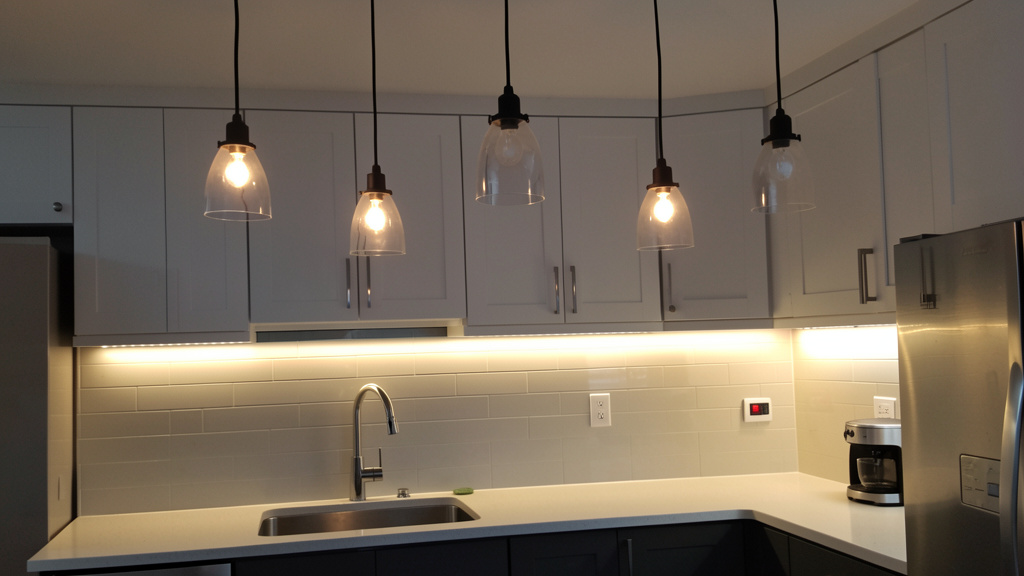
Move beyond harsh overhead glare and shadowy countertops. Discover how ambient, task, and accent lighting work together to create a kitchen that supports safety, reduces eye strain, and adapts gracefully to chopping, cooking, cleaning, and connecting—without overpromising or overwhelming complexity.
Achieving kitchen lighting that feels both functional and inviting isn’t about maximizing brightness or chasing trends. It’s about intentionally layering three distinct types of light—ambient for overall orientation, task for focused work zones, and accent for warmth and visual interest—to create adaptable illumination that serves your daily rhythms. This guide translates established lighting design principles into clear, actionable steps tailored to real-world kitchens. You’ll learn how to assess your space, select appropriate fixtures, avoid common pitfalls, and build a flexible lighting plan that evolves with your needs—whether you’re refreshing a rental, updating a suburban kitchen, or designing a new build. We begin where lasting solutions start: by observing how light already moves through your space.
Introduction: Seeing Light as a Tool, Not an Afterthought
Step into many kitchens at dusk, and a familiar pattern emerges: a single overhead fixture casts sharp shadows across the cutting board while leaving corners dim. Or warm-toned bulbs make it difficult to distinguish ingredients clearly. These aren’t merely aesthetic concerns—they can contribute to eye fatigue during meal prep and reduce confidence in detailed tasks. For decades, lighting professionals have addressed this through layered design: combining ambient light for safe navigation, task light for precision work, and accent light for emotional resonance. When thoughtfully integrated, these layers create adaptable illumination that supports both practical needs and human comfort. A well-layered kitchen feels intuitive—energizing during morning routines yet calming during evening cleanup—while highlighting textures and materials without creating glare. This guide synthesizes widely accepted lighting principles into a practical framework you can apply regardless of layout, budget, or experience level. We begin not with product catalogs, but with mindful observation of your unique space.
The Triad Lighting Framework: A Flexible Approach to Illumination
True lighting effectiveness comes from strategic distribution, not sheer output. The Triad Lighting Framework offers a adaptable structure for designing illumination that serves multiple purposes without conflict. Think of it as a recipe where each component has a defined role, yet the final result reflects your personal context. Ambient light establishes a gentle baseline for spatial awareness. Task light delivers focused clarity exactly where hands work. Accent light adds warmth and visual interest. Crucially, these layers work best when planned together—not added sequentially. Installing ceiling fixtures without considering under-cabinet lighting may create unavoidable shadows. Choosing dramatic pendants without evaluating ambient fill can leave dark zones. The Triad Framework helps prevent these missteps by guiding intentional integration from the earliest planning stages. Below, we explore each layer with practical detail—covering purpose, placement considerations, fixture options, and real-world adaptations most guides overlook. This is where foundational principles become actionable insight.
Step 1: Ambient Lighting – Creating a Foundation for Orientation
Ambient lighting provides gentle, overall illumination that supports safe movement and defines the room’s perimeter. Often confused with “general lighting,” its true role is subtler: minimizing harsh contrasts between light and shadow to reduce visual strain. Imagine theater stage lighting—present enough to prevent disorientation, yet unobtrusive enough not to distract from the main action (your task and accent layers). Without balanced ambient light, even excellent task lighting can create jarring transitions between bright work zones and darker areas—a condition that may increase visual fatigue during extended cooking sessions.
Why This Layer Matters:
Ambient light supports three practical human needs. First, it aids spatial orientation, helping you move confidently through the kitchen, especially in low-light conditions. Second, consistent illumination reduces the need for your eyes to constantly adjust between extreme light levels, potentially decreasing fatigue. Third, thoughtful ambient lighting can enhance perceived spaciousness in compact layouts by eliminating visual “dead zones” that make rooms feel confined. Environmental psychology research suggests uniformly lit environments may support greater user comfort and sense of control.
Implementing Ambient Lighting Thoughtfully:
Start with a simple sketch of your kitchen layout. Note windows, doors, cabinets, and appliances. For even coverage:
– Space ceiling fixtures approximately half your ceiling height apart (e.g., every 4 feet for an 8-foot ceiling).
– Position fixtures 24–36 inches from walls to avoid the “cave effect” (dark walls making space feel smaller) while minimizing direct glare.
– In L- or U-shaped kitchens, avoid placing a fixture directly over the corner where cabinets meet; this often creates a shadow trap. Instead, offset fixtures slightly toward the center of each wall section.
Fixture considerations:
– Recessed options: Choose “flood” beam angles (40°+) for soft, overlapping pools of light rather than narrow “spot” beams. Baffle trims help reduce glare. For insulation contact safety, verify IC-rated housings where required.
– Surface-mounted options: Flush mounts suit lower ceilings (<8 ft); semi-flush mounts work well for standard heights. Look for designs that emit light both downward and upward to gently wash walls and ceiling.
– Supplemental approaches: Cove lighting (LED tape hidden atop wall cabinets, aimed upward) creates a soft perimeter glow. Toe-kick lighting under base cabinets (set very low) provides subtle path illumination for nighttime navigation.
Helpful Nuances:
– Measure consistency: Use a free smartphone light meter app to check floor-level illuminance. Aim for relatively even readings across the space. Significant dips near pantries or entries signal gaps needing attention.
– Honor daylight: South-facing kitchens receive warm afternoon sun; north-facing spaces stay cooler and dimmer. Use dimmers to adjust electric light intensity as natural light shifts.
– Maintain temperature harmony: Select one color temperature family for all ambient fixtures (3000K is a versatile midpoint—warm but clear). Mixing temperatures unintentionally creates visual discord.
– Think vertically: Light at multiple heights (ceiling, cabinet-top, floor-level) adds dimension and reduces flatness.
Illustrative example: In a narrow galley kitchen with windows on one side, ambient lighting felt unbalanced—bright near the window wall, shadowed on the opposite side. The solution shifted three ceiling fixtures slightly toward the darker wall, added continuous cove lighting along the window-wall cabinets to bounce light upward, and included subtle toe-kick lighting on the shadowed side. The result was noticeably more uniform illumination that enhanced the space’s sense of balance—demonstrating that thoughtful placement often matters more than fixture quantity.
Step 2: Task Lighting – Clarity Where Hands Work
Task lighting delivers focused illumination precisely where manual activities occur: chopping, reading recipes, washing dishes, or monitoring pots. Its purpose is functional clarity—reducing shadows cast by your own hands or body to support safety and precision. Without it, cooks often lean forward, squint, or reposition repeatedly. Industry guidelines (such as those from the Illuminating Engineering Society) suggest 50–100 foot-candles of light on work surfaces—significantly more than ambient levels alone typically provide. Achieving this requires attention to placement, beam control, and glare management.
Why Placement Precision Matters:
Light originating directly overhead often casts shadows exactly where you need visibility most. Effective task lighting positions the source between your eyes and the work surface. This is why under-cabinet lighting excels for perimeter countertops: it angles light forward onto the workspace. However, quality varies. Low-density LED strips may show visible “dots” or hotspots, making it harder to discern fine details. High-quality task lighting provides smooth, diffuse illumination with minimal glare—a consideration especially important during prolonged tasks.
Implementing Task Lighting Effectively:
Identify your primary work zones:
1. Main prep area (often near the sink)
2. Cooking surface (range or cooktop)
3. Cleanup zone (sink and dishwasher)
4. Secondary zones (island, coffee station, baking center)
For each zone:
– Under-cabinet systems (perimeter counters):
– LED tape light: Choose high-density strips (120+ LEDs per meter) with a frosted diffuser channel for seamless light. Install toward the front edge of the cabinet underside (1–2 inches back) to angle light onto the countertop, not straight down where it may reflect off glossy surfaces.
– Puck lights: Space every 12–15 inches if used; best for short runs. Opt for models with frosted lenses to soften output.
– Always verify dimmer compatibility and choose fixtures rated for kitchen environments (heat/moisture resistance near ranges or sinks).
– Islands and peninsulas:
– Pendant height: Generally 30–36 inches above the countertop. For ceilings over 9 feet, add approximately 3 inches of drop per additional foot.
– Spacing: For multiple pendants, measure island length, subtract 12 inches (6 inches from each end), then divide the remaining space by the number of pendants plus one.
– Prioritize shades with internal baffles or diffusers to minimize glare for seated guests.
– Stovetop considerations:
– Range hood lights alone often cast shadows from the cook’s body. Supplement with heat-rated LED bars mounted inside the upper cabinet above the range (angled slightly forward) or adjustable under-cabinet lights on adjacent cabinets.
– Sink zone:
– Avoid a single pendant centered over the sink—it can create glare on wet surfaces. Instead, use two smaller fixtures flanking the sink or adjustable recessed trims angled to graze the front of the basin.
Practical Refinements:
✨ The shadow check: Stand at your counter in typical cooking posture. Hold a knife over your cutting board. If your hand casts a distinct shadow on the work surface, adjust the light source forward or consider adding a secondary fixture.
✨ Maintenance matters: Choose systems where components are accessible. Modular LED tape channels allow segment replacement if needed, avoiding full-system replacement later.
✨ Color rendering: For task zones, prioritize fixtures with a Color Rendering Index (CRI) of 90 or higher. This supports accurate color distinction—helpful when judging food doneness or matching ingredients.
✨ Layer within layers: For dedicated bakers or chefs, a swing-arm wall sconce beside the prep zone offers adjustable close-focus light for intricate tasks like piping or filleting.
Illustrative example: A homeowner installed three decorative pendants over a large island but found shadows obscured chopping tasks. The adjustment lowered fixtures to 33 inches above the counter, added continuous under-cabinet-style LED tape beneath the island’s raised eating ledge (angled onto the prep surface), and installed a dimmer to balance both light sources. The change transformed the island into a genuinely functional workspace—highlighting that task lighting benefits from human-scale validation, not just theoretical placement.
The Fundamental Principle: Task lighting succeeds when it quietly disappears—making the work surface feel like a natural extension of your hands, not a battlefield of light and shadow.
Step 3: Accent Lighting – Adding Warmth and Intention
Accent lighting shapes atmosphere. It doesn’t illuminate tasks or ensure navigation; it reveals character—highlighting a textured backsplash, a collection of ceramics on open shelves, or the grain of a wooden range hood. Psychologically, these subtle highlights create visual anchors that reduce perceived clutter and invite connection. When used with restraint, accent lighting guides the eye, establishes rhythm, and supports transitions between activities. Overused, it becomes visual noise; underused, the space may feel flat. Mastery lies in selective emphasis—like a curator using spotlights in a gallery: sparingly, purposefully, and always in service of the subject.
Why Thoughtful Accent Lighting Resonates:
Neuroaesthetic studies suggest humans find environments more engaging when they contain intentional focal points. In a kitchen dominated by uniform surfaces, a softly lit shelf of heirloom dishes or gently grazed tilework provides visual interest that feels restorative. Additionally, warmer, lower-level accent light in the evening can support natural wind-down cues—complementing the body’s shift toward rest without disrupting function. Industry guidance often suggests accent light should make a surface appear 3–5 times brighter than its surroundings for noticeable emphasis without discomfort. Exceeding this ratio may feel theatrical in daily living spaces.
Implementing Accent Lighting with Restraint:
First, identify 2–4 meaningful “hero elements” worthy of highlighting:
– Textural surfaces (handmade tile, fluted wood, stone)
– Display zones (open shelves, glass-front cabinets)
– Architectural details (arched openings, beam ends)
– Personal collections (cookbooks, pottery, herb garden)
Technique considerations:
✨ Grazing vs. washing:
– Grazing positions a narrow-beam light very close (6–12 inches) and parallel to a textured surface. Light skims the texture, casting subtle shadows that amplify depth. Ideal for brick, 3D tile, or fluted wood.
– Washing uses a wider beam from farther away to create even illumination across smooth surfaces like artwork or flat backsplashes.
✨ Open shelving & cabinets:
– Mount low-voltage LED strips along the inside top front edge of shelves, aimed downward with a diffuser.
– For glass-front cabinets: Place tape along the inside top rear edge, aimed forward to illuminate contents without creating reflections on the glass. Use a dimmer to adjust for displayed items.
✨ Backsplashes:
– Position under-cabinet lights 3–4 inches from the backsplash plane to avoid harsh hotspots at the top.
– For dimensional tiles: A second, dedicated strip at the base of the backsplash (between counter and tile), aimed upward, can create a gentle floating effect. Use warmer tones (2700K) for coziness.
– Avoid highlighting highly reflective surfaces (mirror tile, polished metal) without diffusion—it may cause disabling glare.
✨ Low-level ambiance:
– Toe-kick lighting under base cabinets (set to 5–10% brightness via separate dimmer) provides just enough path light for nighttime navigation. Warm color temperatures (2200K–2700K) minimize sleep disruption. Motion sensors can activate this automatically after dark.
The Restraint Principle:
✅ One focal point per viewing zone: When standing at the sink, your eye should settle on one intentional highlight—not dart between competing spots.
✅ Independent dimming: Every accent circuit should have its own dimmer. The ideal level for entertaining differs from late-night snack mode.
✅ Temperature consistency: Match accent light temperature to your ambient layer (typically 2700K–3000K). Unintentional mixing creates visual tension.
✅ The 10-second test: Stand in the kitchen doorway after dark. Within 10 seconds, can you identify the intentional highlights? If your eye feels overwhelmed, reduce intensity or remove a source.
Illustrative example: A kitchen initially featured lighting on every open shelf and both sides of a decorative beam, creating a busy “Christmas tree” effect. Simplifying to:
1. Lighting only the top shelf (highlighting a pottery collection)
2. A single uplight grazing one beam end
3. Subtle toe-kick glow under the island only
4. A dedicated dimmer for all accent circuits
…transformed the space. The kitchen felt more spacious, intentional, and serene. As the homeowner noted, “Now the light feels like it’s revealing my kitchen, not shouting about it.” This reflects accent lighting’s highest purpose: adding meaning through selective revelation.
Integrating the Layers: Creating Harmonious Flow
Designing layers in isolation risks visual discord. True effectiveness emerges when ambient, task, and accent lighting work together fluidly—a symphony where no single element dominates. The Harmony Principle emphasizes relative calibration: each layer’s intensity should complement the others, with controls allowing dynamic adjustment for time of day, activity, or mood. Lighting ideal for Sunday morning pancake prep may feel too energetic during a quiet Tuesday evening tea. Achieving harmony requires three practical elements: independent circuit control, thoughtful dimming ranges, and smooth transitions between zones.
Circuit Strategy for Flexibility
Avoid wiring all kitchen lights to a single switch. Minimum recommended separation:
– Circuit 1: Ambient layer (ceiling fixtures, cove lighting)
– Circuit 2: Task layer (under-cabinet lights, island pendants, sink lights)
– Circuit 3: Accent layer (shelf lighting, toe-kick, backsplash uplights)
– Circuit 4 (helpful): Lights near windows on a separate dimmer to balance daylight changes
In larger or open-concept kitchens:
– Split ambient circuits by zone (e.g., “prep zone” vs. “dining zone”)
– Give island task lighting its own circuit, separate from perimeter under-cabinet lights
– Place toe-kick lighting on a motion-sensor circuit for hands-free nighttime use
Dimming with Purpose
Dimmers are mood architects, not just brightness controls. Compatibility matters:
– Verify fixture and dimmer compatibility before purchasing. Many LED fixtures require specific dimmer types (ELV, TRIAC, or 0–10V).
– Test a sample fixture with your chosen dimmer: check for smooth operation across the full range, absence of flicker or buzz.
– Smart systems (like Lutron Caséta) offer pre-validated pairings and scene programming, reducing compatibility guesswork.
Guiding Dimming Ranges by Layer
| Layer | Daytime Use | Evening Use | Night Mode | Purpose |
|——-|————-|————-|————|———|
| Ambient | 70–100% | 40–60% | 10–15% | Maintain spatial awareness without glare |
| Task | 80–100% | 60–80% | Off or minimal | Support visual clarity during active work |
| Accent | 30–50% | 20–40% | 5–10% | Provide gentle visual anchors |
Example scene: “Weekend Brunch”
– Ambient: 80% (energizing but not harsh)
– Task: 100% over island/prep zones
– Accent: 40% on open shelves showcasing coffee mugs
Example scene: “Weeknight Wind-Down”
– Ambient: 40% (soft overall glow)
– Task: 30% over sink only (for quick cleanup)
– Accent: 15% on toe-kick + one shelf
Bridging Transition Zones
Abrupt boundaries between light zones can feel disorienting. Smooth transitions with:
– Cove lighting along cabinet tops to bridge ceiling ambient and under-cabinet task light
– Continuing LED tape 6 inches beyond cabinet ends (dimmed to 30%) to prevent harsh light termination
– Combining toe-kick (low), under-cabinet (mid), and cove (high) lighting to create vertical continuity, enhancing perceived height
Human-Centered Validation
Technology alone can’t guarantee harmony. Before finalizing:
1. Simulate times of day: At dusk, activate circuits gradually: ambient → accent → task. Notice how the space’s emotional quality shifts.
2. Walk through activities: Chop an onion under task lighting only. Pour a glass of water with only accent lighting active. Walk from fridge to sink with just toe-kick light. Does each feel safe and intuitive?
3. Glare and reflection check: Sit at island seating. Look toward all light sources. Examine glossy surfaces from typical angles. Adjust aim, add diffusion, or reduce intensity where needed.
Illustrative example: In an open-concept home, the kitchen’s bright lighting created a jarring “cliff” when moving into the warmer-lit living area. The solution:
– Unified color temperature (3000K) across both spaces
– Added cove lighting along the shared boundary wall, calibrated to match the living room’s ambient level
– Programmed a “Transition Scene” that gently dims kitchen lights as living room lights brighten in the evening
The result felt cohesive—the space now “breathed” with the household’s rhythm, reducing the mental shift between zones. This underscores that layer integration serves human experience first.
Adapting to Your Kitchen’s Layout: Practical Strategies
No single lighting plan fits all kitchens. Layout, windows, workflow, and adjacent spaces shape effective solutions. Below are adaptable approaches for common configurations—focusing on opportunities and constraints unique to each. These are starting points; observe your own space to refine further.
The Galley Kitchen: Enhancing Perception in a Narrow Space
Characteristics: Two parallel walls of cabinets, narrow width (often 8–12 ft), potential daylight imbalance.
Key considerations: Avoid the “tunnel effect”; minimize body shadows across the workspace.
– Ambient: Install two parallel rows of recessed fixtures (one 24″ from each wall), staggered like brickwork. Supplement with cove lighting along both cabinet tops to wash side walls, visually widening the space.
– Task: Under-cabinet lighting on both walls is essential. Angle lights slightly away from the center aisle to reduce glare while standing in the walkway. On the windowless wall, consider vertical LED strips in the gap between upper and lower cabinets for cross-illumination.
– Accent: Highlight the entrance/exit wall with a wall washer to draw the eye forward. A single dimmable light inside one glass-front cabinet on the darker wall creates a gentle destination point.
– Why it works: Vertical light layers (ceiling, cabinet gap, toe-kick) counteract narrowness. Balanced task lighting prevents one side from feeling shadowed.
The L-Shaped Kitchen: Unifying Two Zones
Characteristics: Cabinets form a 90-degree corner, often with a small peninsula.
Key considerations: Prevent the corner from becoming a shadow trap; create visual continuity.
– Ambient: Avoid a fixture directly over the corner cabinet. Position the nearest fixtures 30″ away along each arm, angled slightly toward the junction. A continuous cove light running through the corner connects the zones visually.
– Task: Use flexible LED tape to wrap under-cabinet lighting continuously around the corner. Add a small surface-mounted light on the corner post itself, aimed downward, to eliminate the classic “corner shadow.”
– Accent: Graze the cabinet fronts meeting at the corner with a narrow-beam adjustable trim. If the L-shape creates a dining nook, a single wall sconce on the non-cabinet wall (at seated eye level) provides ambient fill without glare.
– Why it works: Continuous light lines and targeted corner illumination transform a problematic zone into a functional asset.
The U-Shaped Kitchen: Preventing a “Light Box” Feeling
Characteristics: Cabinets on three walls, often with an island. High storage, potential for visual weight.
Key considerations: Avoid competing glare sources; ensure the island doesn’t cast shadows on perimeter counters.
– Ambient: Prioritize surface-mounted fixtures with upward-facing elements (semi-flush mounts) to bounce light off the ceiling, reducing enclosure. Cove lighting along all three cabinet tops lifts visual weight.
– Task: Under-cabinet lighting on all three walls. Zone dimmers by wall section to brighten only where you’re working. If the island blocks window light, add supplemental task lighting under the island overhang on the shadowed side.
– Accent: Highlight the “open” side of the U: uplights grazing a plant or artwork on the boundary wall. Light one glass-front cabinet per wall at subtly varying intensities to break monotony.
– Why it works: Upward-directed ambient light and strategic accents prevent visual heaviness while maintaining functional task coverage.
The Island-Centric Kitchen: Balancing Heart and Hub
Characteristics: Large central island in an open layout; island serves prep, dining, and social roles.
Key considerations: Balance island lighting needs with perimeter zones; preserve sightlines.
– Ambient: Keep ambient levels deliberately subdued to complement adjacent living areas. Use recessed trims around the island perimeter (not directly over it) to define the zone without competing.
– Task: For dual-function islands, layer two systems:
1. Recessed adjustable trims aimed precisely at the prep surface (for cooking)
2. Pendants hung at dining height (30–36″ above counter) with diffused shades (for seating ambiance)
– Accent: Install LED tape under the island’s eating ledge (seating side only) for a subtle “floating” effect. Add warm toe-kick lighting only on the seating side at very low intensity (5%).
– Why it works: Separating prep and dining lighting functions allows the island to adapt seamlessly to different activities without compromise.
The Single-Wall Kitchen: Creating Depth in Compact Spaces
Characteristics: All elements along one wall (common in studios or apartments). Minimal depth.
Key considerations: Create perceived depth where architecture lacks it; integrate with the larger living space.
– Ambient: Avoid ceiling-only ambient light—it emphasizes narrowness. Create a “vertical stack”: cove lighting atop cabinets (bouncing light upward), vertical linear accents flanking the cooking zone, and toe-kick lighting below.
– Task: High-quality under-cabinet lighting is the primary source. Extend it 6 inches beyond cabinet ends. For the sink (often at one end), a small adjustable wall-mounted light beside the faucet provides targeted illumination.
– Accent: Place a narrow vertical LED strip in the corner where the kitchen wall meets the adjacent room’s wall (20% brightness). Light a single open shelf or artwork on the opposite wall to create a visual destination that pulls the eye across the space.
– Why it works: Light at multiple heights and strategic accents on non-kitchen walls make the kitchen feel integrated into—and expansive within—the larger environment.
Understanding Light Quality: Metrics That Matter
Navigating lighting specifications can feel technical. This section translates key terms into practical outcomes—focusing on what genuinely impacts your daily experience in the kitchen.
Lumens vs. Watts
Watts measure energy use; lumens measure light output. With LEDs, focus on lumens. For task zones, industry guidelines suggest approximately 75 lumens per square foot of work surface. But distribution matters more than total output: diffused, even light feels more comfortable than a high-lumen fixture creating hotspots.
Color Temperature (CCT): The Emotional Tone
Measured in Kelvin (K), CCT describes light’s warmth or coolness:
– 2700K–3000K: Warm to neutral white. Creates comfort while maintaining clarity. Ideal for most residential kitchens across ambient and task layers.
– 3500K–4000K: Crisp neutral. May enhance visual acuity in workshops but can feel sterile in living spaces. Use selectively, if at all.
– Avoid 5000K+: Daylight temperatures often feel harsh in kitchens, exaggerate shadows, and may disrupt evening relaxation.
Practical tip: In open-concept homes, match kitchen CCT to adjacent living areas within 200K to avoid visual dissonance. If using tunable systems, program intentional scenes (“Morning Prep” at 3500K, “Evening Wind-Down” at 2700K) rather than random mixing.
Color Rendering Index (CRI): Seeing True Color
CRI (0–100) measures how accurately light reveals colors compared to natural light.
– CRI <80: Poor color distinction. Avoid for kitchens.
– CRI 80–89: Acceptable for ambient zones.
– CRI 90+: Recommended for task lighting. Critical for judging food doneness, distinguishing herbs, or applying makeup at the island.
– Key detail: Ask for the R9 value (saturated red rendering). Many “CRI 90” LEDs have low R9, making reds appear dull. For task zones, seek R9 >90.
Flicker Awareness
Low-quality LEDs may flicker imperceptibly, potentially contributing to eye strain or headaches.
– Check: Film the light with your smartphone camera. Visible rolling bars indicate problematic flicker.
– Prevent: Choose fixtures labeled “flicker-free” or compliant with IEEE PAR1789. Prioritize this in task zones and near seating areas.
Fixture Selection Guidance
| Fixture Type | Best Application | Key Considerations |
|————–|——————|———————|
| Recessed “Can” Lights | Ambient layer | Choose IC-rated airtight housings where insulation contact occurs. Baffle trims reduce glare. Flood beam angles (40°+) for ambient coverage. |
| LED Tape Light | Under-cabinet task, cove ambient | Requires aluminum channel with frosted diffuser for smooth output and heat management. Verify high CRI (90+) and density (120+ LEDs/meter). |
| Pendants | Island task/ambient | Scale to island size (diameter ≈ ½ to ⅔ cabinet depth). Use baffled or fabric shades to minimize glare. Height: 30–36″ above counter. |
| Flush/Semi-Flush Mounts | Low-ceiling ambient | Select designs with upward-facing elements to prevent “cave effect.” Match size to room scale. |
| Track Lighting | Adjustable accent/task | Choose low-glare heads. Ideal for vaulted ceilings or evolving needs. May not suit traditional aesthetics. |
Dimmer Compatibility Reminder
Mismatched dimmers cause flicker, buzz, or limited range.
1. Confirm fixture is dimmable and note required dimmer type.
2. Use manufacturer compatibility tools (e.g., Lutron’s online checker).
3. Test one fixture/dimmer pair before full installation.
4. Group very low-wattage fixtures (like a single under-cabinet strip) with others on a circuit to meet the dimmer’s minimum load requirement.
Material Longevity Notes
– Aluminum channels dissipate heat better than plastic, extending LED life.
– Glass diffusers resist yellowing better than acrylic near sunny windows.
– In high-moisture zones (sink, dishwasher), choose fixtures with corrosion-resistant finishes.
– Mid-tier fixtures from lighting-specialty brands often offer better longevity and serviceability than the least expensive options—consider total cost of ownership.
Working With Daylight: A Complementary Approach
Natural light is dynamic—shifting in intensity, direction, and color temperature throughout the day and across seasons. Electric lighting works best when it complements this cycle, not competes with it.
Simple Daylight Integration Protocol:
1. Observe your space: Spend one afternoon noting:
– Which zones receive direct sun (and when)
– Where shadows fall during key activities (breakfast prep, dinner cleanup)
– How light quality changes from morning to evening
2. Adapt electric lighting:
– Sun-drenched zones: Use dimmers to reduce electric light intensity as daylight peaks. Slightly cooler CCT (3200K) can balance warm afternoon sun if desired.
– Perpetual shadow zones: Maintain slightly higher ambient levels; warmer CCT (2900K) can counteract cool north light.
3. Seasonal awareness:
– In winter months with shorter days, you may rely more on electric ambient light earlier.
– In summer, daylight harvesting (dimming electric lights when sufficient sun is present) supports comfort and efficiency.
4. Window treatments: Sheer shades or adjustable blinds help manage glare without eliminating beneficial daylight.
Illustrative example: A west-facing kitchen became uncomfortably bright and warm by late afternoon. The solution combined motorized sheer shades (timed to lower at 3:30 PM), ambient dimmers programmed to reduce to 40% at the same time, and warm accent lighting that activated at 4 PM. The result shifted perception from “harsh afternoon glare” to “cozy evening transition”—demonstrating how electric light can harmonize with natural cycles.
Smart Lighting: Adding Intelligence Thoughtfully
Smart lighting can enhance convenience when applied purposefully—but complexity without clear benefit creates frustration. Focus on solutions that reduce decision fatigue or support natural rhythms, not novelty.
Where Smart Features Add Genuine Value:
✅ Circadian support: Systems that gradually shift color temperature and intensity throughout the day (cooler/brighter in morning, warmer/softer in evening) may align with natural energy cycles.
✅ Context-aware scenes: A “Good Morning” scene that gently brightens ambient lights while the coffee brews. A “Goodnight” path light that activates toe-kick lighting via motion sensor after 10 PM.
✅ Daylight harvesting: Sensors that automatically dim electric lights when natural light is sufficient (particularly valuable in sun-drenched kitchens).
✅ Vacation mode: Randomized lighting patterns to simulate occupancy.
Where to Exercise Caution:
❌ Voice control for basic functions: “Turn on kitchen lights” is often slower than a well-placed switch. Reserve voice commands for complex scenes (“Set Kitchen to Dinner Party”).
❌ App-only operation: Always retain physical wall controls. If Wi-Fi fails, you should still operate lights manually.
❌ Over-automation: Motion sensors in busy main zones may turn lights off unexpectedly during focused tasks. Better suited for pantries or mudrooms.
❌ Mixing ecosystems: Combining multiple brands/platforms (Hue bulbs + SmartThings hub + generic switches) often leads to compatibility issues. Choose one reliable platform if pursuing smart features.
Implementation Principle:
Start with an excellent non-smart layered lighting plan. Add smart features only where they solve a specific, observed need in your household. Technology should enhance an already-functional foundation—not compensate for poor design. If pursuing smart integration, prioritize platforms known for reliability and professional support in your region. Always include manual overrides for every automated function.
Your Questions, Answered
Q: How much does implementing layered lighting typically cost?
A: Costs vary widely based on existing conditions, fixture choices, and labor. Simple updates (adding under-cabinet LED tape and dimmers to an existing kitchen) may range from $200–$800. Full new-construction integration with multiple circuits and quality fixtures can range from $1,500–$5,000+. Focus first on high-impact, budget-aligned steps: adding task lighting under cabinets or installing dimmers on existing ambient lights often delivers significant improvement at lower cost.
Q: Can I add layered lighting to an existing kitchen without major renovation?
A: Absolutely. Many impactful upgrades require minimal construction:
– Plug-in or hardwired under-cabinet LED tape systems (often installed without cabinet removal)
– Surface-mounted ambient fixtures replacing a single central light
– Battery-operated puck lights inside glass-front cabinets
– Smart plugs or in-line dimmers for existing fixtures
– Toe-kick lighting with adhesive-backed LED strips
Consult an electrician for circuit modifications, but many task and accent additions are DIY-friendly with proper safety precautions.
Q: What’s the most common lighting mistake in kitchens?
A: Relying solely on a single overhead light source. This creates harsh shadows on work surfaces and uneven illumination. The layered approach directly addresses this by separating functions: ambient for overall safety, task for work zones, accent for warmth. Starting with this mindset shift is more impactful than any single product choice.
Q: How do I choose between LED tape light and puck lights for under-cabinet lighting?
A: LED tape light (in a proper aluminum channel with diffuser) generally provides smoother, more even illumination across long runs and is preferred for primary task lighting. Puck lights work well for short sections (<4 ft) or as supplemental spots but can create uneven “pooling” of light if spaced incorrectly. For new installations, high-density LED tape with a diffuser is typically the more versatile, professional-looking solution.
Q: Do I need an electrician for these upgrades?
A: For hardwired installations (recessed lights, new circuits, in-wall dimmers), yes—always hire a qualified electrician for safety and code compliance. However, many task and accent additions use plug-in drivers, battery operation, or adhesive mounting (e.g., under-cabinet tape with plug-in transformer, battery puck lights). These can often be installed safely by homeowners comfortable with basic tools. When in doubt, consult a professional.
Q: How can I reduce glare on glossy countertops or stainless appliances?
A: Glare stems from light reflecting directly into your eyes. Solutions include:
– Using fixtures with diffusers or baffles (frosted lenses, fabric shades)
– Angling under-cabinet lights slightly forward, away from reflective surfaces
– Choosing matte or honed countertop finishes where possible
– Installing dimmers to lower intensity during tasks where glare is problematic
– Adding ambient light from multiple directions (cove lighting, wall sconces) to reduce contrast
Q: What color temperature works best with white cabinets?
A: 3000K is widely recommended—it provides enough warmth to prevent sterility while maintaining clarity. Avoid very cool temperatures (4000K+) with bright white cabinets, as this combination can feel clinical. If your adjacent living spaces use 2700K, 2700K–3000K in the kitchen creates a harmonious flow. Always view samples in your actual space at different times of day before finalizing.
Q: How long do quality LED fixtures last?
A: Reputable LED fixtures typically last 15,000–50,000 hours (15–45+ years with average daily use). However, the driver (power supply) often fails before the LEDs themselves. Choose fixtures with accessible, replaceable drivers or strong warranties (5+ years). Heat is the primary enemy—ensure proper heat dissipation (aluminum channels, adequate ventilation) to maximize lifespan.
Q: Can layered lighting work in a very small kitchen (under 100 sq. ft.)?
A: Yes—and it’s especially valuable. In compact spaces, layers prevent visual clutter:
– Ambient: Cove lighting atop cabinets (bounces light upward)
– Task: High-quality under-cabinet lighting as the primary work light
– Accent: One intentional highlight (e.g., inside a single open shelf)
Avoid overcrowding with fixtures. Focus on quality of light over quantity. Vertical layering (ceiling to floor) enhances perceived space more effectively than multiple ceiling fixtures.
Q: How do I coordinate kitchen lighting with an open-concept living area?
A: Prioritize visual continuity:
– Match color temperatures within 200K across both spaces
– Use cove lighting or wall washers along the shared boundary to create a soft transition
– Program scenes that adjust both zones together (e.g., “Evening Relaxation” dims kitchen ambient while warming living room lights)
– Avoid making the kitchen significantly brighter than adjacent areas—it creates a jarring “stage” effect
Q: Are dimmers truly necessary for every circuit?
A: Dimmers are one of the highest-impact, lowest-cost upgrades for layered lighting. They enable adaptation to time of day, activity, and mood. At minimum, dim the ambient layer. Ideally, dim task and accent layers independently. If budget is limited, start with ambient dimming—it provides the greatest flexibility for overall ambiance. Always verify dimmer compatibility with your chosen LED fixtures.
Q: What’s one simple step I can take today to improve my kitchen lighting?
A: Conduct a 5-minute shadow audit after dark:
1. Stand at your main prep area with current lights on.
2. Hold a knife over your cutting board.
3. Note where shadows fall and how easily you see details.
4. Repeat at the sink and stove.
This observation identifies your most critical gap—whether it’s adding under-cabinet light, adjusting fixture aim, or installing a dimmer. Action follows awareness.
Conclusion: Light That Serves Your Life
Creating a well-layered kitchen lighting plan isn’t about perfection on the first try. It’s about building a flexible foundation that grows with your understanding and needs. The Triad Framework—ambient for orientation, task for clarity, accent for warmth—provides a reliable structure. But its true power emerges when adapted to your space, your routines, and your sense of comfort.
Three enduring takeaways:
1. Layers work together: No single fixture type solves all needs. Harmony comes from intentional integration and independent control.
2. Human experience guides design: Validate choices through real-world use—chop an onion, pour a drink, walk through the space at night.
3. Progress over perfection: Start with one high-impact improvement (adding task lighting under cabinets, installing a dimmer) rather than waiting for a full renovation.
Your 24-Hour Action Step:
Within the next day, spend five quiet minutes in your kitchen after sunset. With only your current lights on:
– Stand at your main prep area. Notice shadow patterns on your cutting board.
– Walk to the sink. Observe how light supports (or hinders) seeing into the basin.
– Sit at your table or island. Check for glare on surfaces or in your eyes.
Jot down one specific observation. That single note is your authentic starting point—a grounded insight no generic guide can provide.
The Bigger Perspective:
Thoughtful lighting is a quiet form of care—for yourself, your family, and the daily rituals that shape home life. It reduces friction during meal preparation, supports safety during late-night snacks, and transforms ordinary moments into experiences of comfort and clarity. By approaching light with intention, you invest not just in a room, but in the quality of everyday living. The goal isn’t a magazine-perfect kitchen; it’s a space that feels genuinely yours—adaptable, supportive, and quietly joyful, day after day.
Explore Our Complete System:
Designing Your Home’s Lighting Flow | Bathroom Lighting: Safety and Serenity | Circadian Rhythms at Home: Light and Wellbeing | Choosing Fixtures That Last | Open-Concept Living: Defining Zones with Light | The Mindful Renovation Checklist | Window Light: Working With What You Have