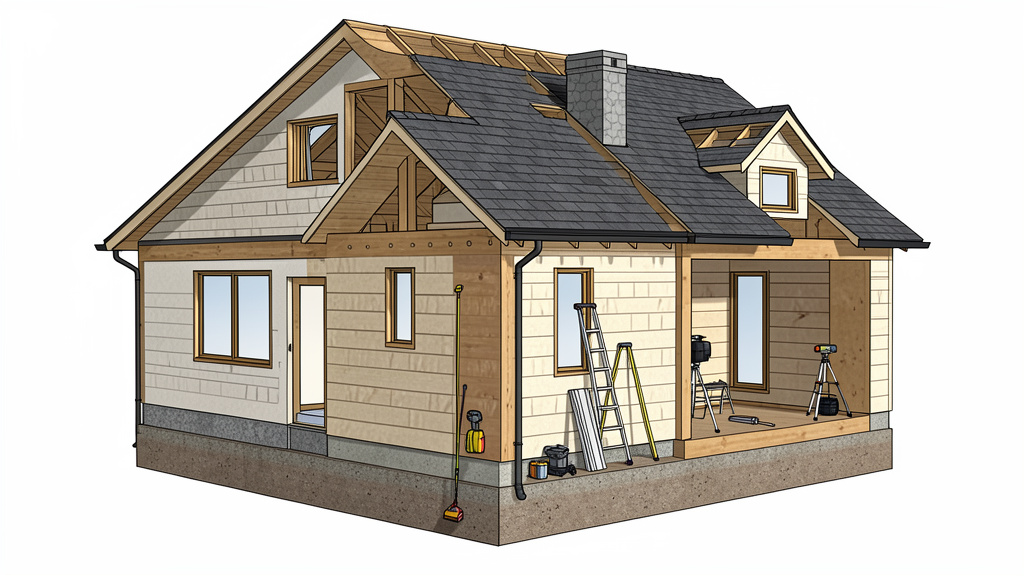
A Practical, Safety-First Framework for Observing, Documenting, and Responding to Structural Indicators
Your home functions as an integrated structural system—foundation, framing, and roof working in concert to withstand environmental forces, daily loads, and the passage of time. Subtle shifts occur naturally: soil settles, wood expands and contracts with humidity, materials age. Most changes are benign. Others signal conditions warranting attention. This guide provides a clear, sequential methodology to observe your home’s physical language with confidence. We translate technical concepts into accessible actions, emphasize safety boundaries, distinguish urgent indicators from normal aging, and equip you with documentation practices that facilitate precise professional consultation. This is not about fear—it’s about informed awareness. By the end, you’ll possess a repeatable assessment workflow, contextual understanding of common observations, and peace of mind through proactive stewardship.
Introduction: Understanding Structural Change as a Natural Process
Homes are dynamic systems. They respond to seasonal moisture cycles, temperature fluctuations, soil movement, and decades of cumulative stress. Unlike vehicles with diagnostic dashboards, houses communicate through physical cues: a door that binds seasonally, a hairline crack in plaster, condensation patterns in the attic. Interpreting these signals thoughtfully prevents both unnecessary concern and overlooked progression.
Structural assessment begins with perspective. Minor settling in older homes is expected. Wood framing naturally adjusts to humidity changes. Cracks appearing after extreme weather events may stabilize. The goal is not perfection—it’s pattern recognition. Documenting observations over time reveals whether a condition is static, cyclical, or progressive. This contextual awareness transforms uncertainty into actionable insight.
This protocol synthesizes widely recognized engineering principles, building science fundamentals, and field-tested observation techniques applicable across diverse construction types and climates. It prioritizes safety above all: if any area appears unstable—significant displacement, active water intrusion, compromised framing—discontinue assessment and contact a qualified structural professional immediately. Your role is careful observation and documentation, not diagnosis or repair. Sharing precise, objective findings with experts streamlines their evaluation and ensures your home receives appropriately scoped attention. True structural evaluation requires licensed professional judgment; this framework empowers you to contribute meaningfully to that process.
The Structural Integrity Scan: A Four-Phase Assessment Framework
Visualize your home’s structure as an interconnected load path: forces travel from roof to foundation through walls, beams, and connections. Assessing components in isolation risks misattribution. A crack upstairs may originate from foundation movement; a sticking door might reflect seasonal humidity, not structural shift. The Structural Integrity Scan eliminates guesswork through four sequential phases. Each phase builds contextual understanding for the next. Skipping phases risks overlooking root causes. Follow the sequence deliberately. Document findings at each stage. Allow 3–4 hours for a thorough initial scan of an average single-family home. Patience and methodical observation yield reliable insights.
Phase 1: Foundation and Substructure Evaluation
Begin where your home meets the earth. The foundation anchors all vertical loads. Its interaction with soil and moisture sets the stage for conditions above. Conduct this phase on a dry day after 48 hours without precipitation for accurate moisture assessment. Wear sturdy footwear, gloves, and use a bright flashlight. If accessing a crawlspace, verify adequate ventilation first; never enter if you detect gas odors, deep standing water, or signs of animal activity. Safety is non-negotiable: use respiratory protection if mold is visible.
Why This Phase Establishes Critical Context:
Soil is dynamic—expanding when wet, contracting during drought, shifting with freeze-thaw cycles. Foundations absorb these pressures continuously. Early observation of moisture patterns or minor movement allows for simple, preventative adjustments like regrading soil or extending downspouts. Waiting until interior symptoms appear often means the condition has progressed further. Think of foundation assessment as checking the roots of a tree; surface symptoms manifest long after underlying conditions change.
Step-by-Step Assessment Protocol:
Exterior Perimeter Walk (Daylight Assessment):
Walk slowly around the entire foundation perimeter at a distance of 3–4 feet to observe overall alignment before examining details. Note vegetation proximity: shrubs or trees closer than 5 feet may channel moisture toward the foundation or introduce root pressure. Check soil grading: the ground should slope away from the foundation. Puddling after rain indicates drainage concerns—a frequent catalyst for moisture-related issues. Inspect downspouts: extensions should direct water discharge away from the foundation perimeter. Missing or damaged extensions are common and readily correctable factors.
Move closer to examine foundation materials:
– Poured Concrete: Scan for cracks. Very fine cracks (<1/16 inch) are typically shrinkage cracks from the curing process and are cosmetic. Wider cracks (>1/8 inch), especially if diagonal, stair-stepped, or showing visible offset (one side higher), warrant documentation. Note location: cracks near corners or under concentrated loads deserve closer observation. Check for efflorescence—white, chalky deposits indicating moisture has migrated through the material. While efflorescence itself isn’t structural damage, it signals moisture movement requiring source investigation.
– Concrete Block (CMU): Focus on mortar joints. Crumbling mortar, particularly in horizontal joints, suggests moisture penetration and weathering. Look for wall curvature—any inward bowing exceeding approximately 1 inch over 8 feet requires professional evaluation. Vertical cracks passing through block units (not just mortar joints) indicate significant stress.
– Brick Veneer: Distinguish between the structural wall behind and the brick facade. Cracks following mortar joints in a stair-step pattern often reflect movement in the supporting structure. Cracks cutting through bricks suggest higher stress levels. Verify weep holes (small openings at the base of brick courses) are clear of debris. Blocked weep holes trap moisture behind the veneer.
– Wood Foundations (Less Common): Found in older homes or specific regions. Gently probe exposed wood with a screwdriver. Soft, crumbly texture indicates decay. Check for insect activity signs (small holes, frass). Wood in direct soil contact is highly vulnerable to moisture damage.
Interior Basement/Crawlspace Assessment (Critical):
Enter only if conditions are safe and dry. In basements, scan walls using raking light (flashlight beam held parallel to the surface). This technique reveals subtle undulations, cracks, or waviness invisible under direct light. Pay attention to corners and areas opposite exterior observations. Check floor slabs for cracks, especially near walls. A separation between slab and foundation wall is often a normal construction joint; a crack through the slab with vertical displacement suggests soil movement beneath.
In crawlspaces:
– Moisture Check: Feel insulation (if accessible). Is it damp? Note musty odors indicating chronic moisture. Look for standing water, mud, or saturated soil. Ideal crawlspace humidity remains below 60%; a basic hygrometer provides verification.
– Structural Elements: Locate main support beams running perpendicular to floor joists. Check beam ends where they rest on piers or foundation walls for signs of compression, rust (on steel), or deterioration. Inspect piers for cracks, tilting, or settlement. Look upward at the subfloor underside for staining, soft spots, or mold growth signaling leaks from above.
– Joist Inspection: Follow floor joists from beam to foundation wall. Note any visible sagging. Gently probe joist ends embedded in foundation pockets (“joist pockets”) with a screwdriver. Soft wood indicates decay—a critical observation point. Check for insect evidence (mud tubes along walls or joists).
– Ventilation: Verify crawlspace vents are unobstructed by vegetation, debris, or misplaced insulation. Adequate airflow is essential for moisture control.
Common Mistakes to Avoid:
– Misinterpreting Crack Types: A vertical crack in upstairs drywall is rarely caused directly by a foundation crack outside. Correlation requires evidence of a continuous movement path. Document locations meticulously across phases.
– Ignoring Seasonal Context: Assess foundations during different seasons if possible. Some cracks open in dry periods and close after rains—a cyclical pattern often stable over years. Documenting this behavior provides crucial context.
– Overlooking Simple Fixes: Many moisture-related concerns stem from grading or drainage issues. Addressing these often resolves associated symptoms without structural intervention.
– Using Invasive Techniques: Never chip concrete or drill exploratory holes. Your role is non-invasive observation and documentation.
Illustrative Observation:
A homeowner noticed a diagonal crack widening in their garage slab. Exterior inspection revealed soil graded toward the foundation near the crack. After rainfall, water pooled within one foot of the wall. They regraded the soil to slope away and installed a downspout extension. Over two subsequent years, the crack stabilized with no further widening. The root cause was chronic moisture saturation affecting soil support—not foundational failure. Early, contextual observation prevented unnecessary concern and expense.
Phase 2: Framing, Floors, and Load Path Analysis
With foundation context established, move to living levels. This phase evaluates how loads transfer vertically and laterally—the “load path.” Disruptions anywhere along this path affect the entire system. Focus on floors, walls, ceilings, doors, and windows. Perform assessments at consistent times of day to minimize temperature-induced expansion artifacts. Use consistent tools: level, flashlight, tape measure, documentation log.
Why Load Path Awareness Prevents Misdiagnosis:
Structural systems are designed so weight flows predictably: roof loads transfer to walls, walls to beams and foundations. When this path is interrupted—by compromised connections, moisture damage, or past modifications—forces redistribute, causing stress elsewhere. A sagging floor might originate from a weakened beam below, not the floor itself. Understanding load paths helps connect observations across levels. Visualize water flowing downhill; structural loads follow the path of least resistance. Your goal: identify potential disruptions in that flow.
Step-by-Step Assessment Protocol:
Floor Levelness and Deflection:
Start in room centers. Place a 4-foot level on the floor. Note bubble position. Move systematically in a grid pattern, marking notable variations with removable tape. For larger areas, stretch a taut string line corner-to-corner and measure deviations. Acceptable deflection varies by age and construction; visible sagging (>3/4 inch over 10 feet) or persistent localized “dips” warrant documentation. Walk slowly across floors. Do specific areas feel unusually flexible? Note precise locations. Check under carpets in suspect areas (lifting a corner discreetly) to inspect subfloor condition.
Wall and Ceiling Integrity:
Examine interior walls using raking light. Focus on:
– Crack Patterns:
– Vertical cracks at wall seams: Often cosmetic, caused by drywall tape movement or normal framing adjustment.
– Diagonal cracks (approximately 45-degree angle) radiating from window/door corners: Common indicator of framing movement or settlement. Measure width at multiple points.
– Horizontal cracks in long, uninterrupted walls: May signal lateral pressure or bracing concerns.
– Stair-step cracks in plaster walls: Follow lath seams; common in older homes with minor settling.
– Bowing or Bulging: Press gently on walls. Significant deviation (>1/2 inch over 4 feet) requires professional evaluation.
– Ceiling Checks: Sight along ceiling lines from floor level. Are corners straight? Gentle sagging between joists may appear as a subtle curve. Check for cracks where ceiling meets walls—especially if aligned with floor observations below.
Door and Window Function (The “Sticking Test”):
Operate every interior and exterior door and window. Note:
– Doors binding at top corner (indicating frame distortion)
– Windows requiring unusual force to latch
– New gaps appearing at top or side of closed doors
– Difficulty securing exterior doors
These functional changes are often more reliable movement indicators than visible cracks alone. Frame distortion directly reflects structural shifting. Document precisely which units are affected and where binding occurs.
Critical Load-Bearing Wall Considerations:
Not all walls carry structural loads. Potential load-bearing walls often:
– Run perpendicular to visible floor joists (observable in basement/crawlspace or attic)
– Align under roof ridges
– Support beams, girders, or walls above
– Are positioned directly above foundation walls or major beams
Critical Reminder: Never assume. When planning modifications, consult original building plans (available through local building departments in many areas) or engage a qualified professional. During assessment, note signs of past alterations: patched seams where walls were removed, mismatched flooring, or unexpectedly placed support posts.
Attic Access Preliminary Check:
Before full attic assessment (Phase 3), briefly observe through the attic hatch. Shine a flashlight upward. Note visible sagging of ceiling drywall, water stains on sheathing, evidence of animal activity, or clutter obstructing inspection points. This preview informs preparation for Phase 3.
Common Mistakes to Avoid:
– Confusing Cosmetic with Structural: Hairline cracks in drywall joint compound are almost always cosmetic. Focus on cracks through the drywall paper or aligned with framing members.
– Ignoring Thermal Effects: Wood expands in high humidity. A door binding only during humid months may require seasonal adjustment, not structural repair. Track patterns over multiple seasons.
– Overlooking Connection Points: Critical vulnerabilities often exist where elements join: joist-to-beam connections, wall-to-foundation anchors. Inspect these interfaces carefully.
– Assuming Symmetry: Settlement is rarely uniform. One corner may shift while others remain stable. Document asymmetries precisely.
Illustrative Observation:
Homeowners in a historic bungalow noted a persistently sticking front door. Initial focus was on the door hardware. Phase 1 revealed subtle foundation movement at the northeast corner. Phase 2 showed a diagonal crack extending from the door frame upward at approximately 45 degrees. Floor levels remained acceptable. The sticking door was a precise indicator of localized foundation movement altering the door frame geometry. Addressing the underlying soil condition resolved the door issue. The door was the symptom; the foundation interaction was the cause.
The Fundamental Principle: Structural observations rarely exist in isolation. A condition noted on an upper floor often traces back to a cause at the foundation or within the interconnected load path. True assessment requires connecting documented evidence across all levels—not treating each symptom as a standalone event.
Phase 3: Roof Structure and Attic Assessment
The roof system bears significant environmental loads: snow, wind, material weight. Attic conditions directly impact framing longevity through moisture and temperature dynamics. Critical Safety Note: Only enter the attic if you are physically capable, confident on narrow surfaces, and access is safe. Never step between ceiling joists—you risk falling through drywall. Walk only on joists or installed walkways. Use a headlamp to keep hands free. Have a helper nearby. If the attic is cluttered, poorly lit, or shows signs of instability (sagging, soft spots), skip interior assessment and consult a qualified roofing professional. Exterior roof observation (from ground level) is safer and often reveals critical clues.
Why Attic Assessment Provides Early Warning:
Moisture is wood’s primary adversary. Inadequate attic ventilation traps humid air from living spaces below. Condensation forms on cold roof sheathing in cooler months, potentially leading to decay that weakens framing over time. This deterioration is invisible from ground level until advanced. Similarly, pest activity compromises structural members silently. Early detection in the attic prevents escalation. Think of the attic as an early-warning environment—conditions here often signal systemic issues affecting the entire structure.
Step-by-Step Assessment Protocol:
Exterior Roof Observation (Ground-Level):
Use binoculars for safety. Scan systematically:
– Surface Condition: Note areas of curling, cupping, missing granules, or discoloration (algae/mold streaks often begin on shaded slopes).
– Flashing Integrity: Check metal flashing around chimneys, vents, skylights, and valleys. Rust, separation from roofing material, or visible gaps signal potential leak points.
– Roof Plane Straightness: Sight along ridges and eaves. Are lines straight? Gentle waviness between rafters may indicate deflection. A pronounced dip near the ridge suggests potential issues with collar ties or ridge connections.
– Vegetation Management: Overhanging branches scrape surfaces and deposit debris. Branches within 10 feet of the roof should be trimmed.
– Gutter Evidence: Sagging sections, separations, or heavy debris buildup indicate maintenance needs contributing to water management issues.
Attic Interior Assessment (If Safe to Enter):
Move deliberately, stepping only on ceiling joists (typically spaced 16–24 inches apart). Place plywood scraps ahead to distribute weight if joists are narrow.
– Moisture and Ventilation Check:
– Ventilation: Locate intake vents (soffit/eaves) and exhaust vents (ridge, gable, turbines). Are soffit vents blocked by insulation? Hold a tissue near soffit vents on a breezy day—if it doesn’t flutter, airflow is restricted. Balanced intake and exhaust are essential.
– Condensation: Run fingers along the underside of roof sheathing near eaves. Is wood damp or stained? Check for frost residue in cooler months (visible as dark streaks when melted). Musty odors confirm moisture concerns.
– Insulation: Is insulation depth consistent? Depressions over exterior walls often indicate blocked soffit vents. Insulation should not cover soffit vents—baffles should maintain clear air channels.
– Framing Inspection (Critical):
– Trusses vs. Rafters: Identify the system. Trusses are prefabricated triangular assemblies with metal connector plates; rafters are individual sloped beams with horizontal ceiling joists.
– Truss Inspection: Examine metal connector plates. Are they rusted, bent, or pulling away from the wood? Check bottom chords (horizontal members) for cracks, splits, or sagging. Note “truss uplift”—a seasonal gap opening between the top of an interior wall and ceiling drywall during colder months (caused by differential moisture content; usually cyclical but warrants monitoring).
– Rafter Inspection: Follow each rafter from ridge to wall plate. Gently probe wood at connection points. Soft spots indicate decay. Check for lengthwise cracks near knots. Inspect collar ties (horizontal members connecting opposing rafters in the upper third)—are they intact? Missing or broken collar ties reduce resistance to wind uplift.
– Ridge Beam: If visible, check for sagging or separation at connections.
– Support Elements: Note any interior walls or posts extending into the attic. Are they cracked, leaning, or showing compression at the top? These often support critical beams below.
– Pest and Damage Evidence:
– Insects: Look for mud tubes on wood, tiny exit holes with fine dust (powderpost beetles), or smooth tunnels (carpenter ants).
– Rodents: Droppings, gnawed wires, nesting materials. Chewed wood near eaves indicates entry points.
– Water Damage: Dark stains on rafters, sheathing, or insulation. Trace stains upward to identify potential leak sources (often near penetrations like vents or chimneys).
– Critical Connections:
– Rafter/Wall Plate Connection: Where rafters meet the top of exterior walls. Check for visible gaps or separation.
– Hurricane Clips/Ties: Small metal straps connecting rafters/trusses to wall plates. Are they present? Rusting? Missing? These enhance resistance to wind uplift. Many older homes lack them; their absence doesn’t automatically indicate danger but is valuable information for professionals.
Common Mistakes to Avoid:
– Confusing Ventilation Types: Ridge vents require corresponding unobstructed soffit vents to function effectively. Installing a ridge vent without ensuring intake airflow can create negative pressure, drawing conditioned air from living spaces.
– Overlooking Ice Dam Contributors: In cold climates, icicles at eaves often signal inadequate attic insulation or ventilation. Heat escaping melts snow high on the roof; water refreezes at cold eaves, potentially backing up under roofing materials. Prevention focuses on attic air sealing and insulation balance.
– Misinterpreting Truss Uplift: Gaps between ceiling and wall appearing in winter and closing in summer are typically seasonal movement, not structural failure—but document width and pattern to share with professionals.
– Ignoring Flashing Details: Most roof leaks originate at penetrations (vents, chimneys), not the main roof field. Prioritize inspection at these points.
Illustrative Observation:
During a routine attic check in a Pacific Northwest home, a homeowner noticed dark staining on a rafter near a plumbing vent pipe. Exterior inspection revealed cracked rubber boot flashing around the pipe. Rainwater had been seeping in gradually, causing localized decay in the rafter tail and adjacent sheathing. Because detected early, repair involved replacing the affected rafter section and re-flashing the vent—a manageable intervention. Left undetected, decay would have compromised structural integrity requiring extensive replacement. The attic assessment transformed a minor repair into a major issue averted.
Phase 4: Synthesis, Documentation, and Action Planning
Raw observations gain meaning through synthesis. Phase 4 transforms scattered notes into a coherent narrative. Patterns emerge: a diagonal wall crack aligns vertically with a foundation observation and a sticking door frame. A spongy floor spot correlates with a rotted joist end noted in the crawlspace. Synthesis separates isolated quirks from systemic patterns. Documentation creates an objective baseline for tracking changes over time and communicating precisely with professionals. Never rely on memory. A well-organized report accelerates professional evaluation, reduces ambiguity, and provides valuable records for future reference.
Why Synthesis Builds Confident Understanding:
Human perception seeks patterns—sometimes creating false connections. Documentation enforces objectivity. Measuring a crack at 1/16 inch today and confirming it remains unchanged six months later provides concrete evidence of stability. Photographs with date stamps eliminate ambiguity. This phase answers the critical question: “Based on all evidence across all phases, what is the most reasonable interpretation of cause, significance, and appropriate response?” It prevents overreaction to minor, stable conditions and ensures genuine concerns receive timely attention.
Step-by-Step Synthesis Protocol:
Create a Structural Assessment Log:
Use a dedicated notebook or digital document with these sections:
1. Property Context: Address, approximate year built, foundation type, roof age, notable past renovations.
2. Assessment Conditions: Date, weather (temperature, recent precipitation), time of day.
3. Phase 1 Findings (Foundation):
– Sketch a simple perimeter diagram. Mark observation locations, widths, orientations. Note grading or drainage observations.
– Attach labeled photos: “NW corner, diagonal crack, efflorescence present.”
4. Phase 2 Findings (Framing/Floors):
– Floor levelness notes. Door/window function log. Wall/ceiling observation maps with measurements.
– Photo reference: “Living room ceiling, subtle sag at center joist bay.”
5. Phase 3 Findings (Roof/Attic):
– Roof condition notes, attic moisture observations, framing issues with precise locations.
– Photo reference: “Attic, rafter near vent pipe, staining observed.”
6. Cross-Phase Correlations:
– “Diagonal crack in dining room wall (Phase 2) aligns vertically with foundation observation at same location (Phase 1).”
– “Spongy floor spot in hallway correlates with joist end condition noted in crawlspace (Phase 1) and subfloor observation (Phase 2).”
7. Contextual Triage Framework:
Categorize each finding using this evidence-based framework:
– Critical (Seek Professional Input Promptly): Visible structural compromise (major beam damage, significant foundation bowing), active water intrusion causing rapid deterioration, safety hazards (gas odor, electrical concerns). Action: Prioritize consultation with a qualified structural professional.
– High Priority (Schedule Evaluation Within Weeks): Progressive changes (measurable widening of cracks over months), significant moisture intrusion with evidence of decay, missing critical connections in high-risk zones, active pest evidence. Action: Contact a qualified contractor or structural professional for assessment.
– Medium Priority (Address Within Months): Stable minor cracks with contextual concerns (e.g., poor drainage near foundation), ventilation deficiencies, cosmetic damage with documented stability. Action: Plan correction during routine maintenance. Monitor quarterly.
– Low Priority / Monitor (Annual Review): Hairline cosmetic cracks unchanged for years, minor settling patterns with multi-year stability, seasonal truss uplift with no associated damage. Action: Document baseline. Reassess during next annual scan.
8. Professional Consultation Preparation:
– List specific, evidence-based questions: “Does the observed crack pattern correlate with typical settlement behavior for this foundation type?” “Is the joist end condition isolated or indicative of a broader moisture issue?”
– Compile all photos, measurements, and correlation notes into a single, organized document. This is your most valuable asset when engaging help.
Establish a Monitoring Routine:
For findings categorized as “Monitor”:
– Place discreet, removable markers (small dots of painter’s tape) at crack ends. Measure distance between markers periodically.
– Photograph marked areas quarterly under consistent lighting.
– Maintain a simple log: “Date: 6/15. Crack width at marker: unchanged.”
– Note environmental context: “Observation followed period of heavy rainfall.”
This data transforms subjective concern into objective evidence. Stability documented over 12–24 months often confirms non-urgent status. Documented progression—even gradual—provides clear justification for professional consultation. This evidence-based approach is highly valued by qualified professionals.
Common Mistakes to Avoid:
– Emotional Triage: Fear can inflate minor issues; complacency can dismiss genuine concerns. Rely on documented evidence and the triage framework.
– Vague Documentation: “Crack in basement wall” lacks utility. “Vertical crack, 12 inches long, approximately 1/16 inch wide at top tapering to hairline at bottom, located 3 feet left of southeast window, photographed 10/26” is actionable.
– Skipping Correlations: Isolating findings misses the narrative. Always ask: “Does this observation connect to something noted elsewhere in the structure?”
– Underestimating Baseline Value: Even a “clean” assessment creates an invaluable reference point. Future changes become instantly recognizable against this documented baseline.
Illustrative Synthesis:
After completing all four phases, a homeowner synthesized findings:
– Phase 1: Minor hairline cracks in garage slab (stable per prior records), but soil graded toward foundation on south side.
– Phase 2: Slight seasonal sticking of south-facing garage door during high humidity; no wall cracks.
– Phase 3: Attic showed minor condensation on north sheathing; soffit vents partially blocked by insulation.
Correlation: South-side grading likely contributes to seasonal moisture variation under the slab, subtly affecting door frame alignment. Attic condensation is a separate ventilation issue.
Triage: Grading correction = Medium Priority (address before rainy season). Soffit vent clearing = Medium Priority. Door adjustment = Low Priority (seasonal pattern).
Action: Regraded soil and installed a downspout extension. Cleared soffit vents and installed rafter baffles. Door function normalized. Total effort: modest time and materials. Professional consultation was appropriately reserved for non-urgent items. Documentation provided clear maintenance records and peace of mind.
Decoding Common Observations: Context Over Alarm
Not all structural indicators carry equal significance. Context—location, pattern, progression, environmental correlation—transforms a mark on a wall from ambiguous to informative. This section provides a balanced lens for interpreting frequent observations, preventing unnecessary concern while ensuring genuine issues receive attention. Always evaluate findings against your documented baseline and the four-phase framework.
Crack Patterns: Location and Meaning
Foundation Walls (Concrete/Block):
– Vertical Cracks: Often shrinkage cracks from material curing. Low concern if hairline (<1/16″), stable over multiple assessment cycles, with no associated moisture or displacement. Higher attention warranted if wide (>1/8″), widening progressively, or accompanied by spalling (surface flaking).
– Horizontal Cracks: Require professional evaluation. May indicate lateral soil pressure or structural bending. Context matters: location, width, presence of offset.
– Stair-Step Cracks (in block/brick): Follow mortar joints in a stepped pattern. Classic indicator of differential movement. Severity depends on width progression, length, and alignment with interior observations.
– Diagonal Cracks: Typically indicate point-load stress or settlement. Critical if near corners, under concentrated loads (chimneys), or showing measurable progression.
Interior Walls (Drywall/Plaster):
– Cracks at Corners of Doors/Windows (Diagonal): Strong indicator of framing movement. Measure width seasonally. Stable width over multiple cycles is reassuring.
– Vertical Cracks at Seam Between Panels: Usually cosmetic—caused by tape movement or framing adjustment. Repairable with standard drywall techniques.
– Horizontal Cracks in Long Walls: May indicate bracing considerations or lateral movement. Investigate foundation and framing connections below.
– Cracks Radiating from Outlets: Often caused by vibration or minor settling; typically low concern unless widening significantly.
Ceilings:
– Cracks Parallel to Joists: Often reflect joist deflection or drywall seam movement.
– Cracks Perpendicular to Joists: May indicate movement in the wall below or truss behavior.
– Cracks at Ceiling-Wall Junction: Common with seasonal truss uplift or foundation movement patterns. Monitor progression.
Moisture Indicators: Location as a Diagnostic Clue
Moisture accelerates nearly all structural deterioration processes. Its presence is a critical diagnostic clue:
– Location Matters:
– Basement/Crawlspace Dampness: Points to grading, drainage, or foundation interface issues. Chronic moisture affects soil support and promotes wood decay.
– Attic Condensation: Signals ventilation imbalance or air leakage from living spaces. Leads to sheathing deterioration and reduced insulation performance.
– Wall Stains at Baseboards: Often indicates plumbing leaks inside walls or moisture wicking from slab. Probe baseboard wood cautiously for softness.
– Ceiling Stains Below Roof Penetrations: Almost always flashing failure at vents, chimneys, or skylights—not general roof failure.
– Pattern Recognition:
– Uniform Dampness: Suggests ambient humidity concerns (needs ventilation/dehumidification).
– Localized Wet Spots: Indicates an active leak source. Trace upward/outward to origin.
– Efflorescence (White Powder): Confirms moisture migration through masonry. Requires moisture source identification.
– Mold Growth: Requires moisture + organic material + time. Surface mold on drywall may be cosmetic; mold on structural wood indicates prolonged moisture exposure needing source correction.
– Seasonal Correlation:
Note timing:
– After Rain: Points to exterior drainage, grading, or roof/gutter issues.
– During Humid Months: Suggests ventilation deficiencies or condensation from HVAC.
– In Cold Months: Indicates warm, moist indoor air contacting cold surfaces (attic sheathing, window frames)—requires air sealing and ventilation balance.
Sensory Cues: What Your Senses Reveal
Your senses provide valuable diagnostic input when interpreted contextually:
– Auditory Cues:
– Persistent Creaking/Groaning: Especially during wind or temperature shifts. May indicate framing members adjusting. Note location and triggers. Sudden, loud, localized popping warrants documentation.
– Dripping Sounds in Walls/Ceiling: Active water leak requiring prompt investigation.
– Olfactory Clues (Smell):
– Musty/Moldy Odors: Unmistakable sign of hidden moisture. Strongest in basements, crawlspaces, closets against exterior walls.
– Earthy/Damp Soil Smell Indoors: Indicates significant moisture intrusion from foundation or slab.
– Sweet, Pungent Rot Smell: Advanced wood decay—requires careful inspection of structural members.
– Tactile Feedback:
– Spongy Floors: Probe subfloor cautiously through access points. Softness indicates decay or delamination.
– Cold Spots on Walls/Floors: May indicate missing insulation, air leaks, or moisture accumulation behind surfaces.
– Excessive Vibration: Beyond normal floor flexibility may suggest inadequate joist support.
Progression Tracking: The Most Informative Metric
A stable condition is often manageable. A progressing condition warrants attention. Implement this simple monitoring system:
1. Mark and Measure: Place discreet, removable markers at ends of cracks. Use a crack gauge card or ruler for precise width measurement. Record date and measurement.
2. Photograph Consistently: Take photos with a scale reference (ruler, coin), under identical lighting. Store digitally with clear filenames: “BasementCrack_NW_20231026.jpg”.
3. Log Environmental Context: Note significant weather events, nearby construction, or changes in home usage that might influence observations.
4. Review Periodically: Compare current measurements/photos to baseline. Ask:
– Is the width changing? (Even small changes matter over time)
– Is the pattern evolving? (New branches appearing?)
– Is associated evidence worsening? (More efflorescence, larger stain?)
Stable measurements over 12–24 months generally indicate non-progressive conditions. Documented progression—even slow—is the strongest justification for professional consultation. This objective data transforms concern into clear, actionable evidence.
Your Structural Assessment Toolkit: Essential Gear for Confident Observation
You don’t need specialized equipment to conduct a thorough assessment, but the right tools transform subjective impressions into objective documentation. This curated toolkit prioritizes safety, accuracy, and accessibility. Invest incrementally—start with Phase 1 essentials, expand as needed. Every item serves a specific purpose within our four-phase framework.
Core Safety Gear (Non-Negotiable):
– Heavy-Duty Work Gloves: Protect hands from sharp edges, splinters. Nitrile-coated for grip.
– Safety Glasses: Essential for dark spaces where debris may fall. Anti-fog coating recommended.
– Respirator Mask (N95 Minimum): Critical for dusty environments or if mold is suspected. For significant concerns, consult safety guidelines.
– Headlamp: Frees both hands for climbing, probing, note-taking. LED with adjustable beam. Essential for dark spaces.
– Sturdy Footwear: Slip-resistant soles. Steel-toed recommended for foundation/crawlspace work.
Precision Observation Tools:
– 4-Foot Level: Longer than standard levels for accurate floor/wall straightness checks. Aluminum for durability.
– Digital Moisture Meter: Pin-type for wood (joists, studs); pinless for drywall/masonry surfaces. Measures moisture content—critical for identifying hidden decay. Calibrate per manufacturer instructions.
– Crack Gauge Card/Width Comparator: Laminated card with precise crack width illustrations (1/16″, 1/8″, etc.). Place against crack for instant sizing.
– Tape Measure (25-Foot): Steel blade with locking mechanism. For room dimensions, crack lengths, grading slopes.
– Hygrometer/Thermometer Combo: Monitors relative humidity and temperature in basements, crawlspaces, attics. Ideal crawlspace humidity: below 60%.
– Flashlight (High-Lumen LED): For raking light technique on walls/floors. Beam should be bright and focused.
Documentation & Analysis Aids:
– Smartphone with Camera: High-resolution photos are your most valuable documentation tool. Use macro mode for close-ups. Enable location/date stamping in settings.
– Notebook & Waterproof Pen: Dedicated structural log. Waterproof paper withstands damp environments.
– Graph Paper: For sketching foundation perimeters, floor plans, marking observation locations precisely.
– Binoculars (8x–10x): Safe exterior roof assessment from ground level. Roofing-specific models have wide fields of view.
– Small Screwdriver (Flathead): For gentle probing of wood surfaces to test for softness/decay (joist ends, window sills, rafter tails). Use minimally and respectfully.
Tool Application Within the Framework:
– Phase 1 (Foundation): Level checks slab flatness; moisture meter tests concrete dampness; crack gauge sizes foundation cracks; hygrometer monitors crawlspace humidity.
– Phase 2 (Framing): Level assesses floor deflection; flashlight raking light reveals wall imperfections; screwdriver probes suspect wood; moisture meter checks for hidden decay near windows.
– Phase 3 (Roof/Attic): Binoculars inspect roof surface safely; moisture meter tests rafters/sheathing; hygrometer verifies attic humidity; headlamp enables safe movement.
– Phase 4 (Synthesis): Smartphone photos + graph paper sketches create visual documentation; notebook logs precise measurements for progression tracking.
Budget-Conscious and Accessible Alternatives:
– No Moisture Meter? Use the “screwdriver probe test” cautiously on inconspicuous wood areas. Soft, crumbly wood indicates decay. Compare resistance to known sound wood.
– No Level? Fill a clear plastic tube with water (water level principle). Mark water height at two points; they will be perfectly level. Low-cost DIY solution.
– No Crack Gauge? Use a standard ruler with fine markings or compare to known widths: credit card thickness ≈ 1/32″, dime thickness ≈ 1/16″.
– Borrow Before Buying: Many libraries offer tool-lending programs; hardware stores may lend tools; neighbors may share specialized items.
Critical Tool Safety Reminders:
– Never use electrical tools in damp conditions without appropriate safety measures.
– When probing wood, apply gentle pressure—aggressive probing can worsen existing damage.
– Always assume electrical wires are live. Never insert tools into wall cavities near outlets/switches without verifying power is off at the breaker.
– Clean and store tools properly after use, especially after crawlspace/attic work.
This toolkit empowers precise, non-invasive observation. Remember: your goal is documentation, not diagnosis. These tools provide objective data to share with qualified professionals, ensuring their assessment is efficient, accurate, and appropriately scoped. Thoughtful preparation fosters collaborative problem-solving.
Navigating Assessment Realities: Practical Solutions and Professional Pathways
Even with thorough preparation, real-world assessment encounters obstacles. Weather delays inspections. Physical limitations restrict access. Ambiguous findings trigger uncertainty. This section addresses frequent friction points with pragmatic solutions, clear boundaries for homeowner assessment, and precise guidance on when—and how—to engage qualified professionals. Understanding these thresholds prevents unsafe overreach while ensuring genuine concerns receive expert attention. This balanced approach embodies responsible, informed homeownership.
Physical Access Limitations: Safety-First Solutions
Crawlspace Too Tight/Low:
– Friction: Standard crawlspaces may be under 18 inches high—impossible to enter safely.
– Observation Alternative: Use a borescope camera inserted through foundation vents or small access points. Attach smartphone for live viewing. Document conditions remotely. Place a moisture meter sensor on a stick to check humidity levels near the floor.
– Professional Path: A qualified home inspector or structural professional possesses specialized compact inspection tools and training for confined spaces. They can provide targeted assessment where access is limited.
Attic Access Unsafe or Blocked:
– Friction: Steep ladder, weak hatch, heavy insulation blocking entry.
– Observation Alternative: Conduct thorough exterior roof assessment with binoculars. Check soffit vents from outside for blockages. Inspect the ceiling below the attic for stains, cracks, or sagging. Use an infrared thermometer on the ceiling to detect temperature anomalies indicating missing insulation or moisture.
– Professional Path: A roofing contractor can assess the exterior roof structure; a home inspector can evaluate the attic interior safely. Specify “structural attic assessment” when inquiring.
Foundation Obscured by Finished Basement:
– Friction: Drywall, paneling, or built-ins cover foundation walls.
– Observation Alternative: Focus on interior clues: floor cracks, door function, moisture on finished walls. Check window wells for drainage issues. Inspect the exterior foundation perimeter thoroughly—exterior conditions often correlate with interior conditions. Use a moisture meter on interior walls at baseboard level.
– Professional Path: A structural engineer may assess through small, strategically placed inspection ports (professionally patched afterward). Non-invasive methods exist but vary in applicability.
Ambiguous Findings: A Framework for Contextual Analysis
The “Is This Normal?” Scenario:
– Example: A fine vertical crack appears in drywall after winter. No corresponding foundation observation. Door functions normally.
– Analysis Framework:
1. Location: At a drywall seam? Likely cosmetic.
2. Pattern: Straight vertical? Less concerning than diagonal radiating from a corner.
3. Progression: Measure now; recheck in 3 months. Stable width = low concern.
4. Correlation: No other symptoms (sticking doors, floor issues)? Supports cosmetic interpretation.
– Action: Document baseline. Monitor quarterly. Repair cosmetically if desired. Professional consultation is typically unnecessary unless progression occurs.
Conflicting Indicators:
– Example: Foundation observations appear stable (Phase 1), but significant diagonal wall cracks exist (Phase 2).
– Analysis Framework:
1. Re-examine Phase 1: Did you miss subtle clues? Recheck grading, drainage, minor cracks.
2. Consider Non-Foundation Factors: Could past remodeling (removed wall?), a plumbing leak behind the wall, or nearby soil disturbance (new tree, excavation) be contributing factors?
3. Seek Additional Data: Monitor crack progression meticulously for 2–3 months.
– Action: If crack stabilizes, likely an isolated framing or finishing issue. If widening, consult a structural professional. Provide your full documentation—this context accelerates accurate evaluation.
Clear Boundaries: When to Engage a Qualified Professional
Your safety and your home’s integrity depend on recognizing assessment boundaries. Cease assessment and contact a qualified professional if you observe:
– Visible Structural Compromise:
– Foundation walls showing significant inward curvature
– Major beams cracked, split, or visibly sagging
– Floor sections feeling unstable or giving way underfoot
– Roof structure showing visible sagging from ground level
– Active Hazard Conditions:
– Deep standing water in crawlspace/basement
– Strong gas odor, electrical buzzing/arcing sounds
– Extensive mold growth (professional remediation guidelines apply)
– Evidence of active, widespread pest activity
– Documented Progression:
– Cracks widening measurably within a few months
– New cracks appearing rapidly after a weather event
– Doors/windows becoming increasingly difficult to operate without seasonal explanation
– Situational Needs:
– Preparing to sell your home (disclosure requirements vary)
– Filing an insurance claim after a significant event
– Planning renovations affecting structural elements
Selecting the Right Professional: Precision Matching
Not all experts address structural concerns equally. Choosing appropriately saves time, resources, and anxiety:
– Structural Engineer (Licensed):
– When to Engage: For diagnosing movement causes, designing repair solutions for foundations, beams, load paths, or after significant events (severe weather, seismic activity). Often required for permit applications involving structural changes.
– What to Expect: Site visit, review of your documentation, engineering analysis, written report with findings and recommendations.
– Verification: Confirm active license in your region. Inquire about residential experience relevant to your home’s age and construction.
– Licensed General Contractor (with Structural Experience):
– When to Engage: For implementing engineer-designed repairs, or for clear-cut issues like replacing decayed joist ends (where scope is well-defined).
– What to Expect: Assessment, repair estimate, project management. Crucial: Verify license, insurance (liability + workers’ compensation), and references. Check with local licensing authorities.
– Consideration: For significant structural concerns, an independent engineer’s assessment prior to contractor bids provides objective scope definition.
– Certified Home Inspector (ASHI/InterNACHI member or equivalent):
– When to Engage: For comprehensive pre-purchase inspections, or periodic “check-up” assessments. Excellent for documenting baseline conditions and identifying maintenance items.
– Limitation: Inspectors identify visible issues but typically do not diagnose root causes or design repairs for major structural concerns. They refer to engineers when needed.
– Value: Provides unbiased third-party documentation.
– Specialty Contractors:
– Foundation Specialists: For foundation repair methods. Seek referrals from engineers.
– Roofing Contractors: For roof structure assessment—verify staff training in structural evaluation.
– Licensed Pest Control: For wood-destroying organism inspection and treatment.
Maximizing Professional Consultations: Your Preparation Checklist
Arrive prepared to make the most of expert time:
1. Share Your Assessment Log: Email your organized documentation (photos, measurements, correlations) before the visit.
2. Prepare Specific Questions: “Does the observed pattern correlate with typical behavior for this foundation type?” “Is the condition isolated or indicative of a broader issue?”
3. Ensure Clear Access: Remove obstacles from basement, crawlspace, attic access points beforehand.
4. Request Written Documentation: Verbal summaries are insufficient. Insist on a detailed report with findings, analysis, and recommendations.
5. Clarify Scope: Confirm what the assessment covers. “Does this include crawlspace evaluation?” “Will you inspect the entire accessible attic?”
6. Seek Multiple Perspectives for Significant Repairs: For proposed repairs exceeding a substantial investment, obtain 2–3 independent assessments. Compare diagnoses and solutions.
Ethical Collaboration: What to Expect
– Professional Conduct: Clear explanations in plain language, written documentation, disclosure of potential conflicts of interest, respect for your prepared documentation.
– Red Flags: Pressure for immediate sign-off, fear-based tactics, dismissal of your documented observations, refusal to answer technical questions.
Trust your instincts. If a professional seems dismissive of your preparation or overly sales-focused, seeking a second opinion is prudent. Your documented assessment establishes you as an informed participant—fostering collaborative, evidence-based problem-solving. This partnership, grounded in shared observation, yields the most reliable outcomes for your home’s structural health.
Documenting Findings: Creating a Clear Report for Effective Collaboration
A photograph provides context, but a well-structured report enables precise communication. Qualified professionals operate on objective data. Vague descriptions like “crack in basement” create ambiguity, potentially leading to overly cautious estimates. Your documentation eliminates guesswork, focuses expert attention on verified observations, and establishes objective baselines for tracking. This section provides a practical template and methodology adapted from professional practice for homeowner application. Invest 30 minutes in documentation; facilitate clearer, more efficient professional consultation.
The Structural Assessment Report Template
Create a single, organized document (digital PDF preferred for sharing):
Cover Page
– Property Address (City/Region sufficient for privacy)
– Assessment Date
– Prepared By: [Your Name]
– Conditions During Assessment (Weather, Recent Precipitation)
– Purpose: “Baseline Documentation,” “Post-Event Observation,” etc.
Executive Summary (1–2 Sentences)
Concise overview of key findings and context:
“Assessment conducted October 26. Primary observations include minor foundation crack at NW corner (stable per historical comparison), soil grading adjustment needed on south elevation correlating with seasonal door function, and blocked soffit vents requiring attic ventilation attention. No critical structural concerns identified. Recommended actions: regrade soil, clear vents, monitor crack quarterly. Full documentation follows.”
Phase 1: Foundation & Substructure
– Exterior Observations:
– Bullet points with measurements: “Diagonal observation, 18 inches long, approximately 1/16 inch max width, NW foundation corner. Photo Ref: FND-01.”
– Grading notes: “Soil slopes toward foundation on south side; negative grade observed at 3 feet from wall.”
– Drainage: “Downspout terminates close to foundation; extension recommended.”
– Interior/Crawlspace Observations:
– Moisture: “Crawlspace humidity 68% (hygrometer); minor dampness noted on north wall.”
– Structural: “Joist end at Pier #3 shows slight softness on probe test (Photo CS-04). No extensive decay observed.”
– Supporting Media:
– Labeled photos: “FND-01: NW corner observation,” “GRD-02: South side grading”
– Simple sketch: Hand-drawn foundation perimeter with marks at observation locations
Phase 2: Framing, Floors, Walls
– Floor Assessment:
– “Living room floor: subtle dip measured 3 feet from NE corner (Level reading Photo FLR-01).”
– Wall/Ceiling Observations:
– “Dining room: Diagonal observation (approx. 45°) extending 12 inches from top corner of south window. Width: approximately 1/32 inch (Crack Gauge Photo WL-03).”
– Door/Window Function:
– “South garage door: Binds at top latch during periods of high humidity. Functions normally in dry conditions.”
– Supporting Media:
– Photos with rulers/crack gauges visible
– Floor levelness notes
Phase 3: Roof & Attic
– Exterior Roof (Binoculars):
– “Minor surface wear observed on south slope; flashing intact at chimney.”
– Attic Observations:
– “Soffit vents on north eave partially blocked by insulation (Photo ATT-02).”
– “Rafter near plumbing vent: staining observed; moisture meter reading elevated (Photo ATT-05).”
– Supporting Media:
– Binocular photo close-ups (if possible)
– Attic condition photos with labels
Phase 4: Synthesis & Correlations
– “Diagonal wall observation (Phase 2) aligns vertically with foundation observation location (Phase 1), suggesting common origin in minor settlement pattern.”
– “Garage door function correlates with grading observation on south side (Phase 1); likely seasonal moisture influence.”
– “Attic moisture staining isolated to vent penetration area; no widespread sheathing damage observed.”
Contextual Triage & Recommendations
| Observation | Location | Context | Suggested Action | Timing |
|————-|———-|———|——————|——–|
| Foundation observation | NW corner | Stable per records | Photograph quarterly; measure width | Ongoing |
| Soil grading | South elevation | Correlates with door function | Regrade to positive slope; install downspout extension | Before rainy season |
| Blocked soffit vents | North eave | Ventilation concern | Clear vents; install rafter baffles | Within 60 days |
| Joist end softness | Crawlspace Pier #3 | Localized | Monitor; reprobe in 6 months | 6-month review |
Appendix
– Full photo gallery with filenames matching report references
– Historical photos (if available) showing prior conditions
– Previous inspection reports or repair records
Photography Best Practices for Clarity
– Scale and Context: Always include a ruler, coin, or crack gauge card in close-up shots. Step back for wider context shots showing location relative to windows, corners, etc.
– Lighting: Use flashlight raking light for wall/floor imperfections. Avoid flash glare on shiny surfaces. Overcast days provide ideal exterior lighting.
– Angles: Shoot perpendicular to surface for accurate representation. Avoid extreme angles that distort observations.
– File Naming Convention: Use descriptive names: “FND_NWobservation_20231026.jpg”, “ATT_raftervent_20231026.jpg”.
– Metadata: Enable date/location stamping in camera settings. Verify timestamps are accurate.
Digital Organization System
– Create a dedicated folder: “Home_Structural_Assessment_2023”
– Subfolders: “Photos_Phase1”, “Photos_Phase2”, etc.
– Store report PDF in main folder.
– Backup to cloud storage and external drive.
– Update folder annually with new assessment data.
Sharing the Report Effectively
– Email PDF to professional with clear subject line: “Structural Observation Report – [Your Address] – For Review”
– In email body: “Attached is documentation from my preliminary observation per the four-phase protocol. Key items for your expertise: [list 2–3 specific questions]. I am available to walk you through findings onsite.”
– Print one copy to have onsite during professional visit for easy reference.
– After professional assessment, file their report in the same digital folder. Compare findings. Update your triage table accordingly.
Why This Documentation Transforms Outcomes
Professionals consistently note that clients arriving with organized documentation:
– Reduce assessment time significantly, lowering consultation costs
– Receive more accurate, targeted recommendations
– Avoid scope ambiguity where minor issues get bundled unnecessarily
– Build immediate credibility, fostering collaborative problem-solving
– Create valuable records for future reference or property transactions
One structural engineer observed: “A homeowner’s well-documented report showing stable observation measurements over two years prevented an unnecessary major repair recommendation. The objective data provided clear context that alleviated concern.”
Your documentation is not just a record—it’s an active tool for advocacy, precision, and peace of mind. It shifts the dynamic from uncertainty to informed collaboration. This empowered approach ensures your home receives appropriately scoped, evidence-based attention.
Preventative Stewardship: Habits That Support Long-Term Structural Health
Assessment reveals current conditions; consistent stewardship shapes future resilience. Structural integrity is maintained not through occasional major interventions alone, but through regular, low-effort habits that mitigate the primary catalysts of deterioration: moisture intrusion, pest activity, and unaddressed minor stresses. This section translates core principles into seasonal, practical rituals anyone can integrate into existing routines (spring cleaning, fall yard work). Think of these as “structural stewardship practices”—small, regular actions that compound into decades of stability. Integrate them gradually for sustainable adoption.
Moisture Management: Your Highest-Impact Priority
Water influences more structural conditions than any other single factor. Proactive moisture management prevents the majority of common structural concerns. Implement this tiered approach:
Exterior Defense (Quarterly Checks):
– Grading Audit: After heavy rain, walk the perimeter. Does water flow away from the foundation? Re-grade soil immediately where puddling occurs. Target: gentle slope away from the house.
– Downspout Discipline: Extend all downspouts to discharge water away from the foundation perimeter. Check monthly during rainy seasons for clogs or disconnections.
– Gutter Guardianship: Clean gutters twice yearly (spring/fall). Verify slope directs water to downspouts. Repair loose hangers promptly—sagging gutters can damage roof edges.
– Landscape Buffer: Maintain clearance between soil/mulch and wood siding or stucco. Trim shrubs to prevent moisture-trapping contact with walls.
Interior Defense (Monthly Habits):
– Humidity Awareness: Maintain indoor relative humidity between 30–50% year-round where feasible. Use exhaust fans during cooking/showering. In humid climates, employ dehumidifiers in basements.
– Crawlspace Climate: If accessible and appropriate for your climate, a vapor barrier (poly sheeting) over dirt floors significantly reduces ground moisture evaporation. Ensure vents are unobstructed seasonally (follow local code guidance regarding seasonal vent closure).
– Attic Airflow: Quarterly, verify soffit vents are clear from inside the attic (use flashlight) and outside (check for nests/debris). Install rafter baffles if insulation blocks airflow channels.
– Plumbing Vigilance: Check under sinks, around toilets, and near water heaters monthly for leaks. Inspect washing machine hoses annually; consider upgrading to braided stainless steel hoses.
Seasonal Focus:
– Spring: After snowmelt/rains, inspect foundation for new observations or efflorescence. Check window wells for debris.
– Fall: Clean gutters thoroughly. Trim tree branches away from the roof. Seal cracks in driveways/walkways directing water toward the house.
– Winter (Cold Climates): Monitor for ice dam conditions. Address attic insulation/ventilation balance before winter if prone to ice dams. Ensure attic insulation doesn’t block soffit vents.
– Summer: Check irrigation systems—sprinklers should not spray foundation walls. Verify AC condensate drain lines discharge away from the house.
Pest Prevention: Fortifying Against Silent Deterioration
Wood-destroying organisms work invisibly for years before symptoms appear. Prevention is vastly more efficient than remediation.
Termite Awareness:
– Eliminate wood-to-soil contact: Maintain clearance between soil and wood siding, posts, or debris.
– Store firewood away from the house, elevated off the ground.
– Fix leaky faucets/hoses near the foundation—moisture attracts pests.
– Schedule professional pest inspections per local recommendations.
Carpenter Ant & Beetle Vigilance:
– Seal cracks around windows, doors, and utility penetrations with appropriate caulk.
– Repair roof leaks and plumbing leaks immediately—damp wood attracts ants.
– Keep mulch beds thin and away from the foundation.
Rodent Exclusion:
– Inspect the foundation perimeter monthly for new holes. Seal openings with appropriate materials (steel wool + caulk, metal flashing).
– Install chimney caps and vent covers with fine mesh.
– Trim tree branches away from the roofline to eliminate access bridges.
Respecting Structural Boundaries: Load Path Awareness
Homes are engineered systems. Alterations without understanding load paths can have unintended consequences.
Renovation Considerations:
– Before Removing ANY Wall: Determine if it may be load-bearing. Consult original building plans (check with local building department) or engage a structural professional for assessment. Never assume.
– Heavy Additions: Installing heavy materials (stone veneer, tile floors) or rooftop structures adds significant weight. Consult a professional to verify framing capacity.
– Attic Storage: Only store lightweight items in designated storage areas. Never place heavy loads directly on ceiling drywall between joists. Install proper attic flooring systems if needed.
– Basement Finishing: In humid climates, avoid framing walls directly against foundation walls—creates potential moisture traps. Maintain an air gap; use moisture-resistant materials where appropriate.
Habitual Load Awareness:
– Distribute heavy furniture evenly. Avoid concentrating very heavy items (pianos, large aquariums) on upper floors without verifying suitability.
– During significant snow events, monitor roof load. Safely remove excessive snow buildup from lower roofs or overhangs using a roof rake from ground level. Never climb snow-covered roofs.
– After significant weather events (high winds, seismic activity), conduct an abbreviated Structural Integrity Scan focusing on new observations, door/window function, or unusual sounds.
Documentation as Prevention: The Annual Structural Check-Up
Prevention includes tracking stability. Schedule 60 minutes each year on the anniversary of your first assessment:
1. Review the previous year’s report.
2. Re-measure marked observations. Re-photograph key locations.
3. Update your assessment log with new observations.
4. Adjust triage categories based on progression (or stability).
5. Plan next year’s preventative actions based on findings.
This ritual transforms uncertainty into assurance. Documented stability over multiple years provides profound peace of mind and valuable records. One homeowner’s decade of stable observation measurements became pivotal evidence during a home sale, alleviating buyer concerns efficiently.
Climate-Informed Adaptation
Tailor protocols to your local environment:
– High Wind Zones: Annually inspect roof flashing, visible connections, and garage door bracing. Consider impact-resistant glazing.
– Seismic Areas: Verify foundation anchoring and cripple wall bracing per local code requirements. Secure water heaters and heavy furniture.
– Expansive Soils: Maintain consistent soil moisture around the foundation perimeter—deep watering during prolonged droughts may help prevent soil shrinkage cracks. Avoid overwatering. Consult local agricultural extension resources for soil-specific guidance.
– High Humidity Regions: Prioritize ventilation—consider attic fans, crawlspace dehumidification. Use mold-resistant materials in vulnerable areas during renovations.
– Heavy Snow Load Areas: Ensure adequate attic insulation to minimize ice dam risk. Verify roof structure was designed for local snow load requirements (consult a professional if adding significant insulation).
Prevention isn’t about perfection. It’s about consistent, informed attention. These practices require minimal time but yield exponential returns in structural longevity, safety, and peace of mind. They transform homeownership from reactive concern to proactive stewardship—a legacy of care embedded in every beam, joist, and foundation wall.
Your Questions, Answered
Homeowners consistently encounter specific uncertainties during structural observation. These evidence-based answers address real-world queries gathered from professional consultations, engineering resources, and homeowner experiences. Each response integrates building science principles with practical guidance, emphasizing safety boundaries and collaborative problem-solving.
Q: How do I know if a foundation crack is serious versus normal settling?
A: Significance depends on width, pattern, location, progression, and correlation—not presence alone. Very fine cracks (<1/16 inch) in poured concrete are typically shrinkage cracks from curing and are cosmetic. Cracks wider than 1/8 inch, especially if diagonal, horizontal, or showing visible offset (one side higher), warrant documentation and monitoring. Stair-step patterns in block walls following mortar joints often indicate movement. Critical considerations: Is the crack widening over multiple assessment cycles (document with photos/measurement)? Is it accompanied by correlated interior observations (sticking doors/windows, wall cracks aligning vertically)? When in doubt, monitor progression for 3–6 months. Stable observations rarely become urgent. Documented progression warrants consultation with a structural professional. Horizontal cracks in foundation walls generally require professional evaluation due to potential lateral pressure implications.
Q: My floors feel bouncy. Is this a structural problem or just old-house character?
A: Some deflection is normal, especially in older homes with wider joist spacing. Test by having someone walk gently in the center of the room while you observe from below (if accessible). If joists visibly flex significantly or you hear loud cracking/popping, document and consult a professional. Persistent “spongy” spots (localized softness) indicate potential subfloor or joist decay—probe carefully with a screwdriver in an inconspicuous area. Bounce concentrated near walls may signal support connection concerns. Document locations precisely. For general springiness without visible damage or decay, adding bridging between joists or sistering new joists alongside existing ones (by a qualified contractor) can stiffen floors. Always rule out moisture damage first—decay compromises structural capacity.
Q: Can I assess my home’s structure after a minor earthquake or severe storm?
A: Yes, but prioritize safety first. Wait until authorities declare it safe to re-enter. Conduct an exterior visual assessment before going inside: check for foundation displacement, major cracks, or leaning walls. If the structure appears compromised, do not enter. If exterior looks stable, proceed cautiously indoors with flashlight and hard hat. Focus on new symptoms: fresh cracks (especially diagonal patterns), doors/windows that no longer close properly, unusual gaps between walls/ceilings, or visible framing damage in accessible areas. Document everything with photos. Even if damage seems minor, schedule a professional structural assessment. Aftershocks or hidden damage can evolve. Many structural professionals offer post-event assessments. Do not attempt repairs until a qualified expert has evaluated the structure.
Q: What’s the difference between a home inspector and a structural engineer? When do I need each?
A: Home inspectors provide broad visual assessments of all home systems (roof, plumbing, electrical, structure) per industry standards. They identify visible issues and recommend further evaluation but do not diagnose root causes of structural problems or design repairs. Structural engineers are licensed professionals who analyze structural systems, calculate loads, diagnose failure mechanisms, and design repair solutions. Hire a home inspector for routine check-ups, pre-purchase evaluations, or to identify maintenance items. Hire a structural engineer when: foundation movement is suspected, significant cracks appear with progression, load-bearing walls are modified, significant damage occurs (storm/event), or a home inspector recommends engineering evaluation. For structural concerns, the engineer’s analysis is definitive; the inspector’s report is a valuable screening tool.
Q: I found mold in my crawlspace. Is this a structural threat?
A: Mold itself doesn’t significantly weaken wood, but it’s a critical indicator of chronic moisture—that is the structural concern. Moisture enables wood-destroying fungi (decay) and attracts pests. First, identify and eliminate the moisture source: poor grading, leaking pipes, inadequate ventilation, or missing vapor barrier. Then remediate mold following safety guidelines (wear appropriate PPE; for extensive growth, consult remediation professionals). After drying, inspect structural wood (joists, beams, posts) for softness using a screwdriver probe. Soft, crumbly wood indicates decay requiring professional repair. Install a vapor barrier over the crawlspace floor and ensure vents are unobstructed per local code. Monitor humidity with a hygrometer; maintain below 60% where feasible. Addressing moisture protects both structural integrity and indoor air quality.
Q: How often should I have my home’s structure professionally inspected?
A: There’s no universal mandate, but strategic timing matters. For homes under 20 years old with no known issues: every 5–7 years for peace of mind. For homes over 20 years old, on expansive soils, or in harsh climates (coastal, seismic zones): every 3–5 years. Trigger events warrant prompt inspection: visible new cracks with progression, sticking doors/windows developing suddenly without seasonal explanation, after major weather events, before/after significant renovations, or when buying/selling. Annual self-assessment using this protocol is highly recommended—documenting stability provides invaluable baseline data. Think of professional inspections as “structural check-ups”: periodic evaluation catches conditions early when interventions are simpler.
Q: Are hairline cracks in drywall or plaster something to worry about?
A: Almost always cosmetic. Drywall cracks commonly occur at seams between panels due to normal framing adjustment (wood loses moisture over time), temperature fluctuations, or minor settling. Plaster cracks often follow lath seams. Repair with joint compound and paint. Concern arises only if: cracks are wide (>1/8 inch), diagonal radiating from corners, accompanied by correlated symptoms (sticking doors/windows), or widening progressively over multiple assessment cycles. Document location and width. Reassess in 3 months. Stable hairline cracks require no structural action—only cosmetic repair if desired. Over-focusing on cosmetic cracks wastes resources; ignoring progressive structural observations risks escalation. Context and documented progression are key.
Q: What does “truss uplift” look like, and should I be concerned?
A: Truss uplift appears as a gap between the top of an interior wall and the ceiling, typically during colder months. This occurs due to differential moisture content between the attic and living space, causing the truss bottom chord to arch upward slightly. In most cases, it is a seasonal, cosmetic issue that closes during warmer months. However, if the gap is accompanied by cracks in the drywall, visible damage to the truss, or does not close seasonally, consult a professional. Monitoring the pattern over a full year is recommended before taking action. Do not nail or screw the ceiling to the wall to “fix” the gap—this can cause damage when the truss moves seasonally.
Q: How can I determine if a wall is load-bearing during my assessment?
A: Potential load-bearing walls often run perpendicular to visible floor joists (observable in basement/crawlspace or attic), align under the roof ridge, or support beams above. However, visual cues are not definitive. When in doubt, consult the home’s original building plans (available from your local building department in many areas) or engage a structural professional for assessment. Never assume a wall is non-load-bearing without verification, especially before renovations. During observation, note signs of past alterations: patched seams where walls were removed, mismatched flooring, or unexpectedly placed support posts.
Q: What immediate steps should I take if I discover significant structural damage?
A: Prioritize safety. If the damage appears severe (major cracks with offset, sagging floors or ceilings, visible bowing), evacuate the area and contact a licensed structural professional or emergency contractor immediately. Do not attempt to assess unstable areas yourself. For less urgent issues, document the findings thoroughly (photos, measurements, location) and schedule a professional consultation. Avoid making repairs until a qualified expert has evaluated the situation. Your safety is paramount.
Q: How does soil type influence foundation assessment?
A: Soil composition significantly impacts foundation behavior. Expansive clay soils swell when wet and shrink during droughts, exerting pressure on foundations. Sandy soils drain quickly but may shift. Understanding your local soil conditions (available through geological surveys or local extension services) helps interpret movement patterns. For example, seasonal crack widening in clay-rich areas may correlate with wet/dry cycles. Documenting these patterns over multiple seasons provides valuable context for professionals diagnosing causes. Consistent moisture management around the foundation perimeter is especially important in expansive soil regions.
Q: Can regular maintenance prevent most structural issues?
A: Proactive stewardship addresses the primary catalysts of structural concerns: moisture intrusion, pest activity, and unaddressed minor stresses. Consistent attention to grading, drainage, ventilation, and pest prevention mitigates the majority of common structural conditions. While no home is immune to aging or environmental factors, a disciplined maintenance routine significantly extends structural longevity and reduces the likelihood of major interventions. Annual assessments using this protocol empower timely, cost-effective action. Prevention is not about perfection—it’s about informed, consistent attention.
Conclusion: From Observation to Informed Stewardship
You now possess a systematic framework for observing your home’s structural narrative with clarity and confidence. This protocol transforms overwhelming complexity into manageable, logical steps: assess foundation to roof in sequence, document findings objectively, synthesize patterns across phases, and respond with appropriate action—whether simple maintenance, monitored observation, or professional consultation. The goal is not perfection, but informed awareness. Most homes exhibit minor, stable conditions that require only routine attention. Your ability to distinguish these from progressive concerns is invaluable.
Recall the three foundational pillars of this approach:
1. Context Over Isolation: A symptom observed upstairs often connects to a cause downstairs. Always seek correlations across the four phases.
2. Documentation Over Assumption: Measured stability over time is powerful evidence. Photograph, measure, log environmental context. Let data guide decisions.
3. Collaboration Over Isolation: Your documented observations are a bridge to qualified professionals. Sharing precise, objective findings fosters efficient, targeted evaluation and builds collaborative problem-solving.
The 24-Hour Next Step:
Within the next day, complete one small, actionable task:
– Sketch a simple perimeter diagram of your home’s foundation.
– Note one drainage observation near a downspout.
– Place a hygrometer in your crawlspace or basement.
This tiny action initiates momentum. Progress compounds through consistent, small steps—not overwhelming overhauls.
The Bigger Picture:
Your home is more than shelter; it’s a legacy of care. Structural stewardship is a quiet practice of respect—for the craftsmanship embedded in its bones, for the safety of those within its walls, and for its endurance across generations. By cultivating informed vigilance, you honor that legacy. You shift from passive occupancy to active, compassionate stewardship. This mindset—grounded in observation, tempered by patience, guided by evidence—is the true foundation of lasting home health.
Explore Our Complete Home Care System:
[Understanding Your Home’s Load Path] | [Moisture Management Mastery] | [Seasonal Home Maintenance Calendar] | [Working with Contractors: A Homeowner’s Guide] | [Decoding Building Science for Homeowners] | [Emergency Preparedness for Home Systems] | [Documenting Home History: A Legacy Guide]