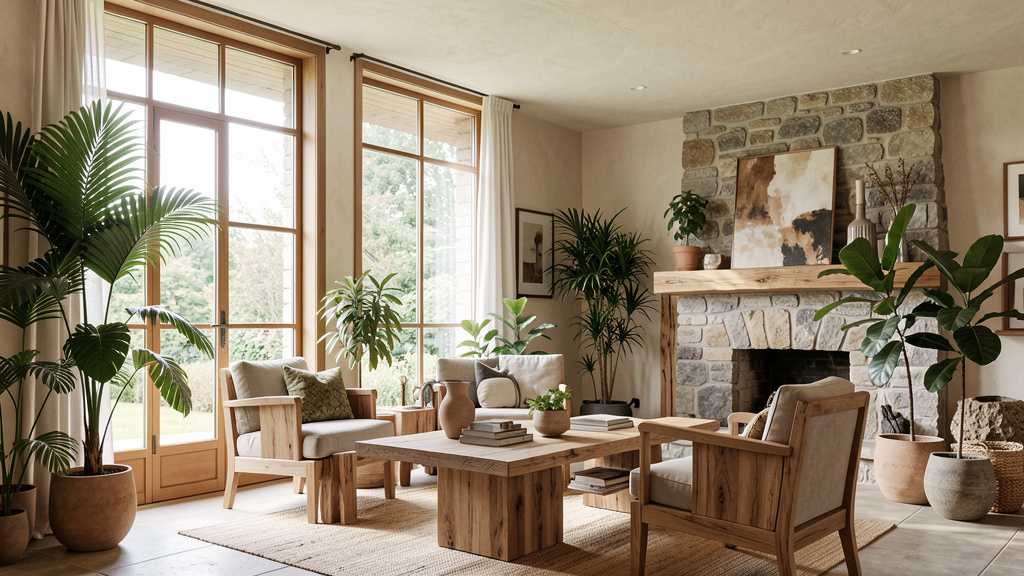
Move beyond potted plants. Discover the core principles of biophilic design, how to thoughtfully apply them across every space in your home, and navigate common constraints with adaptable, sensory-rich solutions grounded in environmental psychology.
Biophilic design extends far beyond decorative greenery—it is a holistic approach to weaving nature’s patterns, processes, and presence into the fabric of daily living. Rooted in decades of environmental psychology and architectural research, this methodology supports human well-being by gently reconnecting us to the natural systems we evolved alongside. This guide offers a practical, adaptable framework for integrating biophilic principles into any living environment—apartment or house, sun-drenched or north-facing, budget-conscious or renovation-ready—through actionable steps, material considerations, and context-aware adaptations informed by established design research.
Introduction: Why Your Walls Crave Wilderness
Imagine stepping into a room where morning light filters softly through leaves onto a wall textured like river stone. The air carries the faint, clean scent of damp soil after rain. A gentle water feature murmurs in the background, its rhythm syncing with your breath. Your shoulders relax without conscious effort. This experience reflects biophilic design in practice. Coined from the Greek bios (life) and philia (love), the term was popularized by biologist E.O. Wilson in his 1984 book Biophilia, proposing an innate human affinity for living systems. Stephen Kellert’s subsequent framework in Biophilic Design: The Theory, Science and Practice of Bringing Buildings to Life translated this theory into actionable architectural patterns. Kellert identified three overarching categories—Nature in the Space, Natural Analogues, and Nature of the Space—later refined into patterns now referenced across residential and workplace design literature. Research, including large-scale workplace studies, has consistently linked environments enriched with natural elements to improved well-being and productivity metrics. Yet many guides reduce this profound discipline to “add a snake plant.” Authentic biophilic integration operates more deeply: it engages multiple senses simultaneously, honors local ecology, and works with your specific constraints rather than against them. This guide bridges academic insight and lived experience, offering a scalable system—not a rigid checklist—to cultivate spaces that feel inherently restorative. Whether you rent a studio apartment or steward a suburban home, you’ll discover how subtle shifts in light, material, pattern, and perspective can gently reshape your daily experience of home.
The Biophilic Integration Framework: Seven Pillars for Authentic Connection
This framework synthesizes environmental psychology, architectural principles, and sensory awareness into a cohesive system. Each pillar functions independently yet gains resonance when layered. Think of them as instruments in an orchestra: a single note is pleasant, but harmony creates transformation. We’ll explore why each pillar matters physiologically, how to implement it across contexts, and nuanced considerations often overlooked.
Pillar 1: Dynamic & Diffused Light
Natural light is more than illumination—it is a biological regulator. Sunlight’s shifting intensity, color temperature (from cool dawn to warm dusk), and direction support circadian rhythms, influencing sleep quality, mood stability, and daytime alertness. Static artificial lighting, by contrast, can contribute to visual fatigue and disrupted rhythms. Biophilic design restores light’s living quality.
Why this pillar matters: Research indicates that access to dynamic daylight correlates with reduced visual discomfort and more stable energy levels throughout the day. Crucially, it’s not about more light—it’s about changing light. Our physiology remains attuned to the sun’s arc; honoring this rhythm supports natural biological cues.
Implementation strategies for every scenario:
– South/West-facing windows (abundant direct sun): Install sheer linen or bamboo roller shades. These diffuse harsh beams into soft, dappled patterns that shift across surfaces. Position a rotating prism crystal in the windowpane to cast fleeting rainbows—a subtle reminder of light’s movement. Angle a small mirror opposite the window to bounce light deeper without glare.
– North-facing windows (consistent cool light): Amplify available light with reflective surfaces. A console table with a light oak or whitewashed finish beneath the window bounces illumination upward. Choose wall colors with subtle warmth (e.g., soft greige or warm white) to balance coolness. Add a dimmable warm-white (2700K) floor lamp with a fabric shade for evening transitions.
– Windowless spaces (basements, interior rooms): Simulate daylight dynamics. Use smart bulbs programmed to shift from cooler tones (around 5000K) in the morning to warm amber (2200K) by evening. Place them in indirect cove lighting or behind sheer fabric panels to avoid harsh point sources. Supplement with a high-CRI (Color Rendering Index >90) LED panel for task areas. Critical nuance: Avoid very cool “daylight” bulbs (6500K+) in living spaces—they can feel clinical and disrupt evening wind-down. Prioritize smooth spectral transitions.
– Budget adaptation ($0–$30): Reposition existing mirrors to reflect window light. Hang a vintage brass tray on a sunlit wall to create gentle highlights. Use light-colored textiles on seating to increase ambient reflectance.
– Common mistake to avoid: Installing uniformly bright, cool-white LEDs throughout. Layer light sources: ambient (overhead), task (reading lamps), and accent (wall sconces) at varying color temperatures to mimic nature’s variability.
The Fundamental Principle: Light should tell time. If your room feels identical at 9 AM and 9 PM, you’ve silenced nature’s most fundamental rhythm.
Pillar 2: Presence of Water
Water engages sight, sound, and subtle scent—triggering a measurable physiological calm. Studies in environmental psychology suggest that the sound of flowing water can reduce stress markers more effectively than silence or music for some individuals. The visual fluidity of water also provides “soft fascination,” allowing directed attention to rest while involuntary attention engages gently—a concept from Attention Restoration Theory.
Why this pillar transcends aesthetics: Beyond potential stress reduction, water features may support indoor humidity in dry climates, benefiting respiratory comfort and wood preservation. Negative ions generated by moving water may also contribute to perceived air freshness. Authenticity matters: a loud, plastic-looking fountain creates cognitive dissonance. The goal is subtle, harmonious integration.
Implementation strategies for every scenario:
– Living areas: A wall-mounted slate or copper water panel (12″x18″) with a recirculating pump creates a quiet vertical element. Position it where morning light catches droplets. For apartments, choose a self-contained unit with a near-silent pump. In arid environments, a small indoor water feature can assist in maintaining comfortable humidity levels.
– Bedrooms: Avoid large features that may disrupt sleep. Instead, use a ceramic diffuser with a very low water flow setting paired with calming botanicals like lavender. Ensure volume is barely audible—water should be noticeable only during quiet moments.
– Kitchens/Bathrooms: Integrate water into function. Install a faucet with an aerator that creates a gentle, rain-like flow. In bathrooms, choose a rainfall showerhead with adjustable pressure. The tactile experience of water during routine acts becomes a mindful ritual.
– Pet/child-safe adaptation: Opt for sealed terrariums with hidden internal features, wall-mounted pieces with no accessible basin, or high-quality audio: a discreet speaker playing nature soundscapes at natural volume levels during work hours.
– Budget adaptation ($0–$50): Place a shallow ceramic bowl filled with water and floating camellia blossoms on a windowsill. The evaporation adds subtle humidity; the visual stillness invites pause. Refresh daily. During safe rainfall, open a window near a downspout to welcome natural sound.
– Common mistake to avoid: Choosing fountains with loud gurgling or mechanical noise. True biophilic water is quiet and fluid. Test pumps for smooth operation. Avoid plastic basins—they degrade water quality and feel artificial.
Pillar 3: Natural Materials & Textures
Our senses evolved interpreting organic textures: the grain of wood, the cool smoothness of stone, the fibrous weave of rattan. These materials possess “fractal complexity”—patterns repeating at multiple scales—which the brain processes with ease, potentially reducing cognitive load. Uniform synthetic surfaces (glossy laminates, flat-painted drywall) can create subtle visual tension.
Why material authenticity matters: Research suggests participants in spaces with visible natural materials like wood grain report lower physiological stress markers than in identical spaces with synthetic alternatives. It’s not about luxury—it’s about tactile truth. Materials should feel honest to the touch and reflect origin.
Implementation strategies for every scenario:
– Floors: Prioritize underfoot experience. Layer a jute or sisal rug (with natural latex backing) over existing flooring. The slight texture and earthy scent engage proprioception. For kitchens, cork tiles offer warmth, slight resilience, and sustainable harvesting.
– Walls: Break up flat surfaces. Apply clay plaster to an accent wall—it breathes, regulates humidity subtly, and has organic variation. For renters, removable grasscloth wallpaper on a single wall introduces vertical texture reminiscent of forest canopies. Pro tip: Run your hand over samples. Does it feel warm? Slightly irregular? Does it have a faint natural scent? These qualities signal biophilic resonance.
– Furniture & Objects: Seek items showing craftsmanship. A live-edge shelf with visible grain. A ceramic mug with an unglazed base revealing the clay body. A woven seagrass basket with gentle asymmetry. These imperfections reflect human-nature collaboration.
– Budget adaptation ($0–$75): Collect smooth river stones during walks; display them in a wooden bowl. Frame pressed leaves or ferns between glass. Use unfinished pine boards (sanded smooth) as bookends or shelf risers. Visit salvage yards for discarded wood scraps to create small wall art.
– Common mistake to avoid: Overloading a space with “rustic” textures that feel staged. Biophilic texture should feel integrated, not thematic. Balance rough textures with smooth ones (e.g., a nubby wool throw on a sleek linen sofa).
Pillar 4: Biomimetic Patterns & Forms
Nature avoids rigid geometry. Its patterns—fractals in ferns, spirals in shells, branching in trees—are mathematically efficient and visually soothing. Biomimicry translates these forms into design elements that resonate subconsciously. This pillar is often misunderstood as “leaf prints on pillows.” True biomimicry operates at the structural and compositional level.
Why patterns affect cognition: Neuroaesthetics research indicates the human brain processes fractal patterns (repeating shapes at diminishing scales) with less effort than strict Euclidean geometry. Viewing such patterns may support reduced stress responses. This reflects neurological efficiency, not mere preference.
Implementation strategies for every scenario:
– Architectural elements: If renovating, curve a hallway corner or arch a doorway. In existing spaces, choose furniture with organic shapes: a kidney-shaped coffee table, a sofa with gently rounded arms. Hang a circular mirror instead of a rectangle. Trace the silhouette of a local branch onto cardboard; use it as a template to arrange floating shelves in a branching pattern.
– Textiles & Art: Select fabrics with subtle fractal motifs: ikat dyeing (blurred edges mimic water), mudcloth patterns (abstracted tracks), or hand-block prints with slight variations. Avoid perfect digital repeats—they feel artificial. For art, choose abstract pieces using natural pigments with visible brushstrokes suggesting landscapes.
– Lighting: Select fixtures inspired by natural forms: a pendant shaped like a seed pod, a floor lamp with branching arms. Position them to cast organic, shifting shadows on walls—a dynamic, ever-changing element.
– Budget adaptation ($0–$40): Create a “shadow garden.” Cut simple leaf shapes from black cardstock; tape them to a window. As sun moves, intricate shadows dance across walls. Rearrange weekly. Frame a high-resolution photo of lichen patterns or moss close-ups (printed on matte paper) for affordable wall art.
– Common mistake to avoid: Literal nature clichés (plastic vines, cartoonish prints). Biomimicry should evoke nature’s essence, not mimic its appearance. A spiral staircase references natural growth; a honeycomb shelf references efficiency—both feel intentional, not kitschy.
Pillar 5: Prospect & Refuge
This primal spatial pattern addresses deep-seated psychological needs. Prospect is the ability to see outward—to observe territory safely. Refuge is a protected, cozy space to retreat into. In nature, this meant scanning a savanna from behind cover. In homes, imbalance causes stress: open-plan living rooms with no refuge feel exposed; windowless offices lack prospect.
Why spatial psychology matters: Environmental psychology research notes that spaces offering both prospect (views of activity) and refuge (enclosed comfort) correlate with higher satisfaction and reduced stress. In homes, this balance supports both social engagement and solitary restoration.
Implementation strategies for every scenario:
– Living rooms: Create refuge within openness. Float a sofa away from walls with a tall, leafy plant behind it—forming a “green shield.” Position seating to face windows (prospect) but angle chairs slightly inward for conversation intimacy. Add a deep armchair tucked into a corner with a floor lamp—a dedicated refuge nook.
– Home offices: Position desks perpendicular to windows (not with back to door). This provides prospect over the room while maintaining connection to outdoors. For refuge, install a tall bookshelf behind the desk or use a room divider draped with a macramé panel. Avoid placing desks directly facing blank walls (feels confining) or with back to room entrances (triggers subconscious vigilance).
– Bedrooms: Beds should have refuge (headboard against solid wall) and prospect (view of door/window without direct exposure). Place the bed diagonally opposite the door if possible—this “command position” satisfies prospect needs. Use a low upholstered headboard for psychological refuge; avoid exposed metal frames.
– Small apartments: Use furniture to define zones. A console table behind a sofa creates implied separation. Hang a sheer curtain on a tension rod to carve a sleeping nook—providing refuge while maintaining light flow (prospect).
– Budget adaptation ($0–$60): Reposition existing furniture. Move a bookshelf to create a partial barrier behind a desk. Drape a lightweight linen curtain over a rod to define a reading corner. Place a large floor plant to visually anchor a space and create implied refuge.
– Common mistake to avoid: Creating refuge that feels claustrophobic (heavy drapes blocking all light) or prospect that feels exposed (desk in middle of room with no backing). Balance is key—refuge should feel protective, not trapped; prospect should feel expansive, not vulnerable.
Pillar 6: Mystery & Enticement
Nature never reveals everything at once. A winding path invites exploration; a partially hidden garden gate sparks curiosity. Mystery in design creates “enticement”—a gentle pull to move through space, engaging the brain’s reward system. This pillar combats the monotony of predictable, open-box interiors.
Why controlled discovery matters: Environmental psychologists note that spaces with layered views (seeing part of a room beyond a doorway) can increase positive emotional response compared to fully exposed layouts. Mystery isn’t about confusion—it’s about thoughtful revelation.
Implementation strategies for every scenario:
– Entryways: Avoid revealing the entire home upon entry. Place a slender console table with a tall vase of dried grasses to partially obscure the view inward. Hang a mirror angled to reflect only a fragment of the living area—a visual tease.
– Hallways: Transform corridors. Install a narrow shelf displaying a single intriguing object (a geode, a smooth stone). Curve the end of a long hallway with a half-wall planter spilling ivy. Use lighting: a single wall sconce casting a warm pool of light draws the eye forward.
– Room transitions: Between kitchen and living area, hang a beaded curtain (wood or bamboo) that softly clicks when passed through—a sensory cue of transition. Or place a tall, narrow plant at the threshold to frame the view.
– Vertical mystery: Draw eyes upward. Install floating shelves high on a wall with a single trailing plant. Hang art above eye level requiring a slight tilt of the head to view—mimicking how we look up at treetops.
– Budget adaptation ($0–$25): Drape a sheer scarf over a lampshade to cast intriguing shadow patterns. Place a small antique key or smooth stone on a windowsill where light catches it unexpectedly. Rearrange furniture to create a partial view of a favorite art piece from the hallway.
– Common mistake to avoid: Creating mystery that feels obstructive or confusing (blocking pathways, hiding light switches). Mystery should feel inviting, not frustrating. Test flow: can you move comfortably while still feeling intrigued?
Pillar 7: Risk & Peril (Controlled)
This counterintuitive pillar leverages our attraction to safe danger—like watching ocean waves from a secure cliff edge. Controlled peril creates gentle exhilaration without threat, engaging alertness systems positively. In design, it’s about subtle tension: dramatic lighting contrasts, views that hint at depth, or art suggesting dynamic landscapes.
Why calibrated tension enhances vitality: Neuroscientific perspectives suggest mild, predictable challenges can support focus and engagement. In safe environments, controlled peril satisfies innate curiosity about edges and boundaries without triggering stress.
Implementation strategies for every scenario:
– Staircases: If renovating, use open risers with sturdy treads—creating visual lightness and a subtle “edge” sensation while maintaining safety. Add integrated step lighting for nighttime security.
– Balconies/Patios: Install glass railings (where permitted) for unobstructed views that feel expansive yet secure. Place seating near the edge with a small table—inviting connection to the outside world.
– Interior accents: Use dramatic lighting contrasts. A single focused spotlight on a textured wall creates deep shadows and highlights—evoking canyon light. Display landscape photography (stormy seas, mountain peaks) viewed from a cozy armchair—experiencing “peril” from safety.
– Water features: A small indoor stream with smooth stones underfoot (in a sunroom) invites barefoot crossing—a tiny, safe risk that engages proprioception.
– Budget adaptation ($0–$30): Create a “shadow theater.” Position a floor lamp behind a sculptural object (a twisted branch, wire sculpture) to cast dramatic, changing shadows. Rearrange furniture to create a narrow but safe pathway through a room—adding gentle spatial tension.
– Common mistake to avoid: Introducing actual hazards (unstable furniture, slippery surfaces, unsafe railings). Peril must be perceptual, not physical. Always prioritize safety codes and accessibility. This pillar is subtle—it’s about psychological engagement, not adrenaline.
Room-by-Room Implementation: Weaving the Framework into Daily Life
Theory becomes transformative only when applied to where you live. This section translates the seven pillars into actionable strategies for each critical space, addressing unique functional demands and sensory opportunities. Adapt these templates to your home’s reality—no two implementations will look identical, and that’s the point.
The Living Room: The Heart’s Ecosystem
As the primary social and relaxation hub, the living room must balance prospect/refuge, dynamic light, and multi-sensory engagement. Avoid the “showroom trap”—spaces that look perfect but feel sterile.
Light & Airflow Strategy:
Position seating to capture morning sun (east window) for gentle wakefulness and afternoon light (west window) for warmth. Install dimmable sconces at seated eye level to graze textured walls, creating depth after dark. Place a small, silent desktop fountain on a side table near seating—audible only during quiet moments. Adaptation for low-light apartments: Use a full-spectrum light therapy lamp angled toward a reading chair for morning use. Pair with a humidifier disguised as ceramic art to combat dry air.
Material & Texture Layering:
Start underfoot: a layered rug system. Base layer: flat-weave jute (durable, neutral). Top layer: a smaller vintage kilim with organic motifs. On seating: mix linen slipcovers with one chunky knit wool throw. For surfaces: a live-edge oak coffee table, a side table of stacked slate slices. Critical detail: Prioritize natural fibers in textiles—synthetics can feel subtly “off” to touch and sight.
Prospect/Refuge Optimization:
Float the main sofa 12″ from the wall with a tall plant behind it (refuge). Angle two armchairs toward the window view (prospect) but facing each other for conversation. Create a dedicated refuge nook: a deep wingback chair in a corner, shielded by a floor-to-ceiling bookshelf partially filled with books and trailing pothos. Add a small side table holding only a ceramic mug and a single smooth stone—minimalism enhances refuge.
Mystery & Connection:
Position a floor mirror to reflect only a fragment of window greenery—not the whole view. Hang art in a gallery wall but leave one small space empty—a subtle invitation for the eye to linger. For open-plan homes, use a low console table between living and dining areas topped with a low boxwood hedge in a planter—visually defining zones without blocking light.
Friction solved: Problem: “My living room has only one north-facing window and feels cave-like.” Solution: Paint walls in a warm greige. Install LED cove lighting along the ceiling perimeter with warm dimmable bulbs. Place a large mirror opposite the window. Add three layered light sources: a floor lamp with a linen shade behind the sofa, a table lamp with a rattan base, and under-shelf lighting. Introduce warmth through materials: a caramel-toned ottoman, terracotta pots with low-light plants, and a wool rug with earthy tones. The result feels intentionally cozy, not dim.
The Kitchen: Nourishment Through Nature
Kitchens are sensory command centers. Biophilic design here enhances mindfulness during food preparation—a daily ritual ripe for connection. Focus on materials that age gracefully, light that supports tasks, and elements that celebrate food’s origins.
Material Authenticity in Action:
Replace glossy cabinet fronts with matte, vertically-grained wood veneer or painted shaker doors with visible texture. Choose countertops with organic variation: honed soapstone, concrete with subtle aggregate, or butcher block (requires maintenance but feels alive). For backsplash, use handmade zellige tiles—their slight irregularities catch light beautifully. Seal grout lines with a natural beeswax-based sealer for a soft sheen.
Dynamic Light for Function & Mood:
Under-cabinet lighting is essential—but choose warm dimmable LEDs (2700K–3000K) with high CRI (>90) to render food colors accurately. Install a pendant light over the island with a woven rattan shade, casting dappled shadows. For window areas: use cafe curtains in unbleached linen—allowing light in while providing daytime privacy. Place a small herb garden (basil, mint, thyme) on the windowsill in terracotta pots. The greenery provides prospect; the scent engages olfaction during cooking.
Water Integration Beyond the Faucet:
Select a faucet with a pull-down sprayer that mimics rainfall (soft, wide spray). Install a small wall-mounted water feature away from the cooking zone—a slate panel with a quiet recirculating pump near the breakfast nook. The sound masks appliance noise and creates a calming backdrop. For renters: keep a beautiful ceramic pitcher filled with filtered water on the counter—functional art that invites hydration.
Prospect During Tasks:
Position the main prep area to face outward toward living space or a window. If layout forces back to activity, install a small convex mirror above the sink angled to reflect the room—restoring prospect without turning around. This simple fix reduces subconscious unease.
Budget-friendly transformation ($100 total):
1. Replace cabinet hardware with unlacquered brass pulls (develops a living patina).
2. Add under-cabinet LED tape lights.
3. Place three terracotta pots with herbs on windowsill.
4. Hang a woven grass mat on the wall as art.
5. Swap synthetic dish towels for linen ones.
These small shifts create disproportionate sensory impact.
The Bedroom: Sanctuary for Restoration
Bedrooms demand refuge above all. Every element should signal safety, calm, and preparation for rest. Avoid overstimulation—this isn’t the space for dramatic mystery or high-energy colors. Prioritize circadian support and tactile comfort.
Lighting for Circadian Health:
Eliminate blue-light sources before bed. Replace digital alarm clocks with analog ones. Use blackout curtains lined with natural fibers for true darkness—but layer with sheer under-curtains to allow soft dawn light. Install wall sconces with fabric shades on dimmers (no overhead lights). Critical protocol: 90 minutes before bed, dim all lights significantly. Use smart bulbs programmed to shift to warm amber at sunset. Place a small salt lamp on the nightstand for gentle, non-disruptive illumination.
Material Sensitivity for Sleep:
Choose bedding with natural fibers: GOTS-certified organic cotton, linen, or Tencel™. Avoid polyester blends—they trap heat and static. Mattress topper: natural latex or wool (regulates temperature). For headboard: upholstered in wool blend or solid wood with visible grain. Place a small sachet of dried lavender and chamomile under your pillowcase—releasing subtle scent when moved. Wash bedding with fragrance-free, plant-based detergent.
Controlled Prospect & Deep Refuge:
Position bed against the most solid wall, with headboard centered. Ensure you can see the door from bed without straining (prospect), but not directly in line with it. Create refuge layers: a low upholstered bench at the foot of the bed, a tall floor plant in the corner behind the bed, heavy curtains that can fully enclose the sleeping area if desired. A textured barrier behind the bed can provide profound psychological refuge for some individuals.
Air Quality & Scent Strategy:
Place air-purifying plants within the room: a snake plant near the bed (releases oxygen at night) and a peace lily on a dresser (removes VOCs). Important: Research pet safety first. For scent, use a ceramic diffuser with grounding botanicals like cedarwood—non-stimulating. Never use synthetic air fresheners.
Friction solved: Problem: “I live in a studio apartment; my bed is in the main living area.” Solution: Create a dedicated sleep zone using a room divider with natural materials: a folding screen with rice paper panels, or a tall bookshelf filled with books and trailing plants. Drape heavy linen curtains on a ceiling-mounted track to fully enclose the area at night. Use a small rug only under the bed to define the zone. At bedtime, close the divider, dim lights to amber, and place a single smooth stone on the nightstand—a tactile cue that this space is now sanctuary.
The Home Office: Focus Through Natural Rhythms
Remote work demands environments that support sustained attention without burnout. Biophilic offices reduce mental fatigue by providing “soft fascination” and circadian alignment. Avoid sterile, minimalist setups that feel institutional.
Prospect/Refuge for Cognitive Flow:
Position desk perpendicular to window—allowing glances outward (prospect) without screen glare. Create refuge behind the chair: a tall bookshelf filled with books or a living wall panel with low-maintenance plants. Critical adjustment: If desk must face a wall, mount a large mirror above eye level angled to reflect the window—providing virtual prospect. This can reduce feelings of confinement.
Dynamic Light for Alertness & Recovery:
Task lighting is essential. Use an adjustable architect lamp with a warm-white LED (3000K) focused on paperwork. Supplement with ambient light: a floor lamp with a paper shade in the room’s corner. Game-changer: Install a small light therapy lamp on the desk. Use for 15 minutes upon starting work to support alertness. Program smart bulbs to shift from cooler tones in the morning to warm amber by late afternoon. Take “light breaks”: every 50 minutes, look out the window at distant greenery for 2 minutes—resets eye strain and mental fatigue.
Material Texture for Tactile Grounding:
Desk surface: solid wood with visible grain. Mouse pad: natural cork or leather. Chair: breathable mesh back with wool-blend seat fabric. Keep a small tray of natural objects within reach: a river stone to hold during calls, a piece of sandalwood to smell when stressed. These micro-interactions provide sensory anchors during digital immersion.
Controlled Mystery for Mental Refreshment:
Place a single intriguing object where peripheral vision catches it: a geode on a shelf, a vintage compass. Hang art that invites slow looking—a detailed botanical illustration, a black-and-white photo of forest mist. Pro technique: Use the enhanced “20-20-20 rule”: every 20 minutes, look at something 20 feet away for 20 seconds while noticing one natural detail (the way light hits a leaf, cloud movement). This combines prospect with mindful observation.
Budget adaptation ($75):
– Reposition desk to face window (free).
– Add an adjustable LED desk lamp with warm setting.
– Place a snake plant on desk (air-purifying, low light).
– Replace plastic mouse pad with cork version.
– Print a high-resolution nature photo (forest path) and frame in thrifted wood frame.
These shifts create disproportionate cognitive benefits.
The Bathroom: Ritual Reconnection
Bathrooms are prime for sensory reset—yet often feel clinical. Transform this functional space into a daily sanctuary for mindful transitions (morning preparation, evening unwinding).
Water as Central Experience:
Upgrade the showerhead to a rainfall model with adjustable pressure. Place smooth river stones in the shower base for tactile grounding underfoot. For baths: keep a small wooden tray across the tub holding a ceramic cup for tea, a linen cloth, and a single sprig of eucalyptus (releases scent with steam). Choose fixtures with warm finishes—brushed brass, oil-rubbed bronze—over cold chrome. They feel more organic and age gracefully.
Material Warmth Against Moisture:
Replace vinyl shower curtains with linen or hemp (mildew-resistant when dried properly). Use teak bath mats—they resist water, feel warm underfoot, and develop a silvery patina. For countertops: if renovating, choose soapstone or concrete; otherwise, place a small wooden tray on existing counter to hold soap dishes, breaking up cold surfaces. Store towels on a heated rack if possible—the warmth and scent of sun-dried cotton upon use is deeply comforting.
Lighting for Circadian Cues:
Install dimmable sconces flanking the mirror (not overhead lights that cast shadows on face). Use 2700K bulbs for evening routines. For morning: place a small, portable light therapy lamp on the counter for 10 minutes while brushing teeth—signals wakefulness to the brain. Add a tiny, battery-operated LED candle on the edge of the tub for evening baths—flickering light mimics fire, triggering relaxation.
Scent & Sound Integration:
Keep a small ceramic bowl of dried lavender buds on the counter. The scent releases subtly with humidity. For sound: a tiny, waterproof Bluetooth speaker playing brief nature sounds during morning routine or evening bath. Friction solved: “My bathroom has no window and feels claustrophobic.” Solution: Paint walls in a soft, warm white. Install LED strip lighting under the vanity with warm dimmable bulbs. Place a large mirror to reflect light. Add a single air plant (Tillandsia) in a seashell on the counter—it requires no soil, just weekly misting. Hang a small eucalyptus bundle in the shower. These elements create perceived spaciousness and sensory richness.
Small Spaces & Balconies: Micro-Oases of Connection
Limited square footage intensifies the need for intentional biophilic layers. Every inch must serve multiple sensory purposes. Balconies, patios, and fire escapes become critical “nature portals.”
Vertical Integration Strategy:
Walls are prime real estate. Install wall-mounted planters with self-watering systems for herbs or ferns. Use floating shelves made of reclaimed wood to display small plants, stones, and nature-inspired art. Hang a vertical felt planter for strawberries or trailing ivy. Paint one wall in a deep forest green to create an “accent forest” that makes the space feel enclosed and intentional.
Balcony Transformation Framework:
1. Floor: Cover concrete with interlocking teak tiles or outdoor-rated jute mats.
2. Walls: Attach a trellis with climbing jasmine or clematis (scent + visual softness).
3. Seating: Choose a compact bistro set with woven seats. Add weather-resistant cushions in earthy tones.
4. Light: String solar-powered fairy lights through greenery. Place a small copper lantern with LED candle on the table.
5. Sound: Hang a bamboo wind chime or small wall-mounted water feature.
Critical adaptation for renters: Use tension rods to create a “green curtain” of potted plants on balcony railings. All elements must be removable without damage.
Sensory Layering in Studios:
– Sight: A single large mirror angled to reflect balcony greenery.
– Sound: A discreet Bluetooth speaker playing nature sounds during work hours.
– Scent: A reed diffuser with vetiver and bergamot on a shelf.
– Touch: A sheepskin rug beside the bed; linen curtains.
– Taste: A windowsill herb garden for cooking.
This multi-sensory approach makes small spaces feel expansive and deeply personal.
Friction solved: Problem: “My balcony gets brutal afternoon sun; plants die instantly.” Solution: Choose sun-hardy species: sedum, lavender, rosemary, or ornamental grasses like blue fescue. Use light-colored pots (reflect heat) made of terracotta (breathable). Install a retractable bamboo shade on the railing for afternoon relief. Place a small table with a pitcher of water and lemon slices—transforming the space into a cooling ritual spot rather than a gardening challenge. Seasonal adjustments matter: provide extra water during summer heatwaves; bring tender plants indoors before first frost.
Navigating Real-World Frictions: Solutions for Common Constraints
Biophilic design isn’t reserved for ideal conditions. Its true power emerges when adapted to constraints. This section addresses frequent barriers with practical, evidence-informed solutions—turning limitations into creative catalysts.
Low Light Conditions: Thriving in the Shadows
North-facing apartments, basement studios, and dense urban canyons present real challenges. But “low light” is often misdiagnosed. First, assess actual light:
– Bright indirect light: 3–5 feet from an east/west window; shadow has soft edges.
– Medium light: 5–8 feet from window; shadow is faint.
– Low light: No direct sun; shadow is barely visible.
Tool: Use a free app like “Lux Light Meter” to measure foot-candles (fc). Most “low light” tolerant plants need 50–100 fc.
Plant Strategy for True Low Light:
Prioritize proven survivors:
– ZZ Plant (Zamioculcas zamiifolia): Stores water in rhizomes; tolerates very low light. Wipe leaves monthly with damp cloth to maximize light absorption.
– Snake Plant (Sansevieria trifasciata): Thrives in low light; releases oxygen at night. Choose compact varieties like ‘Hahnii’ for small spaces.
– Pothos (Epipremnum aureum): Trails beautifully; survives low light. Propagate cuttings in water on a windowsill, then move mature plants deeper into room.
– Cast Iron Plant (Aspidistra elatior): Tolerates low light and irregular watering. Slow grower, but resilient.
Critical protocol: Rotate plants weekly toward the light source. Clean leaves bi-weekly to prevent dust buildup.
Non-Plant Light Amplification:
– Reflective surfaces: Place a large mirror opposite the window. Angle a brass tray on a side table to bounce light upward.
– Wall color: Paint walls and ceiling in warm whites with yellow/ochre undertones. Avoid cool grays—they absorb light.
– Artificial supplementation: Use a compact full-spectrum grow light on a timer for 1–2 hours at midday. Position 12″ above plants. Do not use standard “daylight” bulbs—they lack necessary spectra.
– Material choices: Select furniture with light, matte finishes (oak, ash) over dark woods. Use sheer curtains to diffuse available light without blocking it.
Psychological reframing: Low-light spaces can cultivate cozy refuge. Lean into warmth: amber lighting, textured textiles, and earthy scents. A dim, plant-filled nook with a single reading lamp can feel deeply restorative. Honor the space’s inherent character.
Allergies & Asthma: Nature Without Compromise
Fear of pollen or mold often deters biophilic integration. Yet thoughtful choices can support air quality and reduce symptoms. Key principle: Avoid flowering plants indoors; focus on foliage. Dust and mold—not plants themselves—are primary triggers.
Hypoallergenic Plant Protocol:
– Top choices: Snake plant, ZZ plant, spider plant (Chlorophytum comosum), Boston fern (Nephrolepis exaltata—requires humidity but filters formaldehyde). All produce minimal pollen.
– Critical maintenance:
– Water only when top 1–2″ of soil is dry. Overwatering causes mold.
– Use pots with drainage holes; empty saucers after watering.
– Wipe leaves weekly with damp microfiber cloth to remove dust.
– Repot annually with fresh, sterile potting mix.
– Avoid: Ficus trees (sap irritant), weeping figs, and plants prone to mildew.
Air Quality Enhancement Beyond Plants:
– Humidity control: Maintain 40–50% humidity with a hygrometer-monitored humidifier/dehumidifier. Too dry irritates airways; too damp encourages mold.
– Ventilation: Open windows for cross-breeze 10 minutes daily if outdoor air quality permits. Use exhaust fans in kitchens/bathrooms.
– Non-plant air purification: Place activated charcoal bags in corners—they absorb VOCs and odors silently. Replace every 2 months.
– Material choices: Select washable textiles (linen, cotton) over heavy velvets that trap dust. Use HEPA-filter vacuum weekly.
Evidence-based perspective: While research such as the NASA Clean Air Study explored plants’ air-purifying potential, practical application in typical homes requires densities not feasible in residential settings. However, the psychological benefits of greenery (stress reduction) may indirectly support overall well-being. Focus on plants as sensory anchors. For severe allergies, prioritize non-living biophilic elements: wood textures, water sounds, nature art.
Pet-Safe Integration: Harmony with Furry Family
Cats and dogs explore with mouths and paws. Safety is non-negotiable—but doesn’t require sacrificing biophilia. First, consult the ASPCA’s Toxic and Non-Toxic Plants database. Then implement layered strategies.
Pet-Safe Plant Shortlist (Verified Non-Toxic):
– Cats/Dogs: Spider plant, Boston fern, calathea, parlor palm (Chamaedorea elegans), money tree (Pachira aquatica), African violet, orchids (most varieties).
– Critical avoidance: Lilies (fatal to cats), sago palm, snake plant (mildly toxic—causes vomiting), pothos (irritant). Double-check every plant.
Physical Deterrence Strategies:
– Elevation: Place plants on high shelves, hanging macramé planters (out of jumping reach), or wall-mounted planters.
– Barriers: Use decorative room dividers or low gates to section off plant zones.
– Surface texture: Cats dislike walking on crinkly surfaces. Place aluminum foil or double-sided tape around pot bases temporarily during training.
– Distraction: Grow cat grass (Triticum aestivum) in a dedicated low planter—provides safe nibbling outlet.
Alternative Biophilic Elements for Pet Homes:
– Water features: Choose wall-mounted or sealed units with no accessible basin.
– Textures: Use durable, washable natural materials: sisal rugs (resists claws), leather furniture (scratches less visible than fabric), cork flooring (resilient).
– Scent: Avoid essential oil diffusers—many are toxic to pets. Instead, simmer citrus peels and cinnamon sticks on stove for natural fragrance.
– Prospect/refuge for pets: Create a window perch with a cushion for cats to observe birds (prospect). Place a covered pet bed in a quiet corner (refuge). Designing for their biophilic needs may reduce destructive behavior.
Rental Restrictions: Temporary Transformation
No drilling, painting, or permanent changes? Biophilic design thrives on impermanence. Focus on portable, reversible elements that enhance without altering structure.
Zero-Permission Strategies:
– Light: Use plug-in wall sconces with upward-facing shades (no hardwiring). Place floor lamps with fabric shades in corners to create pools of warm light.
– Walls: Apply removable wallpaper to a single accent wall or the back of a bookshelf. Use washi tape to create geometric patterns with natural motifs. Hang art with adhesive hooks rated for weight.
– Floors: Layer large area rugs (jute base + vintage kilim top) to define zones and add texture. Use rug grippers to prevent slipping.
– Plants: Choose plants in attractive cachepots (decorative outer pots) that require no drilling for drainage. Use self-watering pots to prevent leaks.
– Textiles: Swap out builder-grade curtains for linen ones using tension rods. Add throws and pillows in natural fibers.
Landlord-Friendly Upgrades (Request Permission):
– Replace dated light fixtures with plug-in pendant lights (cord runs along ceiling molding).
– Install temporary peel-and-stick backsplash tiles in kitchen/bath (easily removed).
– Add adhesive-backed wood veneer to cabinet fronts (removable with heat).
Script for request: “I’d like to enhance the space’s warmth and value with reversible updates. All changes can be fully restored before move-out at my expense. May I share specifics?” Frame as value-add, not demand.
Mindset shift: Rentals teach biophilic minimalism. A single thriving plant, a thoughtfully placed mirror, and warm lighting create profound impact. Your connection to nature isn’t dependent on ownership—it’s cultivated through attention.
Budget Constraints: Biophilia at Every Price Point
Biophilic design is not synonymous with expense. Its core is intentionality, not acquisition. Start with $0 adaptations, then layer as resources allow.
Tiered Implementation Guide:
– $0–$50 Tier (Immediate Impact):
– Reposition furniture for better prospect/refuge.
– Open curtains fully during daytime; use existing mirrors to reflect light.
– Collect natural objects on walks: stones, pinecones, fallen branches. Display in a bowl.
– Play nature soundscapes during work (free on streaming platforms).
– Brew tea in a ceramic mug; notice the warmth, scent, steam.
– $50–$200 Tier (Strategic Investment):
– Purchase one resilient plant (snake plant or ZZ plant) in a terracotta pot.
– Replace harsh overhead bulbs with warm dimmable LEDs (2700K).
– Buy a single linen throw pillow or wool blanket.
– Install a small desktop fountain.
– Frame a nature photograph printed on matte paper.
– $200+ Tier (Transformative Layers):
– Commission a local artist for an abstract nature painting.
– Install smart bulbs for circadian lighting.
– Purchase a quality air-purifying plant and self-watering planter.
– Replace synthetic rug with vintage kilim or jute.
– Hire a handyman for minor tweaks (repositioning a shelf for mystery).
The “One Thing” Rule: Each week, add one biophilic element. Week 1: Place a smooth stone on your desk. Week 2: Swap one lightbulb to warm white. Week 3: Add a small plant to your windowsill. Cumulative micro-shifts create profound transformation without financial strain. True biophilia is cultivated through consistent, mindful attention—not purchased in a single shopping trip.
Your Questions, Answered
Q: Does biophilic design really improve well-being, or is it just aesthetic preference?
A: A substantial body of research in environmental psychology and public health supports connections between biophilic elements and measurable improvements in stress reduction, mood, and cognitive function. Multiple studies and reviews have documented these associations, which align with our understanding of human evolutionary biology. While individual experiences vary, the consistency of findings across contexts suggests more than mere preference—it reflects deep-seated physiological and psychological responses to natural patterns and processes.
Q: I have a black thumb. What are the absolute easiest plants for beginners?
A: Start with these resilient species:
– ZZ Plant (Zamioculcas zamiifolia): Tolerates low light, infrequent watering (every 3–4 weeks), and neglect. Stores water in rhizomes.
– Snake Plant (Sansevieria): Thrives on benign neglect. Water every 3–6 weeks. Releases oxygen at night—ideal for bedrooms.
– Pothos (Epipremnum aureum): Grows in water or soil. Trim yellow leaves; propagate cuttings easily. Trails beautifully from shelves.
Pro tip: Set phone reminders for watering. Stick finger 1″ into soil—if dry, water thoroughly until it drains. If soggy, wait. Most beginners overwater plants.
Q: Can biophilic design help with seasonal affective disorder (SAD)?
A: It can be a valuable complementary strategy. While light therapy lamps (10,000 lux) are a primary treatment approach, biophilic elements may enhance efficacy:
– Position your light therapy lamp near a window with a view of sky/trees.
– Incorporate dynamic lighting that shifts color temperature throughout the day.
– Add evergreen plants for year-round greenery.
– Use nature soundscapes during lamp use to deepen relaxation.
Important: Consult a healthcare provider for SAD diagnosis and treatment. Biophilic design supports—but doesn’t replace—medical care.
Q: Are fake plants ever acceptable in biophilic design?
A: High-quality, realistic faux plants can serve specific purposes when real plants aren’t feasible:
– Acceptable uses: In very low-light zones (windowless bathrooms), for severe plant allergies, or in high-traffic areas where real plants would be damaged. Choose silk or latex varieties with visible stem texture and slight color variation. Dust regularly.
– Limitation: Studies suggest real plants may trigger stronger stress-reduction responses due to subtle movement, scent, and subconscious recognition of life. Faux plants lack the “aliveness” that engages biophilia deeply. Prioritize real plants where possible; use faux sparingly as supplements.
Q: How do I incorporate biophilic design in a modern/minimalist home without clutter?
A: Biophilia enhances minimalism when focused on quality over quantity. Key strategies:
– Edit ruthlessly: Choose one exceptional natural object (a single piece of driftwood, one sculptural plant) as a focal point.
– Integrate into architecture: Curved drywall corners, wood ceiling beams, stone accent walls—biophilic elements become part of the structure, not decor.
– Prioritize texture: A smooth concrete floor paired with a nubby wool rug; a matte black faucet against warm wood cabinetry. Contrast creates interest without clutter.
– Embrace negative space: Let walls breathe. A single framed fern print on a large blank wall feels intentional, not empty. Minimalism and biophilia share a core value: intentionality.
Q: What’s the difference between biophilic design and simply having houseplants?
A: Houseplants are one component. Biophilic design is a holistic framework engaging all senses and spatial psychology:
– Houseplants alone: Add visual greenery but may not address light quality, material authenticity, spatial flow, or circadian needs.
– Biophilic design: Weaves plants into a larger system—positioning them for prospect/refuge, pairing them with natural materials, using their presence to enhance dynamic light patterns, and selecting species that support air quality and psychological safety. It’s the difference between placing a chair in a room versus designing a seating area that invites connection, comfort, and contemplation.
Q: Can biophilic principles apply to digital workspaces (computer backgrounds, etc.)?
A: Yes—as a supplementary layer. While physical environment has stronger impact, digital biophilia offers micro-restoration:
– Wallpapers: Use high-resolution photos of natural scenes with depth (forests, mountains). Avoid cartoonish or overly saturated images.
– Break reminders: Apps can prompt 60-second pauses to view a nature image or breathe deeply.
– Soundscapes: Play subtle nature sounds during focused work (rain, distant birds).
Critical note: Digital elements should complement physical biophilia, not replace it. Never use nature wallpapers to justify a windowless office. Prioritize real-world connections first.
Q: How do I maintain biophilic elements without it becoming another chore?
A: Design for sustainability from the start:
– Plants: Choose low-maintenance species matching your light conditions. Group plants with similar water needs. Use self-watering pots or moisture meters.
– Materials: Select durable, easy-care items (linen that softens with washing, wood that ages gracefully).
– Systems: Integrate care into existing routines (water plants while brewing morning coffee; wipe leaves during weekly dusting).
– Mindset: View maintenance as mindful ritual, not chore. Trimming a plant becomes a moment of connection; adjusting light becomes honoring your body’s needs. Start small—add elements only when you genuinely enjoy caring for them.
Q: Is biophilic design culturally appropriative if I use elements from other cultures (like Japanese rock gardens)?
A: Respectful integration requires intention and understanding:
– Avoid: Using sacred symbols (Buddha statues, dreamcatchers) as decor without cultural context.
– Embrace: Universal principles (prospect/refuge, fractal patterns) expressed through your local ecology. Study the why behind designs: Japanese gardens emphasize impermanence (wabi-sabi) and miniaturization of nature—principles you can adapt using local stones and plants.
– Best practice: Draw inspiration from your region’s landscapes. If you live near coastlines, incorporate smooth stones and blues; in forests, use wood textures and greens. Honor the land you inhabit. When borrowing specific motifs, learn their history and significance first.
Q: Can biophilic design help children focus or reduce anxiety?
A: Research in educational settings suggests classrooms with natural light, plants, and wood surfaces correlate with improved focus and reduced stress markers. Home applications: Create a homework nook with prospect (view of yard), natural wood desk, and a small plant. Use nature soundscapes during study sessions. Involve children in caring for easy plants (spider plant babies)—fosters responsibility and connection. For anxiety, a “calm corner” with a weighted blanket, smooth stones to hold, and a small water feature provides sensory regulation. Always observe individual responses and adapt accordingly.
Q: How does biophilic design change with seasons?
A: Seasonal awareness deepens biophilic practice:
– Spring: Introduce fresh cuttings from your garden; open windows to welcome birdsong and breeze.
– Summer: Maximize cross-ventilation; use lighter linens; add cooling elements like a small tabletop fountain.
– Autumn: Incorporate fallen leaves, pinecones, or gourds as temporary decor; shift lighting to warmer tones earlier in the evening.
– Winter: Focus on warmth—amber lighting, textured throws, evergreen plants. Simmer citrus and spices for natural scent. Use light therapy lamps strategically during shorter days.
Adapting your space seasonally reinforces connection to natural cycles and supports circadian rhythms year-round.
Q: What if I live in an urban apartment with no outdoor view?
A: Create “borrowed landscapes” and sensory substitutions:
– Hang large-scale nature photography (forests, mountains) opposite seating areas.
– Use a high-quality digital frame cycling through serene nature scenes.
– Install a vertical living wall with low-light plants on an interior wall.
– Play subtle, high-fidelity nature soundscapes (distant birds, gentle rain) at low volume.
– Place a mirror strategically to reflect indoor greenery, doubling the visual impact.
Focus on what you can control: light quality, material textures, scent, and sound. Even without a window view, you can cultivate a deeply restorative indoor environment.
Conclusion and Next Step
Biophilic design is not a destination to reach, but a lens through which to see your home anew. It invites you to notice how morning light travels across your floor, to feel the grain of wood beneath your palm, to hear the subtle shift in wind through a window. This framework—seven pillars woven room by room, adapted to your unique constraints—is a compass, not a map. Your journey will look different from anyone else’s, and that is its power. You are not decorating; you are cultivating a living relationship between your space and your spirit.
Recap: The Three Non-Negotiables
1. Start with light: Honor its movement and warmth. Shift one bulb to 2700K today.
2. Engage one additional sense: Add texture underfoot, a water sound, or a natural scent.
3. Create one refuge nook: A chair shielded by a plant, a corner with soft light—your sanctuary within sanctuary.
The 24-Hour Rule
Within the next day, place one natural element within your primary line of sight where you spend the most time. A smooth stone on your desk. A single leaf in a small vase. A photograph of a place that brings you peace. Do not overthink it. This tiny act rewires your attention toward connection. Notice how it feels after 24 hours. That sensation is your compass pointing true north.
The Big Picture
Every biophilic choice ripples outward. Choosing sustainably sourced materials supports responsible stewardship. Selecting non-toxic elements protects your family’s health and reduces environmental burden. Creating a home that nurtures you builds resilience to carry into your community. This is design with conscience—a gentle alignment with systems larger than ourselves. You are not just bringing nature indoors; you are remembering your place within nature. And in that remembrance lies a quiet, enduring sense of belonging—for yourself, your home, and the world beyond your window.
Explore Our Complete System:
The Circadian Home: Lighting Your Space for Energy & Sleep | Natural Material Guide: Wood, Stone & Fiber Decoded | Small Space Sanctuary: Biophilic Design for Apartments | The Mindful Home Office: Focus, Flow & Restoration | Nature’s Palette: Choosing Colors That Calm & Inspire | Plant Parenthood: A Stress-Free Guide to Thriving Houseplants | Sensory Home Audit: A 30-Minute Reset for Well-Being