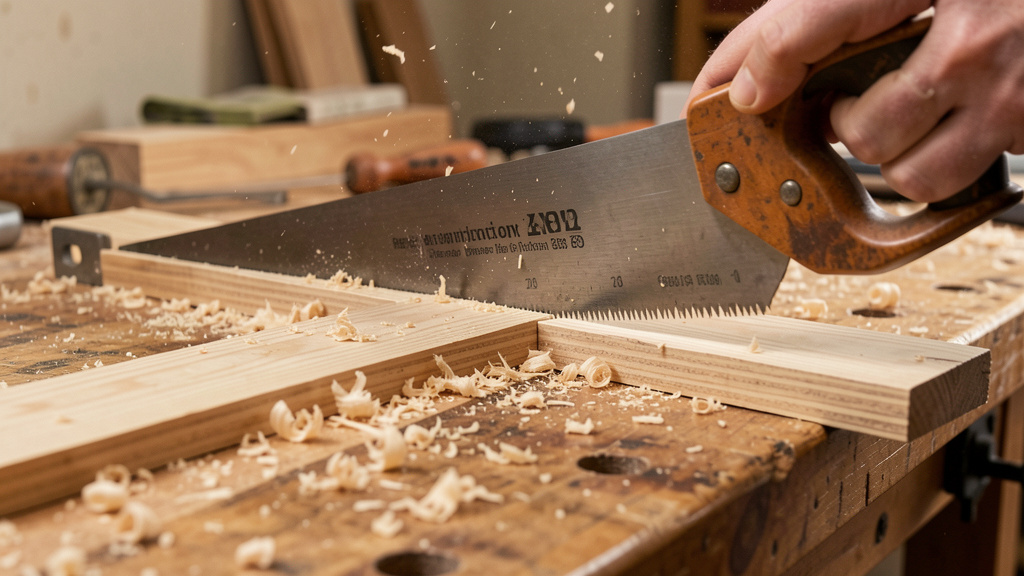
Develop Reliable Cutting Skills Through Intentional Practice—From Workshop Fundamentals to Project-Ready Execution
Every woodworking project begins with a single cut. Whether you’re trimming a shelf, assembling cabinetry, or crafting a picture frame, the quality of that cut influences structural integrity, visual appeal, and your confidence moving forward. This guide offers a clear, adaptable system for approaching saw work with awareness and care. You’ll learn how to assess materials, select appropriate tools, apply foundational techniques, and troubleshoot common challenges—without overpromising perfection or relying on unverified claims. Progress emerges through mindful repetition, not shortcuts. Let this resource support your journey toward consistent, capable craftsmanship.
Introduction
Woodworking invites dialogue between intention and material. Each cut reflects choices made before the blade meets wood: how you measured, secured the piece, selected your tool, and positioned your body. Across workshops worldwide—from urban apartments to dedicated studios—woodworkers share the universal goal of translating plans into tangible results with accuracy and safety.
This guide synthesizes widely accepted principles from woodworking pedagogy, material science, and safety standards published by occupational safety bodies and woodworking associations. Techniques described align with established best practices for hand and power tool use, emphasizing that safety and precision reinforce one another. Whether you’re using a vintage handsaw or a modern power tool, core concepts remain consistent. Mastery grows not from tool ownership, but from deliberate attention to process. As you read, consider how these ideas might integrate into your existing workflow.
The Precision Cutting Framework: Prepare, Execute, Verify
Adopting a consistent three-phase approach transforms cutting from reactive motion into intentional practice. This framework applies universally across cut types and tools. Skipping preparation invites error; rushing execution compromises safety; neglecting verification misses learning opportunities.
Phase 1: Prepare – Laying the Groundwork
Preparation forms the foundation of reliable results. Invest time here to reduce frustration later.
Material Assessment: Examine your workpiece for knots, cracks, warping, or irregular grain. Hard knots may deflect blades; hidden stresses can cause binding. Note the wood species—dense hardwoods (oak, maple) typically require sharper blades and slower feed rates than softwoods (pine, cedar). For sheet goods like plywood or MDF, identify the show face (the side visible in the final piece), as cutting technique affects surface quality. Hold the board to light to check for subtle warping; run your hand along edges to detect twists.
Why this matters: Assessing material prevents mid-cut surprises. A knot encountered unexpectedly may cause a hand saw to jump or a power blade to bind. Thirty seconds of inspection saves minutes of correction and supports safer operation.
Marking and Measuring: Use a sharp pencil (0.5mm mechanical) or marking knife to define cut lines. A knife scores fibers, reducing tear-out on the show face. Follow the spirit of “measure twice, cut once”—verify critical dimensions from multiple reference points. Use a combination square for crosscuts, marking gauge for dados, and bevel gauge for angles. Extend lines fully around visible faces so you can track alignment from different angles during the cut.
Common refinement: On dark woods where pencil fades, use white chalk pencil or fine masking tape with markings. For joinery requiring tight tolerances, scribe lines with a knife to create a physical guide for saw teeth.
Workpiece Security: Secure material firmly before cutting. For hand sawing, clamp to a bench hook or sawhorse with waste extending beyond support. For power tools, use quality clamps, toggle clamps, or vises—ensuring hardware doesn’t obstruct the blade path. When cutting large sheets, support both sides of the cut line with sawhorses, roller stands, or sacrificial-topped supports to prevent sagging.
Safety consideration: Maintain safe hand placement. If your hand rests where a slip could contact the blade path, reposition or add clamping. Use push sticks, featherboards, or jigs for small pieces (<6 inches). Workshop safety resources consistently note inadequate workholding as a frequent factor in incidents.
Tool Readiness: Confirm your saw suits the task and is in good condition. For hand saws, check blade straightness and sharpness (teeth should engage cleanly without excessive force). For power tools, inspect blades for damage, verify safety features (blade guard, riving knife), and ensure dust ports are clear. Set blade depth appropriately: for circular saws, extend teeth ~1/4″ below workpiece thickness; for table saw non-through cuts, set precisely to required depth.
Practical habit: Keep a laminated setup checklist near frequently used tools. Example for table saw: fence parallel to blade? Miter gauge calibrated? Blade height set? Riving knife installed? Dust collection connected? This ritual builds consistency and reinforces safety awareness.
Phase 2: Execute – Mindful Movement
Execution demands presence. Distractions compromise precision and safety. Focus on controlled motion, not speed.
Body Positioning: Stand with feet shoulder-width apart, knees slightly bent. This stable stance supports balance and reduces fatigue. Align shoulders and arms with the intended cut path for hand saws. For power tools, position yourself to see the cut line clearly without leaning over the blade. Ensure lighting eliminates shadows across your work area—a clip-on LED task light often helps. Maintain clear space behind blade paths (especially table saws) to allow safe movement if kickback occurs.
Initiating the Cut: For hand saws, begin with light, short strokes (2–3″) to establish a kerf. Rest your non-cutting thumb alongside the blade (not on teeth) to guide initial motion. For power tools, allow the blade to reach full speed before contacting wood. Ease the blade into the cut smoothly, following your marked line. Never force the tool—let the teeth do the work. Forcing increases deflection, heat, and kickback risk. Use push sticks before hands approach the final 6″ of a table saw cut.
Maintaining the Cut: Keep eyes focused on the cut line ahead of the blade. Peripheral vision tracks blade position. Use fences, straightedges, or calibrated guides for straight cuts. For curves (bandsaw, jigsaw), rotate the workpiece smoothly against a stationary blade. Listen to the cut: a steady hum indicates proper feed; a high-pitched whine suggests slow feed (risk of burning); a labored groan means excessive pressure. Adjust pressure gently to maintain consistent sound and motion.
Guiding Insight: Precision emerges from controlled, intentional movement—not rigidity. Small shifts in grip, posture, or attention can alter the cut. Breathe steadily. Trust your preparation.
Completing the Cut: Support the waste section as you near completion to prevent premature tearing or binding. Slow hand-saw strokes slightly on final passes. For power tools, maintain steady pressure until the blade exits cleanly. Never reach under or behind a moving blade. Wait for full stop before handling pieces. On table saws, never pull work backward through the blade—complete cuts forward, then power down.
Phase 3: Verify – Learning Through Observation
Verification closes the loop, turning each cut into a learning step.
Immediate Inspection: Join cut pieces. Do edges meet smoothly? Check for tear-out, burn marks, or deviation using a precision square (not framing square) for angles. For miters, use a dedicated miter square or digital protractor. Run a fingernail lightly across the edge—if it catches noticeably, refinement may be needed.
Reflective Adjustment: If results differ from expectations, observe without judgment. Was the blade dull? Was support inadequate? Did feed rate vary? Briefly note observations in a workshop journal: “Pine board, crosscut on miter saw—minor tear-out on bottom face. Applied tape to exit side next time; improved.” Over time, this builds personalized insight beyond generic advice.
Tool Care Ritual: After verification, clear sawdust from tools. Wipe hand-saw blades with a lightly oiled cloth to deter rust. For power tools, brush debris from tables, fences, and mechanisms (avoid compressed air near electronics). Clean pitch buildup with blade cleaner or baking soda paste. Schedule deeper maintenance monthly: check bandsaw tension, lubricate miter saw rails, verify fence alignment. Well-maintained tools perform more predictably and safely.
This Prepare-Execute-Verify cycle builds reliable habits across tools and projects. Now, let’s apply it to specific cut types.
Essential Cut Types: Techniques, Tools, and Contextual Adjustments
Crosscut: Cutting Across the Grain
Purpose: Severing wood perpendicular to grain—sizing boards, trimming components, preparing joints. Clean crosscuts prevent assembly gaps.
Tool Options:
– Hand: Crosscut backsaw, Japanese dozuki (pull-stroke precision)
– Power: Compound miter saw (accuracy), table saw with crosscut sled (repeatability), circular saw with straightedge guide (portability)
Technique Highlights (Miter Saw Example):
1. Prepare: Verify fence alignment with precision square. Mark cut line clearly. Position show face toward fence (miter saw) or down (table saw crosscut sled) to minimize visible tear-out. Clamp small or unstable pieces.
2. Execute: Start saw, wait for full speed. Lower blade smoothly while keeping workpiece flat against fence and table. Support long stock beyond the table.
3. Verify: Check squareness with machinist’s square. Inspect exit side for tear-out. Measure cut length at multiple points.
Adapting to Conditions:
– Material: For veneered plywood or melamine, use fine-tooth blade (80+ teeth) and apply low-tack tape along the exit-side cut line.
– Environment: In low-humidity conditions (winter workshops), wood may be more brittle—reduce feed pressure slightly to minimize splintering.
– Constraint: No miter saw? Use circular saw with straightedge guide clamped firmly. Score cut line first with utility knife to reduce tear-out on show face.
Troubleshooting:
– Tear-out on exit side: Apply painter’s tape to exit face before cutting; use sacrificial backer board clamped behind workpiece.
– Cut not square: Recalibrate saw using precision square; ensure workpiece stays firmly against fence throughout cut.
– Burning: Clean blade (pitch buildup increases friction); slightly increase feed rate while maintaining control; confirm blade sharpness.
Rip Cut: Cutting With the Grain
Purpose: Resizing board width—preparing stock for tabletops, cabinet sides, shelving. Requires attention to binding risks.
Tool Options:
– Hand: Rip panel saw
– Power: Table saw (accuracy/stability), circular saw with straightedge guide (sheet goods), bandsaw (resawing thick stock)
Technique Highlights (Table Saw Focus):
1. Prepare: Install rip-specific blade (24–40 teeth, flat-top grind). Confirm fence parallel to blade using the five-cut method. Position show face down to place tear-out on hidden surface. Install riving knife if compatible with your saw model.
2. Execute: Stand left of blade path (right-handed operation). Use push stick/block—hands stay behind blade. Maintain even pressure against fence and downward on board. Support outfeed with roller stand for long boards.
3. Verify: Check edge straightness against straightedge. Measure width at start, middle, end. Feel for roughness or burning.
Critical Safety Note:
A riving knife (or splitter) significantly reduces kickback risk by preventing the kerf from closing behind the blade. Consult your saw manual—many modern cabinet saws support riving knives even during tilted cuts. If your saw lacks this feature, prioritize alternative methods (e.g., circular saw with guide) for rip cuts, especially on narrow stock. Safety organizations emphasize riving knife use as a key preventive measure.
Adapting to Conditions:
– Material: Dense hardwoods require slower, deliberate feed. Softwoods cut faster but are prone to tear-out—use sharp blade and support exit side.
– Seasonal Note: Wood expands across grain in high humidity. For critical width cuts (e.g., drawer parts), allow slight clearance (~0.005″) if assembling in dry conditions for use in humid environments.
– Constraint: Limited table saw access? Circular saw with straightedge guide offers reliable alternative. Clamp guide securely; cut on waste side of line.
Troubleshooting:
– Tapered cut (wider at one end): Re-check fence alignment; use featherboard clamped before blade to maintain consistent fence contact.
– Binding/kickback sensation: Stop immediately. Power down. Verify riving knife is installed, fence is parallel, and stock is fully supported. Never force a binding cut.
– Excessive tear-out: Ensure blade is sharp and clean; position show face down; for plywood, use fine-tooth blade designed for sheet goods.
Miter Cut: Angled Cuts in a Single Plane
Purpose: Joining pieces at corners—frames, molding, trim. Precision is critical; small angle errors compound visibly.
Tool Options:
– Hand: Backsaw in precision miter box
– Power: Compound miter saw (efficiency), table saw with crosscut sled (accuracy for wide stock)
Technique Highlights:
1. Prepare: Set angle using saw scale, then verify with digital protractor or precision square. Mark waste side clearly. Clamp small pieces. For crown molding, position in “nested” orientation per saw manual.
2. Execute: Start saw, reach full speed. Lower blade smoothly while keeping workpiece flat against fence/table. Support long stock beyond saw table.
3. Verify: Dry-fit pieces. Hold joint to light—gaps become visible. Check angle with miter square.
The Mirror Test (No Special Tools):
Place two cut pieces face-to-face on a flat surface. If miters are accurate, the assembly stands steadily. Gap at top (toe)? Angle too open. Gap at bottom (heel)? Angle too closed. Adjust saw incrementally and retest.
Adapting to Conditions:
– Imperfect Walls: For crown molding on non-square walls, use back-cutting: after primary miter, make a shallow secondary cut (1–2°) on the wall-contact edge’s back face. This invisible relief allows molding to seat flush. Practice on scrap first.
– Material: Delicate moldings benefit from fine-tooth blade (80+ teeth) and painter’s tape along cut line.
– Constraint: No power miter saw? Use miter box with backsaw for small stock. Clamp work securely; follow box slots precisely.
Troubleshooting:
– Inconsistent angles across multiple pieces: Use stop block clamped to fence for identical positioning.
– Tear-out on molding profile: Apply tape to show face; cut slowly with sharp blade; use zero-clearance fence insert if available.
– Saw scale inaccuracy: Calibrate stops using precision square; create reference chart taped to saw for verified angles.
Bevel Cut: Angling Through Thickness
Purpose: Creating chamfers (softening edges), beveled panels, or joint preparations. Changes edge profile vertically.
Tool Options:
– Hand: Block plane (refinement after sawing)
– Power: Table saw (tilted blade for long edges), compound miter saw (end bevels), router with chamfer bit (repeatable profiles)
Technique Highlights (Table Saw):
1. Prepare: Tilt blade to target angle. Verify angle with digital gauge on blade teeth—saw scales vary. Set fence for bevel width. Position show face down. Confirm riving knife compatibility per manual.
2. Execute: Use push stick designed for tilted blades. Maintain downward pressure and fence contact. For narrow stock, attach securely to wider carrier board.
3. Verify: Check angle with bevel gauge. Run fingernail along edge—should feel uniform. Measure width at intervals.
Safety Consideration:
Blade tilt direction affects binding risk. Tilting blade away from fence (leaning toward fence side) often provides safer clearance on many table saws—but always consult your specific manual. Increased blade exposure demands heightened focus on workholding and hand placement.
Adapting to Conditions:
– Material: Plywood edges prone to chipping—use sharp fine-tooth blade; apply tape to exit side; consider making cut slightly proud and refining with block plane.
– Constraint: No table saw tilt capability? Router with chamfer bit offers controlled alternative for edge bevels. Use edge guide for consistency.
– Refinement: For durable crisp edges (e.g., picture frames), add a micro-bevel (1–2°) on the arris (sharp corner) using a block plane after sawing. Prevents chipping during handling.
Compound Cut: Miter + Bevel Combined
Purpose: Crown molding, compound frames, angled structural elements. Requires visualizing dual angles.
Tool Options:
– Power: Sliding compound miter saw (optimal), compound miter saw (narrow stock)
Technique Highlights (Crown Molding):
1. Prepare: Determine molding’s spring angle (typically 38°/52° or 45°/45°—measure with bevel gauge; don’t rely solely on packaging). Consult angle chart for your saw model. Cut test pieces on scrap of identical profile/material. Position molding nested (upside down against fence).
2. Execute: Start saw, reach full speed. Lower blade smoothly. Support long pieces.
3. Verify: Dry-fit test pieces in the actual corner. Observe gaps under good light.
Scrap Test Ritual:
Never cut final pieces first. Analyze test-fit gaps:
– Gap at ceiling? Slightly increase bevel angle.
– Gap at wall? Slightly decrease bevel angle.
– Gap at miter heel (inside)? Adjust miter angle.
– Gap at miter toe (outside)? Adjust miter angle opposite direction.
Make micro-adjustments; retest. Document successful settings for future reference.
Adapting to Conditions:
– Imperfect Corners: Coping joints often outperform miters for inside corners on baseboard or crown. Cut one piece square. Cut second piece at miter angle, then use coping saw to trace the profile backward. The coped piece fits over the square piece, hiding wall inconsistencies. Requires practice—start with scrap.
– Constraint: Limited saw capability? For non-critical projects, cope all inside corners. It’s more forgiving of wall irregularities than perfect compound miters.
Dado and Groove Cuts: Channels for Joinery
Purpose: Dado (across grain), groove (with grain)—for shelves, drawer bottoms, panel inserts. Precision ensures tight, strong joints.
Tool Options:
– Hand: Dado plane, chisels
– Power: Table saw with dado stack (efficiency), router with straight bit + guide/router table (versatility, especially stopped dados)
Technique Highlights (Table Saw Dado Stack):
1. Prepare: Confirm saw is rated for dado stack (check manual). Install stack per manufacturer specs. Use sacrificial fence face (screw scrap plywood to fence) to protect main fence and provide zero-clearance support. Mark start/stop points clearly. For stopped dados: Use router table with start/stop blocks—do not attempt freehand stopped cuts on table saw.
2. Execute: Make multiple shallow passes to final depth. Feed steadily against fence. Use push sticks designed for wide cuts.
3. Verify: Test-fit mating piece. Should require light hand pressure—no hammering. Check depth consistency with calipers.
Critical Safety Note:
Dado stacks remove significant material. Verify your saw’s arbor length, power rating (typically 3+ HP recommended), and riving knife compatibility before installation. If riving knife cannot be used (common on contractor saws), prioritize router methods for stopped dados. Safety demands respect for tool limitations.
Adapting to Conditions:
– Wood Movement: Solid wood expands/contracts across grain with humidity shifts. For dados in solid wood sides (e.g., bookcase), allow ~0.005″ clearance in width to prevent seasonal binding. Plywood is more stable—tighter fits often acceptable.
– Material: Plywood tear-out at dado ends—clamp sacrificial backer board behind workpiece; drill small relief holes at start/stop points before routing.
– Constraint: No dado stack? Router with straight bit and edge guide works well. Make multiple shallow passes. Use template and pattern bit for repeated dados.
Pro Insight: In frame-and-panel doors, a half-depth groove (cut halfway through stile thickness) increases glue surface and backing strength versus full-depth groove. Requires precise depth control—best executed on router table with calibrated stop.
Rabbet Cut: Stepped Edges for Assembly
Purpose: Joining cabinet backs, picture frame glazing rabbets, drawer construction. Adds mechanical strength and alignment.
Tool Options:
– Hand: Rabbet plane, shoulder plane
– Power: Table saw (edge rabbets), router with straight bit + edge guide/router table (versatility)
Technique Highlights (Table Saw):
1. Prepare: Set blade height to rabbet depth. Set fence to rabbet width. Attach sacrificial fence face. For end rabbets: Use crosscut sled or miter gauge—never fence alone (creates dangerous pinch point).
2. Execute: Run board edge against fence. For wide rabbets, make incremental passes. Use appropriate push sticks.
3. Verify: Check depth/width with calipers or combination square. Test-fit mating piece. Shoulder should feel crisp.
Zero-Clearance Sacrificial Fence:
Screw 1/4″ plywood/MDF tightly to rip fence, extending past blade path. Cut into sacrificial material—this supports fibers to the cut line, minimizing tear-out. Replace when worn. A simple, high-impact workshop upgrade.
Adapting to Conditions:
– Material: Plywood rabbets—position show face down on table saw; clean shoulder with sharp chisel or shoulder plane after cutting.
– Constraint: Limited tools? Chisels and shoulder plane can cut rabbets by hand. Mark depth/width precisely; pare carefully to lines. Time-intensive but effective.
– Pro Technique: For cabinet carcasses, cut matching rabbets on side panel and back panel edges. They interlock for perfect alignment and increased glue surface—eliminates clamping during initial assembly. Calculate dimensions precisely; test on scrap.
Curved and Irregular Cuts: Beyond Straight Lines
Purpose: Arches, organic shapes, scrollwork, ergonomic elements. Requires tool control and patience.
Tool Options:
– Hand: Coping saw (medium curves), fret saw (tight curves)
– Power: Bandsaw (external curves, resawing), jigsaw (interior cutouts, moderate curves), scrollsaw (intricate detail)
Technique Highlights (Bandsaw External Curve):
1. Prepare: Select blade width: narrow (1/8″–1/4″) for tight curves; wider (1/2″–3/4″) for gentle curves/stability. Set proper tension per manual. Mark curve clearly. For interior cutouts, drill starter hole > blade width.
2. Execute: Start saw, reach speed. Feed wood steadily, rotating smoothly to follow line. Keep hands clear of blade path. For tight curves, make relief cuts (straight cuts into waste perpendicular to curve) to reduce blade stress.
3. Verify: Sand/file carefully to final line. Check against template. Assess smoothness.
Blade Selection Guidance:
– Teeth Per Inch (TPI): Coarse (3–6 TPI) for thick stock (>1.5″) to clear sawdust; fine (10–14 TPI) for thin stock (<3/4″) or smooth curves.
– Tooth Style: Skip-tooth reduces clogging in softwoods; hook-tooth cuts fast but rougher (good for resawing); standard tooth balances speed/smoothness.
– Radius Rule: Minimum curve radius ≈ 3x blade width (e.g., 1/4″ blade handles ~3/4″ radius). Consult blade charts.
Adapting to Conditions:
– Material: Dense hardwoods require slower feed on curves to prevent burning. Softwoods cut faster but may splinter—use finer blade.
– Constraint: No bandsaw? Jigsaw with fine-tooth blade works for moderate curves. Clamp work securely; use relief cuts for tight turns.
– Pro Method: For multiple identical curves (chair legs, decorative elements):
1. Create master template from 1/4″ hardboard/MDF.
2. Attach template to workpiece (double-sided tape/screws in waste).
3. Rough-cut on bandsaw/jigsaw ~1/16″ outside template.
4. Trim precisely with router and pattern bit guided by template.
Yields consistent, professional results.
Saw and Blade Selection: Context-Aware Guidance
Choosing tools based on your project, space, and constraints reduces frustration. Blade selection is equally vital—wrong blade guarantees poor results.
| Cut Type | Hand Tool Option | Power Tool Priority | Budget-Conscious Path | Constraint Adaptation |
|---|---|---|---|---|
| Crosscut | Japanese pull saw | Compound miter saw | Circular saw + straightedge | Handsaw + miter box (small stock) |
| Rip Cut | Rip panel saw | Table saw | Circular saw + straightedge | Careful handsaw rip (patience req.) |
| Miter | Backsaw + miter box | Sliding compound miter | Jigsaw + angle jig | Coping saw (small frames) |
| Bevel | Block plane (refine) | Table saw (tilted) | Router + chamfer bit | Sanding block (last resort) |
| Compound Miter | Coping saw (cope joint) | Sliding compound miter | Jigsaw + careful freehand | Cope inside corners; avoid compound |
| Dado/Groove | Dado plane | Router table | Router + straightedge | Chisels (small dados) |
| Rabbet | Rabbet plane | Router table | Router + edge guide | Chisels + shoulder plane |
| Curve (Ext.) | Coping saw | Bandsaw | Jigsaw | Fret saw (tight curves) |
| Curve (Int.) | Fret saw | Jigsaw / Scrollsaw | Drill + coping saw | Keyhole saw (rough only) |
Material-Specific Considerations:
– Hardwoods (Oak, Maple, Walnut): Require sharp carbide blades. Use slower, deliberate feed. Dull blades cause burning. Match tooth geometry: FTG for ripping, Hi-ATB for crosscutting.
– Softwoods (Pine, Cedar, Fir): Cut easily but prone to tear-out. Use higher-tooth-count blades (60+ for crosscuts). Clean resin buildup regularly. Light sanding (180-grit) often removes surface fuzz.
– Sheet Goods (Plywood, MDF): Use fine-tooth blades (80+ TPI, ATB/Hi-ATB). Support fully on both sides of cut. For plywood: show face down on table saw (tear-out on bottom), up on circular saw (blade exits downward). MDF is abrasive—expect shorter blade life; wear respirator (dust hazard).
– Plastics (Acrylic, PVC): Use fine, evenly spaced teeth blades designed for plastic. Reduce feed rate significantly. Never use wood blades on metal—specialized blades required. Always test on scrap.
Workshop Context Guidance:
– Apartment / Limited Space: Prioritize versatility. Japanese pull saw (handles cross/rip well) + cordless jigsaw form a capable core. Add compact circular saw later. Focus on hand-tool skills—they build foundational understanding with minimal footprint. A sturdy clamping surface matters more than tool quantity.
– Garage Workshop / Hobbyist: Sliding compound miter saw (crosscuts, miters, bevels) + 14″ bandsaw (curves, resawing) cover most needs. Supplement with quality circular saw for sheet goods. Router becomes essential for dados, rabbets, edge work.
– Dedicated Woodshop: Cabinet-grade table saw is central. Pair with sliding compound miter saw, 18″ bandsaw, scrollsaw. Router table system unlocks advanced joinery. Prioritize dust collection—health is non-negotiable. Invest in core tools you’ll use daily; quality impacts precision, safety, and long-term satisfaction.
Safety: Integrated Practices for Sustainable Workshop Habits
Safety isn’t a separate step—it’s woven into preparation, execution, and verification. These protocols address often-overlooked factors.
Hearing Protection:
Power saws routinely exceed 100 dB. OSHA notes hearing damage risk after 15 minutes at this level. Damage is cumulative and irreversible. Minimum: foam earplugs (NRR 25–33 dB). For extended sessions: high-fidelity musician’s plugs (preserve speech clarity) or electronic muffs (amplify quiet sounds, suppress loud impulses). Make it ritual: Verify protection is secure before powering any tool. Keep spares at each workstation.
Respiratory Protection:
Wood dust—especially from hardwoods and MDF—is a recognized respiratory irritant and potential carcinogen (per NIOSH/OSHA). A simple paper mask is insufficient for fine particulates. For occasional work: NIOSH-approved N95 respirator with replaceable filters. For frequent use: integrate source-point dust collection (HEPA shop vacuum connected directly to tool dust port). Position nozzles close to cutting action. If you see airborne dust, you’re breathing it. Clear air reflects effective collection, not absence of hazard.
Hand Tool Stability (Three-Point Rule):
When handsawing, maintain three secure contact points: both hands on saw handle + workpiece firmly clamped or held in bench hook. This triangulation prevents lateral slips. For small pieces, always use a bench hook with stop block—never hold in hand. Workshop injury data consistently links hand injuries during hand sawing to inadequate workholding.
Power Tool Response Protocols:
– Blade binds/stalls: Release feed pressure immediately. Turn off power. Wait for full stop. Then assess. Never force a bound blade.
– Kickback occurs: Step clear. Do not attempt to catch ejected material. Ensure “kickback zone” behind blade path is always clear of obstacles, tools, people. Inspect tool thoroughly before reuse.
– Injury occurs: Apply direct pressure with clean cloth. Elevate if possible. Seek medical evaluation promptly—even small cuts near tendons require professional assessment. Keep well-stocked first-aid kit accessible. Know nearest emergency facility location.
Workshop Ergonomics:
Position primary tools at height allowing neutral spine (elbows ~90°, shoulders relaxed). Anti-fatigue mats reduce standing fatigue. Take breaks every 30–45 minutes during intensive sessions. Stretch hands, wrists, shoulders. Hydrate. Recognize fatigue signs: rushing, skipped safety steps, decreased focus. Stop work when tired. A rested mind and body are your most vital safety assets.
Troubleshooting Guide: Diagnosing Common Cutting Challenges
Systematic diagnosis turns frustration into learning.
Tear-Out on Exit Side
Likely Causes: Dull blade, incorrect tooth geometry, insufficient exit support, grain direction.
Solutions:
1. Sharpen/replace blade (most common fix).
2. Match blade to task: ATB (60+ teeth) for crosscuts; fine Hi-ATB/TCG (80+ teeth) for plywood.
3. Apply low-tack tape along exit-side cut line.
4. Clamp sacrificial backer board behind workpiece.
5. For table saw crosscuts: position show face down; for circular saw: show face up.
Prevention: Note grain direction. Plan cuts so blade exits with the grain where feasible.
Burn Marks on Cut Edge
Likely Causes: Slow feed rate, pitch buildup, dull blade, misalignment, poor dust extraction.
Solutions:
1. Clean blade thoroughly (commercial cleaner or baking soda paste).
2. Slightly increase feed rate while maintaining control—listen for consistent hum.
3. Sharpen/replace blade.
4. Verify fence alignment (table saw five-cut method); ensure base is level (miter saw).
5. Clear sawdust from kerf path; confirm dust collection is active.
Prevention: Clean blades monthly. Monitor feed rate by sound. Keep alignment tools handy.
Cut Not Straight or Square
Likely Causes: Insecure workpiece, fence misalignment, blade not perpendicular, warped stock.
Solutions:
1. Secure workpiece firmly (clamps, featherboards, bench hook).
2. Calibrate tool: verify 90°/45° stops with precision square.
3. Check blade-to-table/fence alignment.
4. Practice guiding on scrap of same thickness.
5. Select flatter stock; for cupped boards, place concave side down on table saw.
Prevention: Make calibration part of monthly maintenance. Always test-cut on scrap.
Blade Binding or Kickback Sensation
Likely Causes: Kerf closing (wood stress), fence misalignment, missing riving knife, inadequate support.
Solutions:
1. Always use riving knife/splitter for rip cuts where compatible.
2. Re-check fence alignment meticulously.
3. Support workpiece fully on both sides of blade.
4. For stressed/warped wood, avoid problematic sections or make relief cuts.
Safety Priority: If binding occurs, stop immediately. Power down. Assess calmly. Kickback is preventable through setup diligence.
Excessive Vibration or Unusual Noise
Likely Causes: Damaged blade, loose arbor nut, unstable base, incorrect bandsaw tension.
Solutions:
1. Inspect blade for bends, chips, missing teeth—replace if flawed.
2. Tighten arbor nut to manufacturer spec.
3. Ensure saw sits on solid, level surface (anti-fatigue mat helps).
4. For bandsaws: verify tension and wheel alignment per manual.
5. If vibration persists, consult technician—do not operate.
Prevention: Handle blades carefully during changes. Store properly. Follow maintenance schedule.
Project Applications: Integrating Cuts into Real Work
Seeing techniques applied builds contextual understanding.
Project: Wall-Mounted Bookshelf (Plywood Construction)
Goal: Sturdy, functional shelf with clean lines.
Key Cuts & Decisions:
– Rip cuts: Resize plywood sides/shelves to width. Precision ensures vertical alignment.
– Crosscuts: Cut sides/shelves to final dimensions. Squareness critical for assembly.
– Dados: Cut 3/8″-deep dados in sides for shelves. Why dados? Superior strength and alignment vs. screws alone.
Execution Notes:
1. Test dado fit on scrap plywood first. Adjust width for snug (not tight) fit.
2. Use router with straight bit + edge guide (or table saw with sacrificial fence).
3. Mark dado locations precisely; use stop block for consistent positioning.
4. Dry-assemble entire unit. Check square via diagonal measurements (equal = square).
5. Sand edges before final assembly. Apply glue to dados for permanent strength.
Adaptation Tip: In humid climates, allow slight dado clearance (~0.005″) to accommodate seasonal plywood movement. For apartment workshops, circular saw + straightedge guide handles all cuts—clamp guide securely, support sheet fully.
Project: Solid Wood Picture Frame
Goal: Custom frame with tight miter joints and secure rabbet for artwork.
Key Cuts & Decisions:
– Miter cuts: Four pieces at precise 45° angles. Accuracy prevents visible gaps.
– Rabbets: Cut along inner back edge of each piece to hold glass/mat/artwork.
– Reinforcement: Splines or V-nails strengthen miter joints.
Execution Notes:
1. Use stop block on miter saw fence for identical piece lengths.
2. Verify miter accuracy with Mirror Test before cutting final stock.
3. Cut rabbets after miters are cut, using router with straight bit and edge guide.
4. Dry-fit entire frame. Check corners under bright light for gaps.
5. Reinforce miters: glue splines into slots cut across joints, or use V-nails.
Adaptation Tip: For imperfect wall corners (if hanging frame), slightly back-cut the outer edge of miters (1–2°) to ensure flush wall contact. On limited budgets, cope inside corners of base molding instead of perfecting compound miters—more forgiving of wall inconsistencies.
Your Questions, Answered
Q: How do I prevent tear-out when cutting plywood on a table saw?
A: Position the show face down (tear-out occurs on bottom/exist side). Use a sharp, fine-tooth blade (80+ teeth) designed for sheet goods. Install a zero-clearance throat insert. Apply low-tack painter’s tape along the cut line on the bottom face. Support the sheet fully on both sides of the cut to minimize vibration.
Q: My miter saw cuts aren’t square. How do I calibrate it?
A: First, unplug the saw. Use a high-quality machinist’s square (not framing square). Place the square against the fence and lower the blade until teeth touch the square’s blade. Adjust the fence per your saw’s manual until the blade aligns perfectly with the square along its full height. Verify at multiple points. Re-check periodically, especially after transport.
Q: Is a riving knife really necessary on a table saw?
A: For standard rip cuts, yes—where compatible with your saw model. A riving knife maintains kerf separation behind the blade, significantly reducing kickback risk caused by wood pinching the blade. Safety organizations consistently cite its use as a critical preventive measure. Consult your manual; if your saw lacks one, prioritize alternative methods (e.g., circular saw with guide) for rip cuts, especially on narrow stock.
Q: What’s the difference between a dado and a groove?
A: Both are U-shaped channels. A dado runs across the wood grain (e.g., shelf slot in bookcase side). A groove runs with the grain (e.g., panel groove in frame-and-panel door stile). Cutting techniques differ slightly due to grain direction, but tools (router, table saw) are similar.
Q: How do I choose the right bandsaw blade for curves?
A: Blade width determines minimum curve radius: narrower blades cut tighter curves (e.g., 1/8″ blade handles ~3/8″ radius). Blade teeth per inch (TPI) affects finish: finer TPI (10–14) for thin stock/smooth curves; coarser TPI (3–6) for thick stock to clear sawdust. Always check manufacturer charts. Ensure proper tension—too loose causes drift; too tight stresses welds.
Q: Can I cut metal or plastic with my woodworking saw?
A: Not without significant risk and tool damage. Wood blades lack geometry and tooth count for non-wood materials. Metal requires specialized abrasive or metal-cutting blades (and often different tools entirely). Plastics need fine-tooth blades designed for plastic to prevent melting/chipping. Always verify blade compatibility with material—and test on scrap first. When in doubt, consult blade manufacturer guidelines.
Q: How often should I sharpen or replace saw blades?
A: There’s no fixed timeline—it depends on material, usage, and blade quality. Signs it’s time: increased burning, rougher cuts, needing more force, visible pitch buildup. Clean blades regularly (baking soda paste works well). For frequent users, professional sharpening every 6–12 months is common. Carbide-tipped blades can be sharpened multiple times; replace when teeth are chipped or worn below carbide layer.
Q: What’s the safest way to cut small pieces?
A: Never cut freehand. For power tools: use a dedicated jig, sled, or auxiliary fence that keeps hands clear. Attach small workpieces securely to a larger carrier board with double-sided tape or screws (in waste areas). For hand tools: use a bench hook with stop block—clamp the hook, not the small piece. If a piece is too small to secure safely, reconsider the design or method.
Q: Does wood humidity affect my cuts?
A: Indirectly, yes. Wood expands across the grain in high humidity, contracts in low humidity. This primarily impacts joinery fit (e.g., a tight dado in dry winter may bind in humid summer). For critical solid-wood joints, allow slight clearance (~0.005″). Plywood and MDF are more dimensionally stable. Store project wood in your workshop for several days before cutting to acclimate.
Q: I’m a beginner with limited tools. Where should I start?
A: Master one versatile tool deeply before expanding. A quality Japanese pull saw (handles crosscuts and rips well) paired with a sturdy clamping surface builds foundational skills with minimal investment. Focus on material assessment, precise marking, and secure workholding—these matter more than tool complexity. Practice on inexpensive pine scraps. Progress to a cordless jigsaw for curves, then circular saw with straightedge guide for sheet goods. Skill develops through intentional repetition, not tool quantity.
Conclusion: Your Path Forward
Recap of Core Principles:
1. Prepare thoroughly: Material assessment, precise marking, secure workholding, and tool readiness prevent most errors.
2. Execute mindfully: Controlled movement, proper body position, and listening to the cut yield safer, more accurate results.
3. Verify intentionally: Inspection and reflection turn each project into cumulative learning.
The 24-Hour Action Step:
Within the next day, select one technique from this guide to apply deliberately. Perhaps:
– Use a marking knife to score your next crosscut line.
– Install a sacrificial fence face on your table saw or router.
– Perform the Mirror Test on two scrap pieces before cutting a miter.
Notice the difference. Small, consistent actions build lasting skill.
The Broader Perspective:
Woodworking is a practice of patience and presence. Each cut teaches something—about the material, the tool, and yourself. There are no flawless woodworkers, only those committed to thoughtful progress. Embrace imperfections as learning points. Share insights with others. Prioritize safety not as restriction, but as respect—for yourself, your materials, and the craft. Your journey continues with the next board, the next cut, the next project.
Explore Further Learning:
Understanding Wood Grain and Movement | Workshop Lighting and Layout Essentials | Hand Tool Fundamentals for Modern Woodworkers | Dust Collection Systems for Home Shops | Joinery Deep Dive: Dovetails, Mortise-and-Tenon, and Beyond | Finishing Techniques for Durability and Beauty | Sustainable Material Sourcing for Woodworkers