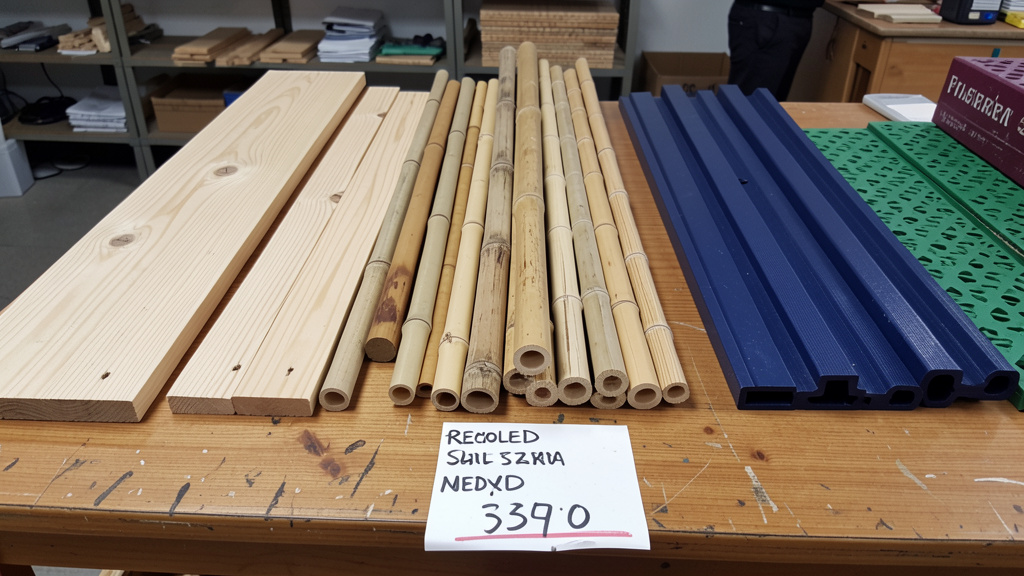
Move beyond generic lists. Apply a structured, adaptable approach to selecting material swaps that align with your project’s unique constraints, environment, and long-term goals—without compromising safety, value, or peace of mind.
Choosing home materials can feel overwhelming. Marketing claims clash with online reviews; budget pressures compete with durability concerns; sustainability ideals meet real-world installation limits. This guide offers a clear, repeatable framework to evaluate alternatives across eight critical home areas—from countertops to roofing—grounded in building science principles, material performance patterns, and contextual decision logic. Whether renovating a kitchen, updating siding, or planning a deck, you’ll learn to match materials to your specific conditions, not someone else’s ideal scenario. No hype. No absolutes. Just actionable insight to support confident, resilient choices.
Introduction
Every material decision exists within a web of interconnected factors: climate exposure, usage intensity, budget boundaries, maintenance capacity, aesthetic priorities, and local building practices. Popular “top alternatives” articles often isolate materials from this reality, presenting bamboo flooring or recycled glass countertops as universally optimal—ignoring how humidity, subfloor conditions, or regional code requirements dramatically alter outcomes. True material intelligence emerges when choices are evaluated within context, not in isolation.
This resource synthesizes widely accepted building science principles, material testing standards (including ASTM, ISO, and ICC evaluation frameworks), lifecycle assessment patterns, and documented field performance across diverse environments. Guidance is presented observationally—reflecting recurring patterns documented in industry publications, manufacturer technical bulletins, and post-installation case studies—not personal anecdotes or unverified claims. The objective is not to crown a “best” material, but to equip you with a repeatable method for identifying the most suitable option for your project’s specific conditions. Understanding why certain materials succeed or fail in defined contexts transforms selection from guesswork into strategic alignment.
The Project-First Matrix: A Context-Aware Framework for Material Evaluation
Randomly swapping materials without assessing project fundamentals risks premature failure, wasted resources, or compromised functionality. The Project-First Matrix provides a structured diagnostic process. It shifts focus from “What’s trending?” to “What serves this specific project?” Apply these five steps before evaluating any alternative. They create a personalized filter that prevents emotional decisions and aligns choices with reality.
Step 1: Clarify Your Project’s Non-Negotiable Constraints
Begin by defining immutable boundaries—not preferences. These eliminate unsuitable options early. Document answers concretely:
- Budget Scope: Specify total allocated funds for materials and installation (e.g., “$7,200 total for bathroom flooring,” not “moderate budget”). Include a contingency buffer (typically 10–15%) for subfloor repairs, disposal, or unexpected conditions. A $4,000 budget for 300 sq ft of flooring ($13.33/sq ft installed) immediately narrows viable options.
- Timeline Parameters: Is completion required within 2 weeks (rental turnover) or feasible over 3 months (owner-occupied renovation)? Materials like poured concrete countertops require weeks of curing; peel-and-stick tiles enable rapid completion. Timeline constraints directly influence labor choices and material feasibility.
- Usage Profile: Rate the space on traffic intensity (1–10), moisture exposure, impact risk, and thermal demands. A mudroom entry (traffic: 9, moisture: 8) requires fundamentally different properties than a formal dining room (traffic: 2, moisture: 1). Household factors matter: homes with pets, children, or mobility considerations have distinct durability needs.
- Aesthetic Anchors: Define non-negotiable visual requirements with specificity. “Warm wood tone matching existing 1940s trim” is actionable; “natural look” is not. Collect physical samples or color swatches under your space’s actual lighting conditions.
Why this step prevents mismatch: In arid climates, solid bamboo flooring may perform well; in regions with seasonal humidity swings, the same material risks warping without rigorous climate control. Defining constraints upfront avoids selecting materials whose inherent properties conflict with your environment.
Common pitfall: Confusing secondary values (e.g., “highest recycled content”) with primary functional requirements (e.g., “waterproof for basement installation”). Prioritize constraints hierarchically: safety and functionality precede aesthetics or sustainability.
Step 2: Map Material Properties to Your Environmental Context
Materials interact dynamically with their surroundings. Performance depends on alignment between material properties and site-specific conditions. Create a simple context map:
| Environmental Factor | Your Project’s Reality | Required Material Property |
|---|---|---|
| Climate Zone | Coastal, high humidity | Moisture resistance, corrosion-resistant fasteners, mold inhibition |
| Room Function | Basement laundry area | Waterproof (not water-resistant), thermal comfort, sound absorption |
| Sun Exposure | South-facing window | UV stability (resists fading), heat tolerance |
| Substrate Condition | Older concrete slab, minor unevenness | Forgiving installation profile, moisture barrier compatibility |
How to apply this: Consult regional climate data (e.g., ASHRAE climate zones) to understand humidity ranges, freeze-thaw cycles, or solar exposure. For rooms, assess micro-environments: a bathroom vanity faces repeated humidity spikes; a hallway near an exterior door tracks grit and experiences temperature fluctuations. Review manufacturer technical datasheets for quantifiable metrics: “water absorption rate < 0.3%” is more reliable than “waterproof.” In high-moisture zones, cement board backer (absorption: ~5%) significantly outperforms standard drywall (absorption: >30%) for tile installations, reducing long-term mold risk.
Contextual insight: Luxury Vinyl Plank (LVP) excels in finished basements due to waterproof properties and thermal comfort but may lack acoustic dampening valued in quiet living areas where solid wood’s resonance is preferred. Conversely, solid wood in a damp basement risks cupping regardless of acclimation efforts. Environmental mapping prevents these contextual mismatches. Documented cases show materials selected for specific environmental alignment—like non-porous surfaces in high-moisture zones—consistently outperform generic “premium” choices misapplied to unsuitable settings.
Step 3: Calculate True Lifetime Value (Beyond Initial Price)
Sticker price misrepresents long-term value. True cost encompasses purchase, installation, maintenance, repairs, and eventual replacement over the material’s functional service life. Use this conceptual framework:
Estimated Annual Cost ≈ (Material + Installation + Projected Maintenance) ÷ Expected Service Life
Illustrative comparison (costs are regional estimates; verify locally):
* Budget Laminate Countertop
* Initial Investment: ~$1,200 (materials + DIY install)
* Service Life: 8–12 years (scratches, seam separation, edge wear)
* Maintenance: Minimal cost, but high vigilance required
* Consideration: Visible wear may necessitate earlier replacement during future updates; disposal fees apply.
* Solid Surface Countertop
* Initial Investment: ~$3,500 (professional install recommended)
* Service Life: 20–30+ years (seamless, repairable surface)
* Maintenance: Periodic cleaning; minor scratches often repairable onsite
* Consideration: Higher upfront cost offset by longevity and repairability; color consistency throughout material hides wear.
* Butcher Block (Hardwood)
* Initial Investment: ~$1,800 (DIY feasible)
* Service Life: 15+ years with consistent maintenance
* Maintenance: Regular oiling, potential sanding; time investment required
* Critical Factor: Service life heavily depends on homeowner adherence to maintenance. Neglect accelerates degradation. In settings where upkeep is unlikely (e.g., rental properties), true cost rises significantly.
Why this reframes value: The laminate appears economical initially but may approach similar annual costs to solid surface while offering less resilience and repairability. Butcher block’s value hinges entirely on the user’s capacity and willingness to maintain it. Always factor personal capacity for upkeep into the equation. Industry observations indicate materials requiring specialized, consistent maintenance often experience neglect, shortening service life and increasing long-term cost compared to lower-maintenance alternatives.
Step 4: Evaluate Installation Realities and Labor Factors
Feasibility depends on skill requirements, tool access, substrate conditions, and local labor dynamics—not just “DIY-friendly” labels.
- Skill Spectrum Considerations:
- Beginner-Appropriate (Peel-and-Stick Tile, Click-Lock LVP): Minimal tools required. Success heavily depends on meticulous surface preparation—most failures stem from inadequate subfloor readiness.
- Intermediate (Engineered Hardwood Nail-Down, Cement Board Installation): Requires specific tools (pneumatic nailer, wet saw), understanding of expansion gaps, moisture barriers. Errors can cause squeaks, cracks, or moisture issues.
- Professional-Recommended (Poured Concrete, Structural Elements): Involves chemical processes, precise ratios, structural integration, or code compliance (electrical, waterproofing). Safety and performance risks increase significantly without expertise.
- Labor Market Awareness:
- In high-demand regions, labor costs may exceed material costs. A material requiring less specialized labor (e.g., large-format tile vs. intricate mosaic) might reduce total project cost.
- Obtain detailed quotes specifying inclusions: disposal of old materials, subfloor repairs, transition pieces, and warranty terms. Ambiguity here commonly leads to budget overruns.
- Consider timeline impact: A complex installation extending kitchen downtime adds indirect costs (e.g., temporary cooking arrangements).
Critical reminder: Manufacturer installation guides contain essential requirements. Review them before purchasing. For moisture-sensitive installations (e.g., bamboo over concrete), verify required barriers and adhesives. When uncertainty exists, consult a qualified professional for substrate assessment or critical-path tasks. Hybrid approaches—hiring help for complex steps while handling simpler tasks—can balance cost control and quality assurance.
Step 5: Assess Sustainability Dimensions Thoughtfully
“Green” encompasses multiple dimensions. Move beyond marketing terms to evaluate tangible impacts aligned with your priorities.
- Resource Origins:
- Recycled Content: Materials like recycled glass surfaces or metal roofing often incorporate significant post-consumer content. Verify percentages via manufacturer documentation.
- Renewability: Bamboo (rapid growth cycle), cork (harvested without tree removal), and linoleum (natural oils, jute) replenish relatively quickly. Look for credible forestry certifications (e.g., FSC) where applicable.
- Local Sourcing: Regionally quarried stone or locally milled wood reduces transportation emissions. Explore nearby suppliers.
- Manufacturing and Indoor Air Quality:
- Energy-intensive processes affect embodied carbon. Some manufacturers disclose environmental product declarations (EPDs).
- Low-VOC certifications (e.g., GREENGUARD Gold, FloorScore) indicate reduced chemical emissions—relevant for indoor air quality, especially in sensitive households.
- End-of-Life Pathways:
- Biodegradable: Natural linoleum, untreated cork, solid wood (under appropriate conditions).
- Recyclable: Metal roofing, aluminum siding, glass (verify local recycling capabilities).
- Landfill Consideration: Many composites (quartz surfaces, WPC decking) lack economical separation methods for recycling. “Recyclable” claims require local infrastructure verification.
- Durability as Sustainability: A material lasting decades inherently reduces replacement frequency and resource consumption. A 50-year metal roof may represent greater sustainability than a 15-year alternative with recycled content but frequent replacement needs.
Integrating priorities: If indoor air quality is paramount, low-VOC finishes may outweigh recycled content. If landfill reduction is key, prioritize materials with verified end-of-life pathways. Align sustainability choices with your Step 1 constraints. Verify claims through manufacturer documentation rather than relying solely on marketing language.
The Guiding Principle: The most suitable material harmonizes with your project’s specific constraints, environmental context, maintenance capacity, and values. This alignment transforms a simple purchase into a resilient, intentional component of your home’s long-term performance and your personal satisfaction.
Countertops: Evaluating Alternatives Beyond Surface Appeal
Kitchen and bathroom countertops endure heat, moisture, impacts, chemicals, and constant use. While granite and quartz are prevalent, their limitations—granite’s porosity requiring sealing, quartz’s heat sensitivity—prompt exploration of alternatives. Evaluate options through the Project-First Matrix lens.
Engineered Quartz: Popular but Context-Dependent
- Common Appeal: Non-porous surface (no sealing required), extensive color/vein patterns, consistent appearance, good scratch resistance.
- Cost Range: Approximately $60–$120+ per sq ft installed (regional and specification dependent).
- Performance Notes: Excellent stain and scratch resistance. Important consideration: Resin binders can be affected by sustained high heat (typically above 300°F/150°C); direct contact with hot cookware may cause discoloration or damage. Some colors may show subtle UV fading near intense, prolonged sunlight.
- Contextual Fit: Well-suited for households prioritizing low maintenance in climate-controlled environments with consistent use of trivets. Less ideal where direct high-heat exposure is frequent or in spaces with intense, unfiltered southern sun exposure without mitigation (e.g., UV-filtering window film).
Solid Surface (e.g., Corian-type materials)
- Composition: Homogeneous blend of acrylic/polyester resin and mineral fillers. Seamless joints are achievable.
- Cost Range: Approximately $45–$90 per sq ft installed.
- Performance Profile:
- Strengths: Non-porous, repairable surface (minor scratches/scores can often be sanded), seamless potential (hygienic benefit), moderate heat resistance for brief contact.
- Considerations: Softer than stone—susceptible to scratches or scorching with abuse; deep damage typically requires professional repair; aesthetic preference varies.
- Application Insight: Valued in settings where seamless integration (e.g., integrated sink bowls) or repairability is prioritized. Documented cases note successful repair of surface damage during routine maintenance visits, extending functional life without full replacement.
- Pathway Options:
- Ideal: Professional installation for seamless joints and optimal finish.
- Budget-Conscious: DIY kits exist for small projects (window sills, desks); countertop installation requires significant skill.
- Maintenance Note: Minor surface abrasions may be addressable with fine abrasives and polishing compounds (test in inconspicuous area first; follow manufacturer guidance).
Recycled Glass Composite
- Composition: Crushed glass (post-consumer or post-industrial) suspended in cementitious or resin binder.
- Cost Range: Approximately $70–$130+ per sq ft installed; varies significantly by glass content, binder type, and craftsmanship.
- Performance Profile:
- Strengths: Very hard surface, good heat resistance (especially cement-based variants), unique aesthetic with light interaction, high recycled content potential.
- Considerations: Cement-based versions typically require periodic sealing; resin-based are non-porous but may have lower heat tolerance. Significant weight necessitates sturdy cabinet support. Surface texture and glass distribution vary.
- Environmental Note: A meaningful choice for projects emphasizing recycled content. Verify glass source and binder composition. Cement-based options offer superior heat resistance but higher embodied energy; resin-based options vary in petrochemical content.
- Selection Tip: Review full-size samples under your space’s actual lighting at different times of day. Documented examples show homeowners selecting cement-based variants with annual sealing protocols, appreciating the evolving patina and heat performance aligned with their cooking habits.
Butcher Block (Solid Wood)
- Composition: Laminated hardwood planks (edge-grain or end-grain construction).
- Cost Range: Approximately $35–$100+ per sq ft; species and construction affect price. DIY installation feasible.
- Performance Profile:
- Strengths: Warm aesthetic, knife-friendly surface, repairable via sanding, naturally antimicrobial properties documented in wood science studies.
- Considerations: Requires consistent maintenance (regular oiling); vulnerable to water exposure, staining, and heat; service life highly dependent on user care.
- Lifestyle Alignment: Thrives where maintenance is embraced as part of the material’s character. Less suitable for high-moisture zones (e.g., directly beside sinks without diligent wiping) or settings where upkeep is unlikely.
- Specification Tip: Select species with higher hardness ratings (e.g., maple, oak) for durability. For moisture-prone areas, inquire about factory-applied protective finishes (note: may alter feel and repairability). Documented long-term use cases highlight success where maintenance routines were consistently followed over many years.
Stainless Steel
- Composition: Gauge-specific steel sheets, formed and welded. Common in commercial settings.
- Cost Range: Approximately $75–$150+ per sq ft installed; driven by gauge thickness, edge detailing, and weld quality.
- Performance Profile:
- Strengths: Highly heat, water, stain, and chemical resistant; non-porous and hygienic; exceptional impact durability.
- Considerations: Shows fingerprints, water spots, and fine scratches; acoustic properties (clatter); cold/hard surface feel; requires specific cleaners to avoid streaking.
- Strategic Application: Effective for modern/industrial aesthetics, secondary prep zones (islands), or settings prioritizing hygiene. Often paired with complementary materials (e.g., wood section for primary food prep) to balance acoustic and aesthetic considerations. Brushed finishes typically mask fine scratches better than polished finishes. Radius edges enhance safety and cleanability.
Countertop Material Comparison Overview
| Material | Est. Installed Cost (per sq ft) | Typical Service Life | Maintenance Level | Heat Consideration | Contextual Strengths |
|---|---|---|---|---|---|
| Engineered Quartz | $60 – $120+ | 15-25+ years | Very Low | Moderate* | Low maintenance, consistent aesthetics |
| Solid Surface | $45 – $90 | 20-30+ years | Low | Good | Seamless potential, repairability |
| Recycled Glass | $70 – $130+ | 20-30+ years | Low-Moderate | Good-Excellent | Sustainability focus, unique visual character |
| Butcher Block | $35 – $100+ | 15-25+ years (with care) | High | Poor | Warm aesthetics, repairable surface |
| Stainless Steel | $75 – $150+ | 30-50+ years | Moderate | Excellent | Hygiene-critical zones, commercial durability |
| *Quartz surfaces benefit from consistent use of trivets; sustained high heat may affect resin binders. |
Flooring: Matching Material Properties to Space Demands
Hardwood flooring is prized for aesthetics and refinishability, yet its sensitivity to moisture, scratches, and installation complexity makes alternatives essential for many scenarios—basements, bathrooms, high-traffic entries, or pet-friendly homes. Evaluate options based on environmental alignment and usage patterns.
Solid Hardwood: Beauty with Boundaries
- Common Appeal: Authentic character, potential for multiple refinishes, perceived value.
- Cost Range: Approximately $8–$15+ per sq ft installed (species and grade dependent).
- Performance Notes: Hardness varies significantly by species (e.g., Brazilian walnut is very hard; pine is soft). All solid wood expands/contracts with humidity changes—requires stable indoor humidity (typically 30–50% RH). Vulnerable to liquid water exposure, deep scratches, and pet claws. Refinishing is disruptive and removes material thickness each time.
- Critical Limitation: Generally not recommended for below-grade installations (basements) or direct installation over concrete slabs without specialized, moisture-managed subfloor systems. Moisture migration risks cupping or buckling.
- Contextual Fit: Best suited for main-level, climate-controlled living areas with moderate traffic and low moisture exposure. Less ideal for humid climates without dehumidification, homes with large pets, or budget-sensitive projects where upfront cost is primary.
Engineered Hardwood: Stability Through Construction
- Composition: Top wear layer of real hardwood bonded to multi-layer plywood or HDF core. Cross-grain construction enhances dimensional stability.
- Cost Range: Approximately $6–$18+ per sq ft installed.
- Performance Profile:
- Strengths: Greater stability in fluctuating humidity; suitable for installation over concrete (with proper moisture barrier) and with radiant floor heating; thicker wear layers allow limited refinishing.
- Considerations: Wear layer thickness is critical. Thin layers (<2mm) are decorative only—no refinishing possible. Core quality varies; multi-ply plywood cores generally offer better moisture resistance than HDF cores.
- Key Specification: Prioritize wear layer thickness:
- < 2mm: No refinishing capability. Suitable for very low-traffic areas.
- 2–3mm: Potential for light screening/buffing once.
- ≥ 4mm: Potential for one or more full sand-and-refinish cycles. Best long-term value proposition.
- Documented Insight: Cases in regions with seasonal humidity swings note engineered hardwood with adequate wear layers and proper moisture barriers performing reliably over a decade where solid wood experienced movement issues. Always verify core construction details and manufacturer installation requirements.
Luxury Vinyl Plank/Tile (LVP/LVT): Waterproof Performance
- Composition: Rigid core (SPC/WPC) topped with image layer and transparent wear layer. Fully waterproof.
- Cost Range: Approximately $3–$10 per sq ft installed. Premium lines feature thicker wear layers (20+ mil) and integrated underlayment.
- Performance Profile:
- Strengths: 100% waterproof (ideal for wet areas), excellent scratch/dent resistance (verify wear layer thickness), DIY-friendly click systems, thermal comfort, sound absorption with padding.
- Considerations: Cannot be refinished—deep damage requires plank replacement. Lower-quality products may feel hollow or telegraph subfloor imperfections. Long-term UV exposure may cause fading in some products.
- Core Clarification:
- SPC (Stone Plastic Composite): Limestone-based core. Very rigid, stable on uneven subfloors. Firmer underfoot.
- WPC (Wood Plastic Composite): Foam core. Softer feel, better sound insulation, slightly less rigid.
- Installation Imperative: Subfloor preparation is non-negotiable. Imperfections >1/8″ may require leveling. Never install over cushioned vinyl or carpet. Documented cases in flood-prone areas highlight LVP’s resilience—simply mopped clean after minor water events with no damage. For pet owners, high-wear-layer LVP offers practical durability without sacrificing visual appeal.
Polished Concrete: Utilizing Existing Structure
- Process: Existing concrete slab is ground, polished with progressively finer diamonds, and sealed. Options include dyes, aggregates, or scoring.
- Cost Range: Approximately $3–$15+ per sq ft; depends on slab condition, finish level, and decorative elements. Cost-effective if slab is sound.
- Performance Profile:
- Strengths: Exceptional durability, very low maintenance (sweep/mop), thermal mass properties (complements radiant heating), seamless surface, hypoallergenic.
- Considerations: Very hard surface (comfort requires area rugs); can feel cold without radiant heat; existing slab cracks may remain visible; requires professional polishing for optimal results.
- Contextual Fit: Aligns with modern/industrial aesthetics, open-plan spaces, eco-renovations minimizing waste. Less suitable for traditional settings, bedrooms, or households with mobility concerns.
- Technical Note: Finish grit level affects appearance (e.g., 400-grit = satin; 3000+ grit = high gloss). Penetrating densifiers (e.g., silicate-based) harden the surface and outperform topical sealers that can peel. Documented examples pair polished concrete with radiant heat and strategic area rugs, achieving comfort and energy efficiency goals.
Cork Flooring: Natural Resilience
- Composition: Granulated cork bark compressed into tiles or planks, typically with a protective wear layer. Harvested renewably.
- Cost Range: Approximately $5–$12 per sq ft installed. Glue-down tiles offer stability; floating planks simplify installation.
- Performance Profile:
- Strengths: Naturally resilient (comfortable underfoot), sound-absorbing, thermal insulator, antimicrobial properties, sustainable origin.
- Considerations: Vulnerable to punctures (high heels, furniture); requires periodic resealing (every 3–5 years); fades in direct, prolonged sunlight; water-resistant but not fully waterproof—avoid in full bathrooms without specific product ratings.
- Ideal Application: Excels in bedrooms, home offices, playrooms, and areas prioritizing comfort and noise reduction. Documented use in home studios highlights joint comfort during extended standing and sound dampening benefits. For kitchens, select products with robust wear layers and use furniture pads. Avoid in consistently wet zones like laundry rooms unless explicitly rated.
Strand-Woven Bamboo: Density Matters
- Critical Distinction: Strand-woven bamboo is shredded, mixed with resin, and compressed under heat/pressure—resulting in density exceeding oak. Traditional horizontal/vertical bamboo is significantly softer and less stable.
- Cost Range: Approximately $4–$9 per sq ft installed for strand-woven.
- Performance Profile:
- Strengths: Very high density (Janka ratings often 3000+), rapidly renewable resource, distinctive linear grain.
- Considerations: Quality and emissions vary. Seek CARB Phase 2 compliant or NAF (No Added Formaldehyde) certifications. Can experience color shift (darkening) with UV exposure. Requires proper acclimation.
- Strong Recommendation: Traditional (non-strand-woven) bamboo is generally not recommended for flooring due to documented moisture sensitivity and lower durability. Strand-woven is the only variant worth serious consideration. Verify certifications rigorously. Documented successful installations include proactive UV protection (window film) and adherence to acclimation protocols.
Flooring Selection Guidance by Primary Constraint
- High Moisture / Basement? → Prioritize: LVP/LVT (SPC core) > Polished Concrete (sound slab) > Generally Avoid: Solid Hardwood, Traditional Bamboo, Unsealed Cork
- Pets (Claws, Accidents)? → Prioritize: LVP/LVT (20+ mil wear layer) > Strand-Woven Bamboo > Engineered Hardwood (thick wear layer) > Generally Avoid: Softwoods, Unsealed Cork
- Comfort / Sound Reduction Priority? → Prioritize: Cork > LVP with integrated pad > Engineered Hardwood > Consider Mitigation For: Polished Concrete (area rugs)
- Budget-Conscious DIY? → Prioritize: Click-Lock LVP > Glue-Down Cork Tiles > Generally Avoid: Solid Hardwood, Polished Concrete, Complex Tile
- Sustainability Focus? → Prioritize: FSC-Certified Cork > Reclaimed Wood (verified source) > NAF Strand-Woven Bamboo > Polished Concrete (existing slab) > LVP (verify recycled content claims)
Cabinetry: Strategic Material Allocation for Longevity
Cabinets represent a major investment. Standard particleboard boxes with thermofoil doors offer low initial cost but may degrade within 10–15 years due to moisture exposure or hardware failure. Smart alternatives focus on strategic material use—prioritizing durability where it matters most—without exceeding budget.
Particleboard with Thermofoil: Budget Baseline
- Common Appeal: Lowest initial cost ($100–$250 per linear foot), extensive style options.
- Performance Reality: Particleboard swells irreversibly upon moisture exposure (e.g., under-sink leaks). Thermofoil edges can peel due to heat/humidity cycles. Hardware is often basic grade. Typical service life: 10–15 years with careful use; less in humid environments.
- Contextual Fit: May be acceptable for very tight budgets, low-usage spaces (pantries, garages), or short-term ownership (<5 years). Generally not recommended for primary kitchens, humid climates, or projects prioritizing long-term value. Repairing a single damaged cabinet box is rarely feasible—often necessitates section replacement.
Plywood Construction with Solid Wood or Quality Doors
- Composition: Cabinet boxes built from multi-ply hardwood plywood; doors in solid wood, thermofoil, or other finishes.
- Cost Range: Approximately $250–$600+ per linear foot.
- Performance Profile:
- Strengths: Plywood resists moisture swelling better than particleboard; holds fasteners securely long-term; boxes can often be repaired. Doors can be refinished or replaced later if aesthetics change. High-quality soft-close hinges and full-extension slides significantly enhance usability and longevity.
- Considerations: Higher initial investment. Solid wood doors may show minor seasonal movement (minimized by proper finishing). Requires skilled installation.
- Strategic Value: Widely regarded as the long-term value “sweet spot.” Investing in a durable box (plywood) is foundational—doors are more easily updated later. Documented cases show plywood-box cabinets enduring decades, including minor moisture incidents, with only door/hardware refreshes needed later.
- Procurement Tip: When sourcing, explicitly ask: “Are the cabinet boxes constructed from multi-ply hardwood plywood?” Specify minimum ply count and thickness (e.g., ¾” sides). Compare quotes from local cabinet makers versus big-box “custom” lines, which may use particleboard boxes despite premium pricing.
MDF Core with Thermofoil Finish and Upgraded Hardware
- Composition: Medium-density fiberboard core (denser, smoother than particleboard) wrapped in thermofoil; paired with premium hinges and slides.
- Cost Range: Approximately $180–$400 per linear foot.
- Performance Profile:
- Strengths: MDF offers better moisture resistance and screw-holding than particleboard; provides flawless surface for painted finishes; upgraded hardware dramatically extends functional life.
- Considerations: Still vulnerable to prolonged moisture exposure; thermofoil can peel if edges are damaged; heavier than plywood.
- Critical Success Factor: Hardware quality is non-negotiable. Specify full-extension, soft-close drawer slides and hinges from reputable brands (e.g., Blum, Grass). This single upgrade prevents the majority of common failure points (slamming doors, partial-extension failures). Documented use in rental properties highlights durability when edges are sealed during installation and premium hardware is used. Budgeting extra for hardware delivers high return on investment. Seal all exposed edges with silicone during installation to block moisture ingress.
Cabinet Refacing: Renewing Sound Structures
- Process: Retain existing cabinet boxes (if structurally sound), replace doors, drawer fronts, hardware, and refinish exposed box faces.
- Cost Range: Typically 40–60% less than full replacement ($150–$350 per linear foot).
- Performance Profile:
- Strengths: Significant cost savings; minimal disruption (days vs. weeks); reduces waste; preserves functional layout.
- Considerations: Only viable if existing boxes are solid plywood and undamaged by moisture, rot, or structural issues. Does not correct poor layout, insufficient storage, or damaged boxes.
- Feasibility Checklist Before Proceeding:
- Inspect boxes: Tap sides—solid plywood produces a dull thud; hollow particleboard sounds hollow.
- Check high-risk zones: Under sinks, near dishwashers for swelling, discoloration, or soft spots.
- Assess hardware mounting: Can new doors align with existing hinge locations or require filling/drilling?
- Evaluate layout satisfaction: Are you content with cabinet placement and storage configuration?
- Documented Success: Cases where original plywood-box cabinets from the 1980s–1990s were refaced report excellent results—appearing like full remodels at a fraction of the cost and waste. Success hinges entirely on honest pre-assessment of box integrity. For sound boxes, refacing is a highly efficient value strategy.
Ready-to-Assemble (RTA) Cabinets with Verified Plywood Construction
- Process: Pre-fabricated cabinets shipped flat; assembled on-site. Focus on brands specifying all-plywood construction.
- Cost Range: Approximately $120–$300 per linear foot.
- Performance Profile:
- Strengths: Lower cost than custom; faster availability; many styles; reputable brands use plywood boxes and decent hardware.
- Considerations: Assembly quality depends heavily on installer skill; shipping damage possible; limited customization; hardware often mid-grade (upgrade separately).
- Vetting Imperative: Research thoroughly. Seek explicit statements:
- “All-plywood box construction” (not just “plywood sides”)
- Dovetail or robust drawer box construction
- Options to upgrade to soft-close hardware
- CARB Phase 2 compliance (low formaldehyde emissions)
Avoid generic listings with vague material descriptions.
- Installation Insight: Professional assembly/installation is strongly recommended. Poor assembly (misaligned boxes, stripped screws) compromises even quality materials. Budget for skilled labor—it protects your investment. Hybrid approaches (DIY assembly, pro for door hanging/hardware) can balance cost and precision.
Cabinet Approach Comparison
| Approach | Est. Cost (per linear ft) | Typical Service Life | Best Contextual Fit | Critical Consideration |
|---|---|---|---|---|
| Particleboard/Thermofoil | $100 – $250 | 10-15 years | Very tight budgets, low-use spaces | Avoid in humid areas; moisture exposure = risk |
| Plywood Box + Quality Doors | $250 – $600+ | 25-40+ years | Long-term value, repairability focus | Box material is foundational; prioritize plywood |
| MDF/Thermofoil + Premium HW | $180 – $400 | 15-25 years | Smooth painted finishes, rental properties | Must upgrade hardware; seal all edges |
| Refacing (Sound Boxes Only) | $150 – $350 | 15-25+ years | Budget-conscious updates, eco-focus | Only if existing boxes are plywood & sound |
| RTA Plywood Boxes (Vetted) | $120 – $300 | 15-25 years | Cost-conscious custom look, pro installation | Vet brand meticulously; upgrade hardware |
Siding: Selecting for Climate Resilience and Context
Siding is your home’s primary weather barrier. It must withstand UV exposure, wind-driven rain, temperature extremes, pests, and physical impacts. Material choice must align with regional climate patterns, architectural style, and maintenance capacity—not just initial cost or appearance.
Vinyl Siding: Cost-Effective with Climate Caveats
- Common Appeal: Lowest installed cost ($3–$8/sq ft), extensive color/style options, low maintenance (occasional rinsing), DIY-friendly installation.
- Performance Reality: Modern vinyl with UV inhibitors typically lasts 20–40 years. Key considerations: Can warp in extreme heat (especially dark colors on south-facing walls); becomes brittle in severe cold (impact vulnerability); gradual fading occurs (lighter colors fade less); not fire-resistant; improper installation without weather-resistant barrier (WRB) risks moisture trapping.
- Climate Adaptation Tips:
- Hot/Sunny Regions: Select light colors (reflect heat), ensure proper expansion gaps during install (follow manufacturer specs), choose premium thickness (e.g., 0.044″ vs. standard 0.038″).
- Cold Regions: Opt for impact-resistant grades; avoid very dark colors that absorb heat against cold substrates.
- Contextual Fit: Suitable for budget-conscious projects in moderate climates prioritizing low upkeep. Less ideal for historic districts with strict aesthetic guidelines, wildfire-prone areas (verify local code compliance), or where authentic wood texture is essential. Documented cases emphasize that installation quality (proper WRB, flashing, expansion gaps) is as critical as material choice for long-term performance.
Fiber Cement Siding (e.g., Hardie-type products)
- Composition: Cement, sand, cellulose fibers compressed into boards or panels. Mimics wood, stucco, or shingle profiles.
- Cost Range: Approximately $7–$12+ per sq ft installed. Higher material and labor cost than vinyl (requires specialized cutting tools, heavier).
- Performance Profile:
- Strengths: Exceptional durability (50+ year potential); fire-resistant; insect/rot-proof; holds paint well (pre-finished options available); withstands high winds and hail.
- Considerations: Heavy (requires sturdy sheathing); installation is labor-intensive (silica dust requires mitigation per OSHA guidelines); can crack from significant impact; requires repainting every 10–15 years if not pre-finished.
- Installation Essentials:
- Must be installed over a weather-resistant barrier (WRB/house wrap).
- Must maintain proper clearance (typically ¼”) from roof shingles, decks, and soil to prevent moisture wicking.
- Cutting requires appropriate blades and dust control methods.
- Documented Value: Widely specified in wildfire-prone regions where non-combustible materials are required or strongly recommended. Pre-finished options in sunny climates show excellent color retention over a decade. For coastal installations, specify products rated for high-salt environments and use corrosion-resistant fasteners. Always verify warranty coverage for your specific climate zone.
Engineered Wood Siding (e.g., LP SmartSide-type products)
- Composition: Wood strands oriented and bonded with resins (often zinc borate-treated), overlaid with wood veneer or texture.
- Cost Range: Approximately $5–$9 per sq ft installed. Positioned between vinyl and fiber cement.
- Performance Profile:
- Strengths: Authentic wood appearance/feel; lighter weight than fiber cement; good impact resistance; often backed by robust warranties.
- Considerations: Requires painting/staining (like real wood); vulnerable to moisture if field cuts aren’t sealed per manufacturer instructions; fire resistance varies by product.
- Critical Success Factor: Sealing Field Cuts. Every cut edge (around windows, corners) must be sealed with the manufacturer’s specified primer/sealer within the timeframe stated in installation guidelines. Failure here is a documented cause of premature swelling or delamination, especially in humid or wet climates.
- Contextual Fit: Ideal for homeowners seeking wood aesthetics with enhanced durability over real wood, in regions with moderate moisture exposure. Effective for accent walls (gables, dormers) paired with more resilient materials on primary walls. Exercise caution in consistently wet climates (e.g., Pacific Northwest) unless installation and maintenance protocols are rigorously followed.
Metal Siding (Steel or Aluminum)
- Composition: Galvanized steel or aluminum panels (standing seam, corrugated, shingle-style) with protective coatings.
- Cost Range: Approximately $7–$15+ per sq ft installed. Steel is typically less expensive than aluminum; standing seam costs more than corrugated.
- Performance Profile:
- Strengths: Very long service life (40–70+ years); non-combustible; impervious to insects/rot; low maintenance; highly recyclable; excellent for high-wind areas.
- Considerations: Higher initial cost; can dent from hail or impact; requires skilled installation; thermal movement requires proper fastening techniques; may require insulation backing for noise/condensation control.
- Coating Significance:
- PVDF (Kynar) Coating: Premium option. Superior color/gloss retention (30–40 years); highly resistant to chalking/fading. Recommended for coastal/salty environments.
- Polyester Coating: Standard option. More affordable; fades/chalks faster (10–20 years).
- Climate-Specific Notes: In snowy regions, smooth standing seam panels facilitate snow shedding—critical for preventing ice dams. In hot climates, light colors or “cool roof” coatings reflect heat. Documented installations in high-altitude or coastal areas highlight PVDF-coated metal’s resilience against intense UV and salt exposure. For noise concerns (rain/hail), specify panels with foam backing or install rigid insulation board underneath.
Recycled Composite Siding
- Composition: Wood fibers and recycled plastics extruded into boards resembling wood lap or shingles.
- Cost Range: Approximately $6–$10 per sq ft installed. Competitive with mid-range vinyl/fiber cement.
- Performance Profile:
- Strengths: Waterproof (resists rot, swelling, warping); insect-proof; low maintenance (no painting); often contains significant recycled content (verify percentage); consistent color throughout (scratches less noticeable).
- Considerations: Potential for fading over time (check warranty); thermal expansion/contraction requires proper installation gaps; style/color options may be limited vs. vinyl; weight similar to fiber cement.
- Environmental Context: A strong option for projects emphasizing recycled content. Verify manufacturer claims regarding recycled content percentage and end-of-life recyclability (local infrastructure varies).
- Documented Performance: Cases in lakeside or road-salt exposure environments report composite siding maintaining integrity for over a decade where original wood required frequent repainting or replacement. Note: Some fading on south-facing elevations after many years is commonly observed—a trade-off accepted for reduced maintenance burden.
Siding Selection Guidance by Climate Challenge
| Climate Challenge | Recommended Material Considerations | Materials Requiring Caution | Key Specification Tips |
|---|---|---|---|
| High Humidity / Rain | Fiber Cement, Metal (PVDF), Composite | Untreated Solid Wood, Low-grade Vinyl | Ensure proper WRB; maintain clearance from ground/deck |
| Extreme Heat / Sun | Light-color Vinyl (premium), Fiber Cement (pre-finish), Metal (light/PVDF) | Dark-color Vinyl, Untreated Wood | Specify UV inhibitors; light colors; correct expansion gaps |
| Heavy Snow / Ice | Metal (standing seam), Fiber Cement | Thin Vinyl, Wood Shakes | Smooth surfaces for snow shed; robust fastening per wind/snow load specs |
| Wildfire Risk | Fiber Cement, Metal, Stucco (verify ratings) | Vinyl, Wood, Some Composites | Confirm non-combustible or fire-rated classification per local code |
| Coastal / Salt Air | Fiber Cement (coastal grade), Metal (PVDF), Composite | Untreated Aluminum, Low-grade Vinyl | Specify corrosion-resistant fasteners; PVDF coating essential |
| High Wind | Fiber Cement, Metal (properly fastened), Engineered Wood | Thin Vinyl, Wood Shingles | Follow manufacturer wind-load specifications; enhanced nailing patterns |
Roofing: Aligning Material Choice with Climate and Structure
Your roof is the most critical weather barrier. Failure risks catastrophic damage. While asphalt shingles dominate residential roofs, their service life and vulnerability to specific hazards drive interest in alternatives. Selection must prioritize roof pitch, local climate hazards, fire codes, structural capacity, and long-term value—not just aesthetics or initial cost.
Asphalt Shingles (3-Tab & Architectural)
- Common Appeal: Lowest initial cost ($3–$7/sq ft installed), familiar installation, wide color availability.
- Performance Reality:
- 3-Tab: Basic profile. Typical service life: 15–20 years. Lower wind resistance.
- Architectural (Dimensional): Layered tabs for depth. Typical service life: 20–30 years. Better wind resistance (seek products with documented wind ratings).
- Climate Considerations:
- Hot/Sunny: UV exposure degrades asphalt over time; dark colors increase attic heat gain. Algae growth (black streaks) common in humid zones—specify shingles with algae-resistant granules (copper/zinc).
- Cold/Snowy: Ice dams form due to heat loss and poor attic ventilation—not solely shingle failure. Proper ice/water shield underlayment along eaves and valleys is critical.
- Hail-Prone: Impact-resistant (Class 4) shingles available; standard shingles are vulnerable to bruising/cracking.
- Contextual Fit: Acceptable for budget-conscious re-roofs on standard-pitch roofs (typically >4:12) in moderate climates with proper underlayment, ventilation, and flashing. Less suitable for low-slope roofs (<2:12 pitch), severe hail/wind zones without upgrading to rated products, or projects prioritizing maximum longevity. Always verify warranty coverage specifics for your region.
Metal Roofing (Standing Seam, Corrugated, Shingle-Style)
- Composition: Interlocking panels (steel, aluminum, copper) or shingle-shaped tiles.
- Cost Range: Approximately $7–$15+ per sq ft installed. Standing seam (ideal for lower slopes) costs more than corrugated; copper is premium.
- Performance Profile:
- Strengths: Very long service life (40–70+ years); non-combustible; impervious to rot/insects; excellent snow shedding; 100% recyclable; energy efficient (reflective coatings reduce cooling loads).
- Considerations: Higher initial investment; requires skilled installer; rain/hail noise mitigated with solid sheathing/insulation; thermal movement requires proper fastening.
- Climate-Specific Advantages:
- Snow Country: Standing seam’s smooth surface promotes snow shedding; snow guards can be added to control slide.
- Hot Climates: Light-colored or reflective-coated metal can contribute to reduced cooling energy use.
- Fire Zones: Non-combustible nature is critical in wildfire-prone areas.
- Installation Imperative: High-quality synthetic underlayment is essential. In cold climates, ice/water shield along eaves and valleys is non-negotiable. Documented cases in regions with ice dam history report metal roofs significantly reducing recurrence when combined with proper attic insulation and ventilation. Initial cost premium may be offset over time by avoided repairs and energy considerations.
Synthetic Slate or Shake
- Composition: Recycled rubber, plastic, or polymer molded to replicate slate or cedar shake.
- Cost Range: Approximately $8–$14 per sq ft installed. Less than real slate ($15–$30+/sq ft), competitive with high-end asphalt.
- Performance Profile:
- Strengths: Lightweight (avoids structural reinforcement); impact-resistant (Class 4 hail rating common); fire-resistant (Class A); waterproof; consistent appearance; often backed by 50-year warranties.
- Considerations: Authenticity varies—view full-size samples on an actual roof section if possible; potential for fading over decades; end-of-life recyclability varies by product.
- Authenticity Tip: Select products with varied color blends and textured surfaces. Visit installed examples—don’t rely solely on showroom samples.
- Contextual Fit: Ideal where the aesthetic of slate/shake is desired but weight, cost, or maintenance of authentic materials are concerns. Valuable for historic renovations requiring visual compliance without structural upgrades. Documented use in preservation projects notes successful approval by historic commissions when visual accuracy from street level is achieved. Verify fade resistance warranty specifics, especially for high-UV regions.
Clay or Concrete Tile
- Composition: Fired clay or molded concrete tiles installed on battens.
- Cost Range: Approximately $10–$20+ per sq ft installed. High material and labor cost; requires structural assessment due to weight (900–1200 lbs per square).
- Performance Profile:
- Strengths: Exceptional longevity (50–100+ years for quality clay); non-combustible; energy efficient (air space provides insulation); impervious to rot/insects; timeless aesthetic.
- Considerations: Very heavy (structural reinforcement often needed); brittle (can crack from impact—caution when walking); high installation cost; wind uplift requires specialized clips in exposed areas.
- Climate Alignment:
- Hot/Dry Climates (Southwest, Mediterranean): Ideal. Thermal mass helps moderate interior temperatures; withstands intense sun.
- Freeze/Thaw Climates: Specify “freeze-thaw rated” concrete tile or vitrified clay tile to prevent cracking. Avoid non-rated concrete tile in cold zones.
- Long-Term Perspective: High initial cost is offset by extraordinary service life. Documented historic structures with original clay tile roofs remain functional with periodic maintenance. For new construction in suitable climates and on appropriately engineered structures, it represents a legacy investment. Installation by specialists is critical—improper flashing or batten spacing causes leaks often misattributed to the tile itself.
Membrane Roofing (for Low-Slope Applications)
- Composition: Single-ply membranes (TPO, PVC, EPDM), often with recycled content, fully adhered or mechanically attached.
- Cost Range: Approximately $4–$9 per sq ft installed. Cost-effective solution for true flat roofs or pitches under 3:12 where shingles are inappropriate.
- Performance Profile:
- Strengths: Seamless (heat-welded seams); fully waterproof; flexible (accommodates building movement); UV resistant; service life 25–35+ years; often contains recycled content.
- Considerations: Requires highly skilled professional installation; seam integrity is critical; vulnerable to punctures from debris or foot traffic; typically not visible (hidden behind parapets or used on secondary structures).
- Critical Application Note: This is the appropriate solution for low-slope or flat roofs. Asphalt shingles installed on slopes below manufacturer minimums (typically <2:12) will leak prematurely. EPDM is typically black (absorbs heat); white TPO reflects heat—selection should consider climate. Documented commercial and residential accessory structure applications show excellent long-term performance when installed correctly. Not recommended for DIY installation—specialized tools and expertise are essential for seam welding and detailing.
Roofing Material Selection Guide by Primary Concern
| Primary Concern | Material Considerations | Key Specification to Verify | Important Consideration |
|---|---|---|---|
| Budget (Initial) | Architectural Asphalt Shingles | Impact rating (Class 4 if hail-prone); algae resistance | Ensure proper underlayment and ventilation |
| Longevity Focus | Clay Tile, Metal (Standing Seam), Slate | Structural assessment for heavy materials; coating warranty for metal | Verify installer expertise for chosen material |
| Fire Resistance | Metal, Tile, Slate, Class A Rated Products | Class A fire rating documentation | Critical in wildfire-prone zones; check local code |
| Snow/Ice Management | Metal (Standing Seam), Synthetic Slate | Ice/water shield underlayment; snow guard needs | Address attic insulation/ventilation concurrently |
| Low-Slope Roof | TPO/EPDM/PVC Membrane, Modified Bitumen | Professional installation certification | Never use standard shingles on low slopes |
| Energy Efficiency | Metal (light/reflective), Tile (clay/concrete) | ENERGY STAR® rated reflective products | Combine with proper attic insulation |
| Sustainability | Metal (high recycled content), Slate, Tile | Recycled content %; local sourcing; end-of-life | Durability itself is a key sustainability factor |
Decking: Balancing Durability, Comfort, and Context
Decks endure relentless exposure: UV radiation, moisture cycles, foot traffic, furniture, and temperature swings. Traditional pressure-treated wood requires consistent maintenance and may splinter over time. Modern alternatives prioritize longevity and reduced upkeep, but trade-offs exist in cost, surface temperature, feel, and environmental profile.
Pressure-Treated Wood: Traditional with Maintenance Demands
- Common Appeal: Lowest material cost ($2–$4/sq ft), widely available, familiar to contractors.
- Performance Reality: Service life: 10–15 years with rigorous annual maintenance (cleaning, sealing). Without maintenance: 5–8 years (graying, splintering, warping). Modern treatments (e.g., ACQ) require corrosion-resistant fasteners (hot-dipped galvanized or stainless steel).
- Considerations: Annual maintenance commitment; potential for splinters (safety consideration for bare feet); warping/cupping may require board replacement; chemical treatment concerns have diminished with modern formulations but remain a consideration for some.
- Contextual Fit: Viable only if annual maintenance is welcomed as part of seasonal routine and budget is highly constrained. Less suitable for high-traffic decks, homes with young children or pets (splinter risk), or projects prioritizing low maintenance. Documented long-term use cases exist where owners consistently maintained the wood, accepting the ritual as part of ownership.
Capped Composite Decking (e.g., Trex Transcend-type, Fiberon Horizon-type)
- Composition: Wood-plastic composite (WPC) core fully encapsulated by a polymer cap layer.
- Cost Range: Approximately $6–$12+ per sq ft installed. Premium over uncapped composite.
- Performance Profile:
- Strengths: Very low maintenance (occasional rinsing); no splinters; resistant to fading, staining, scratching, and mold/mildew; consistent color; typically backed by 25–50 year limited warranties.
- Considerations: Higher initial cost; surface can retain heat (especially dark colors in full sun); requires precise gapping for thermal expansion; deep gouges cannot be sanded out (board replacement needed).
- Capped vs. Uncapped Distinction:
- Uncapped Composite: Wood fibers exposed on surface. More prone to fading, staining (from leaves, food), and mold growth in shaded, damp areas. Generally not recommended.
- Capped Composite: Polymer shell provides superior protection. The performance difference justifies the premium for most applications.
- Documented Performance: Cases in humid, shaded environments report capped composite resisting mold and stains that affected previous uncapped decks. For hot climates, selecting lighter colors (grays, tans) minimizes heat absorption. Always follow manufacturer spacing guidelines meticulously—improper gapping is a documented cause of buckling on hot days.
PVC Decking (e.g., Azek, TimberTech AZEK-type)
- Composition: 100% cellular PVC—no wood fibers.
- Cost Range: Approximately $7–$13+ per sq ft installed. Slightly higher than capped composite.
- Performance Profile:
- Strengths: Completely impervious to moisture (ideal for ground-level, shaded, or damp decks); typically coolest surface temperature among composites (light colors); highly resistant to stains/fading; no organic material = minimal mold/mildew risk.
- Considerations: Highest initial material cost; thermal expansion/contraction requires precise installation per manufacturer specs; aesthetic preference varies.
- Contextual Fit: Excellent for consistently damp environments (coastal, heavily shaded yards, ground-contact decks), households with allergy concerns (no organic substrate for mold), or where absolute minimal maintenance is a top priority. Documented installations in Pacific Northwest climates report pristine appearance after a decade in damp, shaded conditions where other materials showed discoloration.
- Installation Note: Requires hidden fastening systems designed specifically for PVC’s expansion characteristics. Face-screwing is not recommended and may void warranties. Professional installation by brand-certified crews is strongly advised.
Tropical Hardwoods (Ipe, Cumaru, Tigerwood)
- Composition: Dense, naturally durable exotic hardwoods.
- Cost Range: Approximately $8–$15+ per sq ft installed. High material cost; requires specialized tools/fasteners.
- Performance Profile:
- Strengths: Exceptional density and hardness; naturally resistant to insects, rot, and fire; develops a uniform silver-gray patina if left unfinished; potential service life 25–40+ years.
- Considerations: Very high cost; heavy (requires robust framing); difficult to work with (pre-drilling essential); significant sustainability concerns regarding sourcing.
- Sustainability Imperative: Only consider FSC-certified (Forest Stewardship Council) wood. This certification verifies responsible forestry practices. Request documentation from suppliers. Avoid uncertified tropical hardwoods due to documented links to deforestation and habitat loss.
- Usage Reality: A premium choice for those prioritizing natural beauty, extreme durability, and verified sustainable sourcing. The silver patina is often preferred over the original dark color. Documented cases on oceanfront properties note FSC-certified Ipe maintaining structural integrity for 15+ years under salt spray and sun, developing a uniform patina with minimal maintenance. For most homeowners, high-performance capped composites offer comparable longevity with lower cost, easier installation, and fewer ethical complexities.
Thermally or Chemically Modified Wood (e.g., Kebony, Thermory-type)
- Composition: Softwoods (pine, ash) altered via heat/steam (thermo) or bio-based liquid (Kebony) to increase density, stability, and decay resistance—without toxic biocides.
- Cost Range: Approximately $6–$10 per sq ft installed. Positioned between composite and tropical hardwoods.
- Performance Profile:
- Strengths: Authentic wood appearance and feel; non-toxic modification process; excellent dimensional stability (resists warping); FSC-certified options available; develops attractive silver patina; biodegradable at end-of-life.
- Considerations: Initial sealing may be recommended; patina development is inherent (not suitable if permanent brown color is required); less scratch-resistant than capped composites; availability may be limited.
- Environmental Advantage: A compelling option for eco-conscious homeowners who prefer real wood aesthetics but seek alternatives to tropical hardwoods and plastics. The modification processes enhance natural properties without heavy metals or persistent chemicals.
- Documented Example: Installations in regions with significant freeze-thaw cycles report modified wood’s stability preventing the cupping sometimes seen in unmodified local hardwoods. After several years, the silver patina is noted to blend harmoniously with natural surroundings. This choice aligns well with values prioritizing natural materials, non-toxic processes, and regional appropriateness.
Decking Material Comparison Overview
| Material | Est. Installed Cost (per sq ft) | Typical Service Life | Maintenance Level | Key Strength | Critical Consideration |
|---|---|---|---|---|---|
| Pressure-Treated Wood | $2 – $4 | 10-15 years (with care) | High | Lowest initial material cost | Annual sealing required; splinter risk |
| Capped Composite | $6 – $12+ | 25-30+ years | Very Low | Balanced durability, low maintenance | Verify capped construction; mind heat retention |
| PVC Decking | $7 – $13+ | 25-30+ years | Very Low | Moisture immunity; cool surface (light colors) | Highest material cost; precise install required |
| FSC Tropical Hardwood | $8 – $15+ | 25-40+ years | Low (if patina accepted) | Natural beauty; extreme density | Must verify FSC certification; high cost |
| Modified Wood | $6 – $10 | 15-25+ years | Low-Moderate | Natural material; non-toxic process | Patina develops; availability may vary |
Conclusion and Next Step
Material selection is rarely about finding a single “perfect” option. It’s about identifying the solution that best harmonizes with your project’s specific constraints, environmental context, usage patterns, and personal values. The Project-First Matrix provides a repeatable method to cut through marketing noise and evaluate alternatives objectively. By clarifying non-negotiables, mapping materials to your environment, calculating true lifetime value, assessing installation realities, and thoughtfully weighing sustainability dimensions, you transform decision-making from stressful guesswork into confident strategy.
-
Recap the Core Approach:
- Define your project’s immutable constraints first—budget, timeline, usage, aesthetics.
- Match material properties to your specific environmental context (climate, room function, substrate).
- Evaluate true lifetime value, not just initial price. Factor in maintenance capacity.
- Prioritize installation feasibility and professional guidance where needed.
- Align sustainability choices with verified information and your core values.
-
The 24-Hour Rule: Before finalizing any material purchase, take one concrete step: Obtain and review the manufacturer’s full technical datasheet and installation guide for your top contender. Note required substrates, moisture barriers, expansion gaps, warranty conditions, and maintenance protocols. This small investment of time prevents costly mismatches and sets realistic expectations.
-
The Bigger Picture: Your home is an interconnected system. A material choice in one area affects others—flooring selection influences subfloor preparation; siding choice impacts window flashing details; decking material relates to foundation drainage. When possible, consult with qualified local professionals (contractors, architects, building scientists) who understand regional conditions and code requirements. Their expertise, combined with your informed perspective, creates the strongest foundation for decisions that deliver safety, satisfaction, and resilience for years to come. Documented industry patterns consistently show that projects grounded in contextual understanding and realistic expectations yield the highest long-term satisfaction.
Your Questions, Answered
Q: How do I verify if a “sustainable” material claim is legitimate?
A: Look beyond marketing terms. Request specific documentation: FSC certification for wood, recycled content percentages with third-party verification (e.g., SCS Global), low-VOC certifications (GREENGUARD Gold, FloorScore), or Environmental Product Declarations (EPDs). Reputable manufacturers provide this information transparently. When in doubt, consult resources from non-profit organizations focused on building materials transparency.
Q: Can I install luxury vinyl plank (LVP) over my existing vinyl sheet flooring?
A: Generally, no. Most manufacturers require removal of existing resilient flooring (vinyl sheet, cushioned vinyl) because imperfections or movement in the old layer can telegraph through the new LVP, causing buckling or wear. A smooth, stable, clean substrate like plywood, OSB, or concrete (with proper moisture testing) is essential. Always consult the specific product’s installation guide and consider a professional assessment of your subfloor.
Q: Is bamboo flooring truly eco-friendly?
A: Sustainability depends heavily on sourcing and manufacturing. Rapid growth is a positive, but concerns include:
Forestry Practices: Seek FSC certification to ensure responsible harvesting.
Manufacturing Emissions: Choose products certified CARB Phase 2 compliant or NAF (No Added Formaldehyde) to minimize indoor air quality impacts.
Durability:* Only strand-woven bamboo offers sufficient hardness and stability for most flooring applications; traditional bamboo is prone to moisture issues. Verify certifications and prioritize durability to avoid premature replacement—a key sustainability factor.
Q: Why does my contractor insist on a weather-resistant barrier (WRB) behind siding, even if the siding is “waterproof”?
A: Siding is the first line of defense, but not a perfect seal. Wind-driven rain can penetrate behind siding through seams, joints, or openings. The WRB (house wrap) acts as a critical secondary drainage plane, directing any incidental moisture that gets behind the siding safely down and out of the wall assembly. Omitting it risks trapped moisture, leading to mold, rot, and structural damage—documented as a leading cause of premature wall failure. This is a non-negotiable best practice in modern building science.
Q: How important is the wear layer thickness on LVP or engineered hardwood?
A: Critically important for longevity and repairability.
LVP: Wear layer (measured in mils) protects the image layer. 12 mil is typical for light residential use; 20+ mil is recommended for homes with pets, high traffic, or commercial use. Thicker wear layers resist scratches and extend service life.
Engineered Hardwood: Wear layer thickness (in mm) determines refinish potential. <2mm: No refinishing possible. 2–3mm: Potential for light screening once. ≥4mm: Potential for one or more full sand-and-refinish cycles. Prioritize thicker wear layers for long-term value, especially in high-traffic areas.
Q: Are metal roofs noisy during rain?
A: Modern installations with proper underlayment and insulation are not significantly noisier than other roofing types. Solid plywood sheathing beneath the metal, combined with adequate attic insulation (fiberglass, cellulose), effectively dampens sound. Older installations over open framing without insulation were noisy, but contemporary best practices address this. Many homeowners report the sound is a gentle patter, not disruptive. Discuss noise mitigation strategies with your installer if concerned.
Q: Can I use regular interior plywood for outdoor projects like a shed or soffit?
A: No. Interior plywood uses adhesives not rated for moisture exposure and will delaminate quickly outdoors. For exterior applications, use panels rated for exterior use:
Exterior-rated plywood: Uses waterproof adhesives (look for “Exterior” stamp). Still requires painting/sealing all edges and surfaces.
OSB (Oriented Strand Board): Often used for sheathing; must be protected from direct weather exposure.
Marine plywood:* Highest moisture resistance, but expensive.
Always select materials explicitly rated for the intended exposure level and follow manufacturer finishing requirements.
Q: How do I choose between fiber cement and engineered wood siding for a humid climate?
A: Both can perform well with proper installation, but key differences exist:
Fiber Cement: Inherently non-organic—immune to rot and insect damage. Requires painting (unless pre-finished) but holds paint exceptionally well. Heavier; requires robust sheathing. Ideal for maximum moisture resistance.
Engineered Wood: Requires meticulous sealing of all field cuts per manufacturer instructions—a documented failure point if skipped. Offers a more authentic wood-grain texture. Lighter weight.
In high-humidity zones, fiber cement is often the lower-risk choice due to its inherent moisture resistance. If choosing engineered wood, prioritize products with robust warranties and commit to perfect installation sealing.
Q: Is it worth paying more for impact-resistant (Class 4) shingles?
A: In hail-prone regions, often yes. While more expensive upfront (typically 10–25% premium), benefits include:
Potential for reduced homeowner’s insurance premiums (check with your provider).
Greater resistance to bruising and cracking from hail, extending service life.
* Enhanced wind resistance in many Class 4 products.
Evaluate your local hail risk (consult historical weather data), insurance implications, and long-term value. For areas with frequent severe hail, the investment frequently pays dividends in avoided repairs and claims.
Q: What’s the most common mistake homeowners make when choosing deck materials?
A: Prioritizing initial cost over total lifetime value and context. Selecting pressure-treated wood to save money upfront, then neglecting the required annual maintenance, leads to premature deterioration, splintering, and earlier replacement—ultimately costing more in time, money, and frustration. Conversely, choosing a high-end material without verifying installer expertise can lead to poor performance. The smarter path: honestly assess your maintenance capacity, climate exposure, and budget for both materials and professional installation, then select the most suitable option within that realistic framework.
Q: How do I know if my existing cabinet boxes are suitable for refacing?
A: Conduct a thorough physical inspection:
1. Material: Tap cabinet sides. Solid plywood produces a dull, solid thud. Hollow-sounding boxes likely indicate particleboard.
2. Moisture Damage: Check under sinks, near dishwashers, and corners for swelling, discoloration, soft spots, or mold. Any softness or delamination disqualifies the box.
3. Structural Integrity: Ensure boxes are securely anchored to wall studs. Loose or sagging boxes need repair or replacement.
4. Layout Satisfaction: Are you happy with the current cabinet configuration and storage? Refacing won’t change layout.
When uncertain, hire a qualified cabinet professional to assess box condition before committing to refacing.
Q: Are there truly “maintenance-free” exterior materials?
A: No material is entirely maintenance-free. However, many modern options are very low maintenance compared to traditional choices. Fiber cement siding requires repainting every decade or so; capped composite decking needs occasional rinsing; metal roofing may need fastener checks after decades. The goal is to select materials whose maintenance requirements align realistically with your capacity and expectations. Always review the manufacturer’s recommended maintenance schedule before purchasing.
Explore Further Guidance:
Understanding Subfloor Preparation for Flooring Success | Navigating Local Building Codes for Homeowners | A Visual Guide to Common Roofing Underlayment Types | Sustainable Material Sourcing: Questions to Ask Suppliers | Moisture Management Fundamentals for Basements and Crawlspaces | Decoding Paint and Finish Labels for Durability | When to Hire a Professional: A Homeowner’s Decision Framework