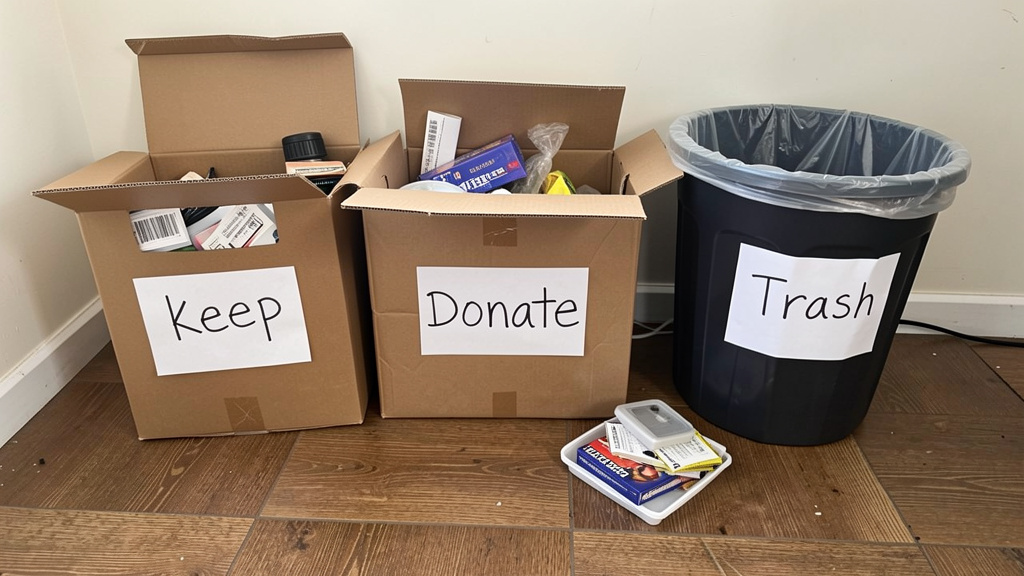
Stop the paralysis of indecision. Transform clutter chaos into calm clarity with a psychologically-grounded system that honors your emotions while delivering lasting results—designed to reduce reliance on willpower.
You stand in the middle of your closet, holding a sweater you haven’t worn since 2019. Your hand hovers between the donate pile and the keep pile. What if it comes back in style? What if I lose weight? It was a gift… Another hour vanishes into the vortex of “maybe later.” This isn’t just about stuff—it’s about mental bandwidth, emotional energy, and the quiet exhaustion of living surrounded by unresolved decisions. Drawing on established principles from environmental psychology and documented patterns in organizing practice, this guide delivers a repeatable decision-making architecture that transforms subjective uncertainty into compassionate, actionable clarity. Move beyond arbitrary rules like “if you haven’t used it in a year, toss it.” True decluttering mastery lies in understanding why we keep what we keep—and building a sustainable system that works with human nature, not against it.
Introduction: Why Your Brain Rebels Against Decluttering (And How to Work With It)
Decluttering efforts often stall not due to laziness, but because common methods overlook the cognitive reality of decision fatigue. Each time you handle an object and weigh “keep or release?”, your brain expends mental energy. Studies in consumer psychology indicate that ambiguous choices—such as evaluating sentimental items—can trigger heightened stress responses compared to clear-cut decisions. Facing hundreds of these micro-decisions in one session may lead to mental exhaustion, abandoned projects, or the cycle of temporary clearance followed by gradual reaccumulation.
This is not a personal failing. It is a predictable cognitive pattern. Sustainable progress emerges when structured decision filters replace emotional guesswork. This guide introduces the TRIAGE Framework: a flexible decision architecture informed by observed patterns across diverse living situations. Unlike approaches centered solely on emotional reactions, TRIAGE integrates cognitive awareness, spatial logic, and practical logistics. We address the nuanced reality of modern belongings—the partially used craft supplies, inherited furniture that no longer fits your space, digital files lingering in cloud storage. By the end, you’ll have a personalized protocol that transforms overwhelm into steady, confident action—room by room, category by category. This is not about achieving minimalist perfection. It is about cultivating a home that actively supports your present life.
The TRIAGE Framework: Your Compass for Confident Decisions
Emergency responders use triage to prioritize care efficiently under pressure. Similarly, applying strategic prioritization to decluttering prevents burnout and directs energy where it matters most. The TRIAGE Framework adapts this principle to your living environment. It is not a rigid acronym but a fluid, five-phase architecture designed to reduce cognitive load while honoring emotional complexity. You apply these phases sequentially during sorting sessions, yet each also functions as a standalone tool for daily maintenance. The true power emerges through internalizing the flow: Triage sets priorities, Reflect provides filters, Integrate ensures sustainability, Act executes cleanly, and Guard protects your progress. This structure transforms decluttering from an emotional ordeal into a manageable, repeatable workflow. Below, we unpack each phase with actionable detail, contextual considerations, and real-world applications. Master this sequence, and the “maybe pile” loses its power.
Step 1: Triage – Categorize by Urgency and Impact (Not by Room!)
Most guides advise starting with a physical location (“begin with the closet”). This often leads to overwhelm. Triage flips the approach: sort items into four priority zones before handling belongings. This ensures high-impact decisions happen when mental energy is highest. Prepare four clearly marked zones (bins, boxes, or floor areas):
-
Zone 1: Critical Hazards (Address Immediately)
Expired medications, recalled products, leaking batteries, moldy food, broken glass, unstable furniture, hazardous chemicals (old paint thinner, pesticides), documents with exposed personal information. Why first? Safety is non-negotiable. Removing hazards eliminates immediate risks and builds momentum through quick, meaningful wins. Example: That half-empty bottle of drain cleaner under the sink belongs here—not in a “later” pile. Contact your local waste authority for safe disposal options; many communities offer periodic collection events. Common pitfall: Delaying “just one” hazardous item. Even small hazards pose risks to household members, pets, or the environment. Address them first. -
Zone 2: High-Impact Friction (Resolve Within 48 Hours)
Items causing daily irritation or blocking function: tangled cords on your desk, mismatched container lids jamming cabinets, shoes piled by the entryway, expired pantry items obscuring usable food, duplicate tools. Why second? These create recurring micro-stressors. Resolving them delivers immediate improvements to daily flow and mental ease. Example: The stack of unopened mail on your kitchen counter isn’t merely clutter—it subtly triggers anxiety with each pass. Sorting it (shred junk, file bills, recycle catalogs) reclaims psychological space. Insight: Neuroscience suggests repeated minor stressors accumulate into significant cognitive load. Fixing these yields disproportionate emotional relief. -
Zone 3: Medium-Use Evaluation (Schedule Dedicated Time)
Seasonal items (holiday decor, off-season clothing), occasional-use tools (camping gear, specialty kitchen appliances), hobby supplies with uncertain future use, books you might reread. Why third? These require thoughtful reflection but lack urgency. Schedule a focused 60–90 minute session when rested. Apply the Reflect phase filters (next section). Example: That bread machine gifted years ago. Honestly assess: Was it used during the most recent relevant season? Does your current lifestyle support its use? If not, it occupies space better suited for frequently used items. Nuance: Guard against “future-self” assumptions (“I might get into sourdough!”). Base decisions on documented past behavior where possible. -
Zone 4: Low-Priority Sentimental (Handle Last, With Compassion)
Childhood memorabilia, inherited jewelry with limited wearability, wedding mementos, children’s artwork, letters from loved ones. Why last? These carry significant emotional weight. Tackling them first risks depletion. By resolving Zones 1–3 first, you build confidence and mental reserves. You approach sentimental items from a place of strength. Example: Your grandmother’s china set. Instead of “Should I keep this?”, ask “Does displaying one cherished teacup honor her memory more meaningfully than storing twelve place settings I’ll never use?” Compassionate note: You need not keep the entire set to preserve the memory. Curate with intention.
The Fundamental Principle: Decluttering success is determined not by volume removed, but by strategic prioritization—addressing safety and daily friction before turning to nostalgia.
Step 2: Reflect – The 5-Question Filter for Unshakeable Clarity
When an item lands in Zone 2, 3, or 4, the Reflect phase activates. This moves beyond fleeting feelings (“Does this spark joy?”) toward consistent, compassionate criteria. Keep this list visible during sorting. For each item, consider these questions. There are no “maybes”—honest answers create clarity. If an item does not affirmatively meet multiple criteria, the path forward often becomes evident.
Question 1: “Have I used, worn, or actively engaged with this item within a relevant timeframe?”
The Evidence-Based Reality Check. This grounds decisions in observed behavior, not hope. Adjust the window contextually: 12 months for everyday items, “last season” for seasonal gear, 6 months for children’s rapidly outgrown items. Example: The yoga mat in the corner. Check your habits: Was it unrolled even once recently? If not, it may represent aspiration rather than current practice. Nuance: Exceptions exist (wedding dresses, heirloom furniture used annually). Acknowledge them consciously. Counter-example: Keeping baby clothes “for future children” after deciding your family is complete. Honor that clarity with compassion—release them to serve another family now.
Question 2: “Does this item align with my identity and values today?”
The Identity Filter. We often retain items tied to past selves (college textbooks, former career attire) or idealized futures. Ask: “Does this reflect who I am now?” Example: A framed professional diploma after transitioning to a deeply different vocation. The diploma represents achievement, but displaying current creative work may better reflect your present identity. Solution: Photograph the diploma, express gratitude for its role, and release the physical frame if space is needed. Nuance: Values evolve. If “community connection” is now central, keep folding chairs for gatherings. If “calm simplicity” is key, release them. Insight: Social psychology research suggests alignment between possessions and current self-concept supports psychological well-being.
Question 3: “If I encountered this item today in a store, would I intentionally choose it again?”
The Value Validation Test. This counters sunk-cost fallacy (“I spent so much on these!”). Ignore historical cost. Focus on current utility and genuine desire. Example: A specialty kitchen gadget (avocado slicer, egg separator). Honestly assess: Would you seek it out and pay for it today? If not, it no longer serves you. Nuance: For gifts, reframe: “Would I select this for myself based on my current needs?” Gifts carry emotional weight, but keeping unused items may not honor the giver’s intent (which was likely for you to enjoy it). Donating ensures it serves someone. Common trap: “But it was expensive!” Past cost is irrelevant. Current value and fit matter.
Question 4: “Does this item serve a clear, necessary, and irreplaceable function in my current life?”
The Functional Audit. Distinguish need from nice-to-have. “Necessary” means no practical substitute exists and the function is regularly required. Example: One functional hammer is necessary. Three hammers stored separately are likely redundant. Keep the best-condition one. Nuance: “Irreplaceable” is key. That chipped mug made by your child? Its primary function is emotional—not utilitarian. It may pass if it meets other criteria. But ten generic coffee mugs when you use two daily? Redundant. Practical tip: For tools/appliances, test functionality during sorting. If broken and repair isn’t feasible or worthwhile, move it toward release.
Question 5: “What is the true cumulative cost of keeping this item?”
The Hidden Burden Calculator. Look beyond physical space:
– Time cost: Cleaning around it, searching for it, reorganizing to accommodate it
– Financial cost: Storage fees, insurance on unused valuables
– Emotional cost: Guilt (“I should use this”), anxiety (“What if I need it?”), visual noise
– Opportunity cost: Space occupied that could hold something you actively love or use
Example: A rarely used treadmill in a shared living area. Consider: potential storage costs, square footage consumed, daily visual reminder of unmet goals (emotional weight), maintenance effort. If the emotional or spatial cost outweighs occasional use, release becomes a logical, self-kind choice. Nuance: For a small box of cherished letters, the “cost” may be negligible, making retention reasonable. For bulky items with high hidden costs, release is often liberating.
After reflecting on all five questions:
– Strong alignment (multiple “yes” responses): Confidently KEEP. Proceed to Integrate phase.
– Mixed alignment: Pause. Is hesitation emotional (fear, guilt) or practical (space constraints)? Revisit Question 5. If emotional, apply Guard phase techniques later. If practical, consider releasing to someone who will fully use it.
– Minimal alignment: Confidently RELEASE (Donate/Recycle/Trash). Release without guilt—the clarity is the gift.
This filter transforms subjective uncertainty into compassionate clarity. It honors an item’s past role while making intentional space for present needs.
Step 3: Integrate – The Home Test: Does Every Kept Item Have a Designated Place?
Deciding to keep an item is only half the process. The #1 reason decluttering efforts don’t last is the “orphaned item”: kept objects without assigned homes inevitably become clutter again. The Integrate phase requires that every single kept item passes the Home Test before leaving your sorting area. This is about spatial honesty, not buying organizers.
How to Conduct the Home Test:
1. Physically walk to the location where the item belongs right now.
2. Place it in its intended spot.
3. Verify: Does it fit without displacing another kept item? Is the location logical (glasses near the sink, keys by the door)? Is access easy and sustainable?
4. If YES: Item is fully integrated. Move on.
5. If NO: The item fails the test. Return it to your sorting zone. Re-evaluate:
– Option A: Release it (it doesn’t truly belong in your current ecosystem).
– Option B: Designate a new, sustainable home immediately (e.g., “This cookbook lives on the small shelf beside the stove, replacing the outdated recipe binder I’m releasing”).
– Option C: Address the root constraint (e.g., “I keep tripping over shoes because the entryway closet holds off-season coats. Solution: Move coats to under-bed storage now, creating dedicated shoe space”).
Real-world application: You keep your favorite winter scarf. Home Test: Walk to the front closet. Is there an accessible hook? If hooks are jammed with summer hats, the scarf fails. You must either:
– Release two summer hats to create space (Option B), OR
– Acknowledge the closet is at capacity and the scarf cannot stay without creating new clutter (Option A).
Why this works: Environmental design principles highlight “behavioral affordances”—spaces intentionally arranged to cue desired actions. A designated hook for keys affords hanging them up. No designated spot = no cue = keys dumped on the counter = new clutter. The Home Test closes this loop. It fosters honest assessment of your actual storage capacity versus aspirational capacity. You cannot sustainably keep more items than your space can logically contain without maintenance becoming burdensome. This phase cultivates spatial integrity—the foundation of lasting order.
Step 4: Act – Execution Pathways: Ethical, Efficient Release Protocols
A decision without action remains incomplete. Vague intentions (“I’ll donate this someday”) lead to limbo piles. The Act phase provides clear, actionable pathways for every release category. Preparation is essential: Before sorting begins, gather supplies:
– Heavy-duty bags (clear for recycling, dark for trash)
– Sturdy boxes labeled: DONATE, RECYCLE, HAZARDOUS WASTE, E-WASTE
– Packing tape, markers, scissors
– Saved contacts: Local donation centers, municipal waste hotline, community sharing group admin
For Items to KEEP:
- Immediate Integration: Place directly into its verified “home” (from Step 3). Do not set aside “to put away later.”
- Maintenance Tag: For items needing repair/cleaning (scuffed shoes, dusty lamp), attach a small note: “Clean before [date]” or “Take to cobbler.” Schedule the task now in your calendar. Unaddressed “fix-it” items become guilt-clutter.
For Items to DONATE: The Responsible Release Protocol
True generosity means donating only what organizations can readily use. Dropping damaged items burdens charities. Follow this mindful flow:
- Condition Check: Is the item clean, functional, and in good repair?
- Clothing: No stains, holes, broken closures. Wash and fold before boxing.
- Housewares: Clean, all parts present, no cracks.
- Furniture: Structurally sound, clean. Test drawers and mechanisms.
-
If NO: Move to appropriate disposal pathway. Do not donate “as-is” hoping someone will repair it. Most charities lack repair capacity.
-
Match to the Right Recipient (Illustrative Examples – Verify Locally):
| Item Category | Potential Pathway | Key Consideration |
|————————|—————————————————-|—————————————————-|
| Gently Used Clothing | Local shelter, women’s support center | Call first! Needs vary by season and current demand. Avoid overwhelming with off-season items. |
| | Career-focused donation program | Often requires professional cleaning. Confirm local chapter needs. |
| Children’s Items | Family shelter, daycare center | Must be sanitized. Verify policies (e.g., many cannot accept used car seats due to safety regulations). |
| | Community sharing group (Buy Nothing/Freecycle) | Ideal for bulky items. Post clear photos with dimensions. |
| Furniture | Habitat for Humanity ReStore (or local equivalent)| Schedule pickup before sorting. Confirm acceptance criteria. |
| | Local furniture bank serving families in transition| Often needs beds, dressers, dining sets. Search “[Your City] furniture bank”. |
| Books | Little Free Library, school/library drive | Remove personal inscriptions if donating publicly. |
| | Prison book program (check guidelines) | Often request specific genres. Verify current needs. |
| Specialty Items | Animal shelter (towels, blankets) | Must be clean, no loose threads. Call to confirm needs. |
| | Community theater (costumes, props) | Contact directly; needs vary by production schedule. | -
Prepare for Drop-off/Pickup:
- Box items neatly. Label clearly: “Women’s XL Sweaters,” “Kitchen Utensils.”
- Obtain a receipt if needed for records (consult a tax advisor regarding deductibility).
- Schedule pickup/drop-off within 48 hours. Momentum sustains progress.
For Items to TRASH/RECYCLE: Mindful Disposal
Responsible disposal protects community resources and the environment.
- Standard Trash: Food waste, soiled paper, broken ceramics, non-recyclable materials (verify local guidelines—recycling rules vary significantly by municipality).
- Recycling: Rinse containers. Remove lids if required locally. Flatten boxes. Critical: When uncertain, leave it out. “Wishcycling” contaminates batches, potentially sending entire loads to landfill. Consult your local waste authority’s website.
- E-Waste (Electronics): NEVER discard phones, laptops, cords, or batteries in regular trash. They contain hazardous materials. Options:
- Retailer take-back (Best Buy, Staples often accept small items)
- Manufacturer programs (Apple, Dell)
- Municipal e-waste collection events
- Call2Recycle.org for battery drop-off locations
- Hazardous Waste: Paint, chemicals, light bulbs, medication.
- Medication: Use authorized drop boxes (often at pharmacies or police stations). Never flush.
- Paint: Latex paint can often be dried out (mix with kitty litter) for trash disposal; oil-based requires special handling.
- Light bulbs: Many hardware stores accept CFLs/LEDs.
- Always search “[Your County] household hazardous waste disposal” for local protocols.
- Textiles (Unusable): Ripped or stained clothing shouldn’t go in donation bins. Many municipalities, H&M, or For Days offer textile recycling (repurposed as insulation, rags). Search “textile recycling near me.”
Pro Tip: Maintain a small “Release Station” in a utility area—a labeled bin for donations, a bag for recycling. Add items as you find them daily. Schedule monthly drop-offs. This prevents accumulation and makes release effortless.
Step 5: Guard – Preventing Regret and Building Sustainable Habits
Sorting is complete. Now, protect your progress with gentle, resilient systems. The Guard phase addresses common post-decluttering experiences: occasional regret and gradual reaccumulation. This is not about perfection—it’s about designing a lifestyle where clutter struggles to take root.
The Regret Mitigation Protocol:
Regret, if it arises, often surfaces within the first week, triggered by weather (“It’s cold—wish I had that sweater!”) or nostalgia. Implement these compassionate buffers:
– The 24-Hour Undecided Box: For items causing acute anxiety but failing the 5-Question Filter, place in a single, small box labeled “Undecided – Review [Date + 24 Hours].” Store it out of sight. After 24 hours, revisit only if you actively missed the item. Typically, the vast majority of items in this box are not reclaimed. Donate the entire box unopened on day two.
– Digital Memory Banking: For sentimental items you release (children’s artwork, concert tickets), photograph them before releasing. Create a digital album titled “Memories: [Year].” This preserves the emotion without the physical burden. Print one favorite photo to display if desired.
– The “Replacement Clause”: If you genuinely need a released item later (e.g., a specific tool), give yourself permission to replace it new—often more efficient than storing unused items for years. This reframes release as empowerment, not loss.
Habit Anchors for Long-Term Maintenance:
– The One-In, One-Out Practice: For new non-essential items entering your home, release one similar item. Maintain equilibrium. Implementation: Keep a small “release box” in your closet. When adding new shoes, immediately select one pair to donate.
– Daily 10-Minute Reset: Set a timer each evening. Return stray items to their homes. Wipe surfaces. This prevents “clutter creep.” Pair it with an existing ritual (after dinner) for consistency.
– Seasonal Sweep: Schedule 20–30 minutes at the end of each season:
– Clothing: Did you wear it? If not, release before next season.
– Pantry: Discard expired items. Consolidate duplicates.
– Digital: Delete old files. Unsubscribe from email lists.
– Shopping Mindfulness Pause: Before purchasing non-essentials, implement a brief waiting period. Ask: “Where will this live in my home? Does it align with my current needs and values?” This reduces incoming clutter at the source.
Guard is not vigilance—it’s designing gentle systems where order sustains itself. These micro-habits require minimal effort but yield compounding returns in sustained calm.
Room-by-Room Deep Dive: Applying TRIAGE to Your Unique Spaces
The TRIAGE Framework provides the foundation; these adaptations honor each space’s unique function and emotional triggers. Apply core phases while respecting contextual nuances. Work through manageable zones within rooms (e.g., pantry first, then utensils) to maintain momentum and avoid overwhelm.
The Clothing Catastrophe: From Overstuffed Closets to Curated Confidence
Clothing decluttering often intersects with identity and body image. Begin with Triage Zones:
– Zone 1 (Critical): Stained, torn, or consistently uncomfortable items causing daily frustration. Remove immediately.
– Zone 2 (High-Impact): Items you actively avoid wearing due to poor fit or discomfort. These fuel negative self-talk each morning. Release them compassionately—they are not serving your well-being.
– Zone 3 (Medium): Seasonal wear, formal attire. Apply the 5-Question Filter. That bridesmaid dress? Unless black-tie events are frequent in your current life, it likely fails Questions 1 and 4. Photograph it, express gratitude, release it.
– Zone 4 (Sentimental): Baby clothes, wedding attire. Handle last. For baby clothes: Keep one complete outfit per child in a memory box. Release the rest—they fulfilled their purpose. For wedding dresses: If professional preservation costs outweigh emotional value for you, consider donating to organizations that provide gowns to individuals facing serious illness (research local options).
Pro Technique: The Hanger Flip. Turn all hangers backward. After wearing and washing an item, return it with hanger facing forward. After a full seasonal cycle, donate items still backward. This provides objective data on actual use, bypassing memory bias.
Special Case: Shoe Management. Line shoes up. Keep pairs worn within the relevant timeframe. For rarely used “special occasion” shoes, ask: “Is the discomfort worth the occasion?” If not, release. Store kept shoes visibly or in clear boxes with photos taped to fronts.
Body Neutrality Reminder: Release clothing tied to past body sizes without judgment. Your current body deserves comfort and respect today. Keeping “goal size” clothing can inadvertently reinforce unhelpful narratives. Honor your journey; dress your present self with kindness.
The Kitchen Conundrum: From Cluttered Counters to Functional Flow
Kitchens accumulate “just-in-case” items and expired inventory. Prioritize safety and daily workflow.
– Zone 1 (Critical): Expired food, chipped glassware (cut risk), recalled appliances (register at recalls.gov), leaking containers. Discard immediately.
– Zone 2 (High-Impact): Items blocking workflow: mismatched lids, duplicate utensils, appliances living on counters. Apply Home Test fiercely. Countertops should hold only daily-use items. Store others in cabinets. Release duplicates.
– Zone 3 (Medium): Seasonal appliances (ice cream maker), bulk pantry items. Ask: “Was this used during the most recent relevant season?” If not, release. For bulk items: Transfer to uniform containers (label contents/date), donate excess to food banks before expiration.
– Zone 4 (Sentimental): A chipped mug from your first apartment, inherited recipe box. Keep one meaningful item if space allows. Photograph recipes; digitize or transcribe favorites. Release the physical box if it occupies prime drawer space needed for daily use.
Pantry Protocol: Empty shelves. Wipe clean. Group like items (baking, canned goods). Use clear bins for categories (“Snacks,” “Pasta”). Place newest items behind oldest (FIFO: First In, First Out). Discard anything expired or unidentifiable.
Utensil Audit: Empty the drawer. Keep only tools used regularly. That avocado slicer? If unused through multiple relevant seasons, it fails Question 3. Release. Store kept utensils in a simple organizer—no tangled messes.
Appliance Check: Unplug and test every appliance. If non-functional and repair isn’t feasible, recycle responsibly. If functional but unused, release. Keep only what fits in designated cabinet space after passing the Home Test.
The Paperwork Paralysis: Taming Mail, Files, and Digital Chaos
Paper triggers anxiety about missing important information. Systemize, don’t sentimentalize.
– Zone 1 (Critical): Documents with exposed personal identifiers (shred immediately), expired insurance cards, old tax returns beyond recommended retention periods (consult a financial advisor for your situation).
– Zone 2 (High-Impact): Unopened mail pile, expired coupons, outdated manuals. Process mail daily: Recycle ads, file bills, shred junk. For manuals: Search online “[Product] manual PDF.” Bookmark or save digitally. Shred physical copies.
– Zone 3 (Medium): Active tax documents, warranties, medical records. Create a simple filing system:
– Active Files: Current year taxes, ongoing projects (use hanging folders)
– Reference Files: Warranties (sorted by room), medical records (by family member)
– Archive Files: Past tax returns (labeled by year)
Store securely. Digitize critical documents (passport, deed) with password protection.
– Zone 4 (Sentimental): Children’s schoolwork, greeting cards. Curate thoughtfully: Keep one standout piece per school year per child. Use acid-free scrapbook or digital scanning. For cards: Save only those with heartfelt handwritten notes; recycle generic ones.
Digital Paperwork: Create cloud folders mirroring physical system (“Taxes_2023,” “Warranties”). Use consistent naming: “YYYYMMDD_DocumentType” (e.g., “20231015_HomeInsurance”). Schedule quarterly digital cleanouts. Unsubscribe from email lists using tools like Unroll.me.
The One-Touch Principle: Handle paper once. Open mail at the recycling bin. Recycle junk immediately. File bills. Shred sensitive docs. Eliminate “to-sort” piles.
The Bathroom Bottleneck: Streamlining Toiletries and Linens
Bathrooms accumulate expired products and duplicate samples. Safety first.
– Zone 1 (Critical): Expired medications (use take-back programs), moldy loofahs, cracked containers, expired sunscreen (loses efficacy). Discard immediately via safe methods.
– Zone 2 (High-Impact): Half-used products you dislike, duplicate razors, tangled hair tools. Release unused items. Keep only daily essentials visible. Store backups under sink only if space allows.
– Zone 3 (Medium): Travel-size samples, seasonal items (heavy moisturizer in summer). Donate unopened hotel samples to shelters if accepted. Discard expired products.
– Zone 4 (Sentimental): Rare. Perhaps a small keepsake. Keep only if it passes filters and has a designated spot.
Product Awareness: Check labels for expiration guidance. When in doubt about medication or skincare efficacy, dispose of safely.
Linens Audit: Keep a practical number of sets per bed and towels per person based on your laundry routine. Release stained, threadbare, or excess sets. Store sets together (flat sheet + fitted + pillowcases) in corresponding pillowcase.
Counter Clarity: Only keep daily-use items on counter (toothbrush, hand soap). Store everything else in cabinets. Wipe surfaces during your daily reset.
The Garage/Storage Abyss: Conquering the “Catch-All” Zone
Garages become dumping grounds due to out-of-sight mentality. Tackle in small, manageable zones (left wall shelf, right corner).
– Zone 1 (Critical): Flammable liquids, broken tools with sharp edges, unstable shelving. Secure or dispose of properly first. Safety is paramount.
– Zone 2 (High-Impact): Items blocking access, seasonal decor taking prime space, sports equipment never used. Release unused gear. Store decor in clear, labeled bins.
– Zone 3 (Medium): Tools, gardening supplies, holiday items. Test functionality. Release duplicate or broken tools. Keep only what fits on pegboard/shelving after organizing.
– Zone 4 (Sentimental): Childhood memorabilia, inherited furniture. Handle last. Photograph large items before releasing if meaningful.
Zoning Strategy: Divide space into functional zones:
– Active Zone: Daily-use items (bike, trash bins) near door
– Seasonal Zone: Holiday decor, camping gear on labeled shelves
– Archive Zone: Memory boxes (limit quantity per person) on high shelves
Tool Organization: Install pegboard. Outline tools with shadow lines for easy return. Release duplicates.
Hazardous Materials: Store paints, chemicals in original containers on low, secure shelves away from heat sources. Schedule disposal day quarterly using local resources.
Digital Decluttering: Clearing Clutter from Devices and Clouds
Digital clutter contributes to cognitive load similarly to physical clutter. Apply TRIAGE digitally.
– Zone 1 (Critical): Malware risks, duplicate sensitive documents, outdated passwords. Run security scans. Use a password manager (Bitwarden, 1Password).
– Zone 2 (High-Impact): Desktop icons, overflowing email inbox, unused apps.
– Desktop: Keep only essential shortcuts. Archive rest.
– Email: Unsubscribe relentlessly. Create filters: “Bills” → folder, “Newsletters” → read-later folder. Archive old emails.
– Apps: Delete unused apps. Organize home screen: Daily-use apps on first screen; others in labeled folders (“Social,” “Utilities”).
– Zone 3 (Medium): Photos, documents, downloads folder.
– Photos: Delete blurry/duplicates. Create albums by year/event. Use cloud “Archive” features for less critical shots. Back up to external drive + cloud.
– Documents: Create logical folder structure. Delete drafts/old versions.
– Zone 4 (Sentimental): Old text threads, social media memories. Archive meaningful chats selectively. Use platform “Save” features intentionally. Unfollow accounts causing distress.
Digital Maintenance: Schedule 15-minute weekly “digital reset.” Clear downloads folder. Empty trash. Unsubscribe from one email list. Digital calm supports mental clarity.
Navigating Emotional Friction: Compassionate Strategies for Tough Decisions
Logic alone cannot resolve deep emotional attachments. This section offers evidence-informed, compassionate techniques for common friction points—framed with empathy, not judgment. Your feelings are valid. You are human.
The Gift Guilt: “But Aunt Carol gave me this!”
Reframe: The gift’s purpose was to express care at the time of giving. Keeping an unused item does not inherently honor that intent; it may burden you with obligation. True respect can mean ensuring the item serves a purpose. If you cannot use it, passing it to someone who will is honoring the spirit of generosity. Say quietly: “Thank you for the love behind this gift. I release it so it can bring joy to someone else.” Donate promptly. For persistent guilt, write a brief, unsent thank-you note to acknowledge the gesture—this can release emotional weight.
The “What If” Fear: “What if I need this someday?”
Challenge the scenario: Assess realistic probability. For a specialty baking pan: How many times was it used in recent years? Zero? The “someday” is often a myth. Counter with evidence: “I use my standard cake pan regularly. This specialty pan remains unused. Releasing it creates space for tools I do use.” For genuine “just-in-case” items (emergency supplies), designate a single, labeled container with strict size limits (“Emergency Kit: Max 1 bin”). Review annually.
Sentimental Overload (Especially with Children’s Items):
Parents often struggle releasing children’s artwork, clothing, or toys. Remember: You are curating memories, not erasing them.
– Artwork: Select 3–5 meaningful pieces per year. Photograph the rest. Create a digital yearbook or annual scrapbook with selected pieces. Recycle physical copies.
– Clothing: Keep one complete outfit per significant milestone (first birthday, first day of school). Store in acid-free box. Release the rest—they served their purpose of keeping your child warm and comfortable.
– Toys: Involve children age-appropriately. “Let’s find toys you’ve outgrown to give to kids who need them.” Focus on generosity. Keep only what fits in designated toy storage. Rotate toys seasonally to maintain novelty without accumulation.
Insight: Child development perspectives emphasize that children value current engagement and connection far more than preserved artifacts. Your presence matters most. Release items with gratitude for the memory they represent.
Decluttering with a Partner or Family Member:
Conflicting styles cause friction. Never declutter others’ belongings without consent. Instead:
1. Begin with shared spaces (living room, kitchen) using TRIAGE collaboratively.
2. Establish “zones of autonomy”: “Your closet is your domain; I won’t touch it. My desk is mine. We’ll jointly decide on the garage.”
3. Use “I” statements: “I feel overwhelmed when the entryway is cluttered. Could we try the Home Test for shoes together?”
4. Seek compromise: If a partner keeps duplicate tools, designate a specific, limited bin for “your extras.”
5. Consider neutral support: A single session with a professional organizer can facilitate decisions.
Important: If severe distress occurs at the thought of discarding items, or living conditions are unsafe due to accumulation, consult a mental health professional. Hoarding behaviors require clinical support—not decluttering strategies.
Decision Fatigue Recovery:
Feeling drained mid-session? This is normal. Implement compassionate circuit breakers:
– Set a timer for 25 minutes of sorting, then 5 minutes of stretching/hydration.
– Switch zones: Move from high-friction (closet) to lower-friction (pantry) to recharge.
– Stop before exhaustion. End on a win (“I cleared the entire junk drawer!”).
– Acknowledge micro-wins: “I released items that no longer serve me. My space feels lighter.”
Remember: Decluttering is a practice, not a performance. Progress over perfection. Rest is part of the process.
Sustainable Disposal Guide: Honoring Resources Beyond Your Doorstep
Releasing items responsibly extends your decluttering impact into community and environment. This guide moves beyond “donate or trash” toward intentional stewardship.
Mindful Donation Practices
Well-intentioned donations can unintentionally burden charities. Textile recycling observations note that a significant portion of donated clothing is unsellable due to damage, creating disposal challenges. Before donating:
– Prepare items: Wash, mend if feasible, fold neatly.
– Verify needs: Call ahead. Shelters may urgently need winter coats now but not summer dresses.
– Honor dignity: Donate only items you would feel comfortable receiving.
– Special Cases:
– Furniture: Ensure structural soundness. Clean thoroughly. Take clear photos for pickup scheduling.
– Electronics: Wipe all personal data securely. Remove SIM cards.
– Baby Gear: Verify no recalls (search CPSC.gov or your national consumer safety site). Many charities cannot accept used car seats due to safety/liability concerns.
Expanded Release Pathways
– Community Sharing Groups (Buy Nothing/Freecycle): Hyper-local gift economies. Post “OFFER: Gently used gardening gloves.” Builds neighborhood connection. Tip: Post clear photos and dimensions.
– Repair Cafés: Search “[Your City] repair café.” Volunteers may fix broken items (lamps, small appliances). If repairable, extend its life. If not, they advise proper disposal.
– Creative Partnerships: Local art teachers often welcome fabric scraps, buttons, or clean containers. Call schools.
– Animal Shelters: Accept clean towels, blankets. Call first—needs vary.
Eco-Conscious Disposal
– Textiles (Unusable): Many retailers (H&M, For Days) and municipalities offer textile recycling. Search Earth911.com or local waste authority sites.
– Electronics: Retailers (Best Buy, Staples) and manufacturer programs accept e-waste. Call2Recycle.org locates battery drop-offs.
– Household Hazardous Waste: Never pour chemicals down drains. Search “[County] HHW disposal” for collection events or facilities.
– Medication: Use authorized drop boxes (pharmacies, police stations). Never flush—pharmaceuticals impact water systems.
– Plastic Bags/Film: Return to grocery store collection bins. Do not place in curbside recycling—they tangle machinery.
When Trash is Necessary:
For non-recyclable, non-donatable items:
1. Break down boxes to conserve landfill space.
2. Seal odorous items securely.
3. Reflect gently: “How might I avoid acquiring this type of item again?” (e.g., choose products with minimal packaging).
This mindful closure transforms disposal from guilt into conscious choice.
Your Questions, Answered
Q: What if I’m truly unsure about an item? Should I keep a “maybe” box?
A: A large “maybe” box often delays decisions and guarantees future overwhelm. Instead, use the 24-Hour Undecided Box protocol from the Guard phase: Place the item in a single, small box labeled with a review date 24 hours away. Store it out of sight. If you do not actively miss or need the item within that window (e.g., “I need that screwdriver for the project today!”), donate the entire box unopened. This leverages a common behavioral pattern: out of sight often becomes out of mind for non-essential items. Typically, the vast majority of items in such a box are not reclaimed.
Q: How do I declutter inherited items (jewelry, furniture) without feeling disrespectful?
A: Honor the memory and relationship, not necessarily the physical object. Ask gently: “Does keeping this specific item actively honor my loved one’s memory more than releasing it thoughtfully?” Often, the love resides in your heart, not the object. Photograph meaningful pieces. Keep one small token if it brings comfort (a single piece of jewelry, a photo of the furniture in their home). Release the rest with gratitude: “Thank you for the role this played. I release it so it may serve another family.” Many find donating inherited furniture to a cause the person valued (e.g., a bookshelf to a literacy nonprofit if they loved reading) feels deeply respectful.
Q: I live in a small apartment with limited storage. How do I apply the Home Test?
A: Space constraints make the Home Test more valuable. Your “home” for an item may be highly optimized:
– Vertical space: Over-door organizers, wall-mounted racks
– Multi-functional furniture: Storage ottomans, bed risers with bins
– Clear limits: “I keep only 8 pairs of shoes. When I buy new, one pair leaves.”
If an item has no logical, accessible home within your actual living space, it fails the test. This isn’t deprivation—it’s strategic curation. Every kept item must earn its place. Release items that don’t fit your current reality. Your peace of mind is worth more than temporary solutions that create visual chaos.
Q: What about digital hoarding? My phone has thousands of photos and my desktop is cluttered.
A: Digital clutter triggers similar cognitive load as physical clutter. Apply TRIAGE digitally:
1. Triage: Delete blurry duplicates first (use built-in phone tools).
2. Reflect: For remaining photos, ask: “Does this capture a meaningful memory?” Keep only affirmatives.
3. Integrate: Create cloud albums by year/event. Back up securely.
4. Act: Archive old emails. Unsubscribe. Delete unused apps.
5. Guard: Enable auto-delete for screenshots after 30 days. Schedule 15-minute weekly digital resets. Start small: Clear your phone’s photo library today. Momentum builds confidence.
Q: I decluttered last year, but clutter returned. How do I make it stick?
A: Reaccumulation usually stems from two gaps: 1) No maintenance system (Guard phase), and 2) Unaddressed incoming clutter. Implement these consistently:
– Daily Reset: 10 minutes each evening to return items to homes.
– One-In, One-Out Practice: For new non-essentials, release one similar item.
– Shopping Pause: Brief wait before non-essential purchases. Ask: “Where will this live?”
– Seasonal Sweeps: 20–30 minutes at season’s end to reassess.
Decluttering isn’t a one-time event—it’s cultivating conscious consumption habits. Focus on progress, not perfection. One maintained drawer is a victory.
Q: How do I handle decluttering when I have ADHD or executive function challenges?
A: Adapt the framework to work with your neurology:
– Micro-Zones: Declutter one shelf, one drawer—not the whole room. Celebrate completing that micro-zone.
– Body Doubling: Invite a calm friend to sit quietly while you sort (no pressure to help). Their presence can reduce avoidance.
– Timer Power: 10 minutes of sorting, then 5 minutes of reward (dance break, tea).
– Visual Filters: Print the 5-Question Filter. Point to answers instead of verbalizing.
– Simplify Steps: Skip boxing donations. Place items directly into car for next-day drop-off.
Work compassionately with your brain. Progress in tiny bursts is still progress. An ADHD coach can offer personalized strategies.
Q: Is it wasteful to donate items I barely used? Shouldn’t I “use it up”?
A: This reflects thoughtful consideration. However, “using it up” often means forcing yourself to use something you dislike (wasting time and emotional energy) or letting it sit until it expires (true waste). Donating a gently used item now allows it to serve someone who will value it immediately. This is resource stewardship. Pair this with mindful future purchasing: “I’ll choose higher-quality items I genuinely love, reducing future turnover.”
Q: What’s a common pitfall people encounter when decluttering?
A: Starting with highly sentimental items (Zone 4) before building decision-making confidence with Zones 1–3. This often leads to emotional fatigue and project abandonment. Another frequent challenge: decluttering by location (whole closet) instead of by category (all sweaters across the house). Category sorting reveals true volume (“I have 15 black sweaters!”) and prevents duplicate keeping. Always triage by urgency first. Protect your energy—begin where success feels accessible.
Q: How do I declutter kids’ toys without causing distress?
A: Involve children age-appropriately with empathy:
– Ages 2–4: “Let’s find toys you’ve outgrown to give to babies who need them!” Focus on generosity. Keep selection limited.
– Ages 5–8: Use the “Toy Library” method: Store 70% of toys. Rotate every few weeks. Donate toys not missed after two rotations.
– Ages 9+: Introduce simplified filters: “Have you played with this recently? Does it still fit you?” Let them lead decisions with gentle guidance.
Keep the process positive. Never discard toys without discussion. Frame releases as making space for new adventures and sharing with others.
Q: What if my local donation centers have restrictions or are overwhelmed?
A: Research is key. Call ahead to confirm needs and hours. If traditional centers are saturated:
– Prioritize hyper-local options: Community sharing groups, school/classroom wish lists, mutual aid networks.
– Target specific needs: Search “[City] mutual aid” for grassroots groups distributing directly to neighbors.
– Get creative: Offer usable craft supplies to local art teachers; gardening tools to community gardens.
– When donation isn’t feasible, responsible recycling or disposal is still meaningful progress. Your thoughtful effort to sort and release items matters. Focus on what is possible in your community.
Conclusion and Your Next Step
You now hold more than a decluttering method—you possess a compassionate decision-making architecture designed for human complexity. The TRIAGE Framework transforms the exhausting “keep or release?” dilemma into a series of clear, values-aligned choices grounded in your present reality. Remember the core pillars: Prioritize safety and daily friction first (Triage). Filter decisions through objective, compassionate questions (Reflect). Ensure every kept item has a sustainable home (Integrate). Release items responsibly with precise pathways (Act). Protect your progress with gentle, consistent habits (Guard). This system honors your emotions without letting them dictate your space. It respects your time by reducing decision fatigue. Most importantly, it shifts focus from what you remove to what you gain: mental clarity, daily ease, and a home that actively supports your life.
Recap: Your Three Anchors for Lasting Change
1. Triage Before You Touch: Never begin with a room. Sort items into Critical, High-Impact, Medium, and Sentimental zones first. Protect your energy.
2. The 5-Question Filter is Your Compass: When uncertainty arises, return to these evidence-informed questions. They cut through guilt, fear, and nostalgia with compassionate clarity.
3. The Home Test is Foundational: If an item has no designated, logical place right now, it does not belong in your kept pile. This practice is critical for preventing reaccumulation.
The 24-Hour Rule: Your Tiny, Powerful Next Step
Do not attempt to declutter your entire home today. Overwhelm guarantees inaction. Instead, within the next 24 hours:
1. Identify one high-friction spot causing daily annoyance (the junk drawer, the mail pile, the shoe pile by the door).
2. Set a timer for 20 minutes.
3. Apply only Steps 1 (Triage) and 2 (Reflect) to that micro-zone.
4. Release items using Step 4 pathways.
5. Acknowledge completing this tiny victory.
This micro-action builds momentum without depletion. Success breeds confidence. Tomorrow, choose another micro-zone. In two weeks, you’ll have transformed multiple pain points—and internalized the framework.
The Big Picture: Decluttering as an Act of Self-Respect
Your home is not a museum of your past. It is a sanctuary for your present and a launchpad for your future. Every item you consciously choose to keep declares: “This supports my well-being.” Every item you release with gratitude declares: “I honor my space and my peace.” This practice extends beyond physical objects. It cultivates discernment—the ability to recognize what truly matters. You learn to release outdated obligations and energy-draining patterns. The clarity gained in your closet ripples into your calendar, your commitments, your calm. You are not just organizing stuff. You are designing a life of intention. Start small. Be kind to yourself. Trust the process. Your calmer, clearer home awaits—one confident, compassionate decision at a time.
Explore Our Complete System:
The Mindful Home Audit: Assessing Your Space for Flow and Function | Sustainable Swaps: Reducing Waste While Decluttering | The Digital Sanctuary: A Room-by-Room Guide to Tech-Free Zones | Conscious Consumption: Building a Wardrobe That Lasts | The 10-Minute Daily Reset: Habits for Lifelong Order | Memory Curation: Preserving What Matters Without the Clutter | Space Psychology: How Your Environment Shapes Your Mood and Productivity