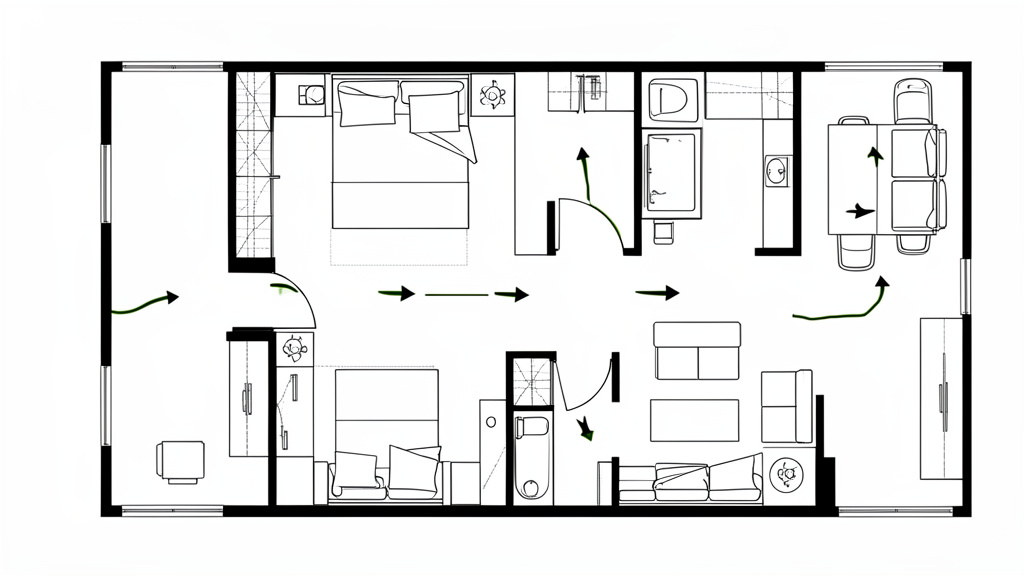
Stop designing for the home you think you have. Start optimizing for the home you actually live in—down to the coffee mug left on the counter and the shoes kicked off by the door.
Your home is more than architecture and decor; it is a dynamic ecosystem shaped by the rhythms of daily life. Yet too often, we organize our spaces based on aspirational ideals rather than observable reality. This guide bridges that gap. Drawing on established principles of environmental psychology and documented patterns of household behavior across diverse living situations, we provide an actionable framework to decode how your home is truly used—and how to align every corner with the life you actually live. Prepare to see your home not as a static backdrop, but as a living document of your habits, needs, and connections.
Introduction: The Gap Between Design and Daily Reality
Walk into any beautifully staged home, and you’ll see a vision of perfection: keys resting neatly in a ceramic dish, mail sorted instantly upon arrival, living rooms reserved for quiet conversation. Now walk into a lived-in home. You might find keys buried under a week’s worth of unopened mail, a dining table doubling as a homework station and craft zone, and a living room where the TV competes with scattered toys and half-finished projects. This disconnect isn’t a personal failing—it’s a universal human experience. Homes are designed for idealized scenarios, but lived in by complex, busy people with evolving routines.
Environmental psychology reveals a critical insight: spaces that ignore real usage patterns create friction. Friction manifests as wasted time searching for items, stress from clutter, and missed opportunities for connection. Conversely, spaces calibrated to actual behavior foster efficiency, calm, and joy. This isn’t about achieving Pinterest-worthy perfection. It’s about working with your habits, not against them. By observing the subtle traces of daily life—the worn path on the rug, the cluster of mugs near the coffee maker, the habitual drop zone by the door—we can transform our homes into intuitive partners in daily living.
Patterns documented across spatial behavior studies consistently show that homes functioning smoothly share one trait: they reflect observed behavior, not theoretical ideals. A space that accommodates the reality of muddy cleats after soccer practice will reduce evening stress far more effectively than one optimized solely for visual appeal. This guide introduces a practical methodology to observe, analyze, and optimize your home based on evidence, not aspiration. We’ll move room by room, uncovering the hidden scripts of daily life and providing actionable strategies to reduce friction and amplify function. Whether you’re in a studio apartment or a multi-generational household, the principles here apply. Your home has a story to tell. Let’s learn to read it.
The Activity Mapping Framework: Decoding the Unseen Patterns of Home Life
Before we dive into specific rooms, let’s establish a simple yet powerful framework for understanding home usage. We call it Activity Mapping. This three-layer approach moves beyond surface-level observations to uncover the deep structures of daily life. Think of it as becoming a gentle anthropologist of your own home. You’re not judging; you’re documenting. You’re not criticizing habits; you’re understanding systems.
Activity Mapping consists of three interconnected layers: Traces, Rhythms, and Frictions. Each layer reveals critical insights. Traces are the physical evidence of use. Rhythms are the temporal patterns—the when and how often. Frictions are the points of resistance where design clashes with behavior. By examining all three, you gain a holistic view that informs meaningful, lasting changes. This methodology aligns with documented approaches to spatial behavior analysis used across housing research contexts. There is no “right” way to use a home—only ways that work for you. Let’s break down each layer.
Layer 1: Traces – The Physical Footprints of Daily Life
Traces are the silent witnesses to your routines. They are the subtle, often overlooked clues left behind by daily activities. A trace isn’t just clutter; it’s data. The scuff marks on the wall near the light switch? That’s a trace of height and habitual movement. The cluster of water glasses on the nightstand? A trace of bedtime hydration. The specific spot on the sofa where the fabric is slightly more worn? A trace of where someone consistently curls up to read. Even the direction a door handle is turned most frequently leaves a microscopic trace of preference.
Why Traces Matter: Traces reveal truth without judgment. They bypass the stories we tell ourselves (“I always put my keys in the bowl”) and show what actually happens (“Keys are found under yesterday’s newspaper”). By learning to “read” traces, you shift from frustration to curiosity. Instead of scolding family members for leaving shoes by the door, you notice the trace: a pile of shoes exactly three steps inside the entrance. That trace tells you the current “drop zone” isn’t convenient enough. Traces are neutral evidence—they carry no blame, only information.
How to Conduct a Trace Audit:
1. Choose a neutral time: Early morning before anyone has altered the space, or late evening after the day’s activities have settled. Avoid weekends if weekday patterns differ significantly.
2. Observe without touching: Walk through each room with a notebook or phone. Photograph areas of interest. Ask: What objects are out of place? Where are items clustered? What surfaces show wear? What paths are visibly clearer than others?
3. Categorize traces systematically:
– Drop Zones: Areas where items are temporarily placed (keys, bags, mail, shoes). Note location, frequency, and item types.
– Wear Patterns: Faded spots on floors, scuffs on walls, worn upholstery, polished spots on countertops from repeated contact.
– Flow Paths: Clear routes through rooms, indicated by vacuum lines, dust patterns, or floor wear. Note bottlenecks where paths converge.
– Temporary Storage: Items left out for a reason (tomorrow’s outfit on a chair, library books by the door, charging cables near an outlet).
– Emotional Traces: Cleared surfaces before guests arrive, holiday decorations stored prominently year-round, photos clustered in specific areas.
Common Trace Misinterpretations to Avoid:
– Mistaking a temporary trace for a permanent habit. Example: A stack of moving boxes in the living room isn’t a trace of disorganization; it’s a trace of transition. Wait two weeks before redesigning around it.
– Overlooking positive traces. The well-used path to the bookshelf indicates a cherished reading nook—protect that space! The consistently clear space on the dining table might signal its importance for family meals.
– Ignoring traces of emotion. A cleared-off coffee table before guests arrives is a trace of hospitality; honor that intention in your design. A child’s drawing taped precisely at eye level on the fridge reveals whose perspective matters in that moment.
– Assuming uniformity. In shared homes, different family members leave distinct traces. One person’s “mess” is another’s functional system. Document whose traces belong to whom.
Real-Life Trace Example: In one documented household observation, the kitchen counter was consistently covered in mail, school forms, and random tools. The family insisted they “just needed to be more disciplined.” But the trace audit revealed something else: the only flat surface near the main entrance was the kitchen counter. The “clutter” was a logical, efficient response to the home’s layout—a temporary staging area before items moved to their final homes. Solution? Install a narrow console table in the adjacent hallway with labeled bins: “Action,” “File,” “Recycle.” The counter cleared consistently not through willpower, but through alignment with observed behavior. The trace wasn’t the problem; the lack of intentional space for the trace was.
The Fundamental Principle: Traces are not problems to be solved; they are clues to be understood. Your home is already telling you what it needs—you just have to learn its language.
Layer 2: Rhythms – The Temporal Pulse of Your Home
If traces are the “where,” rhythms are the “when.” Every home has a unique temporal signature—a cadence of activities that shifts by hour, day, season, and life stage. Morning rhythms differ from evening rhythms. Weekday patterns contrast with weekends. Summer brings outdoor flow; winter draws activity inward. Holiday seasons create temporary but intense usage spikes. Ignoring these rhythms leads to spaces that feel perpetually out of sync.
Why Rhythms Matter: Designing without considering rhythms is like planting a garden without regard to seasons. You might install a beautiful formal dining table, but if family meals only happen on Sundays, that table becomes a repository for clutter the other six days. Conversely, recognizing rhythms allows you to design flexible, responsive spaces. A dining area that transforms into a homework hub after school respects the home’s daily pulse. A patio that shifts from morning coffee nook to evening entertaining zone honors temporal transitions. Rhythms reveal not just what happens, but when energy is available for maintenance, connection, or rest.
Mapping Your Home’s Rhythms:
1. Time-Block Observation (Minimum 3 Days): For each room, note key activities. Use a simple chart:
Room | Time | Activity | People Involved | Duration | Emotional Tone (Calm/Stressed/Neutral)
Example:
– Kitchen | 6:45–7:30 AM | Coffee prep, lunch packing, backpack loading | Parent A, Child 1, Child 2 | 45 min | Rushed
– Living Room | 3:30–5:00 PM | Snack time, homework start, device charging | Child 1, Child 2, Parent B | 90 min | Transitional
– Bedroom | 9:00–9:30 PM | Reading, phone charging, outfit prep | Adult | 30 min | Calm
2. Identify Peak and Quiet Zones: Which rooms are busiest at what times? Where do people congregate? Where do they seek solitude? Map “traffic heat” visually—imagine drawing arrows showing movement flow throughout the day.
3. Seasonal and Cyclical Shifts: How does usage change in summer versus winter? During school breaks? Around holidays? Note recurring events: “Every Sunday evening, the dining table becomes a bill-paying station.”
4. Energy Mapping: When are household members most alert? Most tired? Design demanding tasks (meal prep) for high-energy windows; protect low-energy windows (post-work decompression) with minimal-friction zones.
Rhythm-Based Design Strategies:
– Zoning by Time: In a small apartment, the dining table might serve as a workspace from 9 AM to 5 PM, then transform for meals. A rolling cart stores work supplies by day and tucks away at dinner. The key is creating clear transition rituals: “When the laptop closes, the tablecloth comes out.”
– Anticipating Transition Points: The period between work/school return and dinner (typically 3:30–6:00 PM) is often chaotic. Design the entryway and kitchen to handle this surge: hooks at child height, a designated spot for lunchboxes, a visible snack station with pre-portioned options. Reduce decision fatigue during high-stress transitions.
– Honoring Quiet Rhythms: If early mornings (5:30–7:00 AM) are your only quiet time, protect the space where you enjoy coffee. Ensure the path to the coffee maker is clear, the chair by the window is always available, and noise from other areas is minimized. This isn’t selfishness; it’s strategic rhythm alignment.
– Seasonal Swaps: Store patio cushions in a weatherproof trunk on the patio for easy access. Keep a small basket of indoor slippers by the back door for winter transitions. Rotate toy storage: summer sports gear accessible in spring; board games prominent in fall.
Counter-Example: The Rhythm Mismatch
A household installed a dedicated home office in a quiet back room with soundproofing. But the primary user, a freelance professional and parent, discovered they felt isolated there. Their natural rhythm involved working in short, focused bursts while staying peripherally connected to household activity—checking on homework, hearing when snacks were needed. The “ideal” office created cognitive friction: constant worry about what was happening elsewhere. The solution? Relocating the workstation to the kitchen nook, where peripheral awareness was possible. A small room divider provided visual separation during calls. The “imperfect” nook became the productive hub because it respected the actual rhythm of work within family life. The space didn’t change; the understanding of rhythm did.
Layer 3: Frictions – Where Intention Meets Resistance
Friction occurs when the design of a space clashes with how it’s used. It’s the mental or physical resistance you feel daily: the cabinet too high to reach comfortably, the light switch on the wrong side of the door, the narrow hallway where everyone bumps elbows. Frictions accumulate silently, draining cognitive energy and creating low-grade stress that compounds over time. What feels like “being disorganized” is often a series of unresolved frictions.
Why Identifying Frictions is Transformative: Most people accept frictions as “just how it is.” But each friction point is an opportunity for refinement. Eliminating even small frictions—like adding under-cabinet lighting to a dark countertop—can dramatically improve daily experience. Friction mapping turns vague dissatisfaction (“I hate this kitchen”) into actionable insights (“I need task lighting where I chop vegetables between 6:00–7:00 PM”). Crucially, friction isn’t about personal failure; it’s about environmental mismatch. Recognizing this shifts the solution from “trying harder” to “designing smarter.”
Conducting a Friction Audit:
1. Body Scan Walkthrough: Move through your home performing routine tasks slowly. Notice where you:
– Pause or hesitate (“Where are the scissors?”)
– Feel physical strain (reaching high shelves, bending to low drawers)
– Experience mental load (“Which closet should this go in?”)
– Feel emotional resistance (anxiety opening a cluttered closet)
2. Emotion Tracking Journal: For three days, jot down moments of frustration, annoyance, delight, or ease. Note the time, location, and trigger. Friction isn’t just physical; it’s emotional. The joy of finding keys instantly is the absence of friction.
3. Family Input Session: Ask each household member: “What’s one thing that slows you down every day?” or “Where do you feel stuck in this house?” Children’s answers are especially revealing (“I can’t reach the light switch,” “My shoes don’t fit in the bin”). Record verbatim.
4. Friction Severity Scale: Rate each friction 1–5:
– 1 = Minor annoyance (occasional)
– 3 = Daily disruption (wastes noticeable time or causes stress)
– 5 = Major barrier (prevents task completion, causes conflict)
Prioritize fixes starting with Severity 3+ frictions.
Categorizing Frictions for Targeted Solutions:
– Physical Frictions: Poor ergonomics (sink too low), inadequate lighting (shadowed prep area), awkward layouts (door swings into traffic path), inaccessible storage (heavy items on high shelves).
– Cognitive Frictions: Too many decisions (“Which bin does this recycling go in?”), hidden storage requiring memory (“Where did I put the tape?”), unclear zones (“Is this counter for mail or coffee?”).
– Social Frictions: Spaces that force unwanted interaction (bathroom door opens into kitchen), prevent needed connection (TV facing away from seating), or create territorial conflicts (“You moved my scissors!”).
– Temporal Frictions: Tasks requiring more time than available (complex morning routine in small bathroom), mismatched timing (dishwasher runs during quiet evening hours).
From Friction to Solution: A Practical Translation Guide
– Friction: “I always misplace my glasses.” (Cognitive, Severity 4)
Solution Path: Place a small dish on the nightstand and by the favorite reading chair. Redundancy reduces cognitive load. Add a brightly colored case as a visual anchor.
– Friction: “The pantry is a black hole; I buy duplicates.” (Cognitive/Physical, Severity 5)
Solution Path: Clear bins labeled by category (snacks, baking, canned goods), with frequently used items at eye level. Install pull-out shelves. Take a photo of the organized pantry and tape it inside the door as a “map.”
– Friction: “Morning traffic jam in the bathroom.” (Social/Temporal, Severity 5)
Solution Path: Create duplicate essentials (toothbrushes, skincare) for a secondary location (bedroom dresser). Establish a visual schedule with movable magnets. Install a second mirror on the closet door for hair prep.
– Friction: “I dread opening the hall closet.” (Emotional, Severity 4)
Solution Path: Empty completely. Sort items into: Keep (used in last year), Donate, Relocate (belongs elsewhere). Install uniform bins. Add battery-operated LED light. Assign one shelf per person.
The Ripple Effect of Reducing Friction:
In one documented observation, a household identified the morning “bottleneck” at the coat area. Children struggled to reach standard hooks, leading to coats piled on the floor, repeated reminders, and rushed departures. Installing lower hooks at child height (approximately 24 inches) and labeled fabric bins for each child (“Maya’s Gear,” “Leo’s Stuff”) eliminated the friction. The result? Smoother mornings, less repeated prompting, children taking ownership of the routine, and reduced floor clutter. The fix required minimal investment and time. Small friction fixes create outsized improvements in daily peace because they remove repeated micro-stresses. When friction decreases, capacity for connection increases.
The Kitchen: Command Center of Connection and Chaos
No room reveals the gap between design and reality more starkly than the kitchen. Magazine spreads show spotless countertops and serene cooking. Real kitchens are hubs of activity: meal prep, homework, bill paying, impromptu conversations, emotional decompression after a long day, and the inevitable “drop zone” for whatever enters the house. Understanding the kitchen’s true role requires looking beyond the work triangle (sink, stove, fridge) to the human behaviors within it. This space is rarely just for cooking—it’s the home’s nervous system.
Observed Patterns: The Kitchen’s Multiple Personalities
Throughout the day, the kitchen shifts roles dynamically. At 6:30 AM, it’s a launchpad: coffee brewing, lunches packed, keys grabbed, last-minute permission slips signed. By 3:15 PM, it transforms into an after-school hub: backpacks dumped by the door, snacks consumed at the island, homework begun at the table while dinner prep begins. Evening brings the dinner rush—cooking, setting the table, cleaning up—followed by the quiet hum of dishwashing and planning for tomorrow. Weekends might see the kitchen as a social space for baking with kids, hosting friends for coffee, or Sunday meal prep. Holidays amplify these patterns with intensified activity.
Key traces to observe with intention:
– Counter Cartography: Divide the counter into zones. Which sections are consistently clear? Which are perpetually occupied? The “permanent” items (coffee maker, toaster, knife block) reveal non-negotiable routines. The “temporary” piles (mail, school projects, library books) indicate workflow gaps. Note where items accumulate—not just that they do.
– The Fridge Door Ecosystem: A cultural artifact. Magnets holding soccer schedules, artwork at child height, grocery lists, takeout menus. The density, location, and rotation of items show what information is prioritized and by whom. Faded spots indicate removed items; crowded sections reveal information overload.
– Floor Path Evidence: The worn path from fridge to sink to stove tells you the dominant workflow. Deviations (e.g., a path to the trash can, the pantry, the back door) highlight secondary but critical routines. Scuff marks near the dishwasher indicate frequent loading/unloading.
– Temporal Traces: Water rings from morning coffee mugs near the window. Crumbs near the toaster at 7 AM. A cleared space on the counter at 5 PM signaling dinner prep begins. These time-stamped traces reveal the kitchen’s daily narrative.
Common Mismatches: When Kitchen Design Ignores Lived Reality
- The “Show Kitchen” vs. The “Working Kitchen”: Open shelving looks beautiful in photos but requires constant tidying. If your reality involves quick clean-ups between activities (e.g., wiping counters while kids do homework), closed cabinets with easy-access organizers reduce cognitive friction. Similarly, a large central island touted as a “gathering space” may block the primary workflow path, forcing the cook to take extra steps—a physical friction that compounds over time.
- Storage That Doesn’t Match Habits: Deep pantry shelves lead to forgotten items and duplicate purchases. If your family snacks frequently between meals, a dedicated snack station at child height (clear bins labeled “Crunch,” “Sweet,” “Healthy”) respects that rhythm. Conversely, if you batch-cook on Sundays, deep freezer organization becomes critical.
- The Counter Illusion: Designers often advocate for “clear counters,” but this ignores functional reality. The coffee maker should stay out if used daily. The solution isn’t hiding everything; it’s curating intentionally. A toaster used every morning belongs on the counter; a waffle iron used monthly belongs stored away.
- Lighting Gaps: Overhead lights cast shadows on countertops where chopping occurs. Task lighting is non-negotiable for safety and efficiency. Similarly, under-cabinet lighting that can’t be dimmed creates harsh glare during evening cleanup.
- The Social Disconnect: Kitchens designed solely for the cook isolate them from household activity. If connection is valued (e.g., talking with kids doing homework), the layout must support peripheral awareness—like positioning the sink to face the table.
Optimization Strategies: Designing for the Kitchen You Live In
Strategy 1: Zone by Activity, Not Just Appliance
Divide the kitchen into micro-zones based on observed rhythms and traces. Each zone has a clear purpose, reducing decision fatigue:
– Launchpad Zone (near main entrance): Small tray for keys, hook for reusable bags, bin for tomorrow’s lunchboxes. Prevents counter colonization.
– Beverage Station: Coffee maker, mugs, water pitcher, tea selection—all within one reach. No morning scavenger hunts. Add a small step stool if children make their own drinks.
– Command Center: Vertical space (wall-mounted organizer, small bulletin board, or magnetic board) for calendars, mail sorting, shopping lists. Keep it away from cooking splatter zones. Use color-coded sections for each family member.
– Cleanup Zone: Under-sink storage optimized with pull-out organizers for dish soap, sponges, trash bags. Add a small step stool if children help unload the dishwasher. Place the compost bin within easy reach of the prep area.
– Snack Zone: For households with children or frequent snacking. Clear, labeled bins at accessible height. Pre-portion options to reduce decision fatigue (“Apple slices go here”).
Strategy 2: Embrace “Controlled Clutter” with Intentional Curation
Not all counter items are clutter. The coffee maker stays out because it’s used daily. The solution isn’t minimalism for minimalism’s sake; it’s intentional curation. Use trays, risers, or cutting boards to group related items (breakfast station: toaster, bread box, butter dish). This creates visual order while honoring usage patterns. For items used less frequently but still daily (like a blender), designate a “landing spot” nearby—a specific shelf or cart—that feels organized but accessible. The goal is reducing the mental load of “Where does this go?” not achieving sterile perfection.
Strategy 3: Layer Lighting for Multiple Activities
Lighting must support the kitchen’s shifting roles:
– Task Lighting: Under-cabinet LED strips (dimmable) over all prep areas. Ensure no shadows fall where knives are used.
– Ambient Lighting: Recessed lights on a dimmer switch for overall illumination that adapts to time of day.
– Accent Lighting: Pendant lights over the island or table set on a separate dimmer for focused tasks or mood setting.
– Night Lighting: Motion-activated LED strips under cabinets or inside the pantry for safe, low-light access without flipping bright switches.
Test lighting at different times: Can you read a recipe at 7 AM? Chop vegetables at 6 PM without shadows? Find a snack at midnight without waking others?
Strategy 4: Optimize Workflow Paths
Measure the distance between key points: fridge to prep area, prep area to stove, stove to sink. The ideal path is a smooth loop. If your trace audit shows frequent detours (e.g., to a distant pantry), consider relocating frequently used items closer to the workflow. Use mobile solutions: a rolling cart for spices near the stove, a portable cutting board that moves between zones. In small kitchens, vertical space is key—wall-mounted racks for pots, magnetic strips for knives free up counter space for actual work.
Real-Life Kitchen Observation: Aligning Space with Behavior
In one household, kitchen counters were consistently covered with mail, art projects, and tools. Frustration mounted nightly. A trace audit revealed the core issue: the only surface near the garage door (their main entrance) was the kitchen counter. The “clutter” was a logical, efficient staging area before items moved to their final homes—a functional trace mislabeled as disorganization.
Their solution respected observed behavior:
1. Installed a narrow console table (12″ deep) in the adjacent hallway with three labeled bins: “Action Today,” “File,” “Recycle.”
2. Added a wall-mounted key hook and small shelf exactly where keys were dropped (three steps inside the door).
3. Created a “homework hub” on the dining table with portable caddies for each child’s supplies, freeing the kitchen table for meals.
4. Installed under-cabinet task lighting over the primary prep area, eliminating the shadow that caused chopping hesitation.
5. Relocated the coffee station to a dedicated corner with all supplies contained on a tray.
Result: Within a short period, the kitchen counters remained consistently clearer. Morning departures became smoother. Evening cleanup felt less burdensome. The change wasn’t about discipline; it was about aligning the space with documented behavior. The kitchen became a more supportive space because it worked with their rhythms, not against them. The emotional shift was notable: “It feels like the kitchen is helping us now, not fighting us.”
The Entryway: The Critical First and Last Impression
The entryway is the home’s handshake—a brief but powerful interaction that sets the tone for arrival and departure. Yet it’s often the most neglected space: a narrow hallway, a bare wall, or a closet barely large enough for one coat expected to handle the entire household’s transition between outside and inside. No wonder it becomes a friction hotspot. This space manages two critical psychological transitions: decompression (shedding the outside world) and preparation (gathering resources for departure). When it fails at either, the entire household feels the ripple effect.
Observed Patterns: The Entryway’s Dual Role in Daily Transitions
The entryway serves two opposing but equally vital functions:
1. Decompression Zone: Where we shed the outside world—physically (coats, shoes, bags) and mentally (work stress, school worries, weather exposure). This requires space to pause, breathe, and transition.
2. Launchpad: Where we gather resources for the day ahead (keys, wallet, lunch, confidence). This requires efficiency, clarity, and reliability.
Traces tell the unvarnished story: scuff marks on the wall from bags being set down while unlocking the door, a cluster of shoes just inside the threshold (not neatly in a closet), keys left on a nearby surface because the designated bowl is too far. These aren’t signs of messiness; they’re evidence of function under time pressure. The question isn’t “Why is it messy?” but “What is this trace trying to tell me about the transition process?”
Common temporal patterns:
– Morning Rush (Weekdays): High stress, time pressure, multiple people moving simultaneously. Focus: speed and accuracy (grabbing correct items).
– After-School/Work Return: High cognitive load (switching contexts), physical fatigue, emotional transition. Focus: shedding and resetting.
– Weekend Departures: More relaxed but often involving more gear (sports equipment, groceries, project materials). Focus: organization and completeness.
– Evening Return: Seeking calm, closure. Focus: smooth transition to home mode.
Common Mismatches: The “Ideal” Entryway vs. Lived Reality
- The Closet That’s Too Small or Poorly Located: A coat closet designed for two people becomes overwhelmed in a family of four. Coats end up on chairs, creating friction. Worse, if the closet is down a hallway, items get dropped at the door—the path of least resistance.
- No Place to Pause: An entryway with no seating forces people to balance on one foot while removing shoes—a physical friction that increases fall risk, especially for children and elders.
- Hidden or Inconvenient Storage: A bench with storage is useless if the lid is heavy or requires two hands to open while holding bags. Friction occurs when the solution requires more effort than the problem it solves.
- Poor Lighting: A dim entryway makes finding keys or checking appearance difficult, adding cognitive load at transition points.
- Ignoring “In-Between” Items: Mail, packages, library books, sports gear—items that enter daily but don’t belong permanently in the entryway. Without a temporary holding zone, they colonize surfaces.
Optimization Strategies: Creating an Intentional Transition Space
Strategy 1: The “Drop Zone” Triad (Non-Negotiable)
Every functional entryway needs three elements within arm’s reach of the door—no exceptions:
1. Hooks: At varying heights. Adult hooks at standard height (60–66 inches), child hooks lower (36–42 inches). Use sturdy, wide hooks that hold heavy bags without slipping. Install one hook per household member plus one guest hook.
2. Surface: A small shelf, console table (minimum 14″ deep), or even a repurposed stool for placing keys, mail, or a coffee cup while unlocking the door. This surface should be clear except for a small dish for keys.
3. Container: A bin, basket, or tray for items that need to come inside but don’t have a permanent home yet (library books, packages, permission slips). Label it clearly: “To Process.”
Strategy 2: Zone for Decompression with Ritual Spaces
Create intentional spots that support the psychological shift:
– Seating: A bench (18″ high) with storage underneath for off-season shoes. Ensure it’s sturdy enough to support an adult sitting to remove boots. Add a small cushion for comfort.
– Mirror: A wall-mounted mirror at varying heights allows a quick check before heading out. For children, mount a lower mirror or use a leaning floor mirror.
– Sensory Transition: A small tray with hand sanitizer, lotion for dry climates, or a scented drawer with lavender sachets to signal “home.”
– Shoe Management: Designate zones: “Everyday Shoes” bin by the door, “Outdoor/Dirty Shoes” mat just inside, “Seasonal Storage” in closet. Use open bins—not lidded containers—for quick access.
Strategy 3: Anticipate the “In-Between” Items with Temporary Homes
What comes in daily that doesn’t belong in the entryway long-term? Designate clear, labeled temporary zones:
– Mail Station: A wall-mounted sorter with slots: “Action,” “File,” “Recycle.” Place a small recycling bin underneath. Process mail immediately upon entry—this is a significant friction reducer for many households.
– Launchpad Tray: A dedicated tray on the console table for items needed tomorrow: lunchbox, signed form, library book. Make it a nightly ritual to prepare this tray.
– Gear Station: For households with sports, music, or outdoor hobbies. Use ventilated bins labeled by activity (“Soccer,” “Violin,” “Hiking”). Store off-season gear elsewhere to avoid visual clutter.
– Pet Zone: If applicable, a small mat for wiping paws, a hook for leashes, a bin for poop bags. Keep it contained to avoid spreading mud.
Budget-Friendly Entryway Adaptation: The Rental Solution
You don’t need a renovation or permanent changes. In a rental with no closet and minimal space, one household transformed their entryway affordably:
– A freestanding coat rack in the corner (holds multiple coats, bags, and hats)
– A vintage wooden trunk serving as a bench with storage inside for off-season shoes and scarves
– A wall-mounted floating shelf with a key hook and small woven basket for mail
– A durable indoor/outdoor rug to catch dirt and define the space
– Removable adhesive hooks inside the door for leashes and reusable bags
Total time: under two hours. The friction of “Where do I put my stuff?” diminished noticeably. Arrivals became calmer; departures more efficient. Children independently managed their gear. The space felt intentional, not chaotic. This demonstrates that observation-driven solutions often outperform expensive renovations. The key was respecting the traces: the coat rack went exactly where coats were dropped; the shelf went where keys landed.
The Living Room: Beyond the Coffee Table Vignette
Staged living rooms feature perfectly arranged furniture, artfully stacked books, and a single throw pillow. Real living rooms are dynamic stages for life: movie nights with popcorn bowls, playdates with toy avalanches, quiet reading with a purring cat, family debates, homework sprawl, and the gentle chaos of connection. The living room’s true purpose is rarely “display”—it’s connection. But connection looks different in every home. For some, it’s conversation; for others, parallel activity (everyone in the same room doing different things); for others, shared media experiences. Understanding your household’s unique connection language is the first step to optimizing this space.
Observed Patterns: The Living Room’s Fluid Identity Across Time
Track the living room’s transformation over a typical week:
– Weekday Evenings (6:00–9:00 PM): TV watching, individual device use, quiet reading, maybe a family game. Energy levels vary—post-work decompression vs. pre-bed wind-down.
– Weekend Mornings (8:00–11:00 AM): Pancake breakfasts at the coffee table, kids building blanket forts, newspaper reading, slow conversations. Light-filled and relaxed.
– After-School Hours (3:00–5:00 PM): Homework sprawl on the floor, snack time, temporary toy zones, charging station for devices. High activity, transitional energy.
– Social Mode (Variable): Hosting friends, with furniture rearranged for conversation, drinks on side tables, music playing. Requires flexibility.
– Quiet Hours (Early Morning/Late Night): Solo reading, meditation, planning the day. Requires protection from household noise.
Traces to document with curiosity:
– Furniture Arrangement Clues: Is the sofa pushed tightly against the wall, or pulled slightly into the room? The latter often indicates a desire for conversation flow. Are chairs angled toward each other or toward the TV?
– Surface Usage Patterns: Is the coffee table covered in remotes and drinks, or is it consistently clear? A clear table might mean it’s rarely used—or that items are quickly cleared for activities (like board games). Note where remotes live: scattered? in a bowl? under a cushion?
– Floor Evidence: Toy clusters in specific corners, blanket piles on the floor indicating preferred lounging spots, a well-worn path to the bookshelf or window seat.
– Lighting Habits: Which lamps are turned on most frequently? Are overhead lights avoided? This reveals preference for ambient vs. task lighting.
– Emotional Traces: Photos clustered on a specific shelf, a child’s artwork displayed prominently, a cleared space before guests arrive.
Common Mismatches: Form Over Function in Connection Spaces
- The Conversation-Killing Layout: Furniture arranged solely for TV viewing, with no easy way for people to face each other. This supports passive consumption but hinders active connection. If your household values conversation, this layout creates social friction.
- Fragile Furnishings in High-Use Homes: A light-colored fabric sofa in a home with toddlers or pets creates constant anxiety—a cognitive friction that prevents relaxation. Similarly, delicate glass tables in active homes become hazard zones.
- Insufficient Surfaces: Not enough side tables leads to drinks on the floor, remotes lost in couch cushions, or phones balanced precariously. Each missing surface creates micro-frictions.
- Poor Traffic Flow: Furniture blocking natural pathways forces awkward navigation, especially when carrying items (drinks, trays). This creates physical friction and disrupts activity flow.
- Lighting That Doesn’t Support Activities: Overhead lights too bright for movie watching; no task lighting for reading; lamps placed where cords create tripping hazards.
Optimization Strategies: Designing for Connection and Adaptive Flexibility
Strategy 1: Create Activity Nooks Within the Larger Space
Instead of one monolithic seating area designed for a single activity, divide the room into smaller, purpose-driven zones. This respects diverse needs happening simultaneously:
– Media Zone: Comfortable seating focused on the TV, with built-in charging stations (USB ports in side tables), dedicated remote storage (a shallow tray), and cable management to reduce visual clutter. Use a media console with doors to hide components when not in use.
– Reading Nook: A comfortable armchair near a natural light source or with a dedicated floor lamp (adjustable arm). Include a small side table for books and beverages, and a shelf within arm’s reach for current reads. Add a soft throw blanket for coziness.
– Play/Activity Zone: A rug-defined area (washable, durable material) with accessible toy storage. Use low, open bins labeled with pictures for young children (“Blocks,” “Cars,” “Art”). Store frequently used items here; rotate others to reduce overwhelm.
– Conversation Circle: Arrange seating (sofa, two chairs) to face each other with a central coffee table. Ensure sightlines allow eye contact. Keep this zone clear of permanent clutter to invite use.
Strategy 2: Choose Resilient, Adaptable Furnishings
Prioritize function and durability without sacrificing warmth:
– Fabrics: Performance fabrics resist stains and clean easily. Darker colors or patterns hide wear better than light solids. For homes with pets, avoid delicate weaves that snag.
– Tables: Ottomans with storage serve as extra seating, footrests, impromptu tables, and toy storage. Nesting tables can be separated for drinks during gatherings or tucked away when floor space is needed.
– Storage: Use furniture that pulls double duty: storage ottomans, benches with lift-tops, media consoles with deep drawers. Keep frequently used items accessible; store seasonal or rarely used items elsewhere.
– Rugs: Choose rugs with patterns that hide dirt. Ensure they’re large enough that all furniture legs rest on them (prevents tripping). Use rug pads to prevent slipping and reduce wear.
Strategy 3: Embrace “Controlled Flexibility” Through Mobile Elements
The living room must adapt to changing needs. Incorporate elements that can be easily reconfigured:
– Lightweight Furniture: Armchairs on casters, nesting tables, folding screens for temporary zoning.
– Modular Seating: Sectional sofas with movable pieces allow reconfiguration for movie nights vs. conversation circles.
– Portable Lighting: Battery-operated LED puck lights inside cabinets, rechargeable table lamps for reading nooks, string lights for ambiance during gatherings.
– Clear Surfaces Ritual: Establish a 5-minute “reset” before bed: return remotes to their tray, fold blankets, clear coffee table. This small ritual maintains functionality without demanding perfection.
Case Study: Reclaiming the Living Room for Family Use
One household’s living room was rarely used except for holidays. The light-colored sofa was off-limits to kids; the glass coffee table held only a single decorative book. Family time happened in the basement, leaving the main living room feeling cold and disconnected.
Their trace audit revealed key insights:
– Weeknights were for TV and relaxation after homework.
– Weekends involved kids’ play and family board games.
– The parents desired more conversation but felt the layout discouraged it.
– The children avoided the room because “we’re not supposed to touch anything.”
Their solution respected observed rhythms and reduced friction:
1. Replaced the light-colored sofa with a durable, deep-seated sectional in a forgiving charcoal fabric. Added washable slipcovers for the accent chairs.
2. Swapped the glass coffee table for a large, wooden trunk (storage inside for board games and blankets). The flat top became a play surface, game table, and footrest.
3. Moved the sofa away from the wall to create a conversational circle with two armchairs. Added a second side table for drinks.
4. Installed wall-mounted shelves at varying heights: lower shelves for children’s books and displayed artwork; higher shelves for adult books and decor.
5. Added layered lighting: dimmable overheads, adjustable floor lamp for reading, and battery-operated LED strips under shelves for ambiance.
6. Defined a play zone with a colorful, washable rug and low bins labeled with pictures.
Result: Within a short period, the living room became the heart of the home. Kids felt welcome to play; adults enjoyed conversation without anxiety. Board game nights happened regularly. The space adapted seamlessly to movie nights, playdates, and quiet reading. The emotional shift was profound: “It finally feels like our room—not a showroom.” The key wasn’t buying new furniture; it was aligning the space with how they actually lived. The trunk wasn’t just storage; it was permission to use the space freely.
The Bedroom: Sanctuary or Storage Unit?
The bedroom’s intended purpose is rest and restoration. But in reality, it often becomes a multi-functional space: home office overflow, dressing room, laundry staging area, digital hub, and emotional decompression zone. When the bedroom’s traces reveal work stress, clutter, or competing demands, sleep quality and mental recovery can suffer. Research consistently links bedroom environment to sleep quality—clutter may increase cognitive load; light pollution can disrupt rest cycles; poor airflow affects comfort. Optimizing this space isn’t about aesthetics; it’s about supporting physiological and psychological restoration.
Observed Patterns: The Bedroom’s Competing Demands Throughout the Day
Conduct a trace audit at two critical times: bedtime (9:00–11:00 PM) and upon waking (6:00–8:00 AM). Note the subtle evidence:
– Bedside Surfaces: What’s on the nightstand? Phone, book, water glass, glasses, medication? This reveals bedtime rituals and morning priorities. Is the phone charging here (digital invasion) or elsewhere?
– Floor Clues: Clothes on the floor—dirty or “worn once”? Shoes by the bed? A path worn to the closet or bathroom? These indicate morning routines and decision points.
– Furniture Usage: Is the dresser used for folding laundry, or is it buried under items? Is the desk (if present) used for work, or has it become a dumping ground? Are chairs used for seating or as “temporary” clothing storage?
– Light and Sound Traces: Are blackout curtains fully closed? Is there a white noise machine? Are earplugs visible? These reveal attempts to control the sleep environment.
– Emotional Traces: Photos facing the bed, a journal on the nightstand, a cleared space indicating preparation for rest.
Rhythms to document:
– Pre-Sleep Routine (60–90 minutes before bed): Reading? Scrolling? Light stretching? Conversation? Note duration and location.
– Morning Routine (First 30 minutes awake): Where are clothes selected? Where are items laid out for the next day? Is there time for quiet reflection?
– Daytime Usage: Is the bed used for working, watching TV, or folding laundry? How does this impact the brain’s association of the bed with rest?
– Weekly Patterns: Laundry day creates temporary clutter; weekend mornings may involve slower, more relaxed routines.
Common Mismatches: When the Bedroom Works Against Rest
- The Digital Invasion: Phones charging on the nightstand lead to bedtime scrolling (blue light may suppress melatonin) and morning email checks (activating stress response before feet hit the floor). This creates cognitive friction at critical transition points.
- Insufficient or Poorly Designed Storage: Clothes piled on chairs indicate storage that doesn’t match clothing volume, laundry frequency, or decision-making habits (“I’ll wear this again tomorrow”). Deep closets with poor lighting make selection difficult.
- Poor Lighting Layering: Overhead lights are too harsh for bedtime; no task lighting for reading; no soft lighting for nighttime bathroom trips.
- Multi-Functional Overload: A desk in the bedroom blurs work-life boundaries. The brain may associate the space with productivity, not rest. Similarly, using the bed for work or TV weakens the mental cue for sleep.
- Neglected Sensory Environment: Streetlights filtering through thin curtains, traffic noise, uncomfortable mattress temperature, or stale air—all disrupt restorative rest.
Optimization Strategies: Reclaiming the Bedroom for Restoration
Strategy 1: Create a “Shutdown Ritual” Zone
Designate a small area specifically for transitioning out of the day. This ritual signals to the brain that work/stress is complete and rest begins:
– Preparation Station: A chair or bench at the foot of the bed for laying out tomorrow’s clothes. Reduces morning decision fatigue.
– Decompression Tray: A small tray on the dresser for items to “shut down”: phone (to charge in another room), journal, book, gratitude list. The physical act of placing items here reinforces the mental shift.
– Relocation Bin: A small, attractive basket for items that don’t belong in the bedroom (to be relocated during morning routine). Label it “Tomorrow’s Home.”
– Sensory Cues: A diffuser with lavender oil, a weighted blanket folded at the foot of the bed, or a specific playlist for wind-down time. Consistency strengthens the ritual.
Strategy 2: Optimize Storage for Real Habits (Not Aspirations)
Storage must match actual behavior, not idealized systems:
– The “One Week” Rule: If you try on multiple outfits each morning, keep only 7 days of frequently worn items easily accessible. Store off-season or special occasion clothing elsewhere.
– Decision Support: Install a full-length mirror on the closet door with good lighting inside. Use uniform hangers (all facing the same direction) to create visual calm. Group clothing by category (work, casual, workout) not color.
– Laundry Flow: Place a discreet hamper inside the closet—not in the main pathway. Use two sections: “Lights” and “Darks.” For households that do laundry daily, a small hamper is sufficient; for weekly laundry, ensure capacity matches volume.
– Drawer Intelligence: Use dividers for socks, underwear, and accessories. Fold items vertically so everything is visible—no digging. Reserve top drawers for daily essentials; lower drawers for bulkier items.
– Under-Bed Utilization: Use low-profile, wheeled bins for off-season clothing or extra bedding. Ensure they slide easily and don’t collect dust.
Strategy 3: Layer Lighting for Circadian Rhythms and Safety
Lighting must support the body’s natural sleep-wake cycle:
– Evening Wind-Down (2 hours before bed): Dim overhead lights. Use warm bulbs (2700K or lower) in bedside lamps. Consider smart bulbs that gradually shift from cool to warm throughout the evening.
– Bedtime Reading: Adjustable arm lamps or swing-arm wall sconces provide focused light without disturbing a partner. Ensure switches are within easy reach from bed.
– Nighttime Safety: Motion-activated LED strips under the bed or along the baseboard provide gentle guidance for bathroom trips without disrupting sleep cycles. Avoid bright overhead lights.
– Morning Wake-Up: Blackout curtains block early light; consider smart curtains that open gradually with sunrise. A small, warm-glow alarm clock (no blue light) placed away from the bed reduces sleep disruption.
Strategy 4: Curate the Sensory Environment for Deep Rest
Address all five senses to signal “sanctuary”:
– Sight: Remove visual clutter. Store items in closed containers. Use calming colors (soft blues, greens, neutrals). Ensure all electronics are out of sight or covered.
– Sound: White noise machine to mask household or street noise. Earplugs for light sleepers. Thick curtains absorb sound.
– Smell: Essential oil diffuser with lavender or chamomile. Freshly laundered bedding. Avoid strong synthetic fragrances.
– Touch: High-thread-count cotton or bamboo sheets. A mattress topper for comfort. Temperature-controlled bedding (cooling for hot sleepers). Keep a glass of water within reach.
– Temperature: Ideal sleep temperature is generally between 60–67°F (15–19°C). Use a programmable thermostat. Keep extra blankets accessible for partners with different preferences.
Observation: The Impact of a Phone-Free Bedroom
One individual moved all phone charging to the kitchen counter. Initial adjustment was needed. Within days, bedtime became a true wind-down: reading physical books, light stretching, conversation with partner. Sleep onset felt smoother; morning grogginess decreased. The friction of “just one more scroll” was eliminated. This isn’t about deprivation; it’s about designing the environment to support biological needs. The bedroom reclaimed its primary purpose: restoration. The key was replacing the friction (phone distraction) with a supportive ritual (placing phone in kitchen tray before showering). Small environmental shifts create profound behavioral changes because they work with human nature, not against it.
The Bathroom: Efficiency Meets Sanctuary
Bathrooms are high-friction zones due to competing needs: quick morning routines vs. relaxing baths, shared use vs. privacy, hygiene demands vs. limited space. Small design tweaks can transform daily stress into smooth efficiency. Yet this space is often overlooked in home optimization—until frustration peaks. A well-designed bathroom reduces morning bottlenecks, supports hygiene habits, and offers moments of sanctuary. It must balance clinical functionality with human comfort.
Observed Patterns: The Bathroom’s Dual Nature Across Users and Times
Track usage over a typical weekday morning (5:30–8:30 AM) and evening (8:00–10:00 PM):
– Who uses the space and when? Note duration, sequence, and overlapping needs.
– Item Placement Traces: Where are toothbrushes left? Skincare products clustered? Towels hung? Water spots on the counter indicate toothbrushing location.
– Storage Usage: Are cabinets opened frequently? Are items stored under the sink difficult to access? Clutter around the sink reveals insufficient storage for daily-use items.
– Flow Evidence: Scuff marks near the door, worn spots on the floor mat, paths to the toilet or shower.
– Temporal Shifts: Morning = speed and efficiency; Evening = relaxation and wind-down; Weekend mornings = leisurely routines.
Key traces to document:
– Counter Cartography: Divide the counter into zones. Which areas are consistently clear? Which are cluttered? Note item types: daily essentials (toothpaste) vs. occasional use (hair dye).
– Towel Placement: Are hooks at a convenient height? Are there enough? Are towels left on the floor (indicating hooks are too high or insufficient)?
– Shower/Bath Evidence: Soap scum patterns reveal usage frequency; shampoo bottle locations indicate reach comfort; bath toys clustered in a corner signal family use.
– Mirror Usage: Smudges at specific heights indicate user heights; cleared space around the mirror suggests grooming focus.
Common Mismatches: Friction Points in Daily Hygiene Routines
- Shared Bathroom Bottlenecks: One sink for multiple users creates morning traffic jams. Competing needs (shaving vs. makeup) cause friction.
- Storage That’s Out of Reach or Poorly Organized: Medicine cabinets too high for children; under-sink storage requiring deep bending; deep drawers where items get lost.
- Poor Lighting for Critical Tasks: Overhead lights cast shadows on the face while shaving or applying makeup. No task lighting at the mirror.
- Inadequate Towel Solutions: Hooks too close together; insufficient hooks for family size; towels left damp on hooks leading to mildew.
- Ventilation Neglect: Leading to mold, mildew, and lingering odors—a health friction often overlooked.
- Lack of Defined Zones: No separation between “clean” items (toothbrushes) and “dirty” items (hairbrushes), creating hygiene friction.
Optimization Strategies: Streamlining Rituals and Enhancing Sanctuary
Strategy 1: Zone by User and Function
In shared bathrooms, create clear, personalized zones to reduce conflict and increase efficiency:
– Personal Caddies: Assign a caddy, shelf section, or drawer divider to each person. Label with names or colors. Store daily essentials here: toothbrush, toothpaste, skincare.
– Vertical Space Utilization: Install shelves or racks at varying heights. Lower shelves for children’s items; higher shelves for adult products. Use over-the-toilet storage units for extra towels or toilet paper.
– Towel System: Install hooks at multiple heights (child: 36″, adult: 48″). Use separate hooks for each person. For families preferring bars, ensure length accommodates all towels without overlap. Add a small bench inside the shower for shaving or resting feet.
– Hygiene Separation: Designate zones: “Clean” (toothbrushes in a covered holder), “Daily Use” (skincare on a tray), “Storage” (backup supplies in cabinet). Keep hairbrushes away from sink splash zones.
Strategy 2: Streamline the Routine with Ergonomic Tweaks
Reduce physical and cognitive friction in daily rituals:
– Sink Zone Optimization: Keep daily-use items (toothpaste, face wash) in easy-to-reach containers on the counter or in a shallow drawer. Use drawer dividers to prevent jumbling. Store backups (toilet paper, shampoo) in a nearby linen closet—not under the sink where they’re hard to access.
– Shower/Bath Efficiency: Install a caddy or niche at chest height for frequently used products. Use suction-cup organizers for temporary items. Keep a squeegee hanging inside the shower for quick post-use cleanup. Add a small shelf inside the tub for bath toys or salts.
– Lighting Precision: Install vertical sconces on either side of the mirror (not overhead) to eliminate facial shadows. Use dimmable, warm-white LEDs (3000K). Add a small, waterproof LED light inside the shower for safety and ambiance.
– Accessibility Considerations: For households with elders or mobility challenges: install grab bars (discreet styles available), a shower seat, non-slip mats, and lever-style faucets. These reduce fall risk—a critical safety friction.
Strategy 3: Enhance the Sanctuary Aspect for Evening Wind-Down
Transform the bathroom from purely functional to restorative during evening routines:
– Bath Ritual Zone: Keep matches and a candle nearby (in a safe container). Store bath salts, oils, and a book caddy within easy reach. Use a bath tray that spans the tub for drinks or devices.
– Sensory Upgrades: Add a small, quiet exhaust fan with humidity sensor to prevent mold. Use essential oil diffuser with eucalyptus for steam showers. Play soft music via a waterproof Bluetooth speaker.
– Evening Lighting: Install dimmable lights or smart bulbs that shift to warm amber in the evening. Add motion-activated nightlights along the baseboard for safe navigation.
– Towel Warmth: For cold climates, install a heated towel rack (hardwired or plug-in). The small luxury reduces the friction of stepping into a cold towel after a shower.
Quick Fix: The Under-Sink Organizer System
A tension rod installed horizontally under the sink creates instant vertical zones: cleaning supplies hang below; daily items (extra soap, toilet paper) sit on the rod above. Add a small caddy on the door for frequently used items. No more digging through a black hole. This affordable solution eliminates a major friction point for countless households. Pair with clear bins labeled “Cleaning,” “Extras,” “First Aid” for instant visual order. The key is making retrieval effortless—friction occurs when solutions require more effort than the problem.
The Home Office: Productivity or Procrastination Zone?
With remote work and hybrid schedules prevalent, the home office’s design directly impacts focus, productivity, and work-life balance. But many home offices are improvised—kitchen tables, bedroom corners, basement nooks—leading to blurred boundaries, distraction, and burnout. A functional home office isn’t defined by square footage; it’s defined by intentional design that supports cognitive work while protecting personal life. This space must serve two masters: deep focus and clear separation.
Observed Patterns: The Home Office’s Hidden Scripts
Conduct a trace audit during work hours (9:00 AM–5:00 PM) and after shutdown:
– Work Rhythms: Deep focus work (requiring silence) vs. collaborative calls (requiring good acoustics) vs. administrative tasks (requiring quick access to supplies). Note duration and frequency of each.
– Boundary Traces: Is work “leaking” into other rooms? (Laptop on the couch, files on the dining table). Are personal items encroaching on the workspace?
– Distraction Points: What pulls attention away? (Doorway traffic, household noise, visible clutter, phone notifications). Note time lost to distractions.
– Physical Setup: Chair ergonomics (back support, armrests), monitor height (top at or below eye level), keyboard position (elbows at 90 degrees). Poor ergonomics create physical friction that reduces stamina.
– Shutdown Ritual: How does the workday end? Is the space left ready for tomorrow, or chaotic? Is there a clear signal that work is done?
Key traces to document:
– Desktop Cartography: What remains on the desk overnight? Essential items (monitor, lamp) vs. clutter (piles of paper, random mugs). A clear desk supports focus; strategic items support workflow.
– Cable Chaos: Tangled cords indicate insufficient management—a visual and physical friction.
– Wall Evidence: Whiteboard usage patterns, pinned notes density, artwork placement. These reveal workflow aids or distractions.
– Lighting Habits: Which lights are used most? Is there glare on the screen? Natural light direction throughout the day?
Common Mismatches: When the Workspace Works Against You
- The Boundary Blur: No physical or visual separation between work and living spaces. The brain never fully disconnects, leading to burnout.
- Ergonomic Neglect: Kitchen chair used for extended work periods causes discomfort—a physical friction that reduces productivity and well-being.
- Distraction Amplification: Desk facing a high-traffic area (hallway, kitchen); poor acoustics allowing household noise to penetrate; visible clutter competing for attention.
- Insufficient Storage: Supplies stored in another room require disruptive trips; files piled on floor create visual chaos.
- Poor Lighting: Overhead fluorescent lights cause eye strain; screen glare from windows; inadequate task lighting for reading documents.
Optimization Strategies: Designing for Focus and Healthy Boundaries
Strategy 1: Define the Zone with Physical and Visual Cues
Even in small spaces, create clear separation between work and life:
– Physical Barrier: A room divider, bookshelf, or curtain creates visual separation. In open-plan homes, position the desk perpendicular to high-traffic areas.
– Dedicated Furniture: Use a specific chair only for work. Train the brain: sitting in this chair = work mode. Avoid using the bed or couch for work.
– Visual Anchors: A small plant, specific lamp, or artwork visible only from the desk signals “work space.” Remove these cues after hours if space is shared.
– Acoustic Boundaries: Noise-canceling headphones for focus; white noise machine to mask household sounds; rug to absorb sound in hard-surface rooms.
Strategy 2: Optimize for Cognitive Flow and Ergonomic Health
Support the body and mind for sustained productivity:
– Ergonomic Foundation: Chair with lumbar support and adjustable height. Desk height allowing elbows at 90 degrees. Monitor arm to position screen at eye level. Footrest if feet don’t rest flat.
– Lighting Layering: Task lamp (adjustable arm) for document reading. Bias lighting behind monitor reduces eye strain. Position desk perpendicular to windows to avoid glare. Use blue-light filtering software after sunset.
– Distraction Reduction: Keep desk surface clear except for current-task items. Use a document holder at screen level to avoid neck strain. Store supplies in closed containers within arm’s reach.
– Focus Zones: Designate areas: “Deep Work” (minimal distractions), “Collaboration” (good mic placement, neutral background for video calls), “Admin” (printer, filing). Even in one room, mentally assign zones.
Strategy 3: Create a Shutdown Ritual to Protect Personal Time
The most critical element for remote workers: a clear end to the workday.
– Physical Reset: Close the laptop and cover it with a cloth. Tidy the desk surface—file papers, clear coffee mug.
– Verbal Cue: Say aloud: “Work is done for today.” This reinforces the mental boundary.
– Transition Activity: Step outside for 5 minutes of fresh air. Change clothes. Brew tea. Create a ritual that signals shift to personal time.
– Digital Boundary: Turn off work notifications after hours. Use separate user profiles on the computer for work vs. personal use.
Observation: Creating Boundaries in Limited Space
A freelance professional worked from their apartment’s dining table. By mid-afternoon, focus waned. Work bled into evenings; family meals felt interrupted. Their trace audit revealed:
– Distractions: Household noise, visible kitchen clutter, phone notifications.
– Ergonomics: Dining chair caused discomfort after extended periods.
– Boundary Blur: No signal that work ended; checking emails during dinner.
Their solution respected space constraints and observed friction:
1. Repurposed a narrow closet (36″ wide) into a dedicated workspace: installed a wall-mounted desk, monitor arm, and task lighting. Closed the door at day’s end—physical boundary achieved.
2. Invested in an ergonomic chair and monitor riser. Physical discomfort diminished noticeably.
3. Created a shutdown ritual: 5:00 PM sharp—close laptop, cover with cloth, step onto balcony for deep breaths, change into “home clothes.”
4. Added acoustic panels to closet walls to reduce echo during calls. Used a small rug for sound absorption.
Result: Focus improved noticeably. Work hours became contained. Family meals felt uninterrupted. Evenings were truly personal time. The workspace wasn’t spacious, but it was intentional. The key was aligning the space with cognitive needs, not just fitting a desk somewhere. Boundary rituals proved as critical as physical setup—without them, the space alone wouldn’t have solved the blur.
Outdoor Spaces: The Overlooked Living Area
Patios, balconies, decks, and yards are often underutilized due to friction: furniture stored away for winter, lack of shade, no clear purpose, or perceived maintenance burden. Yet when aligned with household rhythms, these spaces become invaluable extensions of the home—offering connection to nature, expanded living area, and seasonal joy. The gap between “idealized backyard” and “actual usage” is often widest here. Observation is key: does your family actually use the patio, or is it a storage zone for unused furniture?
Observed Patterns: How Outdoor Spaces Are Truly Used
Track usage over two weeks, noting weather conditions:
– Frequency and Duration: How many days is the space used? For how long each time?
– Activities: Morning coffee? Evening drinks? Child play? Gardening? Dining? Reading?
– User Patterns: Who uses it? Alone or together? At what times?
– Friction Points: “Too hot at noon,” “No shade,” “Furniture uncomfortable,” “Mosquitoes,” “Too much setup required.”
– Seasonal Shifts: Heavy use in spring/fall; limited in summer heat or winter cold. Note micro-seasons: “We use the patio only before 10 AM in July.”
Key traces to document:
– Furniture Placement: Where is furniture actually arranged? (Not where you intended.) Worn spots on cushions indicate preferred seating.
– Path Evidence: Clear paths to the space vs. overgrown routes. Is access easy or obstructed?
– Storage Clues: Where are cushions stored? Is retrieval effortless or burdensome?
– Temporary Items: Coffee mug left on table, book abandoned on chair—signs of actual use.
Common Mismatches: Why Outdoor Spaces Gather Dust
- The “Setup Friction”: Cushions stored in a distant garage require significant effort to retrieve. If the friction outweighs the reward, the space won’t be used.
- Poor Zoning: One large patio tries to be everything—dining, lounging, play—resulting in no zone feeling intentional.
- Ignoring Microclimates: A patio facing west becomes unusable after 3 PM in summer. No windbreak makes a balcony chilly even on mild days.
- Maintenance Overwhelm: High-maintenance plants or complex irrigation systems create guilt when neglected.
- Lack of Purpose: “We have a patio but never sit out there” often means no clear activity is associated with the space.
Optimization Strategies: Creating Inviting, Low-Friction Outdoor Zones
Strategy 1: Define the Primary Activity with Intentional Zoning
Choose one primary purpose per zone to avoid ambiguity:
– Dining Zone: Bistro set for two, or large table for family meals. Ensure surface is level; add an umbrella or pergola for shade. Store placemats and napkins in a nearby weatherproof box.
– Lounge Zone: Deep-seated chairs with ottomans, side tables for drinks. Position for best view or breeze. Add outdoor-rated throw pillows stored in a bench.
– Quiet Zone: Single Adirondack chair facing garden, small side table for book and tea. Prioritize privacy and sensory pleasure (bird feeder nearby, fragrant plants).
– Play Zone (for families): Defined area with durable surface (pea gravel, turf). Store toys in a labeled bin on the patio—not in the garage.
Strategy 2: Eliminate Setup Friction with Smart Storage
Make using the space effortless:
– On-Site Storage: Weatherproof trunk or bench on the patio for cushions, throws, and games. No trips to the garage.
– Vertical Solutions: Wall-mounted racks for brooms, hoses, or tools. Overhead hooks for hanging plants or lanterns.
– All-Weather Furnishings: Invest in solution-dyed acrylic fabrics that resist fading and mildew. Choose furniture that can stay out year-round (teak, aluminum, HDPE wicker).
– Lighting for Extended Use: Solar-powered path lights for safety. String lights overhead for ambiance. Battery-operated LED candles in hurricane jars for wind-free glow.
Strategy 3: Work With, Not Against, Your Microclimate
Observe sun, wind, and rain patterns for one week:
– Sun Mapping: Note sun position at key times (8 AM, 12 PM, 5 PM). Place dining zone in morning sun; lounge zone in afternoon shade. Use umbrellas, pergolas with retractable shades, or fast-growing vines for natural shade.
– Wind Assessment: Is the space windy? Add a windbreak: lattice screen with climbing plants, tall potted grasses, or a fabric sail. Position seating in the lee of the house.
– Rain Readiness: Keep a small, attractive bin with microfiber towels for quick chair drying after light rain. Choose furniture with slatted seats that drain quickly.
– Seasonal Swaps: Store summer cushions in the on-site trunk; bring out cozy blankets and outdoor-rated pillows for fall. Add a small propane heater or fire pit for cool evenings (check local regulations).
Real-Life Transformation: The Apartment Balcony Revival
A city dweller’s small balcony was used solely for storing recycling bins. Trace audit revealed:
– Desired use: Morning coffee and evening wind-down.
– Frictions: No seating, cushions stored in closet down the hall, no privacy from neighboring buildings.
– Microclimate: Sunny until 10 AM; shaded afternoon; evening breeze.
Solution implemented affordably:
1. Mounted wall brackets for a narrow fold-down table (12″ deep) at chair height.
2. Purchased two stackable, all-weather chairs stored on the balcony under a bench.
3. Installed outdoor-rated roller shade on railing for privacy and wind reduction.
4. Added two large potted ferns for greenery and visual softening.
5. Placed a small weatherproof box on the bench with coffee mugs, a thermos, and a book.
6. Hung battery-operated fairy lights for evening ambiance.
Result: The balcony became a daily sanctuary. Morning coffee ritual established; evening decompression space created. The key was eliminating setup friction (everything stored on-site) and defining a clear purpose (“my quiet corner”). The space wasn’t large, but it was used. This proves that intentionality trumps square footage every time. Observation revealed the true need: not a “party patio,” but a personal retreat. Design followed function.
The Human Factor: How Life Stages and Household Composition Reshape Space
A home’s usage isn’t static. It evolves with its inhabitants. Infants require baby-proofing and accessible changing stations. Toddlers need safe exploration zones and low toy storage. School-age children demand homework spaces and growing independence. Teenagers crave privacy, personal expression, and social zones. Young adults moving back home need respectful boundaries. Empty nesters may repurpose rooms for hobbies, guest hosting, or downsizing. Multi-generational homes require thoughtful zoning for independence and connection. Chronic illness or aging brings accessibility needs to the forefront. Ignoring these shifts creates friction; anticipating them fosters harmony.
Life Stage Shifts: Documenting the Evolution
Infancy and Toddlerhood (0–4 years):
– Key Traces: Baby gates at thresholds, outlet covers, toys clustered in living areas, changing pad on dresser, high chair permanently at table.
– Critical Rhythms: Frequent naps dictating quiet zones; feeding schedules; playtime requiring supervision.
– Friction Points: Lack of safe floor space; storage for bulky gear (strollers, carriers); constant toy cleanup.
– Optimization Focus: Safety first (corner guards, cabinet locks), but avoid over-sanitizing. Create “yes spaces” where toddlers can explore freely. Use low, open bins for toys—children can self-select and clean up. Designate a “landing zone” by the door for stroller and diaper bag.
School Age (5–12 years):
– Key Traces: Backpacks by the door, art projects on fridge, homework sprawl on kitchen table, sports gear accumulating near exits.
– Critical Rhythms: After-school decompression (snack + free play), homework time, extracurricular schedules.
– Friction Points: Morning rush bottlenecks; homework distractions; gear management chaos.
– Optimization Focus: Create dedicated homework zones outside high-traffic areas (bedroom desk, quiet corner). Implement “launchpad” system for tomorrow’s gear (backpack, lunchbox, shoes). Use visual schedules on the fridge. Involve children in designing their spaces—ownership increases buy-in.
Teenage Years (13–19 years):
– Key Traces: Closed bedroom doors, devices charging in common areas, social gatherings shifting to bedrooms or basement, personal decor expressing identity.
– Critical Rhythms: Late-night studying, socializing with friends, increased independence in routines.
– Friction Points: Privacy needs vs. family connection; digital device management; messy rooms causing parental stress.
– Optimization Focus: Respect privacy while maintaining connection points. Create a “charging station” in a common area (not bedroom) to encourage device-free sleep. Designate a social zone (basement rec room, backyard hangout) where teens can host friends without disrupting whole house. Negotiate shared space expectations collaboratively.
Young Adulthood / Boomerang Phase:
– Key Traces: Temporary storage boxes, dual-use furniture (sofa bed), personal items gradually integrating into shared spaces.
– Critical Rhythms: Job searching, socializing, re-establishing independence within family structure.
– Friction Points: Blurred boundaries, shared resource conflicts (bathroom, kitchen), differing schedules.
– Optimization Focus: Designate a defined personal zone (even if small) with storage for essentials. Establish clear agreements about shared spaces and responsibilities. Create a “move-in/move-out” checklist for smooth transitions.
Empty Nesting / Retirement:
– Key Traces: Unused children’s rooms, hobby materials migrating to main living areas, increased time spent in kitchen or garden.
– Critical Rhythms: More flexible daily schedule, increased hosting