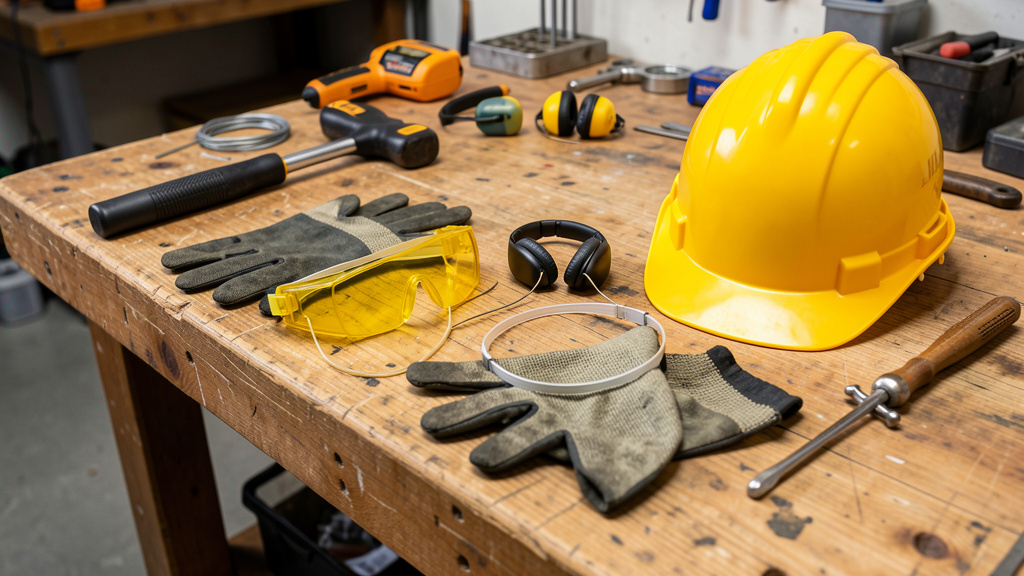
Stop gambling with your well-being. Discover the systematic, scenario-driven approach to selecting, wearing, and maintaining the right protective gear—transforming uncertainty into confident, informed safety for DIYers, gardeners, and home craftsmen.
Personal protective equipment (PPE) serves as your final barrier between routine tasks and preventable injuries. Yet many well-intentioned homeowners reach for ill-fitting gloves, skip eye protection for “quick” jobs, or assume generic gear offers universal coverage. True safety isn’t about owning gear—it’s about understanding why specific equipment matters for your specific risks, how to verify its effectiveness, and how to integrate it seamlessly into your workflow. This guide delivers a structured framework adapted from established safety principles for home environments where hazards hide in plain sight: silica dust from cutting tile, hidden thorns in compost, chemical splashes during seasonal cleanup. You’ll move beyond fragmented checklists to a cohesive system that builds lasting safety habits without sacrificing practicality.
Introduction: Why “Good Enough” PPE Isn’t Good Enough
Walk into any hardware store, and you’ll see walls of safety gear—helmets in primary colors, gloves stacked like pancakes, respirators shrink-wrapped beside duct tape. The visual abundance creates an illusion of preparedness. But safety isn’t measured by gear ownership; it’s measured by appropriate application. Industry safety data consistently indicates that a significant portion of home-project injuries occur despite PPE availability—primarily due to incorrect selection, improper fit, or inconsistent use. This gap between intention and execution is where real risk resides.
Consider two common scenarios:
– Scenario A: You’re repotting cacti on a sunny patio. You wear thin cotton gloves to avoid scratches. A spine embeds deeply near your knuckle, introducing bacteria. Infection sets in within 48 hours.
– Scenario B: You’re sanding an old dresser in your garage. You skip goggles because “it’s just light sanding.” A wood splinter ricochets into your cornea. Emergency room visit. Permanent vision impairment.
Both situations involved some protective effort—but critical mismatches between hazard and gear turned minor tasks into medical emergencies. This isn’t about fear-mongering; it’s about precision. Drawing from widely recognized safety frameworks like the hierarchy of controls (which positions PPE as the last line of defense after hazard elimination and engineering controls) and ANSI/ISEA standards adapted for residential contexts, this guide reframes PPE not as an afterthought, but as a deliberate, intelligent practice. Safety begins long before you open a tool bag—it starts with seeing risks clearly and responding with calibrated solutions. Your hands, eyes, lungs, and skin deserve that level of respect.
The Four-Layer PPE Decision Framework: Your Path to Confident, Context-Aware Protection
Forget fragmented checklists. True PPE mastery requires a repeatable system—one that adapts to your project, your environment, and your body. Developed from occupational safety protocols and refined for home use, this Four-Layer Framework transforms overwhelming choices into clear, actionable steps. Apply it to every task, from planting roses to refinishing floors. Consistency builds competence; competence builds confidence.
Layer 1: Hazard Assessment – Seeing the Invisible Threats
You cannot protect against what you do not see. Hazard assessment is the non-negotiable foundation of effective PPE selection. It shifts your mindset from “What gear do I own?” to “What specific dangers does this task present?” Skipping this layer is like prescribing medicine without diagnosing the illness.
Why this step is crucial: Hazards exist in four primary categories relevant to home settings:
– Physical: Flying debris, sharp edges, falling objects, vibration, extreme temperatures
– Chemical: Pesticides, solvents, paint fumes, fertilizer dust, cleaning agents
– Biological: Mold spores, soil-borne pathogens, insect venom, plant toxins (e.g., urushiol in poison ivy)
– Environmental: UV radiation, confined-space oxygen concerns, electrical currents
Most home injuries stem from underestimating combined hazards. Sanding pressure-treated wood? You face physical (wood dust particles), chemical (residues in older lumber), and biological (mold in damp wood) threats simultaneously.
How to conduct a 5-minute hazard assessment for any task:
1. Pause before starting. Stand where you’ll work. Breathe slowly. Observe.
2. Ask the “What If?” cascade:
– What if a tool slips? (Where would debris fly? What body part is exposed?)
– What if liquid splashes? (Eyes? Skin? Inhalation risk?)
– What if I drop this? (Foot injury? Shattering hazard?)
– What if wind shifts? (Chemical drift? Dust cloud?)
3. Scan vertically: Look up (overhead branches, unstable shelves), down (uneven ground, hidden nails), and around (proximity to children/pets, tripping hazards).
4. Consider duration and repetition: A 10-minute task may need minimal gear; a 3-hour project demands comfort-focused PPE to encourage consistent use. Repetitive motions (pruning, drilling) increase cumulative strain risk—requiring vibration-dampening gloves or supportive footwear.
5. Document mentally (or physically): “Task: Pressure-washing deck. Hazards: High-velocity water injection risk (hands), chemical cleaner splash (eyes/skin), slip hazard (feet), noise (hearing).”
Common mistakes to avoid:
– Assuming familiarity equals safety: “I’ve done this 20 times” overlooks how fatigue, weather changes, or minor tool variations alter risk.
– Ignoring secondary hazards: Using a ladder to clean gutters? Primary hazard = fall risk. Secondary hazards = sharp metal edges (cuts), bird droppings (potential pathogens), overhead power lines (electrocution).
– Overlooking environmental factors: Working in a garage with poor ventilation? Chemical vapors concentrate faster. Humid day? Sweat reduces glove grip and accelerates respirator filter saturation.
Real-world application: You’re clearing overgrown brush behind your shed.
– Hazard scan: Thorny vines (physical puncture), unknown plants (biological—possible irritants), disturbed soil (biological—tetanus risk from hidden nails), buzzing insects (biological sting risk), exertion in heat (environmental heat stress).
– PPE implication: This isn’t just “wear gloves.” You need puncture-resistant gloves with wrist coverage, long sleeves/pants (tucked into socks), safety glasses (not sunglasses—debris can enter from sides), and sturdy boots. Skipping the hazard scan might mean wearing short sleeves and developing a rash that sidelines you for weeks.
Hazard assessment isn’t paranoia—it’s proactive respect for your body’s limits. Make this 5-minute ritual non-negotiable. Your future self will thank you.
Layer 2: Selection Criteria – Decoding Labels, Standards, and Real-World Fit
You’ve identified hazards. Now, how do you choose gear that actually mitigates them? Store shelves overflow with products boasting vague claims like “heavy-duty” or “professional grade.” Without understanding certification standards and material properties, selection becomes guesswork. This layer teaches you to read the language of safety gear—so you select with evidence, not marketing.
Why this step is crucial: Not all “safety glasses” stop high-velocity impacts. Not all “chemical-resistant” gloves withstand acetone. Certification marks (ANSI, CE, NIOSH) provide objective filters in a sea of subjective claims. Ignoring them risks false confidence—a glove labeled “cut-resistant” might fail against a specific blade geometry common in utility knives.
How to decode critical certification marks (with home-relevant examples):
– Eye/Face Protection (ANSI Z87.1):
– Z87+ = Basic impact resistance (suitable for drilling, hammering)
– Z87-2+ = High-mass/high-velocity impact (essential for grinding, chipping concrete)
– D3 = Chemical splash resistance (for pesticide mixing, stain application)
– U6 = UV protection rating (critical for welding, prolonged sun exposure)
Pro Tip: Look for “Z87+” stamped on the lens, not just the frame.
- Hearing Protection (NIOSH NRR):
- Noise Reduction Rating (NRR) indicates approximate decibel reduction. Real-world effectiveness varies based on fit.
- Rule of thumb: For lawnmowers (~90 dB), choose NRR 25+. For angle grinders (~110 dB), NRR 30+ and consider dual protection (earmuffs over plugs).
-
Critical nuance: Foam earplugs require proper rolling and insertion depth to approach rated NRR. Pre-molded flanged plugs suit smaller ear canals but typically offer lower NRR.
-
Respiratory Protection (NIOSH):
- N95: Filters non-oil-based particles (dust, pollen, mold spores). Use for: Sanding drywall, sweeping garage, gardening in dusty soil.
- R95/P95: Oil-resistant (R) or oil-proof (P). Use for: Spraying oil-based paints, handling pesticides with oil carriers.
-
Half/Full Facepiece with Cartridges: Required for vapors (solvents, stains). Cartridge color codes matter:
- Black (OV): Organic vapors (paint thinners, gasoline)
- White (Acid Gas): Muriatic acid fumes (pool cleaning, concrete etching)
- Multi-gas (Yellow): Combination hazards (renovation in older homes with unknown residues)
Important: N95s do not protect against gases/vapors. Using one while stripping paint with certain solvents is ineffective.
-
Hand Protection (ANSI/ISEA 105):
- Cut resistance rated A1-A9 (A9 = highest). A2-A3 suffices for gardening/pruning; A5+ needed for handling sheet metal or broken glass.
-
Chemical resistance varies by material:
- Nitrile: Excellent for oils, solvents, pesticides (ideal for chemical handling)
- Neoprene: Broad chemical resistance + heat tolerance (stain application, epoxy work)
- Latex: Poor chemical resistance; allergy risk (generally avoid for serious tasks)
- Leather: Heat/spark resistance (welding, fireplace maintenance) but absorbs chemicals
Pro Tip: Consult the manufacturer’s chemical resistance chart for your specific chemical. “Chemical-resistant” is meaningless without context.
-
Foot Protection (ASTM F2413):
- I/75 & C/75: Impact (75 ft-lbs) and compression resistance
- EH: Electrical hazard protection (non-conductive soles for incidental contact under 18,000 volts)
- PR: Puncture resistance (critical for roofing, demolition, gardening in debris-filled soil)
Reality check: Steel-toe boots won’t protect against chainsaw kickback. For chainsaw work, seek chainsaw-specific chaps with ballistic nylon layers.
Budget vs. Premium Strategy:
– Budget-smart: Prioritize certified basics for high-frequency tasks. Example: ANSI Z87+ safety glasses ($8–$15) are essential. Skip “designer” branding; focus on certification stamps.
– Premium-worth-it: Invest in comfort-focused gear for long-duration tasks. Example: $40 anti-fog, vented safety glasses with prescription inserts prevent fogging-induced removal during extended projects.
– Emergency alternative: No certified gloves for chemical handling? Use two pairs: thin nitrile exam gloves (from pharmacy) under thick rubber dishwashing gloves. Not ideal, but better than bare hands. Always replace with proper gear ASAP.
Common mistakes to avoid:
– Assuming “waterproof” = chemical-proof: Rubber boots protect against water but may degrade rapidly with pesticide exposure. Check chemical compatibility charts.
– Ignoring size specificity: Respirators require a good seal. A “one-size-fits-all” half-mask respirator leaks if your face shape doesn’t match the seal contour. Try multiple brands.
– Overlooking task duration: Thin cotton gloves suffice for 10 minutes of weeding. For 2 hours of thorny rose pruning, you need padded, puncture-resistant leather with reinforced palms.
Selection isn’t shopping—it’s matching verified protection levels to documented hazards. When in doubt, consult the manufacturer’s technical data sheet (often online via QR code on packaging). Knowledge eliminates guesswork.
Layer 3: Proper Usage, Fit, and Limitations – The Difference Between Gear and Genuine Protection
Owning certified PPE means nothing if worn incorrectly. A respirator with a beard-induced leak offers near-zero protection. Safety glasses perched on your forehead during setup provide zero defense when debris flies. This layer transforms gear from passive objects into active safety systems through precise application.
Why this step is crucial: Improper PPE use significantly reduces effectiveness. A loosely tied hard hat strap won’t prevent helmet displacement during a fall. Ill-fitting gloves cause tool slippage, increasing injury risk. Fit isn’t comfort—it’s functional integrity.
Step-by-step fit protocols for critical PPE categories:
Eye Protection:
1. Place glasses/goggles on face without adjusting straps.
2. Look straight ahead. Lenses should cover eyebrows to cheekbones, temples to nose bridge.
3. Press gently on brow area. Glasses shouldn’t touch eyelashes.
4. Move head side-to-side. Gear must stay firmly seated without sliding.
5. Goggle-specific: Seal should create slight suction when pressed. No light should leak at temples/nose.
Critical check: If you wear prescription glasses, ensure safety glasses fit over them without pressure points, or use prescription inserts. Never wear regular glasses under non-vented goggles—trapped moisture fogs lenses dangerously.
Respirators (Simplified Home Fit Check):
1. For N95s: Place both hands over mask. Inhale sharply. Mask should collapse slightly against face. Exhale gently. No air should leak at edges. Adjust nose wire firmly over bridge.
2. For half-mask respirators: Perform “negative pressure check”: Block cartridge inlets with palms, inhale. Mask should seal tightly to face. “Positive pressure check”: Block exhalation valve, exhale gently. No air should leak at seal.
3. Beard warning: Even light stubble can break the seal. For consistent respiratory protection where a tight seal is required, maintain a clean-shaven face where the mask seals.
Pro Tip: Apply anti-fog solution to inside of safety glasses before putting on respirator. Fogging is a common reason people remove eye protection mid-task.
Hearing Protection:
– Foam earplugs: Roll tightly into thin cylinder. Pull ear upward/outward to straighten canal. Insert deeply, holding until expanded. You should feel slight pressure.
– Verification: Hum loudly. Sound should be muffled and feel “inside your head.” If you hear clear external noise, reinsert.
– Earmuffs: Adjust headband so cups fully enclose ears without hair trapped in seal. Cups should sit parallel to ground.
Gloves:
– Measure hand circumference at knuckles (excluding thumb). Compare to manufacturer’s size chart—do not guess.
– Slide hand in. Fingertips should lightly touch glove ends. Excess material at fingertips reduces dexterity; tightness causes fatigue.
– Make a fist. Material should stretch slightly but not restrict circulation. Check wrist coverage—debris enters through gaps.
– Task-specific test: Hold your tool. Can you grip securely without slippage? Can you feel subtle vibrations (critical for detecting tool malfunction)?
Hard Hats:
– Suspension straps should sit 1–1.5 inches above head. Adjust dial/ratchet until snug but not tight.
– Chin strap must be fastened whenever overhead hazard exists (working under vehicles, in windy conditions, on ladders).
– Critical: Replace suspension annually regardless of appearance. UV degradation weakens straps invisibly.
Understanding inherent limitations (the “what it won’t do” checklist):
– Safety glasses ≠ face shields: Glasses protect eyes only. For grinding, chipping, or chemical pouring, wear goggles under a face shield. Face shields alone may not stop high-velocity impacts.
– N95 respirators ≠ gas masks: N95s filter particles only. They offer no protection against carbon monoxide, solvent vapors, or pesticide gases. Know the hazard type.
– Leather gloves ≠ cut-proof: Leather resists abrasion and heat but offers minimal cut protection against sharp blades. For box cutters or utility knives, use ANSI-rated cut-resistant liners under leather.
– Steel-toe boots ≠ puncture-proof: Steel toes protect against compression, not nail punctures from below. For demolition or roofing, ensure boots have ASTM F2413 PR (puncture resistant) rating.
The Donning and Doffing Ritual (Preventing Secondary Contamination):
Donning (Putting On):
1. Wash hands thoroughly.
2. Put on base layers first (long sleeves, pants).
3. Secure footwear.
4. Don gloves last to avoid contaminating other gear during setup.
5. Adjust all straps/seals before entering hazard zone.
Doffing (Taking Off – Critical for Chemical/Biological Hazards):
1. Outside hazard zone: Remove gloves first using “glove-in-glove” technique: peel first glove off inside-out, hold in gloved hand; slide fingers under second glove cuff, peel off enclosing first glove.
2. Remove eye/face protection by handling edges only.
3. Remove respirator by straps (never touch front filter).
4. Remove headwear.
5. Wash hands immediately, even if gloves were worn.
Why it matters: During pesticide application, improper doffing transfers chemicals to your face, phone, or car steering wheel. This ritual prevents “take-home” exposure to family members.
Common mistakes to avoid:
– Pushing glasses up on head: Creates gap for debris entry. Use a lanyard to hang glasses around neck when temporarily removed.
– Wearing respirator over hat: Breaks seal at forehead. Wear hard hat over respirator straps if both required (check compatibility).
– Reusing single-use items: N95s lose effectiveness after moisture exposure (sweat, humidity). Discard after cumulative use per manufacturer guidance or if soiled/damaged.
– Ignoring comfort-induced non-compliance: If gear causes discomfort quickly, you’ll remove it. Address fit issues before starting work.
Proper usage turns certified equipment into reliable defense. Treat fit checks with the same seriousness as tool safety checks. Your body depends on it.
Layer 4: Maintenance, Inspection, and Replacement Protocol – Sustaining Protection Over Time
PPE degrades. Sunlight weakens plastic lenses. Sweat corrodes respirator valves. Abrasion thins glove palms. Gear that protected you yesterday may fail today. This layer establishes simple, sustainable habits to ensure your equipment remains trustworthy throughout its lifecycle—preventing “silent failure” when you need it most.
Why this step is crucial: Degraded PPE creates dangerous false confidence. A hard hat dropped from height may show no visible cracks but lose significant impact resistance. A respirator filter saturated with oil mist stops filtering particles effectively. Maintenance isn’t optional upkeep—it’s integrity verification.
Category-by-category care protocols:
Eye Protection:
– Daily: Rinse lenses with lukewarm water after use. Wipe gently with microfiber cloth. Avoid paper towels (scratch lenses).
– Weekly: Inspect for scratches, cracks, or loose frames. Hold up to light—any distortion? Replace immediately. Scratches scatter light, causing eye strain and reducing hazard visibility.
– Storage: Keep in vented hard case. Never leave on dashboard (UV/heat degradation) or toss loosely in toolbox.
– Replacement triggers: Visible scratches impairing vision, cracked frame, loose temples, yellowed lenses (UV damage). General guideline: Replace safety glasses annually with regular use.
Respirators:
– After each use: Wipe facepiece with mild soap/water. Air dry away from direct sun. Store cartridges in airtight bag (prevents ambient contaminant absorption).
– Filter replacement:
– N95s: Discard after cumulative use per manufacturer guidance, moisture exposure, or breathing resistance increases.
– Cartridge respirators: Replace when you smell/taste contaminants (“breakthrough”), breathing becomes difficult, or per manufacturer’s time guideline. Never rely solely on time—sensory cues are critical.
– Critical inspection: Check facepiece for cracks, valve integrity (flap should seal tightly), and strap elasticity. Stretch straps—they should return to shape without stickiness.
– Storage: Keep in rigid container away from chemicals, extreme temps, and deformation pressure.
Hearing Protection:
– Foam earplugs: Single-use only. Discard after one session. Reusing compresses foam, reducing effectiveness.
– Reusable plugs/muffs: Wash weekly with mild soap. Rinse thoroughly. Air dry completely before storing. Inspect muffs for cracked cups, hardened seals, or frayed headbands.
– Replacement triggers: Loss of pliability (foam stays compressed), visible dirt/debris trapped in material, reduced noise dampening perceived by user.
Hand Protection:
– Cleaning: Rinse chemical-resistant gloves immediately after use. Turn inside out if contaminated internally. Air dry away from heat sources. Never machine wash leather gloves—they stiffen and crack.
– Inspection ritual: Before each use, stretch gloves under bright light. Check palms, fingertips, and seams for:
– Thin spots (hold to light—pinholes visible)
– Cracks (especially at knuckles)
– Stiffness or stickiness (chemical degradation)
– Replacement triggers: Any puncture (even tiny), loss of grip texture, chemical swelling/discoloration, frayed cuffs. Critical: Cut-resistant gloves lose rating after a single cut incident—replace immediately.
Head and Foot Protection:
– Hard hats: Clean shell monthly with mild soap. Inspect shell for cracks, chalky texture (UV damage), or deep scratches. Replace shell after any significant impact even if no damage visible. Replace suspension every 12 months.
– Safety boots: Clean soles to maintain slip resistance. Inspect for sole separation, punctures in midsole, or worn tread. Steel toes can corrode internally—tap shell; dull thud vs. sharp ring may indicate damage.
Creating a Personal PPE Log (Simple but Powerful):
Keep a small notebook or phone note titled “PPE Tracker.” For critical items (respirator, hard hat, safety glasses), log:
– Purchase date
– First use date
– Last inspection date/results
– Replacement date
Example entry:
ANSI Z87+ Glasses (Brand X) | Bought: 3/15/24 | First Use: 3/20/24 | Inspection 5/1: Minor scratch top-left lens—monitoring | Next inspect: 6/1
This transforms vague “I think these are old” into data-driven decisions.
Seasonal and Scenario-Based Replacement Cycles:
– Spring (Gardening Prep): Inspect gloves for dry rot. Replace knee pads if foam is compressed. Check respirator seals after winter storage.
– Fall (Renovation Season): Verify respirator cartridge expiration dates. Test headlamp brightness on hard hats.
– After High-Risk Tasks: Discard gloves/respirators used for mold remediation, lead paint sanding, or chemical spills—do not reuse.
– Post-Impact: Replace any PPE involved in a fall, strike, or chemical splash incident. Hidden damage is undetectable.
Common mistakes to avoid:
– Storing respirators in toolboxes: Chemical fumes from solvents degrade rubber seals. Store separately in sealed container.
– Using tape to “fix” cracked lenses: Tape creates optical distortion and fails under impact. Replace immediately.
– Ignoring manufacturer guidelines: Some nitrile gloves degrade after months unused due to environmental factors. Check production dates on packaging.
– Washing flame-resistant (FR) clothing with fabric softener: Coating reduces FR properties. Use mild detergent only.
Maintenance is stewardship. Treat your PPE with the respect it deserves—it’s literally standing between you and harm. A 2-minute inspection ritual prevents catastrophic failure. Make it habitual.
The Fundamental Principle: PPE is not a static product but a dynamic system—its effectiveness lives only in the precise intersection of verified hazard assessment, certified equipment selection, meticulous usage, and disciplined maintenance. Mastery lies not in owning gear, but in honoring the entire lifecycle of protection.
Deep Dive: PPE Category Mastery for Home Scenarios
Generic advice fails when thorns pierce thin gloves or wood dust clouds obscure vision. This section delivers hyper-specific guidance for each protection category, grounded in real-world home tasks. For every item, we cover: precise use cases, selection filters, fit nuances, maintenance specifics, and critical “when to upgrade” triggers. Bookmark this section—it’s your field reference.
Head Protection: Beyond the Hard Hat
When you absolutely need it:
– Working under vehicles, ladders, or scaffolding
– Demolition, roofing, or overhead drilling
– Tree trimming (falling branches)
– Using pole saws or chainsaws (kickback trajectory)
– Renovating older homes (loose plaster, nails)
Selection decoded:
– Type I (Top Impact): Protects against vertical blows (falling hammer). Sufficient for most home workshops.
– Type II (Top + Lateral Impact): Adds side protection (swinging tools, glancing blows). Essential for confined spaces (attics, crawl spaces) or chainsaw work.
– Ventilated vs. Non-Ventilated: Vents improve comfort but allow small debris entry. Use non-vented for sanding, grinding, or chemical environments.
– Accessory slots: Critical for home use. Choose hats with slots for:
– Face shields: For grinding or chemical pouring
– Hearing protection: Earmuffs that clip directly to hat
– Headlamps: For working in dim garages or crawl spaces
– Material matters:
– HDPE (High-Density Polyethylene): Standard, affordable, good impact resistance
– ABS (Acrylonitrile Butadiene Styrene): Higher heat resistance (near welding, furnaces)
– Carbon Fiber: Lightweight premium option (reduces neck strain during extended wear)
Fit and usage essentials:
– Suspension must sit level on head—not tilted back like a baseball cap.
– Adjust rear knob until snug but not painful. You should be able to insert one finger between suspension and head.
– Chin strap protocol: Fasten whenever:
– Wind exceeds 15 mph
– Working on slopes or ladders
– Overhead hazards exist (even “just in case”)
– Critical: Never paint hard hats. Paint solvents degrade shell integrity. Use adhesive stickers for identification instead.
Maintenance and replacement:
– Inspect shell weekly for cracks, cuts, or chalky texture (UV damage).
– Replace immediately after any impact—even if no visible damage. Internal structure may be compromised.
– Replace suspension every 12 months (UV and sweat degrade straps).
– Store away from direct sunlight, heaters, or vehicle dashboards. Heat accelerates degradation.
Common home mistakes:
– Wearing baseball caps underneath: Creates gap, prevents proper suspension contact. Causes hat to shift on impact.
– Using expired hats: Most manufacturers imprint production date inside brim (e.g., “0324” = March 2024). Replace shells every 5 years max, regardless of use.
– Ignoring accessory compatibility: A face shield must be rated for the same impact standard as the hat (ANSI Z89.1). Cheap clip-on shields may not provide adequate protection.
When to upgrade:
– For electrical work near live circuits: Choose Class E (Electrical) rated hats (tested to 20,000 volts). Standard hats offer minimal electrical protection.
– For hot environments (attics in summer): Seek hats with moisture-wicking sweatbands and enhanced ventilation slots.
Eye and Face Protection: Precision Defense for Vision Preservation
Your eyes have zero redundancy. One incident can alter your life forever. This isn’t hyperbole—corneal abrasions from wood dust are among the most common DIY-related eye injuries. Selecting the right ocular protection requires matching the hazard’s physics to the gear’s engineering.
Safety Glasses vs. Goggles vs. Face Shields: Choosing Correctly
| Scenario | Hazard Type | Required Protection | Why |
|———-|————-|———————|—–|
| Drilling drywall | Low-velocity dust/debris | ANSI Z87+ Safety Glasses | Vented design prevents fogging; side shields block peripheral debris |
| Grinding metal | High-velocity sparks, UV radiation | Tight-seal Goggles under Face Shield | Goggles block sparks entering from sides; face shield stops large fragments; UV rating protects against arc flash |
| Mixing pesticides | Chemical splash | Indirect-vented Goggles (ANSI Z87.1 D3) | Vents have baffles preventing direct liquid entry; tight seal blocks vapors |
| Chainsaw operation | Wood chips, kickback debris | Goggles with anti-fog coating | Sealed design prevents chip entry; anti-fog critical during exertion |
| Welding (even small repairs) | Intense UV/IR radiation | Auto-darkening Helmet (Shade #10+) | Regular glasses/goggles offer zero protection against arc flash (“welder’s flash”) |
Decoding lens technologies:
– Polycarbonate: Standard for impact resistance. 10x stronger than plastic/glass. Non-negotiable for safety eyewear.
– Anti-fog coating: Critical for humid environments, exertion, or respirator use. Look for “permanent” hydrophobic coatings (not temporary sprays).
– Anti-scratch coating: Extends lens life but never compromises impact rating. Verify ANSI Z87+ stamp remains after coating application.
– Tint options:
– Clear: Indoor/general use
– Amber: Enhances contrast in low light (garages, dusk gardening)
– Gray: True color perception + UV protection (outdoor tasks)
– Mirrored: Reduces glare in bright sun (roofing, snow reflection)
– Prescription options:
– Fit-over glasses: Bulky but affordable. Ensure Z87+ rating on both prescription and outer glasses.
– Insert carriers: Clip prescription lenses inside safety frame. Better optical clarity.
– Rx safety glasses: Custom-made. Highest comfort/compliance for daily wearers.
Fit protocol refined:
1. Temples should rest evenly on ears without pressure points.
2. Nose pads (if adjustable) should distribute weight without slipping.
3. Field of view must remain unobstructed—no frame intrusion in peripheral vision.
4. Critical test: Bend forward sharply. Glasses should stay firmly in place. If they slide, adjust temple arms or choose wraparound style.
Maintenance specifics:
– Clean daily with lens-safe solution and microfiber cloth.
– Store in hard case immediately after use. Loose storage in pockets/toolboxes causes micro-scratches.
– Inspect lenses before each use under bright light. Any scratch deeper than a fingernail? Replace. Scratches diffract light, causing eye strain and reducing hazard detection.
– Replace rubber gaskets on goggles annually—they harden and lose seal integrity.
Critical home scenarios decoded:
– Pressure washing: Requires tight-seal goggles. High-velocity water droplets can penetrate standard safety glasses. Add face shield for chemical cleaners.
– Mowing lawn: Safety glasses essential. Stones kicked up by blades travel at high speed. Amber lenses improve grass/debris contrast.
– Unclogging drain: Chemical splash risk demands indirect-vented goggles. Never use regular glasses—they channel liquid toward eyes.
– Working with fiberglass insulation: Goggles with foam seal prevent itchy fibers from entering. Tape seal to face for extreme sensitivity (temporary measure only).
When to upgrade:
– For extended computer use in workshop (measuring, planning): Blue-light filtering safety glasses reduce digital eye strain without compromising impact protection.
– For color-critical tasks (paint matching, wiring): Choose lenses with high Color Rendering Index (CRI >90) to avoid misidentification.
Hearing Protection: Preserving Your Lifelong Connection to Sound
Hearing damage is cumulative, irreversible, and often painless until it’s too late. That “ringing” after mowing isn’t normal—it’s acute trauma. Consistent protection preserves your ability to hear grandchildren’s laughter, birdsong, and subtle tool warnings (like a bearing failing).
Understanding Noise Levels in Home Environments (General Guidelines):
| Activity | Approx. Decibels (dB) | Suggested Protection | Notes |
|———-|————————|———————-|——-|
| Normal conversation | 60 dB | None | Safe indefinitely |
| Dishwasher | 70 dB | None | Safe |
| Lawnmower | 90 dB | NRR 25+ | Prolonged exposure may cause damage |
| Leaf blower | 100 dB | NRR 28+ | Limit exposure time |
| Chainsaw | 110 dB | NRR 30+ (dual protection ideal) | Very short exposure times recommended |
| Angle grinder | 115 dB | NRR 30+ + earmuffs over plugs | Extreme caution required |
Earplug vs. Earmuff Strategy:
– Foam Earplugs (NRR 29–33):
– Best for: High-noise tasks (grinders, saws), hot environments (less heat retention), wearing under hard hats.
– Critical technique: Roll tightly into thin cylinder. Pull ear up/out to straighten canal. Insert deeply. Hold until expanded. Most users insert too shallowly—reducing effectiveness.
– Pro tip: Use corded plugs to prevent loss in grass/debris.
– Pre-molded Flanged Plugs (NRR 20–27):
– Best for: Smaller ear canals, intermittent noise (drilling sessions), reuse scenarios.
– Limitation: Lower NRR than foam; requires perfect seal. Try multiple sizes.
– Earmuffs (NRR 20–31):
– Best for: Moderate noise (lawnmowers, shop vacs), comfort-focused users, quick on/off tasks.
– Critical fit: Cups must fully enclose ears. No hair trapped in seal. Headband should sit centered on crown.
– Limitation: Less effective for low-frequency noise (leaf blowers). Heat buildup in summer.
– Dual Protection (Plugs + Muffs):
– Required for: Very high-noise tasks (jackhammers, abrasive cutting).
– How it works: Provides additive protection.
– Home application: Essential for prolonged chainsaw use or abrasive cutting.
Advanced considerations for home users:
– Electronic earmuffs: Allow ambient sound amplification (hearing warnings, conversations) while compressing dangerous noise spikes. Ideal for:
– Working alone in garage (hearing phone ring)
– Supervising children while using loud tools
– Custom-molded plugs: Worthwhile investment for frequent users (woodworkers, landscapers). Perfect seal, comfortable for hours, reusable for years.
– Fit testing concept: Hum loudly. Sound should feel “inside your head.” If external noise is clear, reseat plugs or adjust muffs.
Maintenance and replacement:
– Foam plugs: Single-use. Discard after one session. Reusing compresses foam, destroying seal.
– Reusable plugs/muffs: Wash weekly with mild soap. Air dry completely. Inspect seals for cracks, hardening, or debris.
– Replacement triggers: Loss of pliability, visible dirt trapped in material, reduced noise dampening perceived by user.
– Storage: Keep in rigid case. Avoid extreme heat (car glovebox) which degrades materials.
Common home mistakes:
– Wearing only one earplug: “I need to hear my music/tool.” This provides negligible protection and creates imbalance. Use electronic muffs instead.
– Ignoring children’s hearing: Kids’ ears are more sensitive. Provide properly sized earmuffs for yard work or workshop visits.
– Assuming “getting used to the noise” means safety: Your ears aren’t adapting—they’re sustaining damage. Persistent ringing = urgent warning.
When to upgrade:
– For musicians/DJs doing home studio work: High-fidelity musician’s earplugs (Etymotic, Westone) reduce volume evenly across frequencies—preserving sound quality while protecting hearing.
– For communication-heavy tasks: Bluetooth-enabled electronic muffs allow phone calls/tool alerts without removing protection.
Respiratory Protection: Breathing Safely in a Particle-Filled World
Your lungs have no “undo” button. Silica dust from cutting tile can cause serious respiratory conditions. Mold spores trigger sensitivities. Pesticide vapors accumulate silently. Respiratory protection is non-negotiable for invisible threats—but only if matched precisely to the contaminant.
The Contaminant Decision Guide (Choose Your Respirator):
– If the hazard is particles only (dust, pollen, mold spores, non-oil-based):
– Use an N95 respirator (NIOSH-approved).
– For oil-based particles (pesticides with oil carriers, paint overspray): Use R95 or P95.
– If the hazard includes gases or vapors (solvents, pesticides, fumes):
– Use a half-facepiece or full-facepiece respirator with the correct cartridge:
– Organic vapors (paints, stains, gasoline): Black (OV) cartridge.
– Acid gases (muriatic acid, pool chemicals): White (Acid Gas) cartridge.
– Multi-hazard (renovation with unknown chemicals): Yellow (Multi-Gas) cartridge.
– Particulates and vapors: Use an OV cartridge with a P100 pre-filter.
– Important: For high concentrations, unknown hazards, or confined spaces, consult safety guidelines or professionals. Respirators have limitations.
N95 Respirators: The Home Essential (Used Correctly)
– When to use: Sanding drywall/wood, sweeping garages, gardening in dusty soil, mold cleanup (small areas), wildfire smoke days.
– Critical limitations:
– Does NOT protect against: Gases, vapors, asbestos, lead dust (requires P100), oxygen-deficient atmospheres.
– Fit is everything: Must seal tightly to face. Beards, stubble, or facial hair can break seal. Clean-shaven face required where seal is critical.
– Moisture reduces effectiveness: Discard after cumulative use per manufacturer guidance, heavy sweating, or visible soiling.
– Proper donning sequence:
1. Wash hands.
2. Hold respirator with nosepiece up.
3. Place over nose/mouth. Pull bottom strap over head, position below ears. Pull top strap over head, position above ears.
4. Mold nose wire firmly to bridge of nose.
5. Seal check: Place hands over respirator. Inhale sharply—respirator should collapse slightly. Exhale gently—no air leaks at edges.
– Comfort hacks:
– Use respirator with soft foam nose cushion to prevent glasses fogging.
– Apply medical tape vertically over nose bridge before donning to create smoother seal surface.
– For extended wear: Choose models with exhalation valves (reduces heat/moisture buildup).
Half-Facepiece Respirators: For Chemical Hazards
– When to use: Spraying pesticides, oil-based paints, stains, solvents, epoxy work, muriatic acid application.
– Cartridge selection is critical:
– Black (OV): Organic vapors (paint thinners, gasoline, turpentine)
– White (Acid Gas): Chlorine, sulfur dioxide (pool chemicals, concrete etching)
– Green (Ammonia): Specific to ammonia-based cleaners
– P100 Filters (Pink): For lead dust, asbestos (abatement only—hire pro), silica dust. Always pair with OV cartridge for mixed hazards.
– Fit testing concept for home:
– Perform negative/positive pressure checks before each use (described in Layer 3).
– If you smell/taste contaminants (“breakthrough”), leave area immediately and replace cartridges.
– Cartridge replacement protocol:
– Time-based: Follow manufacturer guideline (often 40 hours for OV cartridges).
– Sensory-based: Replace immediately upon detecting odor/taste.
– Critical accessories:
– P100 pre-filters: Snap over cartridges to extend life when sanding/painting. Replace pre-filters frequently; cartridges last longer.
– Spare cartridges: Store sealed in airtight container. Opened cartridges absorb ambient vapors and degrade.
Special Scenarios Demystified:
– Mold remediation (small areas <10 sq ft): N95 sufficient. For larger areas, use half-mask with P100 filters. Always use eye protection—mold spores irritate eyes.
– Wildfire smoke: N95 or P100 respirator. Cloth masks or surgical masks offer minimal protection against fine particulates (PM2.5).
– Painting with low-VOC paints: Still requires respirator. “Low-VOC” ≠ no vapors. Solvents like acetone remain hazardous.
– Working in confined spaces (crawl spaces, tanks): Never rely solely on respirator. Test air quality first if possible. Oxygen deficiency requires specialized equipment—beyond typical home user scope. When in doubt, seek professional assistance.
Maintenance and storage:
– Clean facepiece after each use with mild soap/water. Air dry away from sun.
– Store cartridges in airtight container (glass jar with lid). Label with “Opened On” date.
– Inspect straps, valves, and facepiece weekly for cracks, stiffness, or debris.
– Never store respirator in vehicle—heat degrades rubber seals.
Common home mistakes:
– Using dust masks (surgical masks) for sanding: These filter large particles only. Wood/silica dust passes straight through. Look for “NIOSH N95” stamp.
– Reusing N95s for weeks: Effectiveness degrades with moisture. Discard after single heavy-use session.
– Ignoring exhalation valve limitations: Valves protect you but not others. Do not wear valve-equipped respirators when sick or in sterile environments.
– Assuming “no smell” means safe: Many hazardous vapors (carbon monoxide) are odorless. Know your chemicals.
When to upgrade:
– For frequent painters/woodworkers: Invest in powered air-purifying respirator (PAPR). Battery-powered blower delivers filtered air to hood—superior comfort, no face seal issues, higher protection factor.
– For allergy sufferers: N95 with exhalation valve reduces breathing resistance during yard work. Pair with sealed goggles to block pollen entry.
Hand Protection: The Critical Interface Between You and Your Tools
Your hands are your primary tools. Protecting them isn’t about avoiding minor scratches—it’s about preserving dexterity, sensation, and function for life. Glove selection requires matching material science to specific hazard physics.
The Glove Selection Matrix: Material vs. Hazard
| Hazard Type | Best Material | Why | Home Task Examples |
|————-|—————|—–|———————|
| Cuts/Abrasion | Cut-resistant liner (HPPE, Steel Mesh) under leather | HPPE fibers resist slicing; leather adds abrasion/heat resistance | Handling sheet metal, broken glass cleanup, pruning thorny roses |
| Punctures | Kevlar®/Stainless Steel blend | Interlocking fibers stop sharp points | Gardening in debris-filled soil, roofing, demolition |
| Chemicals | Nitrile (oils/solvents), Neoprene (broad spectrum) | Molecular structure resists permeation | Pesticide application, stain mixing, epoxy work, battery acid |
| Heat/Flame | Leather (cowhide/goatskin), Aluminized | Natural fibers char rather than melt; reflect radiant heat | Fireplace maintenance, welding small repairs, handling hot pipes |
| Cold | Insulated (Thinsulate™), Waterproof membrane | Traps air for insulation; blocks moisture | Winter gardening, handling frozen pipes, snow removal |
| Vibration | Gel-padded palms, specialized damping layers | Absorbs tool oscillation frequency | Using jackhammers, chainsaws, sanders for extended periods |
| Biological | Nitrile exam gloves (under work gloves) | Impermeable barrier to pathogens | Compost handling, cleaning animal areas, mold remediation |
Fit and dexterity protocols:
– Size matters: Measure hand circumference at knuckles (exclude thumb). Compare to brand-specific chart. Too tight = reduced circulation, fatigue. Too loose = tool slippage.
– Dexterity test: Put on gloves. Pick up a dime. Tie a shoelace. If impossible, size up or choose thinner material (e.g., goatskin vs. cowhide leather).
– Wrist coverage: For chemical/biological hazards, choose gauntlet-style gloves that extend over shirt cuffs. Tape seal if critical (temporary measure).
– Critical check: Make a fist repeatedly. Material should flex at knuckles without binding. Stiff gloves cause hand fatigue and reduce grip security.
Task-specific deep dives:
– Gardening:
– Light weeding: Breathable cotton/polyester blend (prevents blisters, allows sweat evaporation).
– Rose pruning/thorny plants: Leather palms with Kevlar® liner + extended wrist cuff. Never use thin fabric gloves—they tear on thorns, embedding fibers in wounds.
– Compost handling: Nitrile exam gloves under canvas work gloves. Prevents fungal/bacterial exposure.
– Woodworking:
– Sanding: Vibration-dampening gloves with synthetic palms (prevents hand fatigue).
– Table saw use: Critical safety note: Most safety organizations advise against gloves near rotating blades (entanglement risk). Primary defense: push sticks, proper technique, and tool guards. For feeding small pieces where gloves are considered, cut-resistant gloves (ANSI A5+) may be used with extreme caution—but technique and guards are paramount.
– Finishing: Nitrile gloves (resists solvents in stains/varnishes). Change immediately if chemical soaks through.
– Chemical Handling (Pesticides, Cleaners):
– Consult manufacturer’s chemical resistance guide before purchasing.
– Example: For glyphosate-based herbicides, nitrile >4H (4+ hours breakthrough time). Latex degrades rapidly.
– Double-gloving strategy: Thin nitrile exam glove under thick rubber glove. If outer glove leaks, inner provides backup. Remove outer glove first during doffing.
– Electrical Work (Low Voltage <600V):
– Only use gloves rated for electrical work (ASTM D120) with leather protectors.
– Critical: Inspect for pinholes before each use (air inflation test). Never use damaged electrical gloves.
– Home reality: For most DIY electrical (outlet replacement), voltage-rated gloves are often unnecessary if circuits are de-energized first (PPE is last line of defense). Always verify power is off with a tester.
Maintenance and replacement triggers:
– Cleaning: Rinse chemical gloves immediately. Turn inside out if contaminated internally. Air dry away from heat. Never machine wash leather—use saddle soap sparingly.
– Inspection ritual: Before each use, stretch under bright light. Check for:
– Pinholes (hold to light)
– Cracks at knuckles/fingertips
– Stiffness or stickiness (chemical degradation)
– Thinning at high-wear areas (palms, index finger)
– Replacement triggers:
– Any puncture or cut (even tiny)
– Loss of grip texture
– Chemical swelling/discoloration
– Stiffness reducing dexterity
– Critical: Cut-resistant gloves lose rating after one cut incident—replace immediately.
Common home mistakes:
– Using dishwashing gloves for chemical tasks: Thin rubber offers minimal chemical resistance and tears easily. Use purpose-built nitrile/neoprene.
– Wearing wet gloves: Moisture accelerates chemical permeation and causes skin maceration (increasing absorption). Dry thoroughly between uses.
– Ignoring allergy risks: Latex gloves cause reactions in sensitized individuals. Nitrile is a safer universal choice.
– Assuming “thick = better”: Thick gloves reduce tactile feedback, increasing accident risk with precision tools. Match thickness to task.
When to upgrade:
– For frequent woodworkers: Goatskin leather gloves offer superior dexterity and comfort vs. cowhide.
– For cold-weather tasks: Heated gloves (battery-powered) maintain dexterity in freezing temps—critical for safe tool operation.
– For vibration-sensitive users: Look for gloves certified to ISO 10819 (vibration attenuation standard).
Foot and Leg Protection: Foundation of Stability and Safety
Your feet anchor your entire body. A slip, puncture, or crush injury doesn’t just cause pain—it destabilizes your whole posture, potentially triggering falls or tool mishaps. Foot protection is stability engineering.
Safety Boot Selection Criteria:
– Toe Protection:
– Steel Toe: Maximum impact resistance. Heavier, conducts cold.
– Composite Toe (Carbon Fiber, Kevlar®): Lighter, non-conductive (electrical work), non-metallic (airport-friendly). Sufficient impact resistance for most home use.
– Sole Protection:
– Puncture Resistant (PR): Steel or composite midsole plate. Essential for roofing, demolition, gardening in unknown terrain.
– Slip Resistant (SR): Deep, multi-directional lugs + rubber compound. Critical for wet surfaces (pressure washing, garage oil spills).
– Electrical Hazard (EH): Non-conductive soles (tested to 18,000 volts). Note: EH rating degrades with moisture, wear, or contaminants. Not for live electrical work—de-energize first.
– Material Matters:
– Full-Grain Leather: Durable, water-resistant (with treatment), molds to foot. Best all-around.
– Waterproof Membrane (Gore-Tex®): Essential for wet environments (mud, snow, pressure washing). Prevents blisters from soaked socks.
– Metatarsal Guards: External guard protecting top of foot. Needed for handling heavy pipes, logs, or demolition debris.
Fit protocol beyond shoe size:
– Try boots on late in the day when feet are largest.
– Wear task-specific socks (thick work socks for boots).
– Stand up. There should be ½ inch between longest toe and boot end.
– Walk on incline/decline surface if possible. Heel should not slip.
– Critical: Toes must wiggle freely. Cramped toes cause numbness, reducing balance awareness.
Task-specific recommendations:
– Landscaping/Gardening:
– Waterproof boots with aggressive lug soles (mud traction).
– PR rating essential for hidden nails, rocks, or thorns.
– Alternative: Rubber boots with PR insole for wet conditions. Standard rubber boots offer zero puncture protection.
– Workshop Use:
– EH-rated composite toe boots (lighter for all-day wear, electrical safety near outlets).
– Oil-resistant soles prevent slips on garage floors.
– Consider metatarsal guards if moving heavy materials.
– Roofing/Ladder Work:
– Deep-lug soles for shingle grip.
– PR rating non-negotiable (nails).
– Ankle support critical for ladder stability.
– Chemical Handling:
– Rubber boots (neoprene) rated for specific chemicals.
– Critical: Boots must extend over pant legs to prevent splash entry. Tape seal if high-risk.
Maintenance essentials:
– Clean soles after each use—caked mud reduces traction.
– Condition leather quarterly to prevent cracking.
– Inspect soles weekly for separation, deep cuts, or worn tread.
– Replacement triggers:
– Sole separation
– Worn tread (smooth spots)
– Puncture through midsole
– Persistent odor (indicates internal degradation)
Common home mistakes:
– Wearing sneakers in workshop: Zero puncture/crush protection. A dropped wrench can fracture toes.
– Ignoring sock choice: Cotton socks retain moisture, causing blisters. Choose moisture-wicking synthetic or wool blends.
– Assuming “waterproof” = chemical-proof: Rubber boots protect against water but may degrade with pesticide exposure. Check chemical compatibility.
– Wearing loose boots: Causes foot slide, reducing control and increasing blister risk. Laces should be snug but not tight.
When to upgrade:
– For all-day comfort: Look for boots with removable cushioned insoles (replace with orthotics if needed).
– For extreme cold: Insulated boots (200g+ Thinsulate™) with moisture-wicking liners prevent discomfort during winter projects.
– For electrical professionals: Dielectric boots (ASTM F2413 EH) with verified voltage rating—never rely on standard EH rating for live work.
Body Protection: Full-Coverage Defense for High-Risk Scenarios
Often overlooked until it’s too late, body protection shields your largest organ—skin—from burns, chemicals, cuts, and biological hazards. It’s not just “coveralls”; it’s strategic barrier engineering.
Garment Types and Applications:
| Garment Type | Protection Level | Best For | Limitations |
|————–|——————|———-|————-|
| Disposable Coveralls (Tyvek®) | Light particulate barrier (dust, mold spores) | Sanding, light demolition, mold cleanup (<10 sq ft) | Tears easily; no chemical resistance; single-use |
| Chemical-Resistant Suits | Liquid splash protection (varies by material) | Pesticide application, stain mixing, hazardous cleanup | Heat stress risk; requires training; limited reuse |
| Flame-Resistant (FR) Clothing | Self-extinguishing fabric (arc flash, sparks) | Welding, fireplace work, near open flames | Expensive; requires special laundering |
| High-Visibility Vests | Increases visibility to others | Working near roadways, driveways, low-light areas | No physical protection; wear over other PPE |
| Chainsaw Chaps | Ballistic nylon layers stop chain on contact | Chainsaw operation (essential!) | Heavy; only protects front of legs |
Critical selection details:
– Tyvek® coveralls:
– Choose “Type 5” for particulate protection (mold, asbestos abatement prep).
– “Type 3” for limited liquid splash (light pesticide mixing).
– Fit tip: Order one size larger to wear over clothing. Tape wrists/ankles with duct tape for better seal (temporary).
– Chemical suits:
– Material matters:
– Nitrile-coated: Good for oils, solvents
– Butyl rubber: Best for strong acids, ketones
– Viton®: Premium broad-spectrum resistance
– Critical: Check breakthrough time for your specific chemical. A suit rated for “pesticides” may fail against your brand’s formulation.
– FR clothing:
– Look for ASTM F1506 rating.
– Never wear synthetic blends (polyester melts into skin). 100% cotton is better than synthetics but not FR-rated.
– Launder separately with mild detergent—no fabric softener (coats fibers, reducing FR properties).
Task-specific protocols:
– Chainsaw operation:
– Chaps must cover from waist to below knee.
– Ensure chaps are certified to ASTM F1897.
– Critical: Chaps protect only the front of legs. Always cut with saw to side of body, never between legs.
– Pesticide application:
– Wear chemical-resistant suit over long sleeves/pants.
– Seal wrists/ankles with tape.
– Add chemical-resistant apron for torso splash protection.
– Doffing sequence is critical: Remove suit before respirator/gloves to avoid contaminating face.
– Welding (even small repairs):
– FR shirt/pants minimum. Leather welding jacket ideal.
– Never wear synthetics—they ignite and melt.
– Cover all skin; UV radiation from arc causes “sunburn” through light fabrics.
Maintenance and replacement:
– Disposable coveralls: Discard after single use. Roll inward to contain contaminants.
– Reusable chemical suits: Rinse immediately after use. Air dry away from sun. Inspect for pinholes before each use (hold to light).
– FR clothing: Wash separately in warm water. No bleach, starch, or fabric softener. Replace after heavy soiling, tears, or 25–50 washes (per manufacturer).
– Chainsaw chaps: Inspect after each use for cuts in outer layer. Replace immediately if ballistic layers are exposed.
Common home mistakes:
– Wearing shorts/tank tops in workshop: One spark from grinding can cause severe burns. Always cover skin.
– Using rain gear for chemical tasks: PVC rain suits offer minimal chemical resistance and trap heat. Use purpose-built suits.
– Ignoring layering: In cold weather, wear moisture-wicking base layer under FR clothing. Cotton base layers retain sweat, increasing burn risk.
– Assuming “dark color = FR”: Color has no relation to flame resistance. Only certified FR labels matter.
When to upgrade:
– For frequent pesticide applicators: Invest in reusable chemical suit with taped seams (higher protection level).
– For welders: Leather spats protect ankles from sparks—often overlooked injury zone.
– For visibility-critical tasks: Choose ANSI Class 2 or 3 high-vis vests with reflective striping (not just bright color).
Beyond the Gear: Overcoming Psychological and Practical Barriers to Consistent PPE Use
You can own the perfect gear, but if you don’t wear it consistently, it’s worthless. Safety failures are rarely about gear quality—they’re about human behavior. This section addresses the real-world friction points that cause even safety-conscious people to skip protection, offering evidence-based strategies to build lasting habits.
The Comfort-Compliance Connection: Why “Uncomfortable” Gear Gets Ignored
Research consistently shows comfort is a primary predictor of PPE compliance. If gear causes pain, fogging, or overheating within minutes, your brain rationalizes removal: “I’ll just do this one quick part without it.” This is not laziness—it’s human nature. The solution isn’t willpower; it’s intelligent gear selection focused on wearability.
Solving common comfort pain points:
– Fogging safety glasses:
– Cause: Temperature differential between face and lens; breath leakage from respirator.
– Solutions:
– Anti-fog coated lenses (permanent hydrophobic coating)
– Ventilated safety glasses with indirect airflow channels
– Anti-fog spray applied before starting work (reapply mid-task if needed)
– Tape seal between respirator nose wire and glasses bridge
– Pro hack: Apply thin layer of dish soap to inside of lenses, buff dry—creates temporary anti-fog film
– Respirator heat/moisture buildup:
– Cause: Trapped exhaled air, especially in humid conditions.
– Solutions:
– Choose models with exhalation valves (vents moist air out)
– Use powered air-purifying respirator (PAPR) for extended tasks
– Take scheduled “cooling breaks” in fresh air (set timer)
– Wear moisture-wicking headband under respirator straps
– Glove hand fatigue:
– Cause: Poor fit, stiff materials, lack of padding.
– Solutions:
– Measure hand precisely; choose anatomical cut gloves
– Select goatskin over cowhide for flexibility
– Use vibration-dampening gloves for power tools
– Rotate between multiple glove pairs during long tasks
– Hard hat pressure points:
– Cause: Improper suspension adjustment, worn padding.
– Solutions:
– Replace suspension every 12 months
– Add aftermarket moisture-wicking sweatband
– Choose carbon fiber hats for lighter weight (reduces neck strain)
The “Minimum Viable Protection” Strategy:
On days when full compliance feels overwhelming, identify the absolute minimum gear required for the highest-risk part of the task. Example:
– Task: Quick 5-minute drill hole in garage wall
– Minimum viable: ANSI Z87+ safety glasses (flying debris risk is immediate and severe)
– Rationale: Skipping glasses for “just one hole” causes countless eye injuries. Accept that glasses are non-negotiable; other gear (gloves, hearing) may be task-dependent.
This reduces all-or-nothing thinking. Start with the critical item. Often, putting on that one piece triggers full compliance.
Building Unbreakable Safety Habits: The 3-Step Integration Method
Habits form through cue-routine-reward loops. Intentionally design your safety routine to embed PPE use into your project workflow—not as an extra step, but as the natural starting point.
Step 1: Anchor PPE to an Existing Cue
Link gear preparation to a ritual you already do:
– Before plugging in any power tool: “Plug-in = Glasses On”
– Before opening chemical container: “Cap Off = Gloves + Goggles On”
– Before stepping into garden: “Door Open = Gloves + Hat On”
Place gear in the path of the cue: Hang safety glasses on drill charger; store gloves on pesticide shelf. Visual triggers bypass decision fatigue.
Step 2: Create a “Safety Station”
Dedicate a visible, accessible spot for PPE:
– Pegboard near workshop entrance with labeled hooks for glasses, gloves, ear protection
– Clear bin in garage labeled “Garden Safety Kit” (gloves, knee pads, hat)
– Small caddy under sink for chemical handling gear (goggles, nitrile gloves)
Key: Keep it tidy. Cluttered stations feel burdensome. Restock immediately after use.
Step 3: Implement the “Two-Minute Rule”
If prepping PPE takes >2 minutes, compliance drops. Optimize:
– Pre-assemble kits for frequent tasks: “Sanding Kit” = N95, safety glasses, earplugs in ziplock bag
– Keep critical items always accessible: Safety glasses on lanyard around neck during multi-step projects
– Use quick-donning gear: Elastic-wrist chemical gloves vs. cuff-tie styles
Social Accountability Tactics:
– Family safety pact: “We all wear eye protection in workshop.” Children mimic behavior—model consistency.
– Project partner check: “Before we start, confirm your gear.” Makes safety collaborative, not policing.
– Photo documentation: Snap pre-work photo showing proper PPE. Share in DIY groups—normalizes safety culture.
Addressing Common Rationalizations (and Evidence-Based Counters)
| Rationalization | Reality Check | Action Step |
|---|---|---|
| “It’s just a quick task.” | Many eye injuries occur during brief tasks. Speed increases error risk. | Adopt “Quick Task = Critical Gear” mindset. Glasses/gloves take seconds to don. |
| “I’ve done this forever without issues.” | Past experience doesn’t guarantee future safety. Cumulative exposure (hearing loss, lung irritation) may be silent. | Focus on sustainable habits: “Protecting myself today supports my ability to enjoy projects for years.” |
| “This gear is too expensive.” | Cost of one medical visit dwarfs $20 safety glasses. Budget for safety like tool maintenance. | Prioritize certified basics: Glasses ($10), N95s ($15/box), gloves ($12). Skip “premium” branding. |
| “It’s uncomfortable/hot.” | Discomfort is often solvable with proper selection (see Comfort section). Temporary discomfort beats lasting consequences. | Invest time finding comfortable certified gear. Try multiple brands/sizes. |
| “I look silly wearing all this.” | True confidence comes from competence, not appearance. Professionals wear PPE—emulate their wisdom. | Reframe: “This gear shows I respect my body and my craft.” |
Creating a Home Safety Culture: Beyond Individual Compliance
Safety thrives in environments where it’s normalized, not nagged. Small shifts make protection feel like shared values, not imposed rules.
- Lead with vulnerability: “I skipped goggles once and got wood dust in my eye—it hurt for days. Now I never skip them.” Sharing near-misses builds collective wisdom.
- Involve children appropriately: “Help me check my gear before I start?” Gives them agency while teaching safety mindset. Provide kid-sized safety glasses for “helper” tasks.
- Celebrate safety wins: “Great job remembering your gloves for thorny roses!” Positive reinforcement sticks better than criticism.
- Annual safety refresh: Each spring, inspect all PPE together as a family. Replace expired items. Discuss new projects and required gear. Makes safety proactive, not reactive.
True safety isn’t about perfect compliance—it’s about consistent progress. Forgive occasional slips, but learn from them. Ask: “What cue failed? How can I adjust my system?” This compassionate accountability builds resilience. Your safety journey is personal; honor your progress while striving for better. Every time you choose protection, you reinforce an identity: I am someone who values my well-being.
Special Scenarios: Tailored PPE Strategies for Common Home Activities
Generic advice fails when real-world complexity hits. This section translates the Four-Layer Framework into actionable protocols for high-frequency home scenarios. Print these checklists and keep them at your project sites.
Workshop & Woodworking Safety Protocol
Hazard Assessment Snapshot:
– Physical: Flying wood chips, blade contact, dust inhalation, noise, vibration
– Chemical: Solvent vapors (stains, finishes), wood dust (some species may cause sensitization)
– Biological: Mold in reclaimed wood, splinters introducing bacteria
– Environmental: Poor ventilation concentrating vapors, trip hazards from cords
PPE Checklist (Non-Negotiable Minimum):
– [ ] Eye Protection: Tight-seal goggles (ANSI Z87-2+) for sanding/grinding; safety glasses for assembly. Why: Wood chips travel at high velocity; goggles prevent side entry during aggressive sanding.
– [ ] Hearing Protection: NRR 28+ earmuffs (for table saw, planer) or dual protection for routers/grinders. Why: Most power tools exceed 95 dB—prolonged exposure risks hearing damage.
– [ ] Respiratory Protection:
– Sanding/Planing: N95 respirator minimum; P100 recommended for exotic woods or MDF.
– Finishing: Half-mask respirator with OV (black) cartridges + P100 pre-filters.
– [ ] Hand Protection:
– Cut-resistant gloves (ANSI A3+) for handling rough lumber
– Nitrile gloves for finishing/staining
– Critical exception: Do not wear gloves near rotating blades (table saw, drill press)—entanglement risk outweighs cut protection. Use push sticks and proper technique instead.
– [ ] Foot Protection: EH-rated composite toe boots with oil-resistant soles. Why: Prevents slips on oily floors; protects from dropped tools.
– [ ] Body Protection: Long sleeves (cotton or FR), shop apron for finishing tasks.
Pro Tips for Workshop Safety:
– Dust control first: Connect tools to shop vacuum with HEPA filter. PPE is last line of defense—reduce airborne particles at source.
– Lighting matters: Shadows hide hazards. Ensure adequate task lighting at work surface.
– Emergency prep: Keep eyewash station within reach of work area. Know location of first aid kit and emergency shut-offs.
– Tool-specific nuance:
– Router: Always wear face shield over safety glasses—bit shattering creates high-velocity fragments.
– Chainsaw (for milling): Chaps, helmet with face shield and hearing protection integrated. Never operate alone.
Garden & Lawn Care Safety Protocol
Hazard Assessment Snapshot:
– Physical: Thorns, sharp tools, flying debris (mower), repetitive strain
– Chemical: Pesticides, fertilizers, herbicides, compost gases
– Biological: Soil pathogens, insect stings, plant toxins (e.g., poison ivy)
– Environmental: UV exposure, heat stress, uneven terrain
PPE Checklist (Task-Specific):
For Mowing/Trimming:
– [ ] Eye Protection: ANSI Z87+ safety glasses with amber lenses (enhances grass/debris contrast)
– [ ] Hearing Protection: NRR 25+ earmuffs (lawnmowers average 90 dB)
– [ ] Foot Protection: Closed-toe shoes with slip-resistant soles (no sandals!)
– [ ] Leg Protection: Long pants (denim or canvas)—prevents cuts from hidden debris
For Pruning/Thorny Plants:
– [ ] Hand Protection: Leather gloves with Kevlar® liner + extended wrist cuff (ANSI Cut Level A3+)
– [ ] Eye Protection: Safety glasses (debris from cutting)
– [ ] Leg Protection: Sturdy long pants (canvas or denim) to protect against scratches and insect bites. Consider gaiters for tall grass or brush.
– [ ] Foot Protection: Steel-toe or composite-toe boots with puncture-resistant soles (for hidden nails, thorns).
For Chemical Application (Pesticides/Herbicides):
– [ ] Respiratory Protection: N95 for dusts; half-mask respirator with appropriate cartridge (e.g., OV for solvent-based) for liquids. Check label requirements.
– [ ] Eye Protection: Chemical splash goggles (ANSI Z87.1 D3 rating)
– [ ] Hand Protection: Nitrile gloves (check chemical resistance chart for the specific product)
– [ ] Body Protection: Long sleeves, long pants, and chemical-resistant apron. Consider a disposable coverall for heavy application.
– [ ] Foot Protection: Chemical-resistant boots (rubber or neoprene) that extend over pant legs.
For General Gardening (Weeding, Planting):
– [ ] Hand Protection: Breathable fabric gloves for comfort and blister prevention.
– [ ] Eye Protection: Safety glasses if using tools that may kick up debris (e.g., trowel