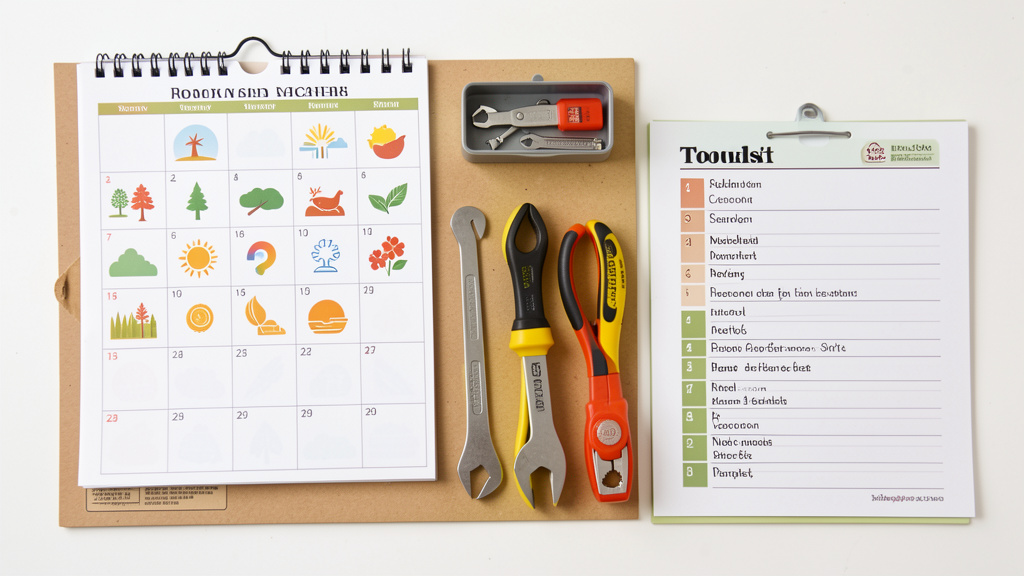
Stop reacting to emergencies. Start flowing with the seasons—transforming overwhelming upkeep into a calm, confident ritual that protects your largest investment while freeing up time, money, and mental space all year long.
Your home breathes with the seasons. It expands in summer heat, contracts in winter cold, drinks spring rains, and shields itself from autumn winds. When maintenance aligns with this natural rhythm—not against it—you can help prevent many costly emergencies before they begin. This guide moves beyond generic checklists to offer a systematically designed, climate-adaptable framework. Drawing on established property preservation principles, it transforms seasonal care into a predictable and satisfying practice. Whether your home is a century-old craftsman, a modern build, or anywhere in between, this guide meets you where you are—with actionable steps, nuanced adaptations, and deep respect for your time and resources.
Introduction: Why Seasonal Maintenance Isn’t Optional—It’s Essential
Homes are dynamic ecosystems, not static structures. Every material—from cedar shingles to copper pipes—responds to temperature shifts, humidity fluctuations, and environmental stressors. Industry analyses consistently indicate that homeowners who follow a structured seasonal maintenance routine can achieve significant long-term savings on major repairs while extending the functional lifespan of critical systems. More importantly, this practice transforms anxiety into agency. That subtle drip you ignore in July? It may become a flooded ceiling in January. The cracked caulk you overlook in October? It can invite moisture that compromises framing by March. Maintenance isn’t about perfection; it’s about pattern recognition. It’s understanding that a 20-minute gutter check after the first autumn storm helps avoid extensive foundation repairs next spring. This guide synthesizes building science principles, climate-responsive strategies, and practical psychology to create a maintenance rhythm that feels less like a chore list and more like caring for a trusted companion. You’ll learn not just what to do each season, but why timing matters, how to adapt tasks to your specific context, and when to confidently seek professional support—turning seasonal upkeep into one of your home’s most reliable allies.
The Home Harmony Cycle: A Four-Season Framework for Proactive Care
Forget fragmented to-do lists. The Home Harmony Cycle reframes maintenance as a continuous, intelligent conversation between your home and its environment. Informed by established property preservation principles, this framework operates on a core insight: each season presents a unique window of opportunity. Spring isn’t just “cleaning time”—it’s your diagnostic phase. Summer isn’t merely “lawn season”—it’s your monitoring phase. Fall isn’t only “raking leaves”—it’s your fortification phase. Winter isn’t simply “hibernation”—it’s your conservation phase. By aligning tasks with these natural windows, you work with physics and biology, not against them. This reduces effort, maximizes impact, and builds cumulative resilience. Below, we walk through each phase with clear rationale—detailing why each task matters, exactly how to execute it safely, common pitfalls to avoid, budget-conscious alternatives, and clear triggers for professional support. This isn’t maintenance as punishment; it’s maintenance as mastery.
Step 1: Spring Renewal — Reawaken, Assess, and Reset
Emerging from winter’s dormancy, spring is your home’s annual physical exam. Snowmelt, rain, and thawing ground reveal vulnerabilities hidden for months. This phase prioritizes inspection, gentle cleanup, and system recalibration. Rushing leads to missed clues; patience reveals the full story.
Exterior Inspection & Structural Assessment
Begin at dawn on a dry day. Walk the perimeter slowly—without tools. Observe first, act later.
– Foundation Check: Kneel at each corner. Look for new cracks wider than 1/8 inch, efflorescence (white chalky deposits indicating moisture migration), or soil pulling away from the foundation. Why crucial: Hairline cracks are often normal settling; widening cracks may signal shifting. Moisture intrusion here can compromise structural integrity over time. Common mistake: Ignoring hairline cracks. While most are benign, photograph them with a coin for scale. Recheck in 90 days. If wider, consult a structural engineer. Budget adaptation: Seal hairline cracks yourself with hydraulic cement (under $15). Professional trigger: Cracks with stair-step patterns in brickwork, or cracks wider than ¼ inch.
– Roof & Gutter Diagnostic: Use binoculars from ground level first. Scan for missing, cracked, or curled shingles; displaced flashing; moss buildup. Then safely access gutters. Why crucial: Winter ice dams and debris contribute to a significant portion of spring water damage claims. How to do it correctly: Wear grippy shoes. Place ladder on solid ground, extending 3 feet above gutter. Have a spotter. Scoop debris into a bucket—never toss downward. Flush with hose from downspout end to check flow. Critical nuance: Check downspout extensions. They must discharge water at least 6 feet from your foundation. If buried underground, ensure outlet isn’t clogged. Emergency fix: If downspout is blocked during heavy rain, temporarily disconnect it and direct flow away with a hose until storm passes. Professional trigger: Sagging gutters, rust holes, or if you spot daylight through roof sheathing in the attic.
– Window & Door Audit: On a breezy day, hold a lit incense stick near closed windows/doors. Watch smoke drift. Why crucial: Air leaks at these points can account for a substantial portion of heating and cooling energy loss. How to do it correctly: Note every draft location. For minor gaps, apply removable rope caulk (peel-and-stick, under $10). For persistent drafts, measure gap width. Gaps under ¼ inch: use acrylic latex caulk. Gaps over ¼ inch: insert backer rod first, then caulk. Common mistake: Caulking over dirty surfaces. Clean with vinegar solution first; let dry 24 hours. Budget adaptation: Temporary draft stoppers (fabric tubes filled with rice) for doors. Professional trigger: Warped frames, fogged double-pane windows (seal failure), or if operation feels stiff/resistant.
Systems Recalibration & Safety Checks
- HVAC Spring Tune-Up: Why crucial: Dust buildup from winter reduces efficiency and strains components. How to do it correctly:
- Replace air filter (match MERV rating to your system—typically MERV 8–11 for homes).
- Clear 2-foot radius around outdoor condenser unit. Remove leaves, twigs, debris.
- Gently hose down fins from inside out to avoid bending. Use fin comb ($8) if bent.
- Test thermostat: Set to cooling, lower temp 5 degrees. Listen for startup.
Critical nuance: Never pressure-wash the condenser. High PSI bends delicate aluminum fins, reducing airflow permanently. Budget adaptation: DIY filter changes monthly save money versus service contracts. Professional trigger: Unusual noises (grinding, squealing), weak airflow, or if system won’t start. Schedule bi-annual pro servicing (spring/fall) for refrigerant checks, electrical connections, and coil cleaning. - Plumbing Pressure Test: Why crucial: Frozen pipes that thawed may have micro-fractures. How to do it correctly:
- Shut off main water supply.
- Open lowest faucet (usually basement utility sink) to drain lines.
- Close all faucets. Turn main supply back on.
- Listen for hissing near pipes. Check under sinks for new moisture.
Common mistake: Skipping the drain step. Residual water masks leaks. Emergency fix: If you spot a drip, shut off water immediately. Wrap leak tightly with pipe repair tape ($5) as a temporary patch until plumber arrives. Professional trigger: Any visible leak, low water pressure, or discolored water after thaw. - Smoke & CO Detector Verification: Press test button on every unit. Note location of any that fail. Why crucial: Battery corrosion, often accelerated by seasonal humidity changes, is a common cause of detector failures. How to do it correctly: Replace all batteries annually on the same date (e.g., daylight saving time change). Vacuum sensor grilles gently with soft brush attachment. Critical nuance: Detectors expire! Check manufacture date on back. Replace units older than 10 years (smoke) or 7 years (CO). Budget adaptation: Interconnected battery-operated units ($25/unit) provide whole-home alert without rewiring. Professional trigger: Hardwired units requiring electrical work.
Landscape & Drainage Reset
- Grading & Slope Check: After rain, observe water flow near foundation. Why crucial: Water pooling within 3 feet of foundation is a leading cause of basement moisture issues. How to do it correctly: Soil should slope away from house at approximately 6 inches over 10 feet. Use a level and straight board to verify. Budget adaptation: Add clean topsoil to low spots; tamp firmly. Plant deep-rooted native grasses (like fescue) to stabilize soil. Professional trigger: Significant settling requiring regrading or French drain installation.
- Irrigation System Wake-Up: Why crucial: Winter freeze can crack pipes, valves, or sprinkler heads. How to do it correctly:
- Locate main shutoff valve (often in basement or utility closet).
- Turn on slowly. Listen for hissing.
- Activate each zone manually. Check for geysers (broken heads), soggy spots (leaks), or misaligned spray.
Common mistake: Turning water on full blast immediately. Gradual pressure prevents sudden failures. Emergency fix: Shut off valve. Cap broken head with plug ($2) until repair. Professional trigger: Persistent low pressure, multiple broken components, or if system won’t activate zones.
The Fundamental Principle: Spring maintenance is diagnostic, not corrective. Your goal isn’t to fix everything today—it’s to gather accurate data about your home’s condition so summer actions are precise, targeted, and effective.
Step 2: Summer Vigilance — Protect, Monitor, and Optimize
Summer’s heat, humidity, and storms demand proactive defense. This phase shifts from assessment to active protection—shielding your home from peak environmental stress while optimizing efficiency during high-use months. Vigilance here supports autumn readiness.
Exterior Defense & Weatherproofing
- Deck & Porch Safety Scan: Why crucial: Wood expands in humidity; fasteners loosen. Deck safety is a documented concern in residential maintenance. How to do it correctly:
- Railings: Shake firmly. Should not move more than 1 inch. Check for rusted bolts.
- Decking: Probe boards with screwdriver. Soft spots = rot. Pay attention to boards near house (most vulnerable).
- Joists & Beams: Peek underneath. Look for cracks, insect damage (sawdust piles), or rusted hardware.
Critical nuance: Pressure-treated wood still benefits from sealing. Unsealed decks absorb moisture, accelerating decay. Budget adaptation: Spot-treat soft spots with wood hardener ($12), then fill with epoxy putty. Professional trigger: Any structural movement, widespread rot, or if ledger board (attaches deck to house) shows separation. - Exterior Paint & Caulk Patrol: Walk perimeter on a cloudy day (glare hides flaws). Why crucial: Cracked caulk lets moisture behind siding—leading to mold, rot, insect infestation. How to do it correctly: Focus on joints: window frames, door frames, where siding meets foundation, trim corners. Scrape loose caulk with utility knife. Clean groove with vinegar solution. Apply 100% silicone or polyurethane caulk (lasts longer than acrylic alternatives). Common mistake: Caulking over dirt or old caulk. Adhesion fails within months. Budget adaptation: Prioritize south/west exposures (most sun damage) first. Professional trigger: Peeling paint on large sections (may indicate moisture intrusion behind), or if lead paint is suspected in pre-1978 homes.
- Storm Preparedness Drill: Why crucial: Being ready before severe weather hits reduces panic and potential damage. How to do it correctly:
- Identify safe interior room (no windows, lowest level).
- Assemble emergency kit: battery-powered radio, flashlight, water (1 gal/person/day), non-perishable food, first-aid supplies.
- Trim branches within 10 feet of roof/power lines.
- Secure loose yard items (patio furniture, trash cans).
Critical nuance: Know your evacuation zone if in flood/hurricane area. Bookmark local emergency management site on phone. Budget adaptation: Repurpose old backpacks for individual emergency kits. Professional trigger: Large tree limbs overhanging roof require certified arborist assessment.
Interior Climate Control & Efficiency
- Attic Ventilation Audit: Why crucial: Attic temps can exceed 150°F in summer. Poor ventilation stresses roof materials and radiates heat downward, increasing cooling demands. How to do it correctly: On a hot afternoon, go to attic. Feel airflow near soffit vents (eaves) and ridge vents. Should feel consistent breeze. Check for blocked soffit vents (insulation stuffed against them). Budget adaptation: Install inexpensive cardboard baffles ($1 each) to keep insulation clear of soffits. Add solar-powered attic fan ($150) for passive cooling. Professional trigger: Visible mold on roof sheathing (indicates moisture + heat combo), or if ridge vent is damaged.
- Window Film Application: Why crucial: A significant amount of unwanted heat enters through windows. How to do it correctly: Clean glass thoroughly with ammonia-free solution. Apply static-cling reflective film (removable, no residue) to south/west windows. Critical nuance: Avoid permanent tinting on historic homes or where HOA restrictions apply. Budget adaptation: Temporary heat-control film kits start under $20 for 3 windows. Professional trigger: For permanent low-e coatings or replacement windows.
- Humidity Management: Why crucial: Indoor humidity above 60% encourages mold growth and discomfort. How to do it correctly: Place hygrometer ($8) in basement and main living area. Ideal range: 30–50%. Run bathroom/kitchen exhaust fans during/after use. Use dehumidifier in damp basements. Common mistake: Closing AC vents in unused rooms. This disrupts airflow balance, causing system strain and moisture buildup. Budget adaptation: Place bowls of calcium chloride (DampRid) in closets or small spaces. Professional trigger: Persistent musty smells, visible mold patches larger than 10 sq ft, or condensation on interior walls.
Pest Prevention Protocol
- Perimeter Defense: Why crucial: Summer heat drives pests indoors seeking moisture and coolth. How to do it correctly:
- Seal cracks >1/8 inch around foundation, pipes, utility entries with steel wool + caulk (rodents can’t chew steel wool).
- Install door sweeps ($15) on all exterior doors. Gap should be <1/8 inch.
- Store firewood 20+ feet from house, elevated off ground.
Critical nuance: Ant trails? Wipe with 50/50 vinegar-water solution to disrupt pheromone path. Budget adaptation: Diatomaceous earth (food-grade) sprinkled along baseboards deters crawling insects ($10 for 2 lbs). Professional trigger: Sawdust piles (carpenter ants), mud tubes on foundation (termites), or recurring infestations. - Mosquito Mitigation: Why crucial: Standing water = breeding grounds. How to do it correctly: Empty all containers (plant saucers, buckets, toys) weekly. Clean gutters. Add mosquito dunks (Bti bacteria, safe for pets/wildlife) to bird baths, ponds, or clogged drains. Common mistake: Ignoring clogged downspout extensions—they trap water perfectly. Budget adaptation: Drill small drainage holes in outdoor containers. Professional trigger: Large stagnant water features requiring larvicide treatment.
Step 3: Fall Fortification — Prepare, Seal, and Secure
As temperatures drop, your home shifts from defense to preparation. Fall is about creating barriers against winter’s assault—sealing vulnerabilities, safeguarding systems, and setting the stage for indoor comfort. This is your most critical preventative phase.
Exterior Hardening & Weatherproofing
- Gutter & Downspout Final Clean: Why crucial: Clogged gutters in freezing temps contribute to ice dam formation—leading to roof leaks, fascia damage, and interior water intrusion. How to do it correctly: Perform after most leaves fall but before first hard freeze. Wear gloves. Remove debris. Flush with hose. Verify downspouts discharge 6+ feet from foundation. Critical nuance: Install gutter guards now if prone to clogs—but choose wisely. Mesh screens ($2–$5/ft) work for most homes; avoid cheap plastic inserts that crack. Budget adaptation: DIY gutter guard kits using PVC pipe slices (many online tutorials available). Professional trigger: Sagging gutters needing re-sloping or replacement.
- Window & Door Winterization: Why crucial: Drafts increase heating demands. How to do it correctly:
- Re-check caulk from spring. Reapply where cracked.
- Install removable interior storm windows (clear acrylic panels, $25/window) for single-pane windows.
- Apply weatherstripping to doors: V-strip for hinges, adhesive foam tape for frame contact points.
Common mistake: Over-compressing weatherstripping. Door should close firmly but not require force. Budget adaptation: Shrink-film window kits ($15 for 5 windows)—heat with hairdryer for invisible seal. Professional trigger: Drafts persisting after DIY efforts may indicate deeper issues (warped frames, failed seals). - Exterior Faucet & Hose Management: Why crucial: Frozen water expands, potentially cracking pipes inside walls. How to do it correctly:
- Disconnect hoses. Store indoors.
- Close interior shut-off valve for outdoor faucets (usually in basement).
- Open outdoor faucet to drain residual water. Leave open all winter.
- Install insulated faucet covers ($8 each).
Critical nuance: Frost-free faucets (long stem extending into warm wall) still require hose removal. Water trapped in hose bibb can freeze. Emergency fix: If faucet freezes, apply warm (not hot) cloth to spigot. Never use open flame. Professional trigger: Leaking faucet after thaw indicates internal damage needing replacement.
Systems Winterization & Safety
- HVAC Fall Tune-Up: Why crucial: Heating system failures often occur during initial cold snaps. Prevention supports reliability. How to do it correctly:
- Replace filter.
- Clear debris around furnace area (3-foot clearance).
- Test thermostat in heat mode.
- Listen for unusual sounds during startup.
Budget adaptation: DIY filter changes + visual inspection support system health. Professional trigger: Schedule annual pro servicing: heat exchanger inspection (cracks = carbon monoxide risk), gas pressure check, blower motor lubrication, safety controls test. Non-negotiable: If you smell gas (rotten egg odor), evacuate immediately and call utility company from outside. - Chimney & Fireplace Safety: Why crucial: Creosote buildup is a leading cause of chimney fires, with thousands of incidents reported annually. How to do it correctly:
- Visually inspect firebox for cracked bricks/mortar.
- Check damper operation (opens/closes smoothly).
- Do not use if you see white/chalky deposits (efflorescence = moisture intrusion).
Critical nuance: Even gas fireplaces need annual inspection—vents can clog with bird nests. Professional trigger: Annual inspection and cleaning by a certified chimney professional before first use is strongly recommended. They check flue lining integrity, clear blockages, and verify draft. - Insulation & Air Sealing Deep Dive: Why crucial: Heat rises. Unsealed attic hatches can contribute significantly to heat loss. How to do it correctly:
- Check attic hatch: Add adhesive foam tape around frame. Install insulated cover ($40).
- Seal can lights: Install airtight baffles ($15 each) to prevent heat loss into attic.
- Inspect basement rim joists (where floor meets foundation): Spray foam gaps >1/4 inch.
Budget adaptation: Roll fiberglass batts ($0.50/sq ft) over existing attic insulation to boost R-value. Professional trigger: Whole-house energy audit with blower door test identifies hidden leaks. Often subsidized by utilities.
Landscape & Utility Prep
- Irrigation Blow-Out: Why crucial: Water left in lines freezes, potentially bursting pipes underground—costly to locate and repair. How to do it correctly: Hire pro with air compressor ($75–$150). DIY only if experienced: Attach compressor to system’s blow-out port. Start at lowest zone. Blow until only air exits. Critical warning: Incorrect PSI can damage valves. Most manufacturers advise professional service for this task. Professional trigger: Strongly recommended for all but simplest systems.
- Tree & Shrub Winterization: Why crucial: Heavy snow/ice can damage weak branches near structures. How to do it correctly:
- Prune dead/diseased branches (hire arborist for large trees near structures).
- Wrap young tree trunks with plastic guards to prevent rodent gnawing and sunscald.
- Mulch perennial beds after ground freezes (prevents heaving).
Common mistake: Pruning spring-blooming shrubs (like lilacs) in fall—they set buds on old wood. Wait until after flowering. Budget adaptation: DIY tree wrap with burlap scraps. Professional trigger: Trees within falling distance of house/power lines require certified arborist.
Step 4: Winter Preservation — Conserve, Monitor, and Sustain
Winter isn’t maintenance downtime—it’s conservation mode. Focus shifts inward: monitoring indoor conditions, preventing system failures, and preparing for spring. Patience and observation are your primary tools.
Interior Climate & Moisture Management
- Humidity Balance: Why crucial: Cold air holds less moisture. Heating dry air drops indoor humidity, potentially causing wood cracks, static shocks, and respiratory irritation. How to do it correctly: Maintain 35–45% humidity. Use hygrometer. Run humidifier if needed. Place water basins near radiators. Critical nuance: Too much humidity causes window condensation—leading to mold on frames. Wipe condensation daily. Budget adaptation: Simmer pot of water with cinnamon sticks on stove (adds moisture + ambiance). Professional trigger: Persistent window condensation between panes indicates failed seal—requires glass replacement.
- Air Filter Vigilance: Why crucial: Heating systems run longer in winter. Clogged filters strain motors and reduce airflow. How to do it correctly: Check filter monthly. Replace when visibly dirty (often every 30–60 days in winter). Common mistake: Using high-MERV filters (13+) not designed for your system—restricts airflow, causing freeze-ups. Stick to manufacturer’s recommendation. Budget adaptation: Buy filters in bulk online (saves 20–30%).
- Pipe Freeze Prevention Protocol: Why crucial: Frozen pipes can cause significant water damage. How to do it correctly:
- Know location of main water shutoff valve. Test it opens/closes smoothly.
- During deep freezes (<20°F):
- Drip faucets on exterior walls (kitchen, bathroom).
- Open cabinet doors under sinks on exterior walls.
- Keep thermostat at 68°F minimum—even when away.
- Insulate exposed pipes in basement/garage with foam sleeves ($1/ft).
Emergency fix: If pipe freezes, shut off water. Apply warm towels or hairdryer starting from faucet end. Never use open flame. Call plumber if no water flow after thawing. Professional trigger: Pipes in unheated spaces (crawlspaces) may need heat tape installation by electrician.
Safety & System Monitoring
- Carbon Monoxide (CO) Vigilance: Why crucial: Blocked chimneys, faulty furnaces, or generator misuse can cause dangerous CO buildup. How to do it correctly:
- Test CO detectors monthly (press test button).
- Never run generators, grills, or camp stoves indoors or near windows.
- If detector alarms: Evacuate immediately. Call 911. Do not re-enter until cleared.
Critical nuance: CO is odorless and colorless. Symptoms mimic flu (headache, nausea, dizziness). If multiple household members feel ill simultaneously, suspect CO. Budget adaptation: Battery-operated CO detectors ($20) for bedrooms if hardwired units absent. Professional trigger: Annual furnace inspection includes CO testing at flue. - Emergency Kit Refresh: Why crucial: Winter storms cause power outages. Being prepared reduces risk. How to do it correctly: Check kit contents:
- Water (rotate every 6 months)
- Non-perishable food (check expiration dates)
- Batteries (replace annually)
- Medications (7-day supply)
- Cash (ATMs/credit cards fail during outages)
Budget adaptation: Store kit in plastic bin under bed for quick access. Professional trigger: Consider whole-house generator for medical needs or extreme climates.
The Quiet Observation Practice
Winter’s stillness offers unique diagnostic opportunities:
– Attic Check on Cold Morning: Look for frost patterns on rafters. Uniform frost = good ventilation. Bare spots = heat escaping from below (indicates missing insulation or air leaks).
– Window Watch: Persistent condensation on interior pane indicates high indoor humidity. Condensation between panes = seal failure.
– Sound Awareness: Listen for unusual furnace cycles (short cycling = overheating), dripping sounds in walls (thawing pipes), or howling winds pinpointing drafts.
Why this matters: These subtle cues inform your spring action plan. Document observations in a home journal. This transforms passive waiting into active intelligence gathering—making next spring’s renewal phase faster and more targeted.
The Fundamental Principle: Winter maintenance is about stewardship, not struggle. By conserving energy, monitoring conditions, and honoring the season’s restful pace, you set the stage for a smoother, more efficient transition into spring—turning dormancy into strategic advantage.
Beyond the Calendar: Adapting to Your Home’s Unique Blueprint
A rigid calendar fails without context. Your home’s age, climate zone, construction materials, and even sun exposure dictate task timing and priority. This section empowers you to personalize the framework intelligently.
Climate Zone Adjustments: One Size Does NOT Fit All
- Cold Climates (Zones 3–5: Northeast, Midwest, Mountain West):
Critical Shift: Fall prep is essential. Prioritize gutter cleaning, faucet winterization, and insulation checks before first freeze. Spring renewal starts later—wait until consistent 50°F+ days to avoid working on wet surfaces. Summer vigilance focuses on humidity control (dehumidifiers essential in basements).
Regional Nuance: Ice dam prevention is paramount. Install heat cables before snow season in problem areas. Ensure adequate attic insulation (R-49 minimum) to minimize snow melt on roof. - Hot-Humid Climates (Zones 7–10: Southeast, Gulf Coast):
Critical Shift: Spring renewal begins in February. Focus shifts to mold prevention, pest control, and hurricane prep (June–Nov). Fall fortification emphasizes drainage (clean gutters before rainy season) and HVAC efficiency. Winter preservation is minimal—focus on monitoring humidity and preparing for early spring storms.
Regional Nuance: Prioritize termite inspections annually. Use mildew-resistant caulk (silicone) on all exterior joints. Install surge protectors before storm season. - Arid Climates (Zones 5–7: Southwest, Desert):
Critical Shift: Spring renewal targets monsoon prep (July–Sept). Clean gutters before summer rains. Summer vigilance focuses on UV protection (window film, deck sealant) and irrigation efficiency. Fall fortification includes checking for monsoon damage. Winter preservation is light—focus on pipe protection during rare freezes.
Regional Nuance: Soil expands when wet. Check foundation grading after heavy rains. Use drought-tolerant native plants to reduce irrigation needs. - Marine Climates (Zones 8–9: Pacific Northwest):
Critical Shift: Fall fortification is year-round priority. Clean gutters monthly during wet season (Oct–Apr). Spring renewal focuses on moisture damage assessment. Summer vigilance targets moss/algae removal from roofs and decks. Winter preservation emphasizes ventilation to combat persistent dampness.
Regional Nuance: Prioritize roof inspections for moss damage. Install zinc strips at roof peak to inhibit growth. Use moisture meters to check subfloors in crawlspaces.
Home Age & Material Considerations
- Pre-1940 Homes (Older Construction):
Key Focus: Preserve breathability. Avoid modern vapor barriers that trap moisture in historic walls. Use lime-based mortars for repointing brick (allows moisture escape). Prioritize foundation drainage—older homes often lack modern waterproofing.
Critical Task: Check for knob-and-tube wiring (common in attics/basements). If present, consult electrician—do not insulate over it.
Adaptation: Spring renewal includes checking for settling cracks. Document with photos yearly. - 1940s–1970s Homes (Mid-Century):
Key Focus: Asbestos and lead awareness. Do not sand/disturb popcorn ceilings, vinyl tiles, or pre-1978 paint without testing. Prioritize HVAC upgrades—original systems are often inefficient.
Critical Task: Fall fortification includes checking aluminum wiring connections (potential fire risk). Hire electrician for evaluation if present.
Adaptation: Summer vigilance targets single-pane window efficiency—storm windows offer significant improvement. - 1980s–2000s Homes (Modern Era):
Key Focus: System lifespan awareness. Original roofs, HVAC, and water heaters may be nearing end-of-life. Spring renewal includes lifespan tracking (note installation dates).
Critical Task: Check for known material issues specific to era/region (e.g., certain drywall types in Southeast homes built 2001–2009).
Adaptation: Fall fortification prioritizes upgrading to energy-efficient systems before failure. - New Construction (<10 years):
Key Focus: Warranty documentation. Track all maintenance performed—required for warranty claims. Spring renewal includes checking for normal settlement cracks (common in first 2 years).
Critical Task: Verify builder completed all punch-list items. Document with photos.
Adaptation: Summer vigilance targets landscaping maturity—adjust irrigation as plants establish.
Personalizing Your Rhythm: Life Stage & Capacity
- Busy Families: Bundle tasks into “maintenance Saturdays.” Assign age-appropriate roles: kids check smoke detectors, teens clean gutters (with supervision), adults handle system checks. Use digital reminders (Google Calendar) with task lists attached.
- Seniors/Aging in Place: Prioritize safety-critical tasks: handrail checks, non-slip surfaces, emergency kit accessibility. Partner with trusted neighbors for exterior tasks. Explore local “handy helper” programs through senior centers.
- Frequent Travelers: Install smart home sensors: water leak detectors ($50), freeze alarms, smart thermostats. Arrange for neighbor checks during absences. Winterize thoroughly before extended trips.
- Budget-Conscious Homeowners: Follow the “Rule of Thirds”:
- Preventative Third: Tasks preventing major repairs (gutter cleaning, filter changes).
- Efficiency Third: Tasks saving recurring costs (caulking, insulation).
- Cosmetic Third: Tasks for appearance (painting, deep cleaning).
Focus energy on first two thirds. Phase cosmetic tasks over years.
Overcoming the Three Big Maintenance Frictions: Time, Cost, and Confidence
Even the best calendar fails without addressing real-world barriers. This section provides compassionate, practical strategies to move from overwhelm to action.
Friction 1: “I Don’t Have Time”
- The Micro-Task Strategy: Break seasonal tasks into 15-minute chunks. Example:
- Monday: Check smoke detectors (5 min)
- Wednesday: Inspect one exterior corner for cracks (10 min)
- Saturday AM: Clean gutters on front section only (15 min)
Completion builds momentum. Track in a visible spot (fridge calendar). - Seasonal Anchoring: Tie tasks to existing habits.
- After raking first pile of leaves: Clean one downspout.
- While waiting for coffee to brew: Test one smoke detector.
- During kids’ Saturday cartoon: Check HVAC filter.
- The 5-Minute Rule: Commit to just starting a dreaded task. Often, momentum carries you further. If not, stopping after 5 minutes is still progress—and reduces guilt.
Friction 2: “I Can’t Afford It”
- The Prevention ROI Mindset: Frame costs as protective investment.
- Gutter cleaning ($100) helps avoid foundation repair ($5,000)
- Annual HVAC tune-up ($150) helps avoid emergency furnace replacement ($5,000)
Calculate your home’s “maintenance budget”: 1–4% of home value annually. For a $300k home, that’s $3,000–$12,000/year—$250–$1,000/month. Start small; build consistency. - Smart Sourcing Guide:
- Tools: Borrow from library tool-lending programs or neighbors. Rent specialty tools (pressure washer) for one-time jobs.
- Materials: Buy caulk, filters, weatherstripping in bulk online. Check Habitat for Humanity ReStores for discounted paint, hardware.
- Labor: Barter skills with neighbors (you fix their faucet; they clean your gutters). Hire vetted handymen via community networks for small jobs.
- Phased Implementation: Prioritize tasks by consequence:
- Safety Critical (smoke detectors, CO alarms)
- Water Intrusion (gutters, grading, caulk)
- System Longevity (HVAC filters, pipe insulation)
- Efficiency/Cosmetic (window film, painting)
Do Tier 1 tasks first. Schedule Tier 2–4 over coming months.
Friction 3: “I Don’t Know How / I’m Afraid of Making Mistakes”
- The Confidence Ladder:
- Step 1: Watch 3 reputable online videos on the task (search “[task] for beginners”). Note tools needed.
- Step 2: Practice on low-stakes area (caulk a garage window before living room).
- Step 3: Do task with knowledgeable friend (or virtual call).
- Step 4: Document your success with photos—builds evidence of capability.
- When to DIY vs. Call a Pro: The Decision Matrix
| Task Type | DIY If… | Call Pro If… |
|—|—|—|
| Electrical | Replacing outlet cover, testing GFCI | Any wiring work, panel access, flickering lights |
| Plumbing | Faucet aerator cleaning, toilet flapper replacement | Leaks behind walls, sewer line issues, gas lines |
| Structural | Tightening loose deck railing bolt | Foundation cracks, sagging floors, roof damage |
| HVAC | Filter changes, clearing condenser debris | Refrigerant handling, electrical components, gas connections |
| Pest Control | Sealing entry points, bait stations | Active infestation, structural damage signs | - Building Your Trusted Network:
- Ask neighbors for referrals (not just online reviews).
- Get 3 written estimates for major jobs.
- Verify licenses/insurance before work begins.
- Start with small job to test reliability.
Remember: Paying a pro for complex tasks is strategic resource allocation. Your time and peace of mind have value.
Building a Maintenance Tracker That Fits Your Life
A calendar only works if you use it. This section moves beyond generic apps to create a sustainable tracking system aligned with your habits and home’s needs.
Choose Your Tracking Method (No Judgment!)
- Digital Minimalist:
- Tool: Google Calendar
- Setup: Create “Home Maintenance” calendar. Set recurring events:
- “HVAC Filter Check” (repeats monthly)
- “Gutter Clean” (repeats Oct 15 + Apr 15)
- “Smoke Detector Test” (repeats Nov 1 + Mar 1)
- Pro Tip: Attach PDF checklist to event description. Set 2-day reminder.
- Visual Planner:
- Tool: Large wall calendar + colored markers
- Setup: Assign colors: Red = Safety, Blue = Exterior, Green = Systems. Circle completion dates. Hang in garage or laundry room—high-traffic area.
- Pro Tip: Add seasonal photos (e.g., spring flowers) to make it inviting.
- Analog Journal Keeper:
- Tool: Dedicated notebook (Moleskine, binder)
- Setup: Divide into seasons. Leave blank pages for notes, receipts, photos. Date each entry.
- Pro Tip: Tape business cards of trusted pros inside front cover.
- Smart Home Integrator:
- Tool: Notion template or home maintenance app
- Setup: Track asset lifespans (water heater installed 2020 → replace ~2030). Upload manuals. Set automated reminders.
- Pro Tip: Scan warranty documents into app—accessible during emergencies.
The Home Health Dashboard: One-Page Snapshot
Create a single reference sheet for quick checks. Laminate and keep in utility closet:
HOME HEALTH DASHBOARD
[ ] SMOKE/CO DETECTORS: Tested ______ | Batteries Changed ______
[ ] MAIN WATER SHUTOFF: Location known? □ Yes □ No | Last tested ______
[ ] FURNACE FILTER: Changed ______ | Next due ______
[ ] GUTTERS: Cleaned ______ | Next due ______
[ ] EXTERIOR FAUCETS: Winterized ______ | De-winterized ______
[ ] EMERGENCY KIT: Checked ______ | Contents updated ______
NOTES:
_________________________________________________________
Update after each task. This reduces decision fatigue—”What did I do last time?” becomes instantly clear.
Making It Stick: The Psychology of Habit Formation
- Pair with Existing Rituals: “After I take down Christmas lights (Jan 2), I check attic insulation.”
- Celebrate Micro-Wins: Completed gutter cleaning? Do a victory dance. Text a friend. Small rewards reinforce action.
- Family Involvement: Create “Maintenance Bingo” for kids:
B | I | N | G | O
Test smoke alarm | Find draft | Change filter | Check fire extinguisher | Organize toolbox
Prize: Family movie night. Makes care collaborative, not chore-like. - Annual Review Ritual: Every New Year’s Day, review past year’s tracker. Note what worked, what didn’t. Adjust next year’s plan. This transforms maintenance from burden to intentional practice.
Your Questions, Answered
Q: How do I know if my home’s maintenance needs are “normal” or a red flag?
A: Context is key. A hairline crack in drywall after a dry summer is often normal settling. The same crack widening monthly, accompanied by sticking doors, warrants professional assessment. Track changes over time with dated photos. When in doubt, consult a licensed home inspector for a targeted evaluation—they diagnose patterns invisible to untrained eyes.
Q: Is it really necessary to service HVAC systems twice a year? Can’t I just do spring?
A: Bi-annual servicing addresses seasonal stressors uniquely. Spring tuning optimizes cooling efficiency and checks for winter debris. Fall tuning ensures safe, efficient heating operation and verifies combustion safety. Skipping fall service for gas systems may miss critical safety checks. For budget-conscious homeowners, prioritize fall service for gas heating systems and spring for cooling systems.
Q: What’s the single most overlooked maintenance task with significant consequence?
A: Checking and clearing the dryer vent exhaust duct. Lint buildup is a significant fire hazard, contributing to thousands of home fires annually. It also reduces dryer efficiency, increasing energy use. Clean the lint trap after every load. Annually, disconnect the duct and vacuum the entire length (use a dryer vent cleaning kit, $20). Ensure exterior flapper opens freely. This 20-minute task supports fire safety and efficiency.
Q: How do I maintain my home if I rent? What’s my responsibility vs. landlord’s?
A: Know your lease terms and local tenant laws. Generally:
– Your responsibility: Filter changes, smoke detector battery replacement, minor cleaning, reporting issues promptly.
– Landlord’s responsibility: Structural repairs, major system failures, pest infestations (unless caused by tenant neglect).
Document all maintenance requests in writing (email). Take move-in/move-out photos. For minor improvements (caulking, shelf installation), get written permission first. Being proactive builds goodwill and ensures timely repairs.
Q: Are “maintenance-free” materials (like composite decking) truly no-work?
A: No material is truly maintenance-free—only lower-maintenance. Composite decking won’t rot like wood, but it still requires cleaning (mold/mildew in shaded areas), checking for loose fasteners, and ensuring proper ventilation underneath. Vinyl siding needs washing to prevent algae. Research realistic upkeep for any material before installation. “Low-maintenance” often means shifting tasks (less painting, more cleaning) rather than eliminating them.
Q: How do I handle maintenance for a vacation home I visit infrequently?
A: Prevention and monitoring are paramount. Before leaving:
– Shut off main water supply; drain lines if freezing risk.
– Set thermostat to 55°F (prevents pipe freeze, controls humidity).
– Install smart sensors: water leak, temperature, security camera.
– Hire local property watcher for quarterly checks (change air filters, inspect perimeter).
– Leave keys with trusted neighbor for emergencies.
Document all steps in a “vacation home protocol” sheet left onsite.
Q: What maintenance tasks should I absolutely NOT attempt myself?
A: Prioritize safety and legal compliance:
– Electrical panel work (risk of electrocution/fire)
– Gas line repairs (explosion risk; requires licensed plumber)
– Roof work on slopes >20 degrees (fall hazard; use pros with harnesses)
– Asbestos/lead abatement (health hazard; requires certified professionals)
– Structural modifications (load-bearing walls, foundation work)
When a task involves heights, gas, electricity, or hazardous materials beyond basic surface cleaning, professional expertise is essential. Your safety is worth the investment.
Q: How do I prioritize tasks when I’ve fallen behind on maintenance?
A: Apply the “Safety-Structure-Water” filter:
1. Safety First: Smoke/CO detectors, fire extinguishers, handrail stability.
2. Structure Next: Foundation cracks, roof damage, major wood rot.
3. Water Intrusion: Gutter blockages, grading issues, window/door leaks.
Address Tier 1 immediately. Schedule Tier 2 within 30 days. Tier 3 can wait. Break large tasks into micro-steps. Celebrate completing each tier—progress builds momentum. Perfection is the enemy of progress; consistent action is the goal.
Q: Do smart home devices actually reduce maintenance needs?
A: They shift maintenance from reactive to proactive—but don’t eliminate physical care. Examples:
– Smart water sensors alert you to leaks before major damage occurs.
– Smart thermostats optimize HVAC runtime, reducing wear.
– Smart plugs let you remotely power-cycle frozen pipes.
However, they add complexity: batteries die, apps update, networks fail. Use them as supplements to physical checks, not replacements. A sensor alert still requires you to investigate and act.
Q: How does regular maintenance impact home resale value?
A: Meticulous maintenance documentation is a valuable selling tool. Buyers often favor homes with:
– Service records for HVAC, roof, water heater
– Photos showing consistent care
– Updated systems with remaining warranty
Conversely, deferred maintenance may trigger lower offers or inspection complications. Think of maintenance as building “equity of care”—a tangible asset that supports sale readiness and value retention when you’re ready to move.
Q: What’s a realistic time commitment for seasonal maintenance?
A: For an average single-family home:
– Weekly: 15 minutes (filter check, quick perimeter glance)
– Monthly: 30–60 minutes (system checks, minor tasks)
– Seasonally: 3–6 hours total (spread over 2–3 weekends)
This totals 10–15 hours annually—less than one weekend. Framing it as “15 minutes weekly” feels manageable versus “a whole Saturday.” Consistency compounds: homes maintained regularly often require less time per task over years.
Q: How do I stay motivated when maintenance feels thankless?
A: Reframe the narrative. Maintenance isn’t about the house—it’s about the life within it. That securely sealed window means your child sleeps soundly through a storm. That clean gutter protects the photo albums stored in the basement. That tested smoke detector guards your family’s safety. Connect tasks to your deepest values: security, legacy, comfort. Keep a “why” journal—note moments your maintenance efforts paid off (“No leaks during heavy rain!”). Gratitude transforms obligation into purpose.
Conclusion: Your Home, Transformed
You now hold more than a calendar—you hold a philosophy. The Home Harmony Cycle reframes maintenance from a burdensome obligation into a rhythmic practice of care, observation, and respect. By flowing with the seasons, you’ve learned to see your home not as a collection of tasks, but as a living system worthy of partnership. The cracked caulk isn’t a failure—it’s data. The quiet hum of a well-tuned furnace isn’t background noise—it’s peace of mind. The dry basement after a spring storm isn’t luck—it’s the direct result of your intentional action.
The Three Anchors to Carry Forward
- Timing Trumps Intensity: A 20-minute gutter check in late October helps prevent extensive water damage repairs in January. Work with nature’s cycles, not against them.
- Observation Precedes Action: Spring’s diagnostic walk reveals what summer’s actions must address. Slow down to see clearly.
- Progress Over Perfection: Missing one task doesn’t unravel the whole system. Return to the rhythm with compassion. Consistency compounds; one season of care builds resilience for the next.
Your 24-Hour Rule: One Tiny Action, Immediate Impact
Within the next 24 hours, complete this single task:
👉 Test every smoke and carbon monoxide detector in your home.
Press the test button. Listen for the loud, clear alarm. Note any units that fail. Replace batteries or units immediately. This takes less than five minutes but safeguards what matters most. Do it now—before reading another word. Your future self will thank you.
The Bigger Picture: Maintenance as an Act of Love
Homes hold our memories, shelter our dreams, and witness our lives. Tending to them is rarely about the structure itself—it’s about honoring the stories within these walls. The scraped knee healed at the kitchen table. The laughter echoing in the backyard. The quiet mornings watching light filter through the window you carefully sealed. When you maintain your home, you’re not just preserving wood and wire. You’re protecting sanctuary. You’re building legacy. You’re saying, “This space matters. The people here matter.” That is the true rhythm of home—a steady, caring pulse that echoes through seasons, years, and generations. Start where you are. Use what you have. Do what you can. Your home is waiting to harmonize with you.
Explore Our Complete Home Care System:
The Ultimate Guide to Decoding Your Home’s Warning Signs | Energy Efficiency Deep Dive: From Audit to Action | Building Your Trusted Contractor Network: A Vetting Framework | The Homeowner’s Emergency Response Playbook | Sustainable Home Upkeep: Non-Toxic Solutions for Every Season | Mastering Moisture: A Room-by-Room Guide to Preventing Mold | The Legacy Home Journal: Documenting Care Across Generations