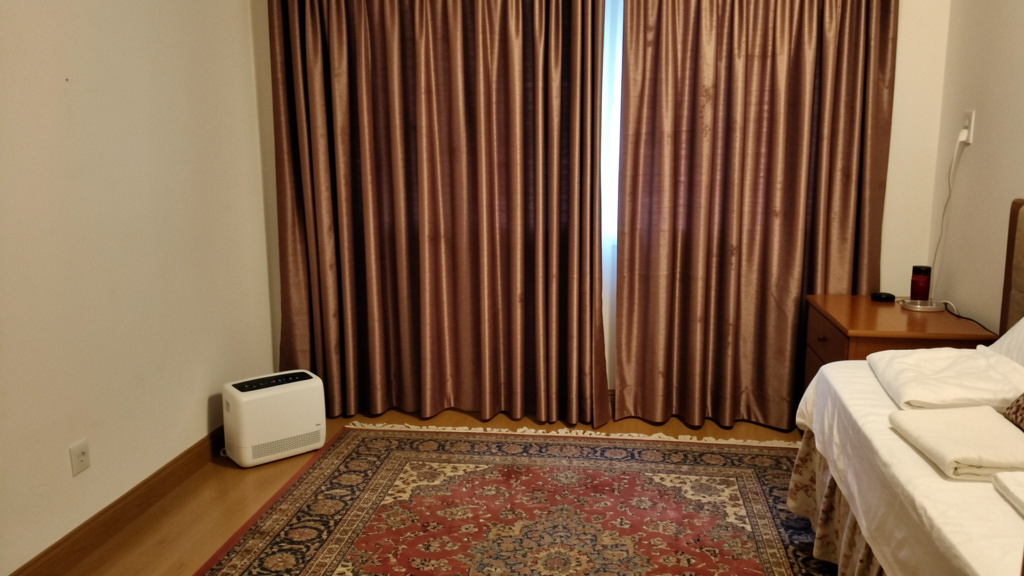
A physics-informed, adaptable approach to creating a calmer sleep environment—practical solutions for renters, homeowners, and every constraint.
You lie awake as a car door slams three streets over. A neighbor’s late-night conversation filters through the wall. Your partner’s alarm pulls you from the edge of sleep. If this sounds familiar, you’re not imagining things—nor are you alone. Research from the National Sleep Foundation indicates that even low-level environmental noise can fragment sleep architecture, reducing time in restorative deep sleep and REM cycles. This isn’t merely about comfort; chronic sleep disruption correlates with elevated stress markers, reduced daytime alertness, and long-term health considerations. Yet most noise-reduction advice offers fragmented tips: “buy thicker curtains” or “add rugs” without explaining why they work (or fail). This guide replaces guesswork with clarity. Drawing on established acoustic principles and real-world implementation patterns, we provide a structured method to identify your unique noise profile and apply precisely targeted solutions. No hype, no oversimplification—just actionable steps grounded in how sound travels, leaks, and can be managed. Your path to a more restful bedroom begins with understanding.
Introduction: Quiet Is a Measurable Outcome, Not a Guess
Sleep is an active biological process where memory consolidates, tissues repair, and the nervous system resets. During deep sleep (Stage N3), heart rate slows, blood pressure eases, and restorative hormones release. Introduce sudden noise above 30 decibels—a whisper registers ~30 dB, a flushing toilet ~50 dB—and the brain may trigger a micro-arousal. You might not fully wake, but sleep continuity fractures. Over time, these disruptions accumulate. A review in Sleep Medicine Reviews analyzing population-level data found that consistent nighttime noise exposure above 40 dB correlated with increased reports of daytime fatigue and physiological stress markers, independent of other variables. This isn’t about luxury; it’s about supporting foundational well-being.
Yet the path to calm is clouded by myths. Egg cartons on walls? They slightly diffuse high frequencies but do nothing against low-frequency vibrations like traffic rumble or bass. “Soundproofing paint”? Independent lab analyses (including in Sound & Vibration magazine) show negligible mass gain—less than 0.1 STC point (Sound Transmission Class measures barrier performance). Meaningful noise management requires understanding sound’s dual pathways: airborne noise (voices, TV, traffic) travels through air gaps and lightweight barriers; structure-borne noise (footsteps, slamming doors, appliance vibration) moves through solid materials like studs, joists, and concrete. A solution effective against one may have little impact on the other. This guide integrates both domains. We begin not with products, but with diagnosis—because sealing a window gap won’t resolve ceiling-transmitted footsteps. By the end, you’ll have a personalized, prioritized plan aligned with your living situation, budget, and noise profile. This isn’t about creating a silent chamber (an unnatural and often unattainable goal); it’s about engineering sufficient calm for your nervous system to rest deeply.
Note: Actual results vary based on room construction, noise source characteristics, installation precision, and environmental factors. Decibel reductions and STC improvements cited reflect typical observed ranges; individual experiences may differ.
Part 1: The Noise Audit—Map Before You Modify
Skipping diagnosis is the most common reason noise-reduction efforts yield disappointing results. Installing expensive curtains won’t help if the primary leak is beneath your door. The Noise Audit is a focused, 15–20 minute observational process to identify sound entry points. Conduct it during the actual time noise disturbs you (e.g., 11 PM for neighbor activity, 6 AM for traffic). You’ll need: a notebook or digital note app, a free decibel meter app (NIOSH SLM for iOS or Sound Meter for Android—calibrated options exist), a flashlight, and a safe smoke source (such as a commercially available smoke pencil or an extinguished incense stick producing smoke without an open flame; exercise caution and never leave unattended).
Step 1: Identify Noise Type and Source Direction
Stand quietly in your bedroom. Close your eyes. Listen. Ask:
– Is the sound rhythmic or impact-based? (Footsteps = structure-borne; traffic hum = airborne low-frequency)
– Does intensity shift with weather? (Wind amplifies gaps; rain may mask some noise but highlight leaks)
– Does closing a specific window noticeably reduce it? (Points strongly to an airborne path at that location)
– Do surfaces vibrate? (Gently place a palm on the wall or ceiling during noise events—buzzing suggests structure-borne transmission)
Use your decibel app to log levels at key spots: center of room, against shared walls, near doors, under windows. Note the character: a sharp “thump” suggests impact noise (bass, footsteps); a steady “shhh” suggests airborne noise (HVAC, distant traffic). This distinction guides your solution path. Low-frequency noise (<250 Hz)—bass, thunder, heavy trucks—typically requires mass and decoupling strategies. Mid/high-frequency noise (voices, birds, TV dialogue) often responds better to sealing gaps and absorption.
Step 2: Trace the Path—Visualizing Air Leaks
Sound exploits the path of least resistance. In a room with barriers, it behaves like water seeking cracks. Perform this in low light:
1. Have a helper stand outside making consistent, moderate noise (talking, tapping a wall).
2. Inside your dimmed room, slowly move your safe smoke source along potential leak points: door perimeter, window frames, electrical outlets on shared walls, baseboards, ceiling corners.
3. Watch the smoke trail. A visible wisp curling inward indicates an air (and sound) leak. Even a small gap can significantly compromise barrier performance—this reflects the “weakest link” principle in acoustics.
Common leak hotspots (ranked by typical impact):
1. Doors: Gaps at top, sides, and especially the bottom (hollow-core doors are particularly vulnerable)
2. Windows: Single-pane glass, worn weatherstripping, loose sashes
3. Electrical Outlets: Unsealed boxes on shared walls
4. Baseboards/Ceiling Corners: Where drywall meets floor or ceiling
5. HVAC Vents: Ducts acting as conduits
Seasonal Note: Building materials expand and contract with temperature and humidity shifts. Re-check critical seals (especially windows and doors) twice yearly—before winter and summer—to address gaps that may develop seasonally.
Step 3: Document and Prioritize
Create a simple log:
| Location | Noise Type Observed | Leak Confirmed? (Y/N) | Severity (1-5) | Quick Fix Idea |
|---|---|---|---|---|
| Bottom of bedroom door | Voices, TV | Yes (smoke pulled under) | 5 | Draft stopper |
| Left window pane | Traffic hum | Yes (draft felt) | 4 | Weatherstripping |
| Outlet on east wall | Bass thump | Yes (smoke wavered) | 3 | Foam gasket |
| Ceiling corner | Footsteps | No visible leak | 2 | Investigate floor above |
Why this step matters: A household in Chicago invested $800 in acoustic curtains for street noise, only to discover via audit that 70% of intrusion came through their hollow bedroom door. A $15 door sweep resolved most of the issue. Another renter traced persistent noise to a gap behind a radiator pipe—sealed with $3 of acoustic sealant. Your audit transforms frustration into objective data. It prevents misdirected spending and builds informed confidence. This method adapts professional acoustic assessment principles for accessible homeowner use. Proceed only when your map is complete. Solutions applied without diagnosis often yield minimal returns.
Part 2: The Four-Layer Framework—How Noise Reduction Actually Works
Effective noise management isn’t a single product—it’s the coordinated application of four interdependent principles. Think of them as complementary layers around your sleep space. Neglecting one layer can undermine the others, much like wearing a raincoat with no pants. This framework synthesizes established acoustic engineering concepts (referencing standards like ASTM E90) to explain why solutions function. Understanding the physics empowers you to adapt strategies to your unique space, rather than copying generic advice.
Layer 1: Mass—Adding Density to Resist Sound Energy
Core Principle: Denser materials require more energy for sound waves to vibrate them, converting acoustic energy into negligible heat. This aligns with the Mass Law: doubling the mass of a uniform barrier typically improves sound isolation by approximately 5 dB (a perceptible reduction). A single sheet of drywall (½”) has an STC of ~33; adding a second layer may raise it to ~45. Mass must be continuous and well-sealed to be effective.
Why it matters for low frequencies: Bass notes (20–250 Hz) have long wavelengths that readily vibrate lightweight barriers. Mass counters this inertia. Imagine pushing a child on a swing (light barrier) versus pushing a parked car (massive barrier). The car barely moves—similarly, dense materials resist low-frequency vibration.
Practical Applications:
– Walls: Adding a second layer of drywall (Type X is denser), mass-loaded vinyl (MLV—a flexible sheeting weighing 1–2 lbs/sq ft), or strategically placing bookshelves filled with books against a shared wall.
– Windows: Upgrading to double or triple-pane windows (glass mass is critical; laminated glass adds damping). For renters: secondary glazing panels (acrylic or glass) mounted inside the frame.
– Doors: Replacing hollow-core doors (STC 15–20) with solid-core doors (STC 25–35). Critical nuance: Mass must be sealed. A heavy door with gaps performs worse than a lighter door with tight seals.
Common Pitfalls to Avoid:
– Adding mass to only one side: Sound vibrates the entire assembly. Mass is most effective when added to both sides of a shared barrier where feasible.
– Ignoring resonance: Every material has a resonant frequency. Layering different materials (e.g., drywall + MLV) disrupts resonance more effectively than identical layers.
– Overlooking flanking paths: Mass on a wall won’t help if sound travels through ceiling joists or floor structures. Address the full assembly.
Adaptable Implementation:
– Immediate Relief ($10): Heavy moving blankets temporarily placed over problem areas (functional for testing; not aesthetic long-term).
– Budget-Conscious ($50–$150): MLV sheets cut to fit inside closet doors on shared walls; dense bookshelves positioned strategically with a small air gap.
– Long-Term Investment ($500+): Professional installation of additional drywall layers with damping compound (see Layer 2).
Layer 2: Damping—Dissipating Vibrational Energy
Core Principle: Damping materials—viscoelastic compounds—convert vibrational energy within a structure into minute amounts of heat through internal friction. This is constrained layer damping: a soft layer sandwiched between two rigid layers (e.g., drywall–damping compound–drywall).
Why it’s valuable for mid-frequencies: Voices, TV dialogue, and keyboard clicks (500 Hz – 2 kHz) efficiently vibrate standard drywall. Damping targets this “coincidence dip” where barriers are weakest. Think of damping like shock absorbers on a car—they don’t eliminate the bump, but they prevent the chassis from rattling afterward.
Practical Applications:
– Walls/Ceilings: Applying damping compound (e.g., Green Glue, SilentPutty) between layers of drywall, plywood, or MLV during renovation. For existing walls: damping mats under new drywall.
– Doors: Damping sheets adhered to the interior of solid-core doors before re-hanging.
– Floors: Underlayment with damping properties (e.g., cork, rubber composites) beneath flooring to reduce impact noise transmission.
Critical Nuance: Damping requires constraint. A compound applied to a single surface lacks effectiveness. It must be sandwiched between rigid materials. This is why “damping paint” fails—it lacks the constrained layer structure. True damping is a system.
Common Pitfalls to Avoid:
– Insufficient compound: Follow manufacturer coverage rates (e.g., 2 tubes per 4×8 sheet). Skimping creates weak spots.
– Applying to flexible substrates: Damping works best between rigid materials. Avoid placing between drywall and loose insulation.
– Confusing with absorption: Acoustic foam absorbs echoes inside a room (reducing reverberation) but does little to block sound transmission between rooms. Damping targets transmission loss.
Adaptable Implementation:
– Immediate Relief ($0): Focus first on sealing gaps (Layer 4), which often yields faster perceptible gains.
– Budget-Conscious ($100–$300): Damping compound for a critical wall section (e.g., behind headboard); damping sheets for a door upgrade.
– Long-Term Investment ($400+): Full-room damping during renovation; specialized damping underlayment for floating floors.
Layer 3: Decoupling—Breaking Structural Vibration Paths
Core Principle: Decoupling physically separates structural elements so vibrations cannot travel directly through them. Sound moves efficiently through rigid connections (studs, joists, concrete). Break that path, and energy dissipates. This is especially valuable for low-frequency structure-borne noise (footsteps, bass, slamming doors).
Why it’s emphasized in high-performance builds: In critical acoustic environments (studios, high-end residences), decoupling is fundamental. A staggered-stud wall can achieve STC 60+, while a standard single-stud wall maxes out around STC 45 even with added mass and damping. Decoupling addresses transmission at its source.
Practical Applications:
– Walls: Resilient channels (metal strips decoupling drywall from studs), sound isolation clips with hat channels, or building a secondary “room within a room” wall with independent framing.
– Ceilings: Installing isolation clips and hat channels below existing joists before adding drywall (critical for impact noise from above).
– Floors: Floating floor systems (underlayment + new subfloor not screwed to original joists), or acoustic underlayments with built-in decoupling (e.g., cork, rubber).
– Doors: Acoustic door seals designed to compress and break vibration transfer at the threshold.
Critical Nuance: Decoupling must be complete. A single screw bridging the decoupled layer (e.g., drywall screw contacting a stud through a resilient channel) creates a “short circuit,” drastically reducing effectiveness. Professional installation is often recommended for major decoupling projects.
Common Pitfalls to Avoid:
– Partial implementation: Adding resilient channels to only part of a wall creates weak zones. Decoupling should span the entire assembly for consistent performance.
– Ignoring flanking paths: Sound travels around decoupled walls via ceiling plates, floor tracks, or electrical boxes. Seal all perimeter gaps meticulously.
– Overlooking penetrations: Doors and windows remain vibration bridges if not addressed with compatible seals.
Adaptable Implementation:
– Immediate Relief ($20): Rugs with thick felt/rubber pads reduce footfall noise within your room (helpful for impact sensitivity; not true structural decoupling for external noise).
– Budget-Conscious ($150–$400): Resilient channels for a single wall during renovation; isolation clips for a ceiling section above the bed.
– Long-Term Investment ($1,500+): Full room-within-a-room construction; professional floating floor installation.
Layer 4: Sealing—Closing Air Paths Where Sound Leaks
Core Principle: Airborne sound travels through minute openings. A 1/8″ gap around a door can reduce a wall’s effective STC rating by 10–15 points—equivalent to removing significant barrier material. Sealing (or “airtightening”) blocks these flanking paths. This layer is frequently the most cost-effective starting point.
Why it’s often transformative: Physics is clear here. Sound pressure seeks equilibrium. A gap under a door acts like a port, efficiently channeling noise. Proper sealing transforms a discontinuous barrier into a continuous one. In many real-world cases (especially older homes), sealing alone resolves a majority of airborne noise issues.
Practical Applications:
– Doors: Automatic door bottoms (drop-down seals), perimeter acoustic seals (kerf-mounted or adhesive), threshold sweeps. Pro tip: Test door seals by closing a dollar bill in the door—if it slides out easily, air (and sound) leaks through.
– Windows: V-strip weatherstripping for sashes, acoustic-grade caulk around frames, removable window plugs (rigid core wrapped in fabric).
– Walls: Acoustic sealant (non-hardening, flexible caulk) around electrical boxes, baseboards, crown molding, and wall-floor/ceiling junctions. Foam gaskets behind outlet/switch plates on shared walls.
– HVAC: Duct liners, acoustic bends in vents, or temporary magnetic vent covers used overnight.
Critical Nuance: Use sealants designed for acoustic performance. Standard silicone caulk hardens and cracks over time. Acoustic sealant (e.g., OSI SC-175, Green Glue Acoustic Sealant) remains pliable for decades, accommodating building movement without losing integrity. It’s denser and formulated for sound blocking.
Common Pitfalls to Avoid:
– Using weatherstripping designed only for weather: Standard foam tape compresses permanently. Look for EPDM rubber or silicone seals rated for acoustic use (high compression recovery).
– Sealing only visible gaps: Sound leaks through hidden paths—inside wall cavities around pipes/wires. Seal penetrations from accessible sides where possible.
– Over-sealing without ventilation consideration: In tightly sealed rooms, ensure adequate fresh air exchange (e.g., crack a window on the quiet side of the house when feasible, consider an energy recovery ventilator). Prioritize safety.
Adaptable Implementation:
– Immediate Relief ($5): Rolled-up towel at the base of the door overnight (temporary but immediate).
– Budget-Conscious ($30–$100): Acoustic door sweep, weatherstripping kit for windows, foam gaskets for outlets, tube of acoustic sealant.
– Long-Term Investment ($200+): Automatic door bottom system, custom-fit window plugs, professional sealing of all perimeter gaps.
The Guiding Insight: Sound behaves like water—it will exploit the smallest gap, the thinnest barrier, and the most rigid connection. Meaningful quiet requires attention to all four layers; neglecting one can compromise the system. Mass without sealing is inefficient. Decoupling without mass lacks inertia. Damping without constraint has limited effect. Your strategy should be holistic yet intelligently prioritized based on your Noise Audit findings. Progress compounds: sealing gaps before adding mass yields better results than mass alone.
Part 3: Applying the Framework—Surface-by-Surface Guidance
Your audit identified weak points. Now, deploy the Four-Layer Framework precisely where it matters. This section translates theory into bedroom-specific actions, with clear pathways for renters (non-destructive, reversible) and homeowners (permanent, integrated). We address each surface sequentially, emphasizing why certain approaches suit specific noise types.
Windows: Addressing a Common Vulnerability
Windows are often the lowest-performance element on an exterior wall. Single-pane aluminum windows may have an STC of 15–20. Even standard double-pane windows typically reach only STC 27–32. Traffic noise, sirens, and neighbor conversations exploit this vulnerability. Low-frequency rumble vibrates the glass pane; mid/high frequencies leak through frame gaps.
Diagnosis First: During your audit, did closing the window significantly reduce noise? If yes, airborne leakage is primary. Did you feel vibration in the glass during loud events? If yes, pane vibration (mass deficiency) is key. Is noise worse on windy days? Points to frame gaps.
Seasonal Reminder: Re-evaluate window seals twice yearly. Thermal contraction in cold weather can widen gaps; humidity changes in summer may affect wood frames.
Renter-Friendly Approaches (Reversible, Minimal Modification)
- Acoustic Curtains: Not all “blackout curtains” provide acoustic benefit. Seek curtains explicitly designed for sound reduction: minimum weight of 1.5 lbs/sq ft, with a core layer of mass-loaded vinyl (MLV) or dense woven fiberglass. Hang on a track extending 6+ inches beyond the window frame on all sides, ensuring fabric pools slightly on the floor to seal the bottom gap. Typical impact: 5–10 dB reduction for mid/high frequencies; less effective for deep bass. Pro Tip: Layer with standard thermal curtains for added mass and light control. Test temporarily with tension rods.
- Removable Window Plugs: Build or buy a rigid panel (½” MDF, plywood, or acoustic foam core) cut 1/8″ smaller than the window opening. Wrap in fabric for aesthetics. Insert snugly into the window frame at night. Seal perimeter gaps with removable putty tape (like Mortite). Typical impact: Adds significant mass and seals gaps—can improve perceived quietness substantially. Budget Build: ~$40 for materials. Critical: Ensure easy, safe removal for emergencies. Never block egress windows permanently.
- Temporary Weatherstripping: V-strip (kerf-style) weatherstripping installs without permanent adhesive into window sash channels. Removable magnetic window film kits (like Indow) create an airtight secondary glazing layer. Typical impact: Seals gaps—reduces leakage noise 3–8 dB. Ideal for: Drafty older windows where sashes rattle.
Permanent Upgrades (Homeowner Projects)
- Secondary Glazing: Install a permanent interior window pane (acrylic or glass) 2–4 inches behind the existing window. Creates an air gap that dampens vibration. Laminated glass (two layers bonded with PVB film) adds inherent damping. Typical impact: STC 40–45 achievable. Professional Cost: $300–$800 per window. DIY Option: Kits available (e.g., AcoustiWood), but precision measuring is critical.
- Window Replacement: Opt for triple-pane windows with laminated glass on the interior pane, argon/krypton gas fill, and warm-edge spacers. Seek STC ratings ≥40. Critical Detail: Installation quality matters more than the window itself. Gaps around the frame must be sealed with acoustic sealant and expanding foam rated for windows. A poorly installed high-STC window underperforms a well-sealed mid-tier one.
- Acoustic Caulking: Remove old glazing compound. Apply non-hardening acoustic sealant around the entire window frame where it meets the rough opening. Reinstall trim. Typical impact: Eliminates hidden leakage paths—often overlooked in replacements.
Illustrative Example: A renter in Boston faced significant street noise through single-pane windows in a 1920s apartment. Post-audit measurements showed peaks near 55 dB. They installed removable window plugs ($65 DIY) and heavy acoustic curtains ($120). Follow-up measurement at the bed: ~38 dB—a meaningful reduction moving the environment from disruptive to library-quiet levels. Plugs were stored in a closet by day. Landlord approved the non-invasive approach.
Nuance: Frame material matters. Aluminum frames conduct vibration efficiently. If replacing, choose vinyl or wood-clad frames with thermal breaks. For existing metal frames, applying damping tape (like VibraBlock) to the interior frame surface before adding secondary glazing may provide marginal benefit.
Doors: Securing the Most Overlooked Gap
Hollow-core interior doors offer minimal sound resistance—thin wood skins over cardboard honeycomb act like drumheads. Even solid-core doors underperform if gaps exist. The gap under a standard door (¾”) often accounts for the majority of sound leakage. Your audit likely flagged this.
Diagnosis First: Did the smoke test show strong airflow under/around the door? Does noise change noticeably when you press a towel against the gap? If yes, sealing is your highest-impact fix.
Renter-Friendly Approaches
- Draft Stopper (Door Snake): A fabric tube filled with sand or recycled pellets. Place along the bottom gap nightly. Typical impact: Reduces under-door leakage 3–5 dB. Upgrade: Choose one with a weighted flap for uneven floors. Cost: $15–$25. Pro Tip: Make your own with an old pillowcase and dried rice—washable and customizable.
- Temporary Threshold Seal: Adhesive-backed rubber sweeps that stick to the door bottom. Remove cleanly with gentle heat (hairdryer) when moving. Typical impact: Better than a snake—5–8 dB reduction. Look for: Models with adjustable height (e.g., Frost King).
- Perimeter Seal Kit: Removable V-strip or foam tape applied to the door stop molding (not the door itself). Creates a compressible seal when closed. Critical: Test adhesion on a hidden spot first; use painter’s tape as a barrier if concerned about residue. Typical impact: Seals side/top gaps—adds 2–4 dB. Combine with a threshold seal for cumulative effect.
Permanent Upgrades
- Solid-Core Door Replacement: Minimum 1¾” thick solid-core door (STC 25–35). Essential pairing: Acoustic perimeter seals. Standard door sweeps are insufficient. Install:
- Automatic Door Bottom: A seal that drops when the door closes (e.g., Zero International). Creates a consistent seal even over uneven thresholds. Typical impact: Critical for high-performance—adds meaningful isolation over standard sweeps.
- Acoustic Kerf Seals: Rubber seals inserted into a groove (kerf) cut into the door stop. Compresses evenly on all sides. Superior to adhesive foam tape.
- Door Seal System: For existing solid doors, upgrade seals comprehensively. Kits include top/side seals and an automatic bottom. Professional Installation Recommended: Precision alignment ensures proper contact without binding.
- Acoustic Sealant: Caulk all gaps between the door frame and wall studs with acoustic sealant before reinstalling trim. This seals hidden flanking paths often missed.
Illustrative Example: A homeowner in Austin shared a wall with active neighbors. Their hollow bedroom door transmitted clear conversation. They replaced it with a solid-core door ($180) and installed an automatic door bottom ($120). Post-installation: voices became indistinct murmurs. Total investment under $350; perceived improvement was immediate. The original door was retained for easy reversion.
Nuance: Door hardware matters. Tighten loose hinge screws. Replace hollow knobs with solid ones to reduce vibration transfer. For extreme cases (e.g., home studios), magnetic compression seals exist—but are typically unnecessary for residential bedroom noise.
Walls and Ceilings: Targeting Shared Boundaries
Shared walls and ceilings transmit both structure-borne noise (footsteps, bass) and airborne noise (conversations). Your audit pinpointed which surfaces are problematic. Focus resources strategically—don’t treat all walls equally. Prioritize the noisiest adjacency.
For Shared Walls (Neighbor Noise, Hallway Noise)
Renter Strategy: Non-Invasive Mass and Strategic Placement
– Strategic Furniture Placement: Position a tall, dense bookshelf (filled with books!) against the shared wall. Books add mass; the small air gap between shelf and wall provides slight decoupling. Typical impact: Noticeable reduction for mid/high frequencies (voices). Less effective for deep bass. Pro Tip: Leave a 1–2″ gap between shelf and wall—this air cavity adds damping. Avoid pushing furniture flush against the wall (creates a rigid bridge).
– Heavy Tapestry or Quilt: Hang a densely woven textile (wool, thick cotton) with a hidden MLV backing. Use tension rods or removable hooks rated for weight. Typical impact: Adds modest mass; primarily masks visual distraction of noise source. Combine with other layers.
– Clarification on Acoustic Panels: Standard fabric-wrapped acoustic panels (1–2″ thick) do not block sound transmission. They absorb echoes within your room, making external noise less noticeable by reducing reverberation. Place at reflection points (where sound bounces toward your bed). Value: Psychological benefit—room feels subjectively quieter. Best used after addressing sealing and mass.
Homeowner Strategy: Integrated Layered Approach
– Add Mass + Damping: Remove baseboards. Apply acoustic sealant around perimeter. Install MLV directly to studs, sealing seams with acoustic tape. Then apply damping compound and a second layer of ⅝” drywall. Critical: Stagger seams relative to the first layer. Typical impact: STC increase of 10–15 points. Cost: $3–$6/sq ft materials.
– Decoupling Upgrade: For severe noise (e.g., adjacent home theater), install resilient channels or sound isolation clips before adding the new drywall layer. Note: This reduces room dimension slightly (¾”–1″). Requires electrical box extenders. Professional guidance strongly recommended to avoid performance-compromising errors.
– Seal Penetrations Meticulously: Every electrical box on the shared wall is a potential leak. Install putty pads behind outlets/switches. Use foam gaskets under cover plates. Seal around pipes/wires entering the wall cavity with acoustic sealant or fire-rated expanding foam.
For Ceilings (Footsteps, Impact Noise from Above)
Ceiling noise is challenging—impact noise travels efficiently through joists. Your audit likely detected vibration during footsteps above.
Renter Strategy: Absorption and Diplomacy
– Thick Ceiling-Mounted Panels: Hang dense acoustic panels (2″+ thick) from the ceiling on secure cables, positioned over the bed. Purpose: Absorb sound reflected downward from footsteps, softening perceived loudness. Does not stop transmission but reduces sharpness. Safety: Use aircraft cable and anchors rated for weight. Alternative: A canopy bed with heavy fabric drapes creates a localized quiet zone.
– Diplomatic Outreach: If feasible and appropriate, kindly suggest the upstairs neighbor add rugs with thick pads in high-traffic areas. A single 8×10 rug with dense pad can reduce impact noise at the source by 15–20 dB—often more effective than receiver-side fixes.
Homeowner Strategy: Decoupling Focus
– Isolation Clips and Hat Channel: The most effective approach for impact noise. Attach sound isolation clips to existing joists. Snap hat channel into clips. Screw new drywall to hat channel. This decouples the new ceiling layer from structural vibrations. Typical impact: Significant improvement for impact noise. Critical: Seal all perimeter gaps with acoustic sealant. Extend electrical boxes. Cost: $5–$10/sq ft installed.
– Damping + Mass Combo: If decoupling isn’t feasible, apply damping compound between two layers of drywall on the existing ceiling. Add MLV between layers for extra mass. Limitation: Less effective than decoupling for low-frequency impact noise, but better than no treatment.
– Insulation Consideration: While standard fiberglass insulation alone does little for sound blocking, dense-pack cellulose or mineral wool (Rockwool Safe’n’Sound) in the ceiling cavity adds damping and absorbs airborne noise within the cavity. Best paired with decoupling or mass additions.
Illustrative Example: A family living below active neighbors found footsteps consistently disrupted their toddler’s sleep. They installed isolation clips and a new drywall ceiling ($2,200 for a 12×12 room). Post-installation: footsteps became faint shuffles. The investment restored family sleep patterns and reduced neighbor tension. Documentation of the upgrade was retained for future home disclosure.
Nuance: Address the entire assembly. Sound flanks around treated walls via the ceiling or floor. Seal the top plate of the wall where it meets the ceiling joists with acoustic sealant. Extend treatments to adjacent surfaces if noise is severe and resources allow.
Floors: Contextual Considerations
Floor noise manifests in two ways: impact noise from above (addressed in ceiling section) and noise you generate that may disturb others below (relevant for considerate living or duplex situations). For bedroom occupants focused on receiving quiet, floor treatments have limited direct impact unless the noise source is directly below.
For Noise Entering From Below (Less Common)
– Renter/Homeowner: A thick area rug with dense rubber or felt pad (≥½” thick) under the bed area adds comfort and absorbs internal room echoes. Typical impact: Minimal for airborne noise from below, but contributes to overall room acoustic comfort.
– Homeowner (During Renovation): A floating floor system (specialized underlayment + new subfloor not screwed to joists) can help. Note: Complex, reduces ceiling height slightly, and usually unnecessary unless the space below is exceptionally noisy (e.g., home gym directly beneath).
For Reducing Noise You Generate (Considerate Living)
– Renter/Homeowner: Area rugs with thick pads in high-traffic zones (beside bed, path to door). Choose rugs with dense piles (wool, shag) and pads rated for sound absorption (look for IIC—Impact Insulation Class—ratings; aim for IIC 50+). Typical impact: Reduces footfall noise transmitted downward by 10–20 dB. A simple, high-impact courtesy to neighbors below.
Key Insight: Floor treatments are generally secondary for receiving quiet unless your audit specifically identified floor-borne noise as a primary issue. Prioritize walls, windows, and doors first based on your audit findings.
Part 4: Renter Pathways vs. Homeowner Investments
Your living situation shapes your strategy. Renters need reversible, non-damaging solutions that preserve security deposits. Homeowners can invest in permanent upgrades that enhance comfort and property value. This section clarifies both paths—and where smart renter tactics deliver meaningful results.
The Renter’s Toolkit: Maximum Impact, Minimal Modification
Renters often feel limited, but targeted interventions yield significant gains. Focus on sealing gaps and adding temporary mass—the two most reversible yet effective layers. Always review your lease and discuss modifications with your landlord in writing beforehand. Frame requests around mutual benefits: “reducing noise complaints,” “improving unit comfort.”
| Solution | Target Noise | Cost Range | Typical Impact | Reversibility | Landlord Communication Tips |
|---|---|---|---|---|---|
| Removable Window Plug | Traffic, voices | $40–$100 DIY | High (seals + mass) | ★★★★★ (Store in closet) | “Temporary night-time use for light/sound management; no adhesives or modifications” |
| Acoustic Door Sweep | Hallway noise, voices | $20–$50 | Medium-High | ★★★★☆ (Removable adhesive) | “Prevents drafts and noise; leaves no residue when removed with gentle heat” |
| Heavy Bookshelf on Shared Wall | Voices, TV | $0 (use existing) | Medium | ★★★★★ | “Furniture placement for organization and space definition” |
| Outlet Foam Gaskets | Bass, voices through walls | $10 for 20-pack | Low-Medium | ★★★★★ | “Fire-safe foam; improves energy efficiency by reducing drafts” |
| Acoustic Curtains | Street noise, light | $80–$200 | Medium | ★★★★★ | “Blackout curtains for shift workers or light-sensitive sleepers” |
| Draft Stopper (Door Snake) | Under-door leakage | $15–$25 | Medium | ★★★★★ | “Draft prevention for comfort and energy efficiency” |
Proven Renter Workflow:
1. Week 1: Install outlet gaskets ($10) and a door sweep ($30). Seal visible window gaps with removable tape. Immediate perceptible improvement.
2. Week 2: Hang acoustic curtains ($120). Place a dense bookshelf against the noisiest wall. Cumulative improvement builds.
3. Week 3: Build/store a window plug for peak noise hours (e.g., 10 PM – 7 AM). Peak-hour quiet significantly enhanced.
Total investment: <$200. Total time: <8 hours. Result: Meaningful reduction in sleep disruption. Document “before” noise levels with your phone app to share with your landlord if questioned—framed as objective data showing improved unit comfort.
Renter Mindset Shift: You’re using furnishings and accessories to optimize your living experience. A bookshelf is furniture. Curtains are window treatments. A door sweep is a hardware accessory. Frame modifications this way. Keep all original parts (old sweep, window hardware) in a labeled box for move-out.
The Homeowner’s Pathway: Integrated Upgrades with Lasting Value
Homeowners can deploy the full Four-Layer Framework. Prioritize based on audit severity, budget, and planned renovations. Remember: solutions compound. Sealing gaps before adding mass yields better results than mass alone.
| Upgrade | Target Noise | Cost Range (Materials) | Typical STC Gain | Value Considerations |
|---|---|---|---|---|
| Solid-Core Door + Seals | All airborne noise | $250–$500 | +10–15 STC | High value: Improves privacy, security, energy efficiency. Visible upgrade for future buyers. |
| Window Secondary Glazing | Traffic, voices | $300–$800/window | +15–20 STC | Strong value: Better than full replacement for historic homes. Improves thermal performance. |
| Wall: MLV + Drywall + Damping | Voices, bass | $4–$7/sq ft | +10–15 STC | Contextual value: Adds appeal in noise-prone areas (urban, near airports). Document for appraisal. |
| Ceiling: Isolation Clips System | Footsteps, impact noise | $5–$10/sq ft | +15–25 STC | High value if below noisy space (kids’ room, home theater). Critical for multi-generational homes. |
| Full Window Replacement (Triple-Pane) | All airborne noise | $800–$1,500/window | +20–25 STC | Long-term value: Energy savings, curb appeal, noise reduction. Prioritize bedroom windows first. |
Strategic Implementation Plan:
– Phase 1 (Weekend Project, <$300): Seal all gaps. Install acoustic door bottom, weatherstrip windows, caulk perimeter gaps, add outlet gaskets. Foundation for all future work.
– Phase 2 (Weekend Project, $300–$800): Address the weakest surface identified in your audit. Replace hollow door. Install window plugs or secondary glazing on bedroom windows. Biggest perceptual improvement.
– Phase 3 (Renovation Project, $1,000+): Tackle shared walls/ceilings during planned remodels (e.g., repainting, flooring updates). Integrate decoupling and damping. Highest performance gain.
Broader Perspective: Thoughtful noise management supports well-being and can enhance property appeal. In dense urban markets, “quiet bedrooms” are increasingly noted as a valued amenity. Document your upgrades—photos, material specs—for future disclosures. It’s a tangible differentiator.
Critical Guidance for DIYers: Approach “soundproofing” products with discernment. MLV must be installed correctly (seams sealed, no gaps) to function. Damping compound requires proper layering. When uncertain, a brief virtual consultation ($100–$150) with a professional certified by the Institute of Noise Control Engineering (INCE) or a member of the Acoustical Society of America can prevent costly errors. Safety first: never block egress windows or modify fire-rated doors. Verify local building codes for structural changes.
Part 5: Complementary Strategies—Behavioral and Environmental Support
Physical modifications form the foundation, but noise management is holistic. Your brain’s perception of sound, sleep rituals, and environmental cues significantly influence how disruptions affect you. Integrating complementary strategies builds resilience—making residual noise less disruptive. This isn’t about “toughing it out”; it’s leveraging environmental psychology and sleep science to support your physiology.
Sound Masking: Choosing the Right Background Sound
Masking doesn’t drown out noise—it raises the ambient sound floor just enough that intrusive noises don’t create sharp contrasts your brain detects. Think of it like visual camouflage—blending the “noise spike” into a consistent backdrop.
- White Noise: Equal energy across frequencies (like static). Effective for masking high-frequency sounds (voices, birds). Consideration: Can feel harsh or “hissy” to some; may cause irritation over time.
- Pink Noise: Equal energy per octave—more power in lower frequencies. Sounds like steady rain, rustling leaves, or a distant waterfall. Research Insight: Studies (e.g., in Frontiers in Human Neuroscience) suggest pink noise may support deeper sleep stability. It masks low-frequency rumbles (traffic, HVAC) more naturally than white noise.
- Brownian (Brown) Noise: Emphasizes very low frequencies—like thunder or a strong river current. Ideal for masking bass-heavy noise (subwoofers, construction). Caution: Very low frequencies can sometimes be felt as vibration; test at low volume first.
- Nature Sounds: Ocean waves, forest ambiance. Benefit: Psychological association with calmness. Consideration: Recordings with sudden variations (a bird call) can trigger alertness. Choose loops with minimal variation.
Implementation Guidance:
1. Placement: Position the speaker between you and the noise source (e.g., near the window for street noise), not right next to your head. This creates a “sound shadow.”
2. Volume: Set just loud enough that intrusive noises become indistinct—typically 45–50 dB at pillow level. Use your phone app to verify. Avoid exceeding 60 dB near the bed.
3. Consistency: Use the same sound nightly. Your brain habituates to the consistent backdrop, lowering its reactivity to novel noises. Avoid changing sounds frequently.
4. Device Choice: Dedicated machines (LectroFan, Marpac Dohm) offer consistent, loop-free sound. Avoid phone apps with ads or sleep timers that cut off unexpectedly. If using a phone, enable airplane mode to prevent notification sounds.
Supporting Insight: A study in the Journal of Clinical Sleep Medicine implemented pink noise in hospital patient rooms. Results showed reduced nighttime awakenings due to environmental noise and higher patient-reported sleep quality. The consistent, non-intrusive frequency profile was key—unlike erratic hallway noises.
Sleep Hygiene Synergy: Supporting Your Nervous System
Noise sensitivity is heightened by stress, caffeine, and irregular sleep schedules. Strengthen internal resilience:
– Wind-Down Ritual (60 mins pre-bed): Dim lights, avoid screens (blue light suppresses melatonin), practice 10 minutes of diaphragmatic breathing (4-7-8 technique: inhale 4 sec, hold 7, exhale 8). This lowers physiological arousal, making your brain less reactive to minor disturbances.
– Consistent Schedule: Wake up and go to bed at the same time daily—even weekends. This stabilizes circadian rhythm, deepening sleep stages where you’re less easily awakened.
– Temperature Control: A cool room (60–67°F / 15–19°C) supports deeper sleep. Use breathable bedding; overheating causes restlessness that amplifies noise perception.
– Cognitive Reframing: When awakened by noise, avoid clock-checking (triggers anxiety). Instead, silently note: “That was a car door. It’s over. My room is safe. I am resting.” This interrupts the stress-feedback loop. Research indicates mindfulness techniques can reduce nighttime arousal duration.
Household Coordination: The Human Element
If you share your home, noise is a shared consideration. Approach conversations with empathy:
– “I” Statements: “I’ve been having trouble returning to sleep after noises past 10 PM. Could we brainstorm solutions together?” vs. “You’re too loud!”
– Collaborative Solutions: Suggest felt pads under chair legs, a shared “quiet hours” understanding (e.g., 10 PM – 7 AM for loud activities), or placing rugs in high-traffic areas. Offer to share costs for shared solutions (e.g., hallway runner).
– Partner Snoring: While not “external” noise, it’s a common disruptor. Encourage positional therapy (side-sleeping), nasal strips, or medical evaluation for sleep apnea. For immediate relief, use separate blankets to reduce vibration transfer, or try dual-chamber sound machines (one aimed at each sleeper).
Integrated Perspective: Physical modifications reduce the objective noise level. Behavioral strategies reduce the subjective impact of residual noise. Used together, they create a powerful buffer. You might reduce street noise from 55 dB to 40 dB physically, then use pink noise at 45 dB to mask the remaining—making the net perceived environment feel significantly calmer. This layered approach mirrors strategies used in clinical sleep settings.
Part 6: Navigating Common Scenarios—Tailored Guidance
Theory meets practice here. Based on documented patterns from acoustic resources, sleep forums, and professional case studies, we address frequent bedroom noise challenges. Match your situation to these adaptable blueprints.
Scenario 1: “My neighbor’s bass/subwoofer vibrates my entire bedroom wall.”
- Noise Type: Structure-borne low-frequency (<100 Hz). Challenging due to long wavelengths.
- Why Common Fixes Fail: Acoustic panels absorb room echoes but don’t stop wall vibration. Rugs and curtains are irrelevant here. Sealing gaps helps airborne leakage but not structural vibration.
- Action Plan:
- Immediate (Renter): Place dense furniture (bookshelf filled with books) against the shared wall with a 1–2″ air gap. Hang a heavy quilt with MLV backing over the furniture. Use a subwoofer isolation platform on your side (like Auralex SubDude) under heavy furniture to absorb vibrations—counterintuitive but may reduce resonance. Run pink noise at moderate volume to mask the thump.
- Medium-Term (Homeowner): Add mass + damping to the wall: MLV sealed to studs, damping compound, second layer of drywall. Critical: Decouple if feasible—resilient channels or isolation clips. Seal all perimeter gaps meticulously. This combo disrupts the vibration path.
- Diplomatic Step: Document noise levels/time objectively with your phone app. Approach neighbor calmly: “I notice vibrations in my wall after 10 PM. Could we test if adjusting the subwoofer placement or adding isolation pads helps?” Many are unaware. Suggest placing the subwoofer on a dense rubber mat.
- Realistic Expectation: Complete elimination of powerful sub-bass is rarely achievable without major structural work. The goal is reduction to non-disruptive levels. If unresolved, contact landlord/building management with documented evidence—many leases include noise clauses.
Scenario 2: “Early morning traffic noise (garbage trucks, buses) wakes me at dawn.”
- Noise Type: Airborne mid/low-frequency with sharp transients (engine revs, brakes).
- Why Common Fixes Fail: Standard curtains lack sufficient mass. Closing windows helps but gaps remain. Earplugs are uncomfortable for many long-term.
- Action Plan:
- Immediate (All): Install removable window plugs for overnight use. Combine with heavy acoustic curtains. Set a sound machine to activate 30 mins before typical noise onset (many have timers).
- Renter Upgrade: Apply removable V-strip weatherstripping to window sashes. Use acoustic caulk temporarily on visible gaps (removable with putty knife; test on hidden spot first).
- Homeowner Upgrade: Secondary glazing with laminated glass interior pane. Ensure window frame is sealed with acoustic sealant during installation. Consider dense shrubs outside the window (absorbs/scatters sound; check HOA rules).
- Insight: Traffic noise can be more pronounced at dawn due to atmospheric conditions (temperature inversion). Solutions must handle peak transient spikes. Window plugs excel here—they add mass and seal gaps simultaneously.
Scenario 3: “I hear every footstep and conversation from the apartment above.”
- Noise Type: Impact noise (footsteps) + airborne noise (voices) transmitted through ceiling joists.
- Why Common Fixes Fail: Ceiling-mounted acoustic panels only absorb room echoes—they do not stop transmission from above. Rugs in your room have minimal impact on noise coming down.
- Action Plan:
- Renter Strategy: Hang thick acoustic panels (2″+) from ceiling over bed on secure cables. Purpose: Absorb sound reflected downward, softening the “thump” perception. Combine with pink noise machine aimed upward. Diplomatically gift upstairs neighbor a thick rug with dense pad for their high-traffic area—framed as a thoughtful gesture.
- Homeowner Strategy: Install isolation clips and hat channel system on ceiling. Add two layers of drywall with damping compound between. Seal perimeter gaps with acoustic sealant. Critical: Extend treatment to walls where ceiling meets them to block flanking paths. This is the most effective solution for impact noise.
- If You Own the Building: Encourage upstairs tenants to use rugs in bedrooms/living areas. Include noise considerations in lease agreements. Install carpet with dense pad in common hallways.
- Key Physics: Impact noise travels through structural connections. Decoupling the ceiling layer breaks this path. Mass alone (extra drywall) helps airborne noise but does little for footsteps—damping and decoupling are essential.
Scenario 4: “My partner’s snoring or restless movements keep me awake.”
- Noise Type: Internal airborne noise (snoring) + structure-borne vibration (mattress movement).
- Important Distinction: This is not external noise intrusion. Soundproofing walls/windows won’t help. Solutions focus on health, bedding, and environment.
- Action Plan:
- Health First: Encourage partner to consult a healthcare provider about snoring—it could indicate sleep apnea (a serious condition). Try positional therapy (side-sleeping), nasal strips, or anti-snore devices.
- Bedding Solutions: Use a mattress with good motion isolation (e.g., memory foam topper). Place a dense rug under the bed frame to dampen vibration. Use separate blankets to minimize movement transfer.
- Personal Masking: Dual sound machines—one aimed at each sleeper. Earplugs designed for side-sleepers (low-profile, soft silicone). Test: Moldable silicone earplugs (like Ohropax) often provide better seal and comfort than foam for sleep.
- Compassionate Consideration: If health interventions don’t resolve chronic sleep deprivation for either partner, discuss separate sleeping arrangements with care. Frame it as “prioritizing both our health and relationship” rather than rejection. Many couples report stronger connections after solving persistent sleep issues.
- Compassionate Note: Never shame a partner for snoring—it’s often involuntary. Approach as a team solving a shared challenge. Sleep deprivation affects mood, cognition, and health for both partners.
Scenario 5: “HVAC system clicks, hums, or whooshes disrupt my light sleep.”
- Noise Type: Airborne mechanical noise + duct-borne vibration.
- Why Common Fixes Fail: Turning off HVAC isn’t feasible year-round. Standard filters don’t address noise.
- Action Plan:
- Immediate: Install magnetic vent covers over bedroom vents at night (allow airflow but block direct noise path). Place a small rug over a floor vent. Run pink noise to mask the hum.
- Maintenance: Replace air filter monthly (clogged filters strain the system, increasing noise). Schedule HVAC tune-up—loose parts or unbalanced fans cause clicks/rattles. Ask technician to check for duct vibration against framing; add rubber isolators if needed.
- Upgrade Path: Install acoustic duct liner inside accessible duct sections near bedroom. Add a duct silencer (baffled section) in the supply line to the bedroom. Upgrade to a variable-speed HVAC system (quieter operation at low speeds).
- Pro Tip: If the thermostat is in the bedroom, consider relocating it to a hallway. Temperature swings trigger system cycles; a stable thermostat location reduces unnecessary cycling.
Your Questions, Answered
Q: Do sound-reducing curtains actually work? What should I look for?
A: Yes, but only specific types designed for acoustic performance. Standard “blackout” curtains add minimal mass. Seek curtains explicitly rated for sound reduction: minimum weight of 1.5 lbs per square foot, with a core layer of mass-loaded vinyl (MLV) or dense fiberglass. Hang them on a track extending 6+ inches beyond the window frame on all sides, ensuring they pool slightly on the floor to seal the bottom gap. Expect a 5–10 dB reduction for mid/high frequencies (voices, birds); less effective for low-frequency traffic rumble. They work best combined with other solutions like window plugs or sealing gaps.
Q: I’m on a tight budget. What’s the single most impactful $20 fix?
A: Seal the gap under your bedroom door. Purchase a high-quality draft stopper (door snake) filled with sand or recycled pellets ($15–$20). Place it snugly against the door bottom every night. This addresses the largest single air leak in most bedrooms, reducing airborne noise (voices, hallway sounds) noticeably. For even better results, combine with foam gaskets behind outlet plates on shared walls ($10 for a pack of 20).
Q: Will adding rugs and carpets in my bedroom significantly reduce noise from upstairs neighbors?
A: Rugs in your bedroom have minimal impact on noise coming from above. They absorb echoes within your room but don’t block transmission through the ceiling structure. However, if you can influence the space above you (e.g., you own the building, or have a cooperative neighbor), thick rugs with dense rubber or felt pads (≥½” thick) in high-traffic areas upstairs can reduce impact noise (footsteps) by 15–20 dB at the source—which is far more effective than any fix in your room. Focus your efforts on ceiling treatments (if feasible) or diplomatic solutions upstairs.
Q: What’s the difference between sound absorption and sound blocking? Why does it matter?
A: This is fundamental. Sound absorption (acoustic panels, foam, curtains) reduces echoes and reverberation within a room by converting sound energy to heat. It makes a room sound subjectively quieter but does little to block sound traveling between rooms. Sound blocking (mass, sealing, decoupling) prevents sound transmission through barriers. Confusing the two leads to wasted effort—installing foam panels on a wall won’t stop neighbor noise. For bedroom noise management, prioritize blocking solutions (sealing gaps, adding mass) first. Use absorption only to fine-tune the room’s internal acoustics after blocking is addressed.
Q: Are earplugs safe for nightly use? Which type is best for sleep?
A: Yes, when used correctly. Choose low-pressure, moldable silicone earplugs (like Ohropax Classic) or pre-molded flanged silicone plugs designed for sleep (Mack’s Ultra Soft). Avoid foam plugs if you have sensitive ear canals—they can cause irritation with nightly insertion. Replace silicone plugs every 2–3 months. Critical: Roll foam plugs tightly before inserting, hold ear upright to straighten the canal, and wait 30 seconds for expansion. Never insert deeply. If you experience pain, discharge, or hearing changes, discontinue use and consult a healthcare provider. For side sleepers, seek ultra-low-profile designs to avoid pressure against the pillow.
Q: Does “soundproofing paint” have any real benefit?
A: No meaningful benefit for noise reduction. These paints contain microscopic particles intended to add mass, but the actual mass increase per coat is negligible (less than 0.1 lb/sq ft). Independent lab tests show STC improvements of less than 1 point—inaudible to the human ear. Save your money. The same budget spent on acoustic sealant for gaps or a door sweep delivers significantly greater noise reduction. Paint serves aesthetic purposes; rely on physics-based solutions for performance.
Q: How do I know if my efforts are working? Can I measure improvement?
A: Yes—and measurement prevents guesswork. Use a free, calibrated decibel meter app like NIOSH SLM (iOS) or Sound Meter (Android). Measure at your pillow location:
1. Before any fixes: Note dB level during a typical noise event (e.g., traffic peak).
2. After each major fix: Re-measure under identical conditions.
A reduction of 3 dB is just noticeable; 5 dB is clearly noticeable; 10 dB sounds like halving the noise level. Track progress in a journal. This data helps prioritize next steps (“Sealing the door reduced noise 6 dB; window plug added another 12 dB”). For low-frequency noise, also note perceived changes—apps are less accurate below 100 Hz.
Q: Can I reduce noise without making my room feel like a dungeon?
A: Absolutely—modern solutions prioritize aesthetics. Mass-loaded vinyl can be hidden behind drywall or fabric wall panels. Acoustic curtains come in designer fabrics (linen, velvet) that complement décor. Bookshelves filled with books add mass while displaying personality. Window plugs can be wrapped in matching fabric and stored discreetly. Focus on targeted treatments: you don’t need to treat all four walls—just the noisiest adjacency. Integrate solutions into your design: a canopy bed with heavy drapes creates a cozy, quiet nest; a well-placed room divider with acoustic backing defines space while blocking noise. Calm doesn’t mean sterile.
Q: What about “green” or eco-friendly noise-reduction materials?
A: Several sustainable options exist:
– Recycled Denim Insulation: (Bonded Logic UltraTouch) Made from post-consumer denim. Provides damping and thermal benefits. Install in wall/ceiling cavities during renovations.
– Cork: Renewable resource. Use as underlayment for floating floors (decoupling + damping) or wall tiles (absorption).
– Hemp or Wool Batts: Natural fiber insulation for cavities; good damping properties.
– Reclaimed Wood: For building window plugs or decorative wall panels with mass.
Avoid materials with high VOC emissions. Look for GREENGUARD Gold certification for low chemical emissions—critical for bedroom air quality. Sustainability and performance can align; choose materials that serve dual purposes (e.g., cork underlayment improves acoustics and comfort underfoot).
Q: My landlord refuses to allow any modifications. What are my non-invasive options?
A: Focus entirely on reversible, furniture-based solutions:
1. Door: Draft stopper + temporary threshold seal (adhesive-backed, removable with gentle heat).
2. Windows: Tension rod-mounted acoustic curtains + removable window film kit (like Indow) for secondary glazing.
3. Walls: Position dense bookshelves against shared walls; hang heavy tapestries with hidden MLV backing using removable hooks.
4. Masking: High-quality pink noise machine.
5. Personal: Comfortable earplugs.
Document noise levels objectively. If noise violates lease terms or local ordinances (many cities have nighttime decibel limits), present data to your landlord calmly. If unresolved, contact a tenant rights organization—many jurisdictions require landlords to address habitability issues like excessive noise.
Q: How long does it take to notice sleep improvements after noise reduction efforts?
A: Many report feeling differences immediately after sealing major gaps (e.g., door sweep installed overnight). However, your nervous system may take 1–2 weeks to fully adapt and trust the new quiet environment—especially after chronic sleep disruption. Track subjective metrics: time to fall asleep, nighttime awakenings, morning refreshment. Combine physical fixes with consistent sleep hygiene (cool room, wind-down routine) to support adaptation. Patience is key; deep sleep architecture rebuilds gradually.
Q: Is professional help worth the cost? When should I consult an expert?
A: Consider a brief consultation ($150–$300 for a virtual assessment) if:
– Noise is severe and persistent despite DIY efforts
– You’re planning major renovations and want to avoid costly errors
– You suspect complex flanking paths (e.g., through ducts)
– You need documentation for landlord disputes
Look for professionals certified by the Institute of Noise Control Engineering (INCE) as Board Certified or members of the Acoustical Society of America with documented project experience. Avoid companies that only sell products—they may overprescribe. A good consultant provides a prioritized report with DIY and professional options. For installation, hire licensed contractors experienced in acoustic work—ask for references on similar projects.
Conclusion: Your Journey to Restful Sleep Begins with Clarity
You now hold a structured, adaptable blueprint—not just a list of products, but a diagnostic method, physics-informed solutions, and complementary strategies tailored to your reality. The path to a calmer sleep environment isn’t about perfection; it’s about purposeful progress. Every gap sealed, every layer thoughtfully added, every behavioral adjustment moves you closer to the deep, restorative rest your body and mind require. Recall the three pillars that make this approach effective:
1. Diagnose before you act. Your Noise Audit transforms uncertainty into focused action.
2. Layer your defenses. Mass, damping, decoupling, and sealing work synergistically—prioritize based on your audit.
3. Integrate physical and behavioral strategies. Sound masking and sleep hygiene amplify your physical efforts.
This is more than home improvement; it’s an investment in foundational well-being. Quality sleep supports immune function, cognitive clarity, emotional resilience, and long-term health. By cultivating a calmer bedroom, you cultivate energy for your days, patience for your relationships, and presence for your life.
The 24-Hour Rule: One Small Step Forward
Don’t wait for “someday.” Tonight, spend 15 minutes conducting the Noise Audit from Part 1. Identify one weak point—likely the gap under your bedroom door or a drafty window. Tomorrow, implement one accessible solution: a draft stopper, weatherstripping tape, or outlet foam gaskets. This single action breaks the inertia of overwhelm. You’ll notice a tangible difference, building confidence for the next step. Progress compounds. Calm compounds. Rest compounds.
The Broader View: Quiet as a Shared Value
In our increasingly dense world, intentional quiet is not indulgence—it’s necessity. Your bedroom should be a sanctuary, a place where your nervous system can safely restore. This guide provides knowledge once reserved for specialists, adapted for practical use. Share insights with a friend losing sleep. Discuss solutions with your landlord using objective terms. Advocate for quieter living standards in your community. When we prioritize restorative rest, we foster resilience—for ourselves, our households, and our shared spaces.
The night awaits—not as an adversary of noise, but as an opportunity for peace. Begin tonight.
Explore Our Complete System:
Designing Your Sleep Sanctuary: Lighting, Temperature & Sensory Harmony | The Renter’s Guide to Non-Destructive Home Adaptations | Decoding Decibels: A Practical Guide to Measuring Home Sound Levels | Beyond White Noise: The Science of Soundscapes for Restful Sleep | Sleep Hygiene Deep Dive: Rituals That Support Nervous System Calm | When to Consult a Professional: Navigating Home Projects with Confidence | The Mindful Homeowner: Balancing Comfort, Resources & Conscious Living