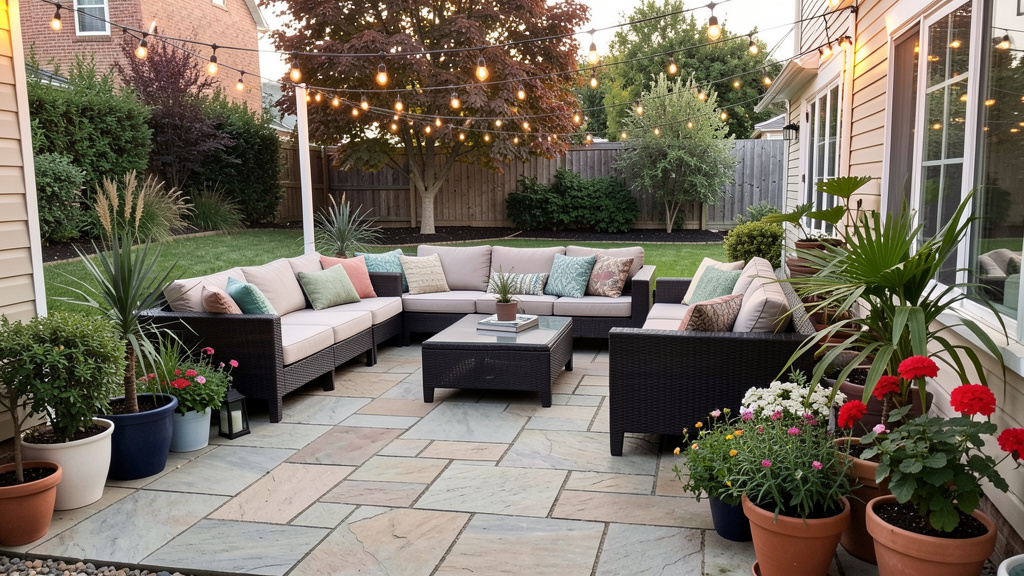
Move beyond basic slabs and hardscapes. Discover the proven framework for creating a functional, beautiful, and enduring outdoor living space that extends your home’s comfort and style through mindful design and climate-responsive choices.
Imagine stepping through your back door into a space that feels like a natural extension of your home—a place where morning coffee steams beside fragrant herbs, weekend dinners unfold under soft ambient light, and quiet evenings are spent wrapped in the gentle warmth of a thoughtfully placed fire feature. This isn’t just a patio; it’s a purposefully crafted outdoor room designed around how you truly live. In this comprehensive guide, we dismantle the overwhelm of patio planning by introducing a holistic, zone-based framework informed by environmental psychology and residential design principles. We’ll walk you through every critical decision—from foundational engineering and climate-smart material selection to spatial flow and seasonal adaptability—while spotlighting common pitfalls (like improper grading or overlooked drainage) that compromise even well-intentioned projects. Whether you’re working with a compact urban backyard or a sprawling suburban lot, this guide transforms inspiration into an actionable, confidence-building roadmap for creating an outdoor sanctuary you’ll cherish for years.
Introduction: Beyond the Slab—Redefining What a Patio Can Be
For too long, patios have been treated as afterthoughts: simple surfaces poured behind the house with little consideration for how humans actually interact with outdoor space. The result? Beautiful but underused hardscapes gathering pollen and patio furniture covers. True outdoor room creation begins with a fundamental mindset shift: your patio is not merely a surface to stand on—it is a three-dimensional living environment where architecture, nature, psychology, and practicality converge. Drawing on established principles from landscape architecture and environmental design, a well-designed patio functions as a seamless extension of indoor living space, intentionally engineered to support specific activities, foster connection, and respond intelligently to microclimates and seasonal shifts. This approach moves decisively beyond idealized imagery that overlooks drainage realities or furniture arrangements that disrupt natural movement. Instead, we embrace a human-centered methodology where every choice—from the texture underfoot to the placement of the first light source—is made with purpose. Whether your vision includes a cozy nook for solo reading, a dynamic entertaining hub, or a multi-functional zone that adapts to your family’s evolving needs, this guide provides the structured yet flexible framework to bring it to life. We’ll address the full spectrum of considerations: structural integrity, material science, spatial psychology, climate adaptation, budget stewardship, and long-term care. This isn’t about replicating a magazine spread; it’s about cultivating a space that feels authentically yours—a place where memories are made, stress melts away, and the boundary between inside and out beautifully dissolves. This guidance aligns with foundational standards from the American Society of Landscape Architects and residential building practices focused on safety, accessibility, and environmental harmony.
The Outdoor Room Framework: Three Zones for Flow and Function
Forget fragmented checklists. The most enduring patios succeed because they honor how people naturally move, gather, and experience space. After reviewing patterns across diverse residential landscapes and human-centered design literature, a consistent structure emerges: exceptional patios intentionally organize into three interdependent zones. This isn’t arbitrary decoration—it’s spatial psychology in action. Each zone serves a distinct human need, and when harmonized, they create a space that feels intuitive, inviting, and effortlessly functional. Think of it like the rooms inside your home: the kitchen (preparation), dining area (gathering), and living room (relaxation) each have clear purposes yet flow together seamlessly. Your patio deserves the same thoughtful orchestration. This framework eliminates decision fatigue by providing a clear lens for every choice you make. When selecting materials, ask: “Does this support the Foundation Zone’s need for durability and drainage?” When arranging furniture, ask: “Does this arrangement honor the Living Zone’s purpose for connection and movement?” When choosing lighting, ask: “Does this enhance the Atmosphere Zone’s goal of comfort and mood?” This systematic approach ensures no critical element is overlooked while preventing common pitfalls like cramming too many functions into one area or neglecting transition points between zones. Below, we unpack each zone in detail—its core requirements, design considerations, and how it collaborates with the others. Master this framework, and you’ll possess a powerful mental model that transforms complexity into confident, intentional creation. This zone-based approach reflects recurring patterns observed in award-winning residential landscapes where usability and emotional resonance are prioritized.
Zone 1: The Foundation Zone – Engineering Comfort and Durability
Beneath every enduring patio lies an invisible hero: the foundation. This zone encompasses everything below and immediately around the visible surface—the structural skeleton that determines longevity, safety, and daily comfort. Neglect this zone, and even quality materials may shift, crack, or become hazardous over time. Prioritize it, and your patio will remain stable, dry, and usable for years with minimal intervention. The Foundation Zone operates on three interconnected pillars: structural integrity, intelligent drainage, and climate-responsive preparation. Let’s explore each pillar with practical clarity.
Structural Integrity: Building a Stable Base
The base is more than compacted soil. A resilient foundation is a layered system engineered to distribute weight, accommodate environmental movement, and prevent settling. For most patios (concrete pavers, natural stone, tile), a standard layered approach includes:
– Sub-base (4–6 inches): Crushed angular gravel (often called “road base”). Angular stones lock together when compacted, creating a rigid, permeable platform. Why it matters: Rounded gravel shifts under pressure, potentially causing uneven surfaces. Angular gravel provides shear strength and stability.
– Setting Bed (1–1.5 inches): Coarse concrete sand. This fine layer allows precise leveling of individual units during installation. Critical nuance: Avoid mason sand—it’s too fine and may wash away. This layer is essential for adjusting minor height variations.
– Edge Restraint: Plastic, aluminum, or concrete curbing installed around the entire perimeter. Why it’s important: Without restraint, units can gradually migrate outward with foot traffic and thermal expansion, creating gaps or tripping hazards. Aluminum restraints offer rigidity for high-traffic areas; heavy-duty plastic works well for curved edges.
Illustrative insight: In regions with freeze-thaw cycles, skipping edge restraint has led to premature displacement of pavers. Installing restraint before laying units—secured firmly to the sub-base with landscape spikes—supports long-term stability. Always verify local building guidelines for specific requirements.
Intelligent Drainage: Guiding Water Thoughtfully
Water management is woven into the foundation’s design. Poor drainage can contribute to surface deterioration, efflorescence (mineral deposits), or slippery conditions. A fundamental guideline: Patios should slope away from your house at approximately 1/4 inch per foot. For a 10-foot-deep patio, that’s roughly a 2.5-inch drop from house to outer edge. But slope alone isn’t always sufficient. Consider these layered strategies:
– Sub-surface Drainage: In clay-heavy soils or areas with high water tables, embedding a perforated drain pipe (wrapped in landscape fabric and surrounded by gravel) at the lowest excavated point can channel water safely away. Direct the outlet to an appropriate discharge location—always check local regulations.
– Surface Channeling: For patios near downspouts, discreet linear drain channels (available in stainless steel or polymer) can capture runoff before it floods seating areas.
– Permeable Paving Options: In regions with heavy rainfall, permeable pavers allow water to percolate through aggregate-filled joints into the base layers. This approach supports stormwater management goals in many communities. Consideration: Requires specialized base preparation and periodic maintenance to prevent clogging.
Climate-aware note: In arid regions, slope toward a central dry well or rain garden may help capture scarce rainfall for irrigation. Always consult local building resources—many municipalities now encourage or require permeable surfaces for new hardscapes above certain sizes.
Climate-Responsive Preparation: Designing for Your Environment
Local climate significantly influences foundation details:
– Frost Considerations (Colder Climates): Excavation depth often needs to extend below the regional frost line to minimize heaving. Consult your local building department for depth guidelines—this step supports structural longevity.
– Expansive Soils (Clay-Rich Areas): Soils that swell when wet and shrink when dry may require deeper excavation and replacement with non-expansive fill (like crushed granite) before adding standard base layers.
– High Water Table Areas: Elevating the patio structure using low retaining walls filled with gravel can lift the living surface above saturation zones. Include weep holes in walls to allow trapped water to escape safely.
Safety protocol: Before any digging begins, contact your local “Call Before You Dig” service (811 in the U.S.). They’ll mark public utility lines at no cost—typically within a few business days. Mark these lines clearly and maintain safe distances during layout planning. For private lines (irrigation, outdoor lighting cables), consider hiring a private locator if records are unavailable. This step is non-negotiable for safety and legal compliance.
Zone 2: The Living Zone – Defining Space and Encouraging Connection
This is where design meets daily life—the visible surface and furnishings where activities unfold. The Living Zone’s effectiveness lies not just in aesthetics, but in how spatial arrangement influences comfort, movement, and human connection. A thoughtfully arranged zone feels intuitive and inviting; a poorly planned one feels awkward or underutilized. We’ll explore three interconnected layers: surface selection, spatial flow, and human-centered detailing.
Surface Selection: Prioritizing Safety, Comfort, and Context
Your flooring choice impacts safety, thermal comfort, maintenance, and microclimate interaction. Move beyond appearance alone to evaluate performance for your reality. Consider these practical filters:
| Material | Best Suited For | Climate Considerations | Maintenance Notes | Thermal Note |
|---|---|---|---|---|
| Concrete Pavers | High-traffic areas, versatile styles | Good freeze-thaw resistance; avoid high-salt exposure | Sweep regularly; refresh joint sand periodically | Light colors stay cooler; dark absorbs heat |
| Natural Stone | Timeless aesthetic, high-end feel | Slate: slippery when wet; Bluestone: durable | Seal periodically per manufacturer guidance | Stone often stays cooler than pavers in sun |
| Stamped Concrete | Budget-conscious projects | Prone to cracking in freeze-thaw zones; requires control joints | Reseal periodically; cracks can be challenging to repair | Dark stamps absorb significant heat |
| Porcelain Tile | Modern aesthetic, indoor-outdoor flow | Must be rated for exterior use and frost resistance | Easy clean; grout may require attention | Glazed surfaces can be slippery when wet |
| Decomposed Granite | Rustic paths, soft underfoot | Washes in heavy rain; benefits from stabilizer | Replenish annually; weed barrier recommended | Stays relatively cool; permeable |
| Wood Decking | Elevated spaces, organic feel | Requires sealing; less ideal in humid climates | Annual cleaning/sealing; inspect for splinters | Can stay cooler than stone; requires upkeep |
Safety consideration: Request samples of materials you’re considering. Wet them and assess slip resistance under typical footwear. Look for products with a Dynamic Coefficient of Friction (DCOF) rating of 0.42 or higher for wet areas—a widely recognized benchmark for slip resistance. Textured finishes (like thermal or flamed stone) generally outperform polished surfaces near dining or water features. In consistently damp climates, prioritize textured, non-slip options.
Thermal awareness: Surface temperature affects comfort. In hot climates, light-colored materials or those with high solar reflectance help keep surfaces cooler for bare feet or pets. In cooler regions, darker tones may provide welcome warmth on chilly mornings. Test samples on a sunny afternoon: if a surface feels uncomfortably hot to the touch, reconsider for high-traffic barefoot zones.
Spatial Flow: Designing for Natural Movement
How you arrange elements directly impacts usability and social dynamics. Apply these evidence-informed principles:
– Conversation Flow: For seating areas, arrange chairs or sofas so occupants face each other at a comfortable angle (roughly 90–120 degrees), with seating faces no more than 8 feet apart. This encourages natural eye contact and conversation without straining. Avoid lining all furniture against walls—it can feel institutional. Floating groupings inward often feels more inviting.
– Pathway Clearance: Maintain clear pathways of at least 36 inches wide between furniture groupings and around the perimeter. For primary routes (e.g., from house to grill), allow 48 inches. Imagine carrying a tray—would movement feel natural? Sketching your layout to scale (1 square = 1 foot) and cutting out furniture shapes helps visualize flow before purchasing.
– Activity Zoning Within the Zone: Even within the Living Zone, define micro-areas:
– Dining Area: Allow 24 inches behind chairs for pulling out; 48 inches between table edge and wall/furniture for serving.
– Lounge Area: Position seating to face a focal point (fire feature, garden view)—not a blank wall.
– Prep/Service Zone: Keep grill, mini-fridge, or serving cart within easy reach of the dining area. Avoid placing grill directly under overhead structures where grease can accumulate.
Practical example: A homeowner initially placed a large sectional against the back fence. Guests felt disconnected from the kitchen entrance, and conversation required raising voices. By rotating the sectional to form an L-shape facing the house (anchored by a coffee table), they created a welcoming “room” that felt connected to indoor activity while maintaining privacy. This simple adjustment significantly increased how often the space was used.
Human-Centered Detailing: Comfort in the Details
True comfort lives in often-overlooked details:
– Step Safety: If your patio is raised, ensure step risers are consistent in height (following local code guidelines) and deep enough for safe footing. Adding subtle LED step lights enhances nighttime safety.
– Edge Transitions: Sharp patio edges can feel abrupt. Soften transitions with low-growing ground cover (like creeping thyme or sedum) spilling between pavers at the perimeter, or choose curved edge restraints instead of sharp corners.
– Standing Comfort: For areas where people stand frequently (outdoor kitchen prep zone), consider embedding a small section of outdoor-rated rubber matting beneath the work surface. This small addition reduces fatigue during extended use.
Zone 3: The Atmosphere Zone – Crafting Mood and Sensory Experience
This zone transforms a functional space into an emotional sanctuary. It engages multiple senses to create ambiance, extend usability into evenings and cooler months, and foster a deeper connection to the environment. Atmosphere is most effective when layered during the design phase to avoid costly retrofits. We’ll explore four sensory pillars: light, sound, thermal comfort, and biophilic integration.
Lighting: Layered Illumination for Safety and Ambiance
Avoid the “airport runway” effect of single overhead lights. Thoughtful outdoor lighting uses three complementary layers:
1. Ambient Lighting (General Illumination): Soft, diffuse light that defines the space’s perimeter and provides baseline visibility. Examples: Low-voltage path lights along edges (mounted 12–18 inches high), uplights grazing a textured wall, or discreet well lights embedded in the patio surface. Tip: Warm-white LEDs (2700K–3000K color temperature) create a welcoming feel and attract fewer insects than cooler tones.
2. Task Lighting (Functional Focus): Targeted light for specific activities. Examples: Under-cabinet lights in an outdoor kitchen, a pendant light above a dining table, or adjustable spotlights over a grill surface. Ensure fixtures are rated for wet or damp locations as appropriate.
3. Accent Lighting (Depth and Interest): Highlights architectural features, textures, or plants. Examples: Silhouetting a sculptural tree, grazing light across a stone wall to emphasize texture, or submersible LED lights in a water feature.
Safety note: All electrical work should comply with local codes. Low-voltage systems (12V) are often DIY-friendly but still require a GFCI-protected transformer plugged into a weatherproof outlet. Line-voltage installations (120V) typically require a licensed electrician. Plan conduit runs during Foundation Zone excavation for future flexibility.
Accessible ambiance: String lights offer versatile ambient lighting. Crisscross them overhead in a loose grid pattern (not just perimeter) to create a “ceiling” effect that defines vertical space. Use commercial-grade, wet-location-rated LED strings. Hang them 8–10 feet above seating to avoid glare. For a cozier feel, drape them gently through tree branches rather than pulling taut.
Soundscaping: Curating Your Acoustic Environment
Unwanted noise can disrupt tranquility. Intentional sound design helps mask distractions and enhance serenity:
– Water Features: The gentle sound of moving water is widely recognized for its calming effect. A small recirculating wall fountain or bubbling urn provides soothing background sound. Position it between your seating area and the noise source when possible.
– Wind Elements: Choose deep-toned bamboo or metal chimes that produce soft, resonant notes. Hang them where breezes naturally flow (near pergola corners).
– Strategic Planting: Dense evergreen shrubs planted along property lines can act as natural sound buffers. Layering heights (tall trees at back, medium shrubs in middle, ground cover in front) enhances absorption.
– Surface Dampening: Adding an outdoor rug under seating areas can reduce footfall noise. Avoid placing hard surfaces (glass tables, metal chairs) directly against reflective walls—they can amplify clatter.
Practical application: To address persistent alley noise, a homeowner installed a narrow bubbling rock fountain against the fence line and planted a dense row of arborvitae in front. The combined water sound and plant buffer noticeably reduced perceived noise, creating a more peaceful setting.
Thermal Comfort: Expanding Seasonal Usability
A truly functional outdoor room works beyond peak summer months. Layer these adaptable strategies:
– Heating Options:
– Overhead: Infrared patio heaters (electric or propane) mounted under pergolas or eaves. Electric models offer quiet operation; propane provides portability. Position to radiate warmth downward onto seating areas.
– Ambient: Fire pits or fire tables. Propane offers convenience and clean burn; wood-burning provides authentic ambiance (check local regulations). Critical safety: Maintain ample clearance from structures, overhangs, and combustibles. Use non-combustible materials within the immediate vicinity.
– Underfoot: Radiant heating mats embedded during base preparation (installed in the Foundation Zone phase). Ideal for small zones like a seating nook. Requires GFCI-protected circuit and thermostat.
– Cooling Strategies:
– Shade: Pergolas with retractable canopies or shade sails offer adjustable sun protection. Orient pergola beams north-south to maximize dappled shade throughout the day. Choose breathable, UV-resistant fabrics.
– Evaporative Cooling: In dry climates, a misting system integrated into pergola beams can provide noticeable cooling. Less effective in humid regions.
– Passive Cooling: Position seating under deciduous trees—they provide summer shade and allow winter sunlight through bare branches.
Regional adaptation: In humid climates, prioritize cross-ventilation. Position seating to catch prevailing breezes, and consider ceiling fans mounted on pergolas (rated for wet locations) to enhance airflow and deter insects.
Biophilic Integration: Weaving Nature Into Daily Experience
Biophilia—the human affinity for nature—isn’t just about adding plants. It’s about creating sensory richness and ecological harmony:
– Vertical Greenery: Install planter boxes on low patio walls or use modular living wall systems on blank fences. Choose plants suited to the microclimate: ferns and hostas for shady areas; sedum and lavender for sunny exposures.
– Scent Layering: Place fragrant plants where air currents carry scent toward seating: jasmine near an entrance, rosemary by the grill (which also deters some pests), mint in contained pots near lounge areas.
– Wildlife Welcome: Add a small, shallow birdbath (with stones for perching) or plant pollinator-friendly natives (coneflowers, milkweed) in nearby beds. The gentle activity of birds and butterflies adds dynamic life.
– Natural Materials: Incorporate elements like a river rock border, a reclaimed wood bench, or a stone water feature. These textures evoke calm and ground the space in authenticity.
The Fundamental Principle: A patio succeeds not by the sum of its parts, but by the harmony of its zones—where the Foundation Zone’s unseen engineering enables the Living Zone’s effortless function, and the Atmosphere Zone’s sensory layers transform utility into profound emotional resonance.
Material Mastery: Choosing Surfaces That Suit Your Climate, Budget, and Lifestyle
Selecting patio materials feels overwhelming because generic advice often ignores your unique context. “Natural stone is best!” overlooks that certain stones become slippery in damp climates. “Pavers are cheapest!” neglects that improper base preparation leads to premature issues in freeze-thaw regions. True material mastery means matching properties to your reality: climate, soil, usage patterns, maintenance tolerance, and aesthetic preference. Let’s move beyond superficial comparisons to a decision framework grounded in practical performance.
Understanding Core Material Properties
Every material has inherent traits that influence real-world performance. Understand these before selecting:
– Absorption Rate: How much moisture the material absorbs. High absorption can contribute to staining, freeze-thaw damage, or efflorescence. Simple test: Sprinkle water on a sample. If it beads up, absorption is low. If it soaks in quickly, absorption is high (may require sealing).
– Slip Resistance (COF): Critical for safety, especially when wet. Aim for products rated for exterior use with adequate slip resistance for your climate. Textured finishes generally improve safety.
– Thermal Properties: How the material responds to sun exposure. Stone and concrete have high thermal mass—they absorb heat during the day and release it slowly. Light colors reflect more heat than dark.
– Porosity: Density affects staining risk and cleaning ease. Porcelain tile has very low porosity; unglazed clay pavers are more porous.
Action step: Obtain samples of your top contenders. Live with them for a few days:
1. Place one on your current patio or driveway.
2. Walk on it barefoot at noon on a sunny day (safely).
3. Pour water on it—observe absorption.
4. Sprinkle dirt; hose it off. Note residue.
5. Place a chair leg on it; drag slightly. Check for scratching.
This tactile testing reveals practical truths no spec sheet can.
Climate-Informed Material Guidance
Your location is a critical filter. General considerations by region:
Cold Climates (Freeze-Thaw Cycles, Snow)
– Consider: Concrete pavers (interlocking design accommodates movement), thermally finished bluestone, porcelain tile rated for frost resistance.
– Caution: Non-interlocking stone set in mortar may crack with movement; unsealed porous stones may absorb water that expands when frozen.
– Strategy: Choose pavers with chamfered edges to shed water. Use polymeric sand in joints—it hardens to resist weeds and washout while maintaining some flexibility.
Humid, Rainy Climates (Southeast, Pacific Northwest)
– Consider: Light-colored concrete pavers, porcelain tile with anti-slip rating, decomposed granite with stabilizer.
– Caution: Smooth surfaces near water features; materials prone to moss in shaded, damp areas.
– Strategy: Prioritize slope and drainage. Ensure minimum 1/4″ per foot slope away from the house. Choose inherently textured materials; avoid finishes requiring frequent sealing where moisture hinders adhesion.
Hot, Arid Climates (Southwest, Desert Regions)
– Consider: Light-colored concrete pavers, travertine, decomposed granite.
– Caution: Dark materials can become uncomfortably hot; sealed surfaces may trap heat.
– Strategy: Integrate shade first. A pergola with adjustable canopy is often essential for usability. Select materials with high solar reflectance where available.
Variable Climates (Midwest, Northeast)
– Consider: Versatile options like quality concrete pavers or regionally appropriate stone.
– Caution: Materials vulnerable to salt damage if de-icing salts are used nearby.
– Strategy: Focus on proper base preparation and drainage—these often matter more than the surface material itself for longevity.
Budget Perspective: Lifecycle Value Over Upfront Cost
Look beyond square-foot price. Consider total value over time:
– Upfront Cost: Material + installation (DIY vs. professional).
– Maintenance Investment: Sealing, cleaning, repairs.
– Longevity: Expected service life with proper care.
– Personal Value: How well it supports your intended use and aesthetic.
Illustrative comparison (conceptual only—actual costs vary widely by region and project):
– A basic concrete slab may have lower initial cost but could require crack repair and resurfacing sooner.
– Quality concrete pavers often have higher initial investment but offer repairability (individual units can be replaced) and longer service life with routine joint maintenance.
– Natural stone provides enduring beauty but typically requires more attentive sealing and cleaning.
Insight: For many homeowners seeking balance, mid-tier concrete pavers offer strong durability, repairability, and value. Stone is a meaningful investment in aesthetics and potential property appeal—but only if you’re prepared for its care requirements. Always get multiple quotes and clarify what’s included.
Sustainability Considerations: Building Thoughtfully
Your choices have broader implications:
– Locally Sourced Materials: Stone or gravel quarried regionally reduces transportation emissions. Ask suppliers about origin.
– Recycled Content: Many concrete pavers contain recycled materials (fly ash, slag). Some porcelain tiles incorporate recycled glass.
– Permeability: Permeable surfaces support groundwater recharge and reduce stormwater runoff—valuable in urban areas.
– Longevity as Sustainability: A patio that lasts decades with minimal upkeep generally has a lower environmental footprint than one requiring frequent replacement. Prioritize durability and timeless design.
– End-of-Life Planning: Concrete and stone are inert and can often be crushed for future base material. Avoid materials with toxic treatments.
Conquering Challenges: Slopes, Drainage, and Site Constraints
Even the most inspired patio vision can encounter real-world site constraints. Slopes, drainage patterns, and existing features aren’t dead ends—they’re design opportunities when approached with knowledge and strategy. This section provides actionable, safety-focused approaches for transforming challenging sites into assets. Always consult local building codes and, when uncertainty exists, seek guidance from qualified professionals to ensure compliance and safety.
Working with Slopes: From Challenge to Feature
A sloped yard isn’t a flaw; it’s a chance to create dynamic, multi-level interest. Match the solution to the slope’s severity and your goals.
Gentle Slopes (Less than 10% grade)
– Approach: Continuous slope with strategic grading.
– How-To: Excavate the high side to create a level platform, using removed soil to build up the low side. Install a low retaining wall (12–18 inches high) on the downhill side using segmental wall blocks. Backfill behind the wall with gravel for drainage.
– Tip: Curved retaining walls often feel more organic and handle soil pressure effectively. Plant low-maintenance ground cover on the built-up slope behind the wall to prevent erosion.
– Code Note: Walls under 18 inches may not require permits in many areas—but always verify with your local building department.
Moderate Slopes (10–20% grade)
– Approach: Tiered patios with integrated steps.
– How-To: Create two or more level areas connected by wide, shallow steps. Each tier should feel usable (minimum 8 feet deep is often comfortable). Steps should have consistent riser height and adequate tread depth. Integrate subtle step lighting for safety.
– Design Opportunity: Use the vertical space between tiers for built-in planters, a cascading water feature, or uplighting to highlight texture. Elevation changes naturally define activity zones.
– Critical Detail: Consider drainage behind upper retaining walls to intercept groundwater.
Steep Slopes (Greater than 20% grade)
– Approach: Professional consultation is strongly recommended. Options may include:
– Helical Piers: Steel foundations driven deep into stable soil to support elevated structures.
– Engineered Retaining Walls: Tall walls require geotechnical assessment and engineered plans.
– Safety First: Never attempt tall retaining walls on steep slopes without professional engineering. Soil pressure increases significantly with height—failure risks are serious.
Universal Principle: Regardless of yard grade, ensure the patio surface itself slopes away from your house (approximately 1/4″ per foot) to prevent water accumulation against your foundation—a common cause of moisture issues.
Drainage Solutions: Engineering Water Flow
Water follows the path of least resistance. Your design should provide a safe, intentional path. Beyond foundational slope:
Clay Soil Considerations
Clay drains slowly. Standard gravel bases may become saturated.
– Approach: Increase sub-base depth (8–10 inches of crushed gravel). Consider a perforated drain pipe at the bottom of excavation, wrapped in landscape fabric, sloping toward a safe outlet.
– Verification: After heavy rain, check if water pools on the excavated sub-base. If it does, drainage intervention is advisable before proceeding.
High Water Table Areas
When groundwater is consistently high, traditional excavation may fill with water.
– Approach: Build up, not down. Construct a raised patio using segmental wall blocks to form a contained box. Fill the interior with landscape fabric, gravel, sand, then pavers. This elevates the living surface.
– Critical Addition: Include weep holes (small gaps between wall blocks at the base) every few feet to allow trapped water to escape, preventing pressure buildup behind the wall.
Downspout Management
Never let roof runoff dump directly onto your patio.
– Preferred Solution: Extend downspouts underground via solid pipe to discharge well away from the patio and house foundation.
– Alternative: Install a discreet catch basin at the downspout outlet, connected to a drain line running along the patio edge.
– Avoid: Relying solely on splash blocks—they scatter water unpredictably and can erode soil.
Utility Line Safety: Non-Negotiable Protocol
Striking an underground line can cause service disruption, costly repairs, serious injury, or worse. There are no shortcuts.
The Essential Process:
1. Contact Your Local “Call Before You Dig” Service: In the U.S., call 811 at least 2–3 business days before digging. It’s free, legally required in most areas, and marks public utility lines (electric, gas, water, sewer, telecom) with color-coded paint.
2. Address Private Lines: 811 does not mark private lines (irrigation, outdoor lighting cables, gas lines to grills). Review old installation records or hire a private utility locator if uncertainty exists.
3. Respect the Marks: Maintain a safe buffer zone (typically 18–24 inches) on either side of marked lines. Hand-dig carefully within this zone using blunt tools.
4. Document: Photograph marked lines before digging. Note depths and locations.
Critical reminder: Skipping this step risks severe consequences. Calling 811 is a small investment of time that protects safety, property, and peace of mind.
Budgeting Wisely: A Phased Approach to Value
A successful patio project balances aspiration with financial reality. Panic-driven cuts lead to regrettable compromises; uninformed splurges drain resources from critical areas. This section provides a transparent, phase-by-phase budget framework prioritizing structural integrity and long-term value while identifying genuine opportunities for savings. We’ll discuss realistic cost factors, a strategic allocation model, and smart phasing.
Understanding Cost Variables
Patio costs vary significantly based on location, site conditions, and choices. National averages provide only a rough starting point—your actual cost depends on:
– Site Preparation: Removing old surfaces, trees, or stumps adds cost. Significant grading or slope correction increases complexity.
– Accessibility: Tight backyards requiring manual material haulage increase labor time.
– Regional Factors: Labor and material costs differ widely by location.
– Permit Requirements: Fees vary; required for structures over certain sizes, retaining walls, or electrical work.
Realistic Installed Cost Ranges (Professional Installation – Conceptual Only):
– Basic Concrete Slab: $8 – $15 / sq. ft.
– Mid-Grade Concrete Pavers: $15 – $30 / sq. ft.
– Natural Stone: $25 – $50+ / sq. ft.
– Porcelain Tile: $20 – $40 / sq. ft.
– Decomposed Granite: $7 – $15 / sq. ft.
Note: These are illustrative ranges. Always obtain multiple detailed quotes for your specific project. Costs include standard excavation, base prep, materials, and labor. Complex sites increase costs.
The 60-30-10 Allocation Framework
Adopt this strategic allocation model:
– 60%: Foundation & Structure (Priority Investment)
Excavation, grading, base materials, edge restraint, drainage systems, structural elements. Why prioritize: Compromising here risks future problems—settling, drainage failures—that cost far more to fix later. This is where “saving” often becomes expensive. Invest in proper compaction, adequate slope, and climate-appropriate preparation.
– 30%: Surface & Hardscape (Strategic Choices)
Visible flooring material, built-in elements (fire pit base, seating walls), permanent structures (pergola footings). Optimization: Choose durable, mid-tier materials proven in your climate. Focus on texture and color that complement your home—this has significant visual impact. Avoid the absolute cheapest option (may lack durability) and the most exotic (may have high shipping or maintenance costs).
– 10%: Atmosphere & Furnishings (Phased Implementation)
Lighting fixtures, planters, furniture, decor. Smart strategy: This is ideal for phasing. Install conduit for future lighting during foundation work (low cost now), add fixtures later. Buy one high-quality seating piece first; add accent chairs over time. Start with hardy, low-cost plants; mature specimens can be added in subsequent seasons. This prevents budget exhaustion before the space is functional.
Example Allocation Concept (Total Project Budget: $X)
– Foundation & Structure (60%): Excavation, base materials, drainage, grading, permits.
– Surface & Hardscape (30%): Quality pavers, built-in seating wall, simple fire feature base.
– Atmosphere & Furnishings (10%): Path lighting kit, two weather-resistant chairs, outdoor rug, planter boxes.
Phase 2 (Next Season): Add string lights, dining set, and mature shrubs as budget allows.
Anticipating Hidden Costs
Even detailed quotes can miss these common considerations:
– Soil Disposal: Excavated soil often requires removal. Dumping fees vary. Solution: Get a written estimate for spoil removal. Ask if excess soil can be used elsewhere on your property.
– Unexpected Site Conditions: Tree roots, buried debris, or unstable soil discovered during excavation. Solution: Include a 10–15% contingency fund in your budget for unknowns. Reputable contractors will pause and get approval before proceeding with extra costs.
– Material Waste: Complex layouts (curves, angles) require more cutting, increasing waste. Standard allowance is 5–10%; intricate designs may need 15%. Solution: Ensure quotes specify included waste percentage. Purchase 5–10% extra material for future repairs—matching batches later is difficult.
– Seasonal Timing: Peak season (spring/summer) may have higher demand. Solution: Schedule consultations in late winter; book contractors for early spring. Fall can offer cooler working conditions and potential scheduling flexibility.
DIY vs. Professional Installation: A Balanced Assessment
Not all patio work is equally suited for DIY. Assess honestly against these guidelines:
Strong DIY Candidates (With Proper Preparation):
– Small, simple patios (under 150 sq. ft.), minimal slope, no complex cuts.
– Decomposed granite paths (requires careful grading and compaction).
– Furniture assembly and placement (follow spatial flow principles).
– Planting and decor.
Considerations: Requires tool access (plate compactor, level, saw), physical capacity, time availability (multiple weekends), and comfort with detailed instructions. Savings potential is significant for suitable projects.
Strong Professional Candidates (Worth the Investment):
– Slope correction or retaining walls (engineering and safety considerations).
– Electrical work beyond low-voltage lighting (NEC compliance is critical).
– Gas line installation (requires licensed professional; permits mandatory).
– Large, complex layouts or poor soil conditions.
Value Beyond Labor: Professionals offer supplier access, efficient workflows, error-correction experience, and warranties. A poorly executed foundation costs more to fix than professional installation upfront.
Hybrid Approach (Strategic Compromise):
Hire a professional for the Foundation Zone (excavation, base prep, drainage) and structural elements. Handle the Living Zone surface installation (laying pavers) and Atmosphere Zone details yourself. This leverages expertise where failure is costly while allowing personal involvement. Many contractors offer “base-only” packages.
DIY or Hire a Pro? A Decision Framework Based on Skill, Time, and Risk
The choice between DIY and professional installation isn’t about pride—it’s a calculated assessment of safety, skill, and project complexity. An ill-advised DIY project can lead to structural issues, safety hazards, or frustration. Conversely, hiring a pro for simple tasks may drain resources needed elsewhere. This framework provides objective criteria for your specific situation.
Four Situations Requiring Professional Involvement
If your project involves any of these, professional installation is strongly recommended for safety and compliance:
1. Retaining Walls Over Local Code Height (Often 18″): Soil pressure increases with height. Walls above code thresholds typically require engineered plans, specific backfill techniques, and reinforcement. Failure risks are significant.
2. Gas Line Installation or Modification: Connecting appliances to natural gas or propane lines requires a licensed plumber or gas fitter. Permits and pressure tests are mandatory. DIY gas work risks leaks and voids insurance.
3. Electrical Work Beyond Low-Voltage Lighting: Installing 120V outlets, permanent fixtures, or underground wiring requires a licensed electrician for NEC compliance. Low-voltage (12V) landscape lighting systems are generally DIY-safe if the transformer plugs into an existing GFCI outlet.
4. Significant Excavation Near House Foundations: Altering grade within 10 feet of your foundation risks water intrusion or structural issues. Major excavation on unstable soil requires assessment.
If none of these apply, proceed to the DIY Readiness Assessment.
DIY Readiness Self-Assessment
Rate each factor honestly (1 = Low, 5 = High). Total your score.
| Factor | Questions to Consider | Your Score |
|---|---|---|
| Project Complexity | Simple layout? Minimal cuts? Flat site? Small size (<150 sq. ft.)? | ___ / 5 |
| Your Skill Level | Experience with levels, compaction, cutting materials? | ___ / 5 |
| Tool Access | Can you rent/borrow compactor, laser level, saw? Safety gear? | ___ / 5 |
| Physical Capacity | Comfortable with repetitive lifting, kneeling? | ___ / 5 |
| Time Availability | 3–5 uninterrupted weekends? Handle weather delays? | ___ / 5 |
| Risk Tolerance | Accept potential mistakes and learn from them? | ___ / 5 |
| Local Code Knowledge | Checked permit requirements? Understand local rules? | ___ / 5 |
| TOTAL | ___ / 35 |
Interpretation:
– 28–35 Points: DIY is a strong candidate. Proceed with detailed planning, tool research, and sample testing.
– 20–27 Points: Hybrid approach recommended. Hire a pro for foundation/base work; DIY surface installation and furnishings.
– Below 20 Points: Professional installation is the wisest investment. Risks of failure (financial, safety) likely outweigh potential savings.
Vetting Professionals: Key Steps
If hiring a pro:
– Get Multiple Detailed Bids: Beware of extremely low bids—they may indicate skipped steps or substandard materials.
– Verify Credentials: Request copies of:
– Valid contractor’s license for your area
– General liability insurance ($1M+ coverage)
– Workers’ compensation insurance
– Review Scope of Work: The contract should specify materials, base preparation details, drainage solutions, cleanup responsibilities, timeline, payment schedule (avoid large upfront payments), and warranty terms.
– Check References: Ask past clients about communication, problem-solving, and adherence to budget/schedule. If possible, visit a completed project.
Red Flags vs. Green Flags
Red Flags (Proceed with Caution):
– Pressure to sign immediately
– Refusal to provide written contract or insurance docs
– Requests for large cash payments upfront
– Dismisses your questions or concerns
Green Flags (Confidence Indicators):
– Provides detailed, itemized proposal
– Explains the “why” behind recommendations
– Shares portfolio of similar projects
– Communicates clearly and patiently
– Discusses permits and code compliance proactively
Furnishing and Decorating: Turning Hardscape into Home
A beautifully built patio remains an empty stage until furnishings and decor invite you to sit, stay, and connect. This phase is riddled with common pitfalls: furniture that overwhelms the space, fabrics that fade quickly, or arrangements that feel like an afterthought. True outdoor room creation treats furnishings as integral architecture—not accessories. This section provides a human-centered approach to selecting, arranging, and maintaining pieces that enhance comfort, reflect your style, and withstand the elements.
Scale and Proportion: The Foundation of Comfort
Oversized furniture is a frequent patio design error. A massive sectional that looks perfect in a showroom can dominate a modest patio, leaving no room to move. Apply these spatial guidelines:
– The 30% Guideline: Total furniture footprint should generally occupy no more than 30% of the patio’s square footage. For a 192 sq. ft. patio (12’x16′), furniture should cover roughly ≤58 sq. ft. Sketch your layout to scale.
– Clearance Zones: Maintain minimum clearances:
– 36 inches around seating groups for walking
– 24 inches behind dining chairs for pulling out
– 18 inches between coffee table and sofa edge
– Test Before Buying: Use painter’s tape to outline furniture dimensions on your patio surface. Walk through the space. Does it feel cramped? Can you easily access key areas? Sit in a temporary chair at the intended table height—does it feel comfortable?
Practical example: A homeowner loved a 96-inch outdoor sofa but her patio was only 14 feet deep. By choosing a 72-inch loveseat and adding two individual armchairs, she created a more intimate conversation area with better flow—and allocated savings to higher-quality cushions.
Material Selection for Outdoor Durability
Not all “outdoor” furniture performs equally. Understand material properties:
| Material | Strengths | Climate Considerations | Maintenance Notes | Typical Longevity |
|---|---|---|---|---|
| Aluminum | Lightweight, rust-resistant | Can feel cold; hollow frames dent | Wash with mild soap; store cushions | 10–15+ years |
| Powder-Coated Steel | Sturdy, classic look | Chips may lead to rust (coastal) | Touch up scratches; cover in winter | 8–12 years |
| Teak (Grade A) | Ages gracefully to silver patina | Premium cost; optional oiling | Clean annually; weather naturally or oil | 20–30+ years |
| Eucalyptus | Sustainable, teak-like appearance | Less dense; may warp | Seal annually; store in extremes | 7–10 years |
| All-Weather Wicker | Comfortable, versatile styles | UV degradation (cheap versions) | Choose UV-stabilized resin; store cushions | 8–12 years |
| Recycled Plastic (HDPE) | Zero maintenance, eco-friendly | Limited styles; aesthetic preference | Rinse occasionally; no sealing needed | 15–20+ years |
Critical Detail: Cushions and Fabrics
– Foam Core: Must be open-cell outdoor foam. Closed-cell (indoor) foam absorbs water, becoming heavy and mold-prone. Open-cell foam allows water to drain through.
– Fabric: Solution-dyed acrylic (Sunbrella, Outdura) is widely regarded as the gold standard. Color is embedded in the fiber, resisting fading, stains, and mildew. Avoid polyester or cotton blends—they degrade rapidly outdoors.
– Storage Solution: Even premium cushions last longer if stored when not in use. Invest in a weatherproof storage bench (doubles as seating) or a dedicated cushion caddy.
Arrangement Psychology: Fostering Connection
Furniture layout influences social dynamics:
– Conversation Circle: For connection-focused areas, arrange seating in a loose circle or U-shape with no more than 8 feet between seat faces. Angle chairs slightly inward. Avoid rigid symmetry—offset a chair for visual interest and easier entry.
– Sightline Strategy: Position key seating to face desirable views (garden, water feature) and away from less desirable ones (utilities, neighbor’s shed). Use a tall planter or screen to block negative sightlines.
– Activity Clustering: Group furniture by function:
– Dining Cluster: Table centered with chairs; ensure overhead clearance for pendant light.
– Lounge Cluster: Seating facing a focal point (fire feature, view); coffee table within arm’s reach.
– Solo Retreat: Single chair with small side table in a quiet corner (near fragrant plants).
– Preserve Flow: Never block primary pathways. Create “negative space” (open floor area) for movement and spontaneous activities.
Purposeful Decor: Layers That Enhance Experience
Decor should serve sensory or functional roles:
– Textiles: An outdoor rug defines the seating area visually and dampens sound. Choose flat-weave (polypropylene) for easy cleaning; avoid thick piles that trap moisture. Throw pillows add color—use solution-dyed acrylic fabric and store indoors overnight to extend life.
– Lighting Integration: Place battery-operated LED candles in hurricane lanterns on tables for safe ambiance. Clip-on reading lights on chair arms enable evening book enjoyment.
– Functional Decor: A stylish galvanized tub doubles as ice bucket and planter. A wall-mounted bottle opener with cap catcher adds utility.
– Personal Touches: Display weather-resistant items with meaning: a carved wooden bowl, a framed botanical print under glass, smooth stones from travels.
Seasonal Refresh Approach:
– Spring: Swap pillow covers for brighter colors; add cool-season annuals in pots.
– Summer: Incorporate cooling elements—misting fan, light linen throws.
– Fall: Introduce warm tones (terracotta, mustard); add a cozy outdoor blanket basket.
– Winter (Mild Climates): Use evergreen garlands, warm-white string lights, deep-hued textiles.
Year-Round Enjoyment: Strategies for Extended Usability
A patio used only during peak summer months represents underutilized potential. True outdoor room creation embraces seasonal shifts, transforming your space into a dynamic extension of home life across spring blooms, summer gatherings, autumn crispness, and even winter tranquility. This section provides climate-adaptive strategies to maximize comfort, usability, and joy throughout the year.
Spring: Renewal and Preparation
Spring is about gentle transitions and proactive care:
– Deep Clean: Before placing furniture, sweep and gently clean the patio surface. Clean furniture frames with mild soap; inspect cushions for storage damage.
– Planting Strategy: Layer bulbs planted the previous fall for early color. Add cool-season annuals (pansies, violas). Position fragrant plants (hyacinth, lilac) near seating to enjoy spring scents.
– Comfort Tweaks: Mornings/evenings remain cool. Keep a lightweight outdoor throw nearby. Position seating to catch afternoon sun for natural warmth.
– System Check: Test irrigation lines, clean gutters directing water away from patio, verify drainage paths are clear.
Summer: Peak Comfort and Smart Cooling
Summer demands intelligent management of heat, sun, and insects:
– Shade Strategy: Adjust retractable canopies or shade sails by mid-morning to block intense sun. Use sheer outdoor curtains on pergola posts—they diffuse light while allowing breezes. Position seating in dappled shade under deciduous trees.
– Cooling Tactics:
– Personal: Keep a small tub with cool water and citrus slices nearby for quick refreshment.
– Ambient: In dry climates, activate misting systems before guests arrive. In humid zones, use fans rated for damp locations to enhance airflow.
– Surface: Lightly hose down stone/paver surfaces in the evening—the evaporative effect lowers ambient temperature.
– Insect Considerations:
– Prevention: Eliminate standing water where mosquitoes breed.
– Natural Options: Place citronella candles upwind of seating. Plant basil, lavender, or marigolds in pots near seating—their scent may deter pests.
– Targeted Solutions: Use battery-operated mosquito repellent devices for localized protection. Avoid broad-spectrum insecticides that harm beneficial insects.
– Hydration Station: Create a dedicated drink area with a beverage tub, reusable cups, infused water pitcher, and small cooler. Reduces trips indoors.
Autumn: Cozy Transitions and Extended Evenings
As temperatures dip, autumn invites intimate gatherings:
– Thermal Layering: Activate overhead heaters before guests arrive. Light the fire feature as dusk falls—it provides radiant warmth and ambiance. Keep plush, weather-resistant throws in a lidded storage bench.
– Ambiance Enhancement: Swap bright string lights for warm-white (2700K) bulbs. Add flameless LED candles in hurricane lanterns on tables. Play soft background music through a weatherproof speaker.
– Sensory Touches:
– Scent: Simmer water with cinnamon sticks, orange peels, and cloves in a small slow cooker outdoors.
– Sight: Arrange seasonal elements like pumpkins or dried wheat in galvanized buckets. Use deep-toned textiles (burgundy, forest green) on pillows and throws.
– Taste: Position the fire feature near seating for roasting marshmallows or warming cider.
– Wind Management: Autumn breezes can chill quickly. Install temporary wind screens using outdoor-rated fabric panels. Position seating in the most sheltered corner.
Winter: Embracing the Quiet (Even in Cooler Climates)
Yes, your patio can offer value even in snow country—with the right mindset:
– The “Viewing Nook” Concept: In snowy regions, your patio transforms into a serene observation spot. Keep a clear path to a single, weatherproof chair positioned to enjoy the winter landscape. Place a small side table nearby for a warm beverage. The experience is about quiet contemplation.
– Cold-Climate Comfort (Temperate Zones): In areas with mild winters:
– Use a focused infrared heater in a small seating nook.
– Add a thick, outdoor-rated rug under seating for insulation.
– Serve warm beverages in insulated mugs.
– String delicate fairy lights through bare branches for evening ambiance.
– Protection Protocol: Before first freeze:
– Clean and store cushions, pillows, and fabric elements.
– Cover furniture frames with breathable covers (avoid plastic tarps—they trap moisture).
– Drain and store hoses; shut off outdoor water valves.
– Apply recommended protective coatings to wood furniture.
– Mindset Shift: Reframe winter patio use. It’s not about replicating summer—it’s about appreciating stark beauty, crisp air, and the unique peace of a quiet, snow-dusted space. Even five minutes of mindful breathing here can reset a stressful day.
The Four-Season Mindset: Designing for Adaptability
Build flexibility into your original design:
– Modular Furniture: Choose pieces that reconfigure seasonally (e.g., sectional modules that form a U-shape in summer, pulled apart for intimate pairs in fall).
– Integrated Storage: Include built-in storage benches or a dedicated shed for off-season items. Hidden storage maintains a clean aesthetic year-round.
– Mobile Planters: Use wheeled plant caddies for large pots—move tender plants to sheltered spots during unexpected weather.
– Zoned Lighting: Install separate controls for different lighting layers (path lights, overhead, accent). Dim ambient lights in summer; maximize warmth-focused lighting in fall/winter.
Maintenance Made Simple: Preserving Beauty and Safety
A patio’s longevity is sustained through consistent, informed care. Neglected maintenance can accelerate wear; a simple, seasonal routine preserves beauty, ensures safety, and protects your investment. This section transforms maintenance from a chore into an efficient, predictable system with clear timelines and actionable steps—tailored to your materials and climate.
The Seasonal Maintenance Calendar: Your Action Plan
Follow this cyclical rhythm. Adjust timing based on your local climate.
Late Winter / Early Spring (Before Growth Begins)
– Surface Inspection: Walk the entire patio. Note cracked units, loose stones, uneven areas, or damaged edges. Photograph issues for repair planning.
– Gentle Clean: Sweep away debris. For pavers/stone: Use a pressure washer on low setting (under 1,500 PSI) with a wide fan tip. Hold nozzle 12+ inches from surface. Critical: Avoid high pressure on paver joints—it can blast out sand. For stains, apply a cleaner specific to the stain type; follow product instructions.
– Joint Refresh: If polymeric sand has washed out or weeds appear:
1. Sweep joints clean with a stiff brush.
2. Apply new polymeric sand, sweeping into joints until full.
3. Lightly mist with water to activate binding (follow product directions).
4. Avoid regular sand—it washes out and invites weeds.
– Furniture Prep: Clean frames thoroughly. Inspect for rust, loose bolts, or fabric damage. Reapply protective coatings as needed per manufacturer guidance.
Late Spring / Early Summer (Pre-Season Check)
– Drainage Verification: After heavy rain, observe water flow. Does it drain promptly? Are there pooling areas? Address grading issues early.
– Lighting Test: Turn on all fixtures at dusk. Replace bulbs, clean lenses, adjust aim. Check transformer and connections.
– Plant Care: Trim overhanging branches that shade patio or drop debris. Fertilize container plants. Check irrigation lines for leaks or clogs.
– Safety Scan: Ensure step edges are secure, handrails are tight, and fire feature components are clean and functional.
Late Summer / Early Fall (Post-Peak Season)
– Stain Prevention: Address spills immediately (wine, grease). Blot—don’t rub. For organic stains (leaves, berries), use a mild oxygen bleach solution (not chlorine bleach—it can damage stone and plants).
– Leaf Management: Sweep regularly to prevent staining and moisture trapping. Use a leaf blower on low setting for paver joints.
– Furniture Assessment: Note wear patterns. Plan cushion replacements or frame repairs before winter storage.
– Fire Feature Cleanup: Empty ash trays. Clean burner ports on gas features. Cover if not used in winter.
Late Fall / Early Winter (Winterization)
– Thorough Clean: Remove all furniture, decor, and planters. Sweep surface completely. Clean if needed (allow ample drying time before freeze).
– Sealant Check (If Applicable): For sealed surfaces, perform a water test: sprinkle water on surface. If it beads up, sealant is likely intact. If it soaks in within minutes, plan to reseal in spring. Never seal in fall—trapped moisture can cause damage during freeze-thaw cycles.
– Drain Systems: Clear debris from drain inlets, French drain outlets, and downspout extensions.
– Storage Protocol:
– Cushions/Pillows: Clean thoroughly, ensure completely dry, store in breathable containers (canvas bags) in a dry location. Avoid plastic bins—they trap moisture.
– Furniture: Clean frames. Cover with breathable covers if left outside. Store lightweight pieces indoors if possible.
– Planters: Empty soil from terra cotta or ceramic pots (water expands when frozen, cracking pots). Store pots upside down.
– Irrigation/Lighting: Shut off water valves. Blow out irrigation lines if recommended. Disconnect and store low-voltage transformer indoors.
– Final Safety Check: Ensure no tripping hazards remain. Verify pathways to patio are clear for winter access if needed.
Material-Specific Care Guidance
Tailor your routine:
Concrete Pavers:
– Weed Prevention: Apply a pre-emergent herbicide (like corn gluten meal) to joints in early spring if desired.
– Efflorescence (White Powder): Usually temporary. Brush off with a stiff dry brush. For persistent cases, use a specialized efflorescence remover—avoid acid washes, which can damage the surface.
– Stain Removal: Oil stains: Apply absorbent material (like cat litter) first, then use a concrete cleaner. Rust stains: Use a rust remover poultice designed for masonry.
Natural Stone:
– Sealing: Reapply penetrating sealer per manufacturer guidance based on water test. Use a sealer formulated for your stone type.
– Cleaning: Avoid acidic cleaners (vinegar, lemon) on limestone or marble—they can etch the surface. Use pH-neutral stone cleaners.
– Moss/Algae: In damp climates, mix oxygen bleach with water per directions. Apply, wait, scrub gently with soft brush, rinse thoroughly. Test in inconspicuous area first.
Porcelain Tile:
– Grout Care: Clean grout lines with a soft brush and mild detergent. For stains, use a grout-specific cleaner. Re-seal grout if recommended by manufacturer.
– Slip Prevention: Keep surface free of algae/mold, especially in shaded areas.
Wood Decks (If Applicable):
– Cleaning: Use a deck cleaner per product instructions. Avoid chlorine bleach—it degrades wood fibers.
– Sealing/Staining: Reapply water-repellent finish per manufacturer schedule. Sand rough spots before recoating.
– Splinter Check: Run hand over surface before barefoot season; sand any rough areas.
Troubleshooting Common Concerns
– Uneven Settling: Often caused by base issues or soil erosion. Approach: Lift affected units. Excavate, add and compact fresh gravel base, re-level, reset units. For large areas, consult a professional.
– Persistent Weeds in Joints: Indicates drainage or joint material issue. Approach: Remove weeds, clean joints thoroughly, refill with polymeric sand, activate with water. Consider pre-emergent treatment next spring.
– Slippery Surface: Algae/mold growth or material choice. Approach: Clean thoroughly with appropriate solution. For long-term, consider textured surface options during future updates.
– Cracked Units: Usually from impact or underlying base issue. Approach: Individual units can often be replaced. Lift surrounding units carefully, remove damaged piece, prepare base, reset new unit. Keep extra units from original installation for matching repairs.
Your Questions, Answered
Q: How do I know if my patio project requires a permit?
A: Permit requirements vary significantly by location and project scope. Generally, permits are more likely needed for patios over a certain size (often 100–200 sq. ft.), retaining walls above local height limits (frequently 18 inches), structures with footings, or projects involving electrical/gas work. Always contact your local building department before starting. They provide definitive guidance based on your specific plans and zoning. When in doubt, ask—securing proper permits protects your investment and ensures compliance. This aligns with standard municipal building protocols designed to safeguard structural integrity and neighbor considerations.
Q: What is the most low-maintenance patio material?
A: For minimal ongoing care, consider porcelain tile (stain-resistant, easy to clean) or high-quality concrete pavers with polymeric sand joints (resists weeds, requires occasional sweeping). Decomposed granite with stabilizer offers a rustic look with moderate maintenance (annual replenishment). Remember: “Low-maintenance” doesn’t mean “no maintenance.” All surfaces benefit from seasonal cleaning and inspection. Your climate heavily influences performance—what works in Arizona may not suit Seattle. Test samples in your actual environment when possible.
Q: Can I build a patio over existing grass or soil?
A: Technically yes, but it’s rarely advisable for permanent installations. Grass and topsoil decompose over time, causing settling and uneven surfaces. Proper preparation involves removing vegetation, excavating to the required depth, and installing a stable gravel base and setting bed. Skipping this step risks premature failure. For temporary or very low-impact solutions (like a small gravel patio), landscape fabric over killed grass might suffice—but expect shorter lifespan and potential weed issues. When longevity matters, proper excavation is a non-negotiable foundation step.
Q: How do I prevent weeds from growing between pavers?
A: A multi-layered approach works best: 1) Install landscape fabric beneath the gravel base during initial construction. 2) Use polymeric sand in the joints—it hardens when activated with water, creating a barrier weeds struggle to penetrate. 3) Ensure proper slope and drainage; standing water encourages growth. 4) Apply a pre-emergent herbicide to joints in early spring if desired (choose pet-safe options if applicable). 5) Sweep joints periodically to remove organic debris where seeds can take root. No method is 100% permanent, but this combination significantly reduces weed pressure.
Q: What’s the safest way to clean my patio without damaging it?
A: Start gentle: sweep regularly and rinse with a garden hose. For deeper cleaning:
– Pavers/Stone: Use a pressure washer on LOW setting (<1,500 PSI) with a wide fan tip, held 12+ inches away. Avoid aiming directly at joints. For stains, use cleaners formulated for your specific material.
– Tile: Mild soap and soft brush. Avoid abrasive pads.
– Wood: Use a cleaner specifically designed for decks; never use chlorine bleach.
Always test cleaning methods in an inconspicuous area first. When in doubt, consult the material manufacturer’s care guidelines—they provide the most accurate recommendations for preserving your investment.
Q: How can I make my small patio feel larger?
A: Strategic design creates perceived spaciousness:
– Mirror Trick: Mount a weatherproof outdoor mirror on a wall to reflect light and greenery.
– Vertical Space: Use wall-mounted planters, shelves, or a vertical garden to draw the eye upward.
– Color Palette: Choose light-colored pavers and furniture to enhance brightness.
– Furniture Scale: Select slender-profile, multi-functional pieces (e.g., nesting tables, benches with storage).
– Sightlines: Keep sightlines open—avoid tall furniture blocking views. Position seating to face outward toward the garden.
– Lighting: Uplights on walls or trees create depth; avoid cluttering the floor with too many light sources.
Less is often more—curate carefully rather than filling every inch.
Q: Are fire pits safe on all patio surfaces?
A: Safety depends on surface material, fire pit type, and placement.
– Non-Combustible Surfaces: Concrete, stone, brick, or tile patios are generally suitable.
– Combustible Surfaces: NEVER place a fire pit directly on wood decks, composite decking, or grass without a properly rated, non-combustible barrier designed for that purpose.
– Critical Safety Practices:
– Maintain ample clearance (typically 10+ feet) from structures, overhangs, trees, and combustibles.
– Use a spark screen.
– Keep a fire extinguisher, bucket of sand, or hose nearby.
– Never leave unattended.
– Check local burn bans and regulations.
When in doubt, consult the fire pit manufacturer’s guidelines and local fire safety resources. Safety is always the priority.
Q: How do I choose the right size patio for my yard?
A: Balance proportion and purpose:
– Rule of Thumb: The patio should feel proportional to your house and yard—not overwhelming the space nor seeming insignificant. A common guideline is to make the patio 10–15% of your total backyard area, but this varies widely.
– Function First: Determine primary activities (dining for 6? lounge seating for 4?). Sketch furniture to scale. Ensure comfortable clearance around pieces.
– Flow Consideration: Leave adequate space for pathways to other yard areas (garden, shed).
– Visual Test: Use garden hoses or painter’s tape to outline the proposed patio shape on the ground. Live with the outline for a few days. Walk through it. Does it feel right? Adjust before breaking ground.
Your patio should enhance your yard’s usability, not dominate it.
Q: What’s the difference between a pergola and a gazebo?
A:
– Pergola: An open framework structure, typically with crossbeams and an open lattice roof. Offers dappled shade, defines space vertically, and supports climbing plants. Highly customizable in size and style. Often attached to the house or freestanding.
– Gazebo: A fully enclosed, freestanding structure with a solid roof (often domed or peaked) and partial walls. Provides full shade and shelter from light rain. Usually placed as a focal point in a garden.
For patios: Pergolas are more common as they integrate seamlessly with the outdoor room concept, allow for retractable canopies, and feel less imposing. Gazebos suit larger properties where a distinct garden retreat is desired.
Q: How can I incorporate my patio into my home’s drainage system?
A: Patios should work with your property’s natural drainage, not against it. Key principles:
– Always slope the patio surface away from your house foundation (approx. 1/4″ per foot).
– Direct runoff toward existing drainage paths, swales, or permeable areas—not toward neighboring properties.
– Coordinate downspout extensions to discharge well beyond the patio edge.
– In complex drainage situations (clay soil, high water table), consult a landscape professional. They can design integrated solutions like French drains or dry wells that comply with local regulations and protect your home’s foundation. Never alter grading near your foundation without understanding the implications.
Conclusion and Next Step
Creating an outdoor room is more than a construction project—it’s an investment in how you live. By embracing the Three-Zone Framework (Foundation, Living, Atmosphere), you shift from overwhelming details to intentional design. You’ve learned how climate-responsive preparation prevents future headaches, how spatial flow encourages connection, and how layered ambiance transforms utility into sanctuary. You now hold a adaptable roadmap—not a rigid prescription—to craft a space that evolves with your life and seasons.
Recap: The Three Pillars of Success
1. Foundation First: Prioritize unseen engineering—proper base, drainage, and climate adaptation. This is the non-negotiable bedrock of longevity and safety.
2. Human-Centered Flow: Design the Living Zone around how you move and connect. Scale, proportion, and sightlines matter more than square footage.
3. Sensory Layering: Build the Atmosphere Zone thoughtfully. Light, sound, thermal comfort, and biophilic elements create emotional resonance and extend usability year-round.
The 24-Hour Rule: Your First Step
Within the next 24 hours, take one small, concrete action:
➡️ Grab your phone and take three photos of your current backyard from different angles. Then, sketch a simple circle on one photo marking where you’d most enjoy morning coffee.
This tiny act bridges dreaming and doing. It creates momentum without pressure. You’ve just begun designing your outdoor room.
The Bigger Picture
Your patio is more than hardscape—it’s a stage for connection, a sanctuary for solitude, a classroom for curiosity. It’s where laughter echoes during summer dinners, where quiet moments unfold under starlight, and where nature gently reminds us to slow down. By designing with intention, respect for your environment, and compassion for your future self, you create not just a space, but a legacy of moments. Start small. Build wisely. Enjoy deeply.
Explore Our Complete Outdoor Living System:
Designing Your Outdoor Kitchen | Choosing Climate-Smart Plants for Privacy | Low-Voltage Lighting Master Plan | Sustainable Hardscaping Materials Guide | Creating Wildlife-Friendly Garden Spaces | Seasonal Patio Refresh Guide | Small Space Outdoor Room Solutions